“Snow lands on top.”
— A recurring thought and phrase for Coriolanus, summarizing his ambition and belief in his own superiority.

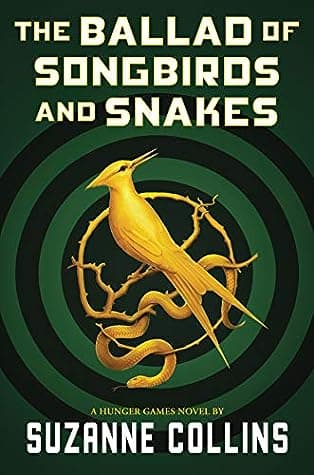
Suzanne Collins (2020)
Genre
Fantasy / Children's / Science Fiction / Young Adult
Reading Time
360 min
Key Themes
See below
Sign in to track this book
To restore his family's name, a young Coriolanus Snow mentors the District 12 tribute in the 10th Hunger Games, fighting literal and political battles where his ambition meets an unexpected human connection.
It is the morning of the 10th annual Hunger Games reaping. Coriolanus Snow, an 18-year-old student at the Academy in the Capitol, prepares for his role as a mentor. His family, House Snow, is struggling financially, and his success in the mentorship program is their only hope for status. Dean Casca Highbottom, still bitter about his role in creating the Games, announces the mentor assignments. Coriolanus is disappointed to be assigned Lucy Gray Baird, the female tribute from District 12, the least favored district. His classmates, like Sejanus Plinth, who is assigned the male tribute from District 2, get better assignments. Coriolanus feels humiliated. He sees his chances of winning the Plinth Prize, a university scholarship, shrinking, as District 12 tributes are usually weak.
During the District 12 reaping, Lucy Gray Baird, a member of the Covey, a traveling musical group, sings a song after her name is called. She captures the small audience and Capitol viewers. When she arrives in the Capitol, she puts a snake into the dress of the Mayor's daughter, Mayfair Lipp, creating a scene. Coriolanus, at first uninterested, realizes her unique showmanship could help. He decides to use her musical talent and stage presence to get sympathy and sponsors. He brings her food and tries to build a connection, thinking that a personal bond will make her more appealing to the Capitol audience and help her survive in the arena.
Coriolanus and his fellow mentors must find ways to increase viewership for the 10th Games, which are not attracting much public interest. He suggests ideas, including allowing mentors to interact with tributes, providing food, and conducting interviews. Dr. Volumnia Gaul, the Head Gamemaker, is interested in his ideas. The tributes are kept in the Capitol Zoo for public display. During a live interview, Lucy Gray sings for Coriolanus. This makes her more popular with the Capitol audience and confirms Coriolanus's belief in her potential. This success makes Coriolanus more confident. He believes he can truly influence the Games' outcome.
As the Games near, a rebel bombing damages the arena, killing several tributes and mentors, including Lysistrata Vickers's tribute. The bombing causes disorder in the Capitol and forces Dr. Gaul to adapt quickly. She decides to use the damaged arena, adding new dangers and unpredictability. Before the Games officially begin, mentors get a last chance to say goodbye to their tributes. Coriolanus smuggles rat poison, given to him by Dr. Gaul, to Lucy Gray. He tells her to use it for self-defense. He also gives her a comb to hide it. The Games begin with immediate violence. Lucy Gray uses her knowledge of poisons and the arena's hidden tunnels to survive the first attack.
During the Games, Coriolanus helps Lucy Gray. When Dr. Gaul releases genetically modified snakes into the arena, he secretly drops her scented handkerchief into their tank. This ensures they will not attack her. This direct help is a big risk, but Coriolanus wants her to win. Lucy Gray, using her intelligence, the rat poison, and her knowledge of the arena, outsmarts and outlasts the other tributes. Her mix of music and survival skills makes her interesting to the Capitol audience. She becomes the winner of the 10th Hunger Games, to Coriolanus's relief and success.
After Lucy Gray's victory, Coriolanus is celebrated, but his actions are noticed. Sejanus, increasingly unhappy with the Capitol and the Games, tries to run away with a rebel group. Coriolanus, trying to protect Sejanus and keep his own position, accidentally gets himself involved. Dean Highbottom, who dislikes Coriolanus and his family, reveals Coriolanus's cheating during the Games, specifically his role in helping Lucy Gray with the snakes. As punishment, Coriolanus is expelled from the Academy and forced to become a Peacekeeper. He is then assigned to District 12, the district of his victorious tribute, a cruel twist of fate.
In District 12, Coriolanus meets Sejanus Plinth, who is also a Peacekeeper, having volunteered due to his anti-Games views. Coriolanus finds himself in the desolate, poor district, a contrast to the Capitol's wealth. He sees Lucy Gray again, performing with the Covey at the Hob, the district's black market. Their relationship restarts amid District 12's harsh life. Coriolanus struggles with the poor living conditions and boring duties. Sejanus actively tries to help the district's rebels, further complicating Coriolanus's position and loyalty.
Sejanus, more involved with the rebels, tells Coriolanus about his plans to escape District 12 with Spruce and Billy Taupe. Coriolanus fears Sejanus's actions will expose him and ruin his chances of returning to the Capitol. He secretly records Sejanus's confession using a jabberjay. He then sends the recording to Dr. Gaul, betraying Sejanus. As a result, Sejanus and Spruce are arrested and publicly hanged for treason. Coriolanus watches the execution. He feels a brief sense of guilt but a stronger belief that he did what was needed for his own survival and ambition. Lucy Gray is horrified by the event, further straining her relationship with Coriolanus.
After Sejanus's execution and Coriolanus's murder of Mayfair Lipp and Billy Taupe to cover his tracks, Coriolanus decides he must leave District 12. He convinces Lucy Gray to run away with him, promising a future together away from the Capitol. They travel into the woods, heading north. As they walk, Lucy Gray becomes more suspicious of Coriolanus's true nature and his involvement in the deaths. She asks him about the gun he has, which he used to kill Mayfair and Billy Taupe. During a tense moment, she disappears into the woods after setting a snare for him. He is unsure if she has abandoned him or is testing him.
Coriolanus, feeling betrayed and paranoid, searches for Lucy Gray in the woods. He fires his gun into the trees, sure she is hiding and planning to expose him. He thinks he sees her, or an illusion of her, and shoots. He finds no body, only her colorful scarf. Unsure if he killed her or if she simply vanished, he returns to the Peacekeeper base. He cleans the gun, disposing of the evidence, and then travels back to the Capitol. Dr. Gaul, impressed by his ruthlessness and ability to survive, arranges his return to the Capitol and enrollment in university. His experiences in District 12, especially Lucy Gray's disappearance, harden Coriolanus. They shape him into the future tyrannical President Snow, without his youthful innocence.
The Protagonist
From a desperate student seeking glory, Coriolanus transforms into a ruthless, calculating individual willing to betray anyone to secure his power and control.
The Supporting/Love Interest
Lucy Gray navigates the brutality of the Games and the Capitol's manipulations, ultimately disappearing into the wilderness to escape Coriolanus's growing darkness.
The Supporting
Sejanus's idealism and rebellion against the Capitol lead to his execution, solidifying Coriolanus's ruthless nature.
The Antagonist
Dr. Gaul remains a constant, malevolent force, successfully corrupting Coriolanus and solidifying his path toward tyranny.
The Supporting
Tigris provides unwavering support to Coriolanus, but her compassionate nature foreshadows her eventual estrangement from his tyrannical future.
The Supporting/Antagonist
Highbottom's attempts to thwart Coriolanus are ultimately unsuccessful, and his legacy remains tied to the Games he despises.
The Supporting
Grandma'am remains a constant, if somewhat detached, influence, embodying the fading glory Coriolanus strives to restore.
The Mentioned
Arachne's brief appearance and swift demise highlight the unpredictable violence of the Games and its consequences.
The Supporting
Clemmensia's disfigurement serves as a warning about the Capitol's ruthlessness and Dr. Gaul's power.
The Supporting
Billy Taupe's involvement in the District 12 rebellion and his past with Lucy Gray lead to his murder by Coriolanus.
The novel explores how power is gained, kept, and misused. Dr. Gaul and Coriolanus believe people are naturally chaotic and need strong, authoritarian control to maintain order, often through fear and events like the Hunger Games. Coriolanus's journey is a pursuit of power, first for his family's survival, then for personal control. His actions, from manipulating the Games to betraying Sejanus, show his growing belief that control, even with ruthless methods, is most important. The Capitol's structure controls the districts through violence and psychological warfare, shown by the Games' increasing brutality.
““They're going to eat you alive, you know,” Dr. Gaul said, a predatory glint in her eye. “Unless you eat them first.””
Coriolanus's struggle with his identity as a 'Snow' and his drive for self-preservation are central. He constantly tries to live up to his family's past glory, even while dealing with their current poverty. His choices are always based on what will ensure his survival and advancement, often at others' expense. Lucy Gray finds her identity in her music and community, protecting her individuality against the Capitol's attempts to dehumanize her. Sejanus struggles as a Capitol citizen who sympathizes with the districts. He cannot reconcile these parts of himself, leading to his downfall.
““Snow lands on top,” Coriolanus murmured, a mantra he'd heard from his father, a reminder of his family's supposed destiny.”
The novel suggests that war and extreme violence, like the Dark Days and the Hunger Games, corrupt individuals and societies. The Capitol, scarred by the war, continues the Games to remind people of its power and the districts' control, creating a cycle of violence. Coriolanus, at first somewhat innocent, becomes less sensitive to death and suffering. His experiences in the arena and as a Peacekeeper, ending with his murders in District 12, remove his empathy. They solidify his belief that violence is a necessary tool for order. The Games themselves show that violence can be entertainment, further blurring moral lines.
““The Hunger Games are a yearly reminder of the cost of rebellion, a lesson in futility. They are a weapon.””
The relationship between Coriolanus and Lucy Gray explores the complex line between love, manipulation, and self-interest. Coriolanus's 'love' for Lucy Gray is tied to his ambition and his desire for her to win, making it conditional. His betrayal of Sejanus, his only true friend, shows his ultimate loyalty to himself and his own advancement. Lucy Gray's loyalty to the Covey and her distrust of the Capitol contrast with Coriolanus's changing allegiances. The novel suggests that in a world driven by power, loyalty is a luxury few can afford, and betrayal becomes a tool for survival.
““And I wasn’t sure if she was still Lucy Gray, or if she was just a ghost, an echo of the girl I’d loved.””
The 10th Hunger Games is an important moment in the development of media manipulation. Coriolanus's early ideas, like mentor interaction and public interviews at the zoo, are designed to make tributes more 'human' and thus more appealing and engaging for Capitol viewers. The entire event is a televised spectacle, turning human suffering into entertainment. Dr. Gaul uses media to spread Capitol ideas and maintain control, showing the power of propaganda and how stories can be shaped for political reasons. Lucy Gray's musical performances are a form of media she uses to her advantage, challenging the Capitol's control.
““What do you think the Hunger Games are for? To remind the districts who’s in charge? No. It’s to remind everyone that we are all animals. And sometimes, animals need to be tamed.””
A recurring motif representing defiance, identity, and the power of storytelling.
The songs performed by Lucy Gray Baird and the Covey serve as a significant plot device. They are not merely entertainment but act as a form of communication, historical record, and subtle rebellion. Lucy Gray's songs reveal her emotions, her past, and her observations about the world, often containing hidden meanings or prophecies. They draw attention to her, making her memorable to the Capitol, but also connect her deeply to District 12 and its traditions. The songs highlight the enduring human spirit and the power of art to convey truth and resist oppression, contrasting with the Capitol's manufactured narratives.
Genetically engineered birds used for surveillance and later for betrayal.
Jabberjays are genetically modified birds initially created by the Capitol during the Dark Days to spy on rebels. They can perfectly mimic human speech and record conversations. In the novel, they are used by Coriolanus to betray Sejanus Plinth. Coriolanus records Sejanus's plans to escape with the rebels using a jabberjay, then sends the recording to Dr. Gaul. This act directly leads to Sejanus's execution and underscores Coriolanus's ruthlessness and his willingness to use Capitol technology for his own manipulative ends, foreshadowing their later use in the main Hunger Games series.
A deadly muttation that serves as a test of character and a tool for manipulation.
The snake muttations, created by Dr. Gaul, are a key element in the arena. These genetically engineered snakes are attracted to familiar scents and are designed to be deadly. They play a crucial role when Coriolanus manipulates the Games by secretly dropping Lucy Gray's scented handkerchief into their tank, ensuring they will not attack her. This act of direct intervention not only helps Lucy Gray win but also exposes Coriolanus's willingness to cheat and his growing understanding of how to manipulate the Games' mechanics and Dr. Gaul's creations for his own benefit. They are a symbol of Dr. Gaul's scientific prowess and cruelty.
A symbol of ambition and social mobility for Capitol students.
The Plinth Prize is a prestigious university scholarship awarded to the mentor of the winning tribute in the Hunger Games. For Coriolanus, it represents his sole opportunity to restore his family's financial standing and secure his future. It is a powerful motivator throughout the novel, driving many of his decisions and manipulations. The prize symbolizes the Capitol's meritocratic facade, where ambition and ruthless competition are rewarded, reinforcing the idea that success justifies any means. Its existence highlights the deep social stratification within the Capitol itself.
A symbolic location representing justice, injustice, and Lucy Gray's defiance.
The Hanging Tree is a significant location in District 12, where executions are carried out. It is the subject of one of Lucy Gray's most famous and defiant songs, which she sings during the reaping. The tree symbolizes the Capitol's brutal justice and the power it holds over the districts. It later becomes the site of Sejanus Plinth's execution, a pivotal moment that further hardens Coriolanus's resolve. The song itself, with its themes of love and death intertwined with the imagery of the tree, adds a layer of folk history and subtle protest to the narrative, becoming a lasting legacy of Lucy Gray's story.
“Snow lands on top.”
— A recurring thought and phrase for Coriolanus, summarizing his ambition and belief in his own superiority.
“It was the things you most wanted that ended up owning you.”
— Coriolanus's internal reflection on his desires, particularly for Lucy Gray and power.
“A world so hungry for entertainment, no matter how cruel, that it would sacrifice its own children.”
— Coriolanus's early observation of the Games' appeal to the Capitol citizens.
“You can take the girl out of the Covey, but you can't take the Covey out of the girl.”
— Lucy Gray's assertion of her identity and loyalty to her performing family, the Covey.
“The show's not over until the mockingjay sings.”
— A phrase used by Lucy Gray Baird, highlighting her connection to the mockingjays and her defiance.
“Hope, I had discovered, was a dangerous thing. It could make you weak, make you vulnerable, make you forget who you were supposed to be.”
— Coriolanus's cynical view on hope, especially after his experiences in District 12.
“War makes everyone a child.”
— Dr. Gaul's observation on the primal nature of humanity during conflict.
“Sometimes I wonder if you and I are two sides of the same coin.”
— Lucy Gray's provocative statement to Coriolanus, suggesting a deeper connection or similarity between them.
“It’s not what you say, it’s what people hear.”
— Dr. Gaul's advice to Coriolanus about the importance of perception and manipulation.
“The whole world’s a stage, and we’re all just players.”
— A philosophical line from Lucy Gray, reflecting her theatrical background and view of life.
“Survival. That's what it came down to. Survival of the fittest. Survival of the smartest. Survival of the most ruthless.”
— Coriolanus's internal monologue about the core principle of the Games and life itself.
“People are not so different from animals. They can be trained, if you know how.”
— Dr. Gaul's chilling insight into her view of human nature and control.
“He knew that he would never be truly free until he was the one pulling the strings.”
— Coriolanus's realization of his ultimate goal: to be in absolute control, rather than controlled by others.
“The Games are a reminder of what happens when we lose control.”
— Dr. Gaul's justification for the Hunger Games, framing them as a necessary lesson.
Ready to see how well you understood this book? Take our interactive quiz with 10 questions.

Suzanne Collins is an American author and television writer. She is best known as the author of the young adult dystopian book series The Hunger Games.







