“We each owe a death, there's no way around that, but for that reason, there's no need to rush things.”
— Paul Edgecomb reflecting on life and death in E Block.

Stephen King (1996)
Genre
Thriller / Fantasy / Mystery
Reading Time
90 min
Key Themes
See below
Sign in to track this book
On Death Row, a condemned man's final goodbyes are intertwined with a miraculous creature and a terrifying, unseen revenge that will grip you tighter with every step down the Green Mile.
Paul Edgecombe, a 104-year-old resident of the Georgia Pines nursing home, begins to write his memories of his time as the supervisor of E Block at Cold Mountain Penitentiary in 1932. He focuses on the 'Green Mile,' the walkway to the electric chair. He introduces his fellow guards: Brutus 'Brutal' Howell, Harry Terwilliger, and Dean Stanton. Paul recalls the execution of Arlen Bitterbuck, a Native American man convicted of murder, and the careful procedures involved, including preparing 'Old Sparky,' the electric chair. This opening sets a somber, reflective tone, emphasizing the weight of the guards' duties and their efforts to maintain humanity in an inhumane environment.
John Coffey, a large black man, is brought to E Block, convicted of the rape and murder of two young twin girls, Cora and Kathe Detterick. Despite his size, Coffey is timid and gentle, showing a childlike innocence and a fear of the dark. His quiet demeanor and soft voice immediately strike Paul and the other guards as not fitting the horrific crime he is accused of. Paul observes Coffey's sensitivity and how he reacts to the suffering of others, even the condemned. This early impression makes Paul doubt Coffey's guilt, contrasting sharply with the official story.
Percy Wetmore, a new guard on E Block, is introduced as a cruel and cowardly individual who abuses his position. He is related to the governor's wife, which protects him from disciplinary action, to the frustration of Paul and the other guards. Percy enjoys tormenting the inmates, especially a mouse named Mr. Jingles who lives on the block. His incompetence and maliciousness cause constant tension. He often threatens the other guards with his connections and openly states his desire to supervise an execution, specifically Eduard Delacroix's, promising to leave Cold Mountain afterward.
A small, intelligent mouse, named Mr. Jingles by Eduard Delacroix, becomes a beloved pet on E Block. Delacroix, a Cajun inmate convicted of rape, murder, and arson, initially seems like a typical death row occupant, but he forms an unusual bond with the mouse. Mr. Jingles performs tricks, like rolling a spool of thread, and brings joy and distraction to the grim environment. This relationship highlights the humanity that can exist even in the darkest places and provides a brief, heartwarming contrast to the impending executions. Percy, however, sees the mouse as a nuisance and a target for his cruelty.
Paul Edgecombe suffers from a severe urinary tract infection that causes him extreme pain. One night, John Coffey, sensing Paul's distress, calls him over to his cell. Coffey places his hands on Paul, and a strange, almost magical energy flows from Coffey into Paul. Paul feels the pain and infection being drawn out of him, appearing as a swarm of black, insect-like particles that Coffey expels from his mouth. Paul is completely cured, leaving him stunned and questioning Coffey's true nature and the validity of his conviction. This event is the first undeniable proof of Coffey's supernatural abilities.
The time comes for Eduard Delacroix's execution. Percy Wetmore, having insisted on supervising it, deliberately neglects to wet the sponge used to conduct electricity, a crucial step. As a result, when the switch is thrown, Delacroix suffers a prolonged, agonizing death, screaming in pain and catching fire, rather than a quick, relatively humane end. The other guards are horrified and enraged by Percy's malicious act, which violates all protocols and decency. Delacroix's death is a brutal scene that shows Percy's depravity and the suffering inflicted on the condemned.
In a fit of pique or as a delayed act of cruelty after Delacroix's execution, Percy Wetmore stomps on Mr. Jingles, seemingly killing the mouse. John Coffey, witnessing this, is deeply distressed. He takes the lifeless mouse into his hands and, just as he did with Paul, performs a healing miracle. Mr. Jingles is revived, completely unharmed, and even appears more vibrant than before. This act further strengthens the guards' belief in Coffey's extraordinary powers and his innate goodness, contrasting sharply with the evil they've just witnessed from Percy.
Warden Hal Moores' wife, Melinda, is gravely ill with an inoperable brain tumor, causing her immense pain and a slow decline. Overwhelmed by desperation, Hal, informed by Paul about Coffey's abilities, reluctantly agrees to a risky plan: the guards will secretly take John Coffey out of Cold Mountain to heal Melinda. The plan involves sedating Percy and carefully transporting Coffey to the Moores' home under cover of darkness. This shows the immense trust and belief the guards have placed in Coffey, risking their careers and lives for a chance at a miracle.
At the Moores' home, John Coffey heals Melinda, drawing the tumor and her suffering into himself. This time, the illness appears as a visible cloud of black particles and a terrifying surge of pain and anguish that Coffey experiences. After expelling the sickness, Melinda is completely cured and restored to health, vibrant and lucid. However, Coffey is deeply affected by absorbing the pain and evil. He reveals that when he heals, he also sees visions of past events, confirming his ability to perceive truth. It is during this healing that he sees the true perpetrators of the Detterick twins' murder.
Upon returning to E Block, John Coffey confronts Percy Wetmore. Coffey, having absorbed the evil from Melinda and seen the truth of the Detterick murders, places his hand on Percy. He transfers the 'bad' from the real murderer, Wild Bill Wharton, into Percy. Percy immediately goes into a catatonic state, then pulls out his service revolver and shoots Wild Bill Wharton multiple times, killing him. Percy then collapses into a permanent state of insanity, institutionalized in a mental hospital. This act is a twisted form of justice and retribution, orchestrated by Coffey, for both Delacroix's death and the twins' murder.
With Percy's actions and Coffey's earlier revelations, Paul and the other guards finally understand the full truth: John Coffey is innocent. The real murderer of the Detterick twins was Wild Bill Wharton, who confessed to Percy (who, in his madness, repeated it). Coffey, with his power, had taken on the evil and pain of the crime, and by transferring it to Percy, exposed the truth. The realization that they are about to execute an innocent man, a man with divine healing powers, weighs heavily on their consciences, creating immense moral conflict and despair.
As the day of his execution approaches, John Coffey tells Paul that he wants to die. He explains that the world is too full of pain and suffering, which he constantly feels and absorbs. He is weary of bearing the burden of humanity's cruelty and sorrow. He does not fear death but sees it as an escape from the relentless barrage of suffering. He asks Paul not to put the bag over his head, wanting to see the light one last time. This request highlights Coffey's empathy and the immense toll his gift has taken on him, making his impending execution even more tragic.
Paul Edgecombe and the other guards, heartbroken and burdened by their knowledge of Coffey's innocence, are forced to carry out his execution. It is the most difficult execution of their careers. Coffey goes peacefully, but his death leaves a lasting mark on all of them, particularly Paul. The guards, especially Paul and Brutal, are devastated by the act, feeling complicit in the murder of a saintly man. The execution is quick and clean, a stark contrast to Delacroix's, emphasizing the respect and sorrow the guards felt for Coffey. This event is the central tragedy of the narrative, a profound injustice.
In the present day, Paul Edgecombe, now 104 years old, reveals the lasting impact of John Coffey's final touch. He and Mr. Jingles, who remained alive and vibrant for decades after Coffey's death, have been blessed with unnaturally long lives. Mr. Jingles eventually dies, but Paul continues on, living far beyond his natural lifespan. This extended life is a constant reminder of Coffey's power and the injustice of his death. He views his prolonged existence as a punishment for allowing Coffey's execution, showing the guilt he carries.
Paul Edgecombe, now the oldest resident at Georgia Pines, reflects on his incredibly long life and the burden it has become. He has outlived everyone he ever knew, including his wife and children. He wonders how much longer he will live, feeling that his prolonged existence is a form of divine punishment for his role in John Coffey's execution. He still 'walks the Green Mile' in his memories, haunted by the events of 1932. He questions if his unnaturally long life is a small fragment of Coffey's gift, or perhaps a lingering curse, leaving the reader with a sense of melancholy and the enduring weight of moral responsibility.
The Protagonist
Paul begins as a man resigned to his grim duties but is profoundly transformed by John Coffey, learning to question justice and carrying the burden of an innocent man's death for the rest of his unnaturally long life.
The Central Figure/Messianic Figure
Coffey enters the story as a condemned man, reveals his divine nature through acts of healing, and ultimately chooses death to escape the overwhelming pain of the world, leaving a lasting legacy on those who knew him.
The Supporting Character
Brutal maintains his strong moral character throughout, becoming a key ally to Paul in navigating the moral dilemmas presented by John Coffey.
The Antagonist
Percy's reign of terror culminates in a horrific execution, and he ultimately meets a karmic fate by having Wild Bill's 'bad' transferred into him, leading to his permanent insanity.
The Supporting Character
Delacroix finds brief moments of joy and connection with Mr. Jingles before suffering a terrible, unjust death orchestrated by Percy.
The Supporting Character
Hal is driven by his love for his wife, leading him to participate in a risky plan that ultimately exposes him to the profound injustice of Coffey's execution.
The Supporting Character
Melinda is introduced as a dying woman, but is miraculously healed by John Coffey, providing undeniable proof of his powers.
The Antagonist/Minor Character
Wild Bill's brief but violent presence on E Block ultimately leads to the exposure of the truth about Coffey's innocence and his own demise.
The Supporting/Symbolic Character
Mr. Jingles survives multiple threats and becomes a living symbol of John Coffey's enduring gift and the enduring weight of the past for Paul.
The Supporting Character
Dean, like the other guards, is deeply affected by Coffey's presence and subsequent execution, but his personal arc is less detailed than Paul's or Brutal's.
The Supporting Character
Harry's character remains consistent as a reliable guard, bearing witness to the tragic events on the Green Mile.
The novel explores the difference between legal justice and true moral justice. John Coffey is legally condemned, yet he is morally innocent and possesses divine goodness. Paul and the other guards, as instruments of the law, are forced to carry out an execution they know to be wrong. This theme is most evident in Coffey's execution, where Paul feels immense guilt for participating in a legal act that is a moral atrocity. The system, represented by the electric chair and the unwavering nature of convictions, is shown to be fallible and capable of injustice, especially when influenced by prejudice and incompetence (Percy Wetmore).
“On the Green Mile, the only justice was the one you made for yourself, and for the man you were about to kill.”
The story shows a stark contrast between pure good and profound evil. John Coffey embodies innocent, selfless good, able to absorb and heal pain and suffering. His ability to discern and draw out 'bad' from people (as seen with Melinda Moores and Percy Wetmore) makes him a literal filter for the world's wickedness. Conversely, characters like Percy Wetmore and Wild Bill Wharton represent unadulterated evil – one through petty sadism and abuse of power, the other through brutal, senseless violence. The novel suggests that evil is a tangible force that can corrupt and destroy, while good, though powerful, is often vulnerable and ultimately sacrificed.
“He took it all back, you see. The bad. The pain. He took it all into himself.”
Despite being set on death row, the novel highlights acts of compassion and humanity among the guards. Paul, Brutal, Dean, and Harry consistently treat the condemned with respect and dignity, even those they know to be guilty. Their bond with Eduard Delacroix and Mr. Jingles, and especially their desperate efforts to save and protect John Coffey, show their inherent goodness. This theme is particularly poignant in the scenes where they risk their careers to take Coffey to heal Melinda Moores, driven by empathy for her suffering and their growing belief in Coffey. It argues for the persistence of human kindness even in the face of institutionalized death.
“We all had our jobs to do, but we weren't monsters.”
Paul Edgecombe's narration from his old age is steeped in the burden of his memories and guilt. His unnaturally long life, a residual effect of Coffey's gift, becomes his personal purgatory, forcing him to outlive everyone he loves and constantly relive the injustice of Coffey's execution. The 'Green Mile' is not just a physical place but a metaphorical path he continues to walk in his mind. This theme explores how past actions, especially those involving moral compromise, can haunt an individual for a lifetime, shaping their perception of existence and purpose. His extended life is both a miracle and a curse.
“I suppose that's the real Green Mile. The walk to the chair is only the last mile. The real one is the one we walk through life.”
The presence of John Coffey introduces a strong element of the supernatural into an otherwise realistic prison drama. Coffey's ability to heal, to absorb and expel sickness and evil, and to extend life is central to the plot. These miracles challenge the characters' rational understanding of the world and force them to confront the existence of forces beyond their comprehension. The miracles serve not just as plot devices but as a way to explore faith, the divine, and the inexplicable aspects of existence. They elevate Coffey beyond a mere mortal, making his execution an act of deicide.
“He was a miracle, all right. A miracle in a world that didn't believe in them anymore.”
The story is told retrospectively by an elderly Paul Edgecombe.
The entire novel is framed by the narration of Paul Edgecombe, who, at 104 years old, is writing down his memories of Cold Mountain Penitentiary. This device allows for a reflective, melancholic tone, providing insight into the long-term emotional and psychological impact of the events. It also creates dramatic irony, as the reader knows from the outset that Paul has survived all these years and is haunted by the past. His unnaturally long life, a consequence of John Coffey's gift, ties directly into the themes of guilt and the lingering effects of supernatural intervention.
The linoleum-covered walkway to the electric chair, symbolizing the path to death.
The 'Green Mile' is both a literal and symbolic plot device. Literally, it is the green linoleum walkway on E Block that condemned prisoners walk to 'Old Sparky,' the electric chair. Symbolically, it represents the final journey towards death, judgment, and the ultimate consequence of life's actions. It also encapsulates the moral and emotional burden carried by the guards who supervise this walk. The phrase extends metaphorically to Paul's own long life, which he views as a continued, personal Green Mile, haunted by the past.
A remarkably intelligent mouse, serving as a symbol of life, hope, and connection.
Mr. Jingles is more than just a pet; he is a significant symbolic device. He represents the resilience of life and the ability to find joy and connection even in the most desolate environments (death row). His intelligence and tricks provide brief moments of wonder and humanity. His survival, through John Coffey's healing and his unnaturally long life alongside Paul, serves as a tangible, living testament to Coffey's miraculous powers and the enduring, if sometimes burdensome, legacy he left behind. He is a small, constant reminder of the extraordinary events witnessed by Paul.
The supernatural ability to absorb and heal pain, sickness, and evil.
John Coffey's unique healing touch is the central supernatural plot device. It drives the narrative by introducing the miraculous into the mundane, forcing characters to confront the unexplainable. This ability directly causes Paul's cure, Mr. Jingles' revival, and Melinda Moores' recovery. Crucially, it also allows Coffey to discern the truth of the Detterick murders and orchestrate Percy's retribution. The healing is not without cost, as Coffey absorbs the 'bad,' highlighting the burden of his gift and his profound empathy, ultimately contributing to his desire for death.
“We each owe a death, there's no way around that, but for that reason, there's no need to rush things.”
— Paul Edgecomb reflecting on life and death in E Block.
“On the day I die, I'll be seventy-eight. I'll have lived a good life, a long life. But I'll still be old. I'll still be tired. And I'll still be ready to go.”
— Paul Edgecomb contemplating his own eventual death.
“He killed them with their love. He killed them with their trust. He killed them with their ignorance.”
— Paul Edgecomb's internal thoughts about William 'Wild Bill' Wharton's crimes.
“The world keeps on spinning, no matter how much we wish it would stop and let us off.”
— Paul Edgecomb's observation on the unstoppable nature of time and life.
“The truth is, we all die. The goal isn't to live forever, the goal is to create something that will.”
— A philosophical reflection by Paul Edgecomb.
“Sometimes the things we think are the end are really just new beginnings.”
— Paul Edgecomb's hopeful perspective on change and loss.
“It was a strange feeling, like being in a dream that you knew was going to turn into a nightmare.”
— Describing the unsettling atmosphere on E Block.
“Memory is a funny thing. Sometimes it's like a leaky faucet, and sometimes it's like a dam.”
— Paul Edgecomb discussing the unreliable nature of memory.
“The past is a phantom, but a strong one. It can reach out and grab you, even when you think you're safe.”
— Paul Edgecomb reflecting on how past events continue to influence the present.
“There are things in this world that defy explanation, and sometimes, those are the things that save us.”
— Reflecting on John Coffey's miraculous abilities.
“The fear of death is worse than death itself, especially if you're a good person.”
— Paul Edgecomb contemplating the final moments of an innocent man.
“We never know how strong we are until being strong is the only choice we have.”
— Paul Edgecomb reflecting on the resilience of the human spirit in dire circumstances.
“Sometimes, the hardest thing to do is forgive yourself.”
— A general reflection on guilt and self-forgiveness.
“It's a wonder how much evil can hide behind a smile.”
— Paul's thoughts on the deceptive nature of some individuals he encounters.
Ready to see how well you understood this book? Take our interactive quiz with 10 questions.
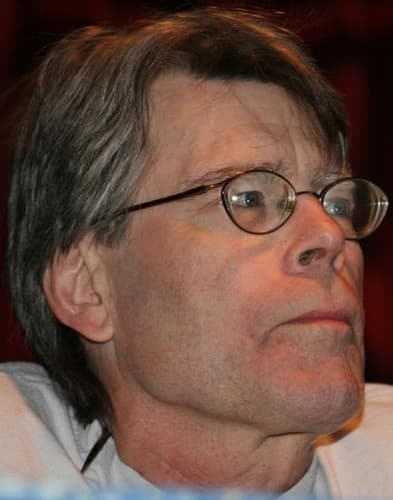
Stephen Edwin King is an American author of horror, supernatural fiction, suspense, crime, science-fiction, and fantasy novels. Described as the "King of Horror", his books have sold more than 350 million copies as of 2006, and many have been adapted into films, television series, miniseries, and comic books. King has published over 65 novels/novellas, including seven under the pen name Richard Bachman, and five non-fiction books. He has also written approximately 200 short stories, most of which have been published in book collections.







