“The world is a story, and we are the tellers.”
— Reflection on narrative and human agency in shaping reality.

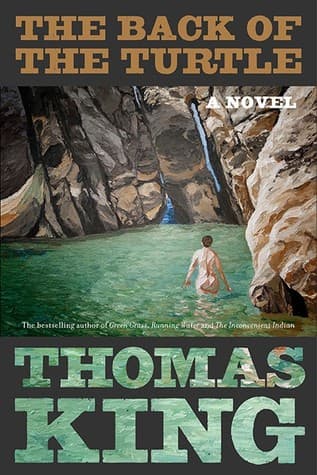
Thomas King (2014)
Genre
Literary Fiction
Reading Time
600 min
Key Themes
See below
Sign in to track this book
A guilt-ridden scientist, responsible for an environmental apocalypse, returns to his ancestral, deserted reserve to end his life, only to find mysterious, sky-fallen survivors emerging from the very ocean he seeks to drown in.
Gabriel, a scientist who developed GreenSweep, a toxic defoliant, arrives at the abandoned Smoke River reserve. This land, his mother's ancestral home, suffered an environmental disaster linked to GreenSweep, which killed the entire population, including his mother and sister, and most local wildlife. Overwhelmed by guilt, Gabriel plans to commit suicide by walking into the ocean. He has spent years in exile, working for DowSanto, and now seeks a final accounting for the destruction he caused. The desolate land and the silence of the once-busy community remind him of his failure and the irreversible damage his creation caused.
Just as Gabriel is about to walk into the sea, he sees a young girl, Kimi, struggling in the waves. His instinct to save her stops his suicide attempt, and he pulls her to shore. Soon after, more people appear from the ocean—first a man, then an older woman, and then a whole group, all with long black hair and almond eyes. Gabriel, despite his shock, repeatedly dives into the water to rescue them, bringing them to the beach. These mysterious arrivals force Gabriel to confront life and responsibility instead of giving in to despair, changing his plans for self-destruction.
The rescued individuals, whom Gabriel first calls 'Others,' and later learns are 'Protectors,' are disoriented and speak an unknown language. Led by a silent, strong woman named Mara, and an elder known as the 'Old Woman,' they start a camp on the beach. They find food and shelter, showing a quiet, almost otherworldly determination. Gabriel, despite his inner struggles, finds himself helping their survival efforts, offering practical help and watching their unique ways. These mysterious people, who seem to embody renewal, challenge Gabriel's view of the world and his place in it, suggesting a deeper reason for their sudden appearance.
Meanwhile, at DowSanto, the CEO, Christian, sends a team to the Smoke River site. Led by the ambitious executive Nicolas and the corporate lawyer, Dorian, their mission is two-fold: to assess the environmental damage, especially the GreenSweep contamination, and to find Gabriel. DowSanto wants to control the story and limit liability, fearing a public relations crisis and large lawsuits. Nicolas sees this as a chance for career advancement, while Dorian focuses on legal strategy. Their arrival brings a threat to the fragile community Gabriel is helping to build, as DowSanto's corporate interests will clash with the well-being of the land and its new inhabitants.
Nicolas and Dorian set up a base near the deserted reserve, with a private investigator, Duane. Their investigation quickly finds unusual things: the 'Others' on the beach, local wildlife thriving despite the GreenSweep contamination, and rumors of supernatural events. Duane, a cynical but observant man, gathers information and watches Gabriel. Nicolas, driven by corporate greed and a desire to hide damaging evidence, sees the 'Others' as a problem or a distraction, while Dorian focuses on legal options. Their presence creates a tense atmosphere, as the corporate world's pursuit of profit and control intrudes on the quiet, resilient existence of the mysterious community.
As Gabriel spends more time with the 'Others,' especially Mara and the Old Woman, he starts to understand their true nature. They are 'Protectors,' sent from another realm, or perhaps the spirit world, to heal the damaged earth. Their appearance from the sea and their ability to bring life back to the barren land are not random; they are part of a larger, ancient mission. They communicate through gestures, shared experiences, and an almost telepathic understanding. Gabriel sees their healing touch on the environment and on himself, realizing they have a deep connection to the natural world, a contrast to DowSanto's destructive forces.
Gabriel's despair slowly turns into a sense of purpose. He lets go of his self-pity and guilt, dedicating himself to helping the Protectors. He becomes their link to the human world, explaining their needs and protecting them from the DowSanto team. A deep, unspoken bond forms between Gabriel and Mara, a connection beyond language and culture. He recognizes the wisdom and strength in her silent leadership. His scientific mind, once used for destruction, now seeks to understand and support the Protectors' restorative mission. This change is important, as Gabriel moves from an agent of ecological ruin to a guardian of the natural world, aligning himself with forces greater than corporate power.
Christian, DowSanto's CEO, arrives at Smoke River, staging a media event. He brings journalists and film crews, creating a story that absolves DowSanto of responsibility while subtly blaming Gabriel. He presents the company as a benevolent entity investigating and helping in recovery, despite their direct fault. Christian's main goal is to deflect blame, protect the company's image, and prevent financial ruin. He uses his charisma and corporate power to twist public perception, turning the ecological disaster into a public relations battle. His presence makes the conflict more intense, pitting the spiritual resilience of the Protectors against the manipulative, profit-driven agenda of the corporate giant.
The tension ends in a direct confrontation between the DowSanto team and the Protectors, with Gabriel as an intermediary. Nicolas tries to assert corporate authority, threatening the Protectors with legal action and removal. However, the Protectors, led by Mara and the Old Woman, remain firm. They do not argue but stand as a silent, powerful presence, embodying the ancient spirit of the land. Their resilience and connection to the earth challenge DowSanto's technology and legal maneuvers. This clash is not just about land ownership or corporate liability; it is a symbolic battle between a worldview that exploits nature for profit and one that respects and protects it.
As the conflict peaks, a giant turtle, an ancient symbol of creation and resilience, emerges from the ocean. Its appearance is a powerful, almost mythical intervention, representing the earth's response to the desecration. The turtle's presence disrupts DowSanto's carefully built narrative and corporate agenda, making their power and influence seem small compared to the forces of nature. The corporate team, including Christian, Nicolas, and Dorian, are bewildered and defeated, their plans dissolving in the face of this inexplicable phenomenon. The Protectors, their mission complete, begin to return to the sea, leaving Gabriel to continue his journey of healing and guardianship of the revitalized Smoke River. The land, once poisoned, begins its slow, natural recovery.
The Protagonist
Transforms from a suicidal, guilt-ridden scientist to a purposeful guardian of the land and its new inhabitants, finding redemption through action and connection.
The Supporting
Remains a consistent force of nature and wisdom, guiding the Protectors and influencing Gabriel's transformation.
The Antagonist
Remains a static antagonist, ultimately failing to control the narrative or the outcome in the face of nature's power.
The Supporting
Remains a static character, driven by ambition and corporate loyalty, ultimately thwarted by forces beyond his comprehension.
The Supporting
Remains a static character, focused on legal maneuvers, ultimately unable to contain the larger forces at play.
The Supporting
Starts as a cynical observer, gradually witnessing events that challenge his rational worldview.
The Supporting
Remains a consistent symbol of ancient wisdom and resilience, a steady presence throughout the Protectors' mission.
The Mentioned
Serves as a catalyst for Gabriel's initial rescue and the subsequent unfolding of events, a symbol of hope.
The novel shows the catastrophic impact of human industry on the environment, seen in the GreenSweep disaster at Smoke River. It portrays the barren land and loss of life, but also explores the possibility of healing through the Protectors. The theme highlights the tension between destructive human innovation and the earth's ability to renew itself. Gabriel's journey from destroyer to protector shows how individuals can help environmental recovery, while the Protectors' actions demonstrate a spiritual approach to ecological restoration.
“The wind had cleared the air, but the smell of death still clung to the trees and the ground.”
Gabriel's character change is key to this theme. Overwhelmed by guilt for creating GreenSweep, he first plans suicide. His encounters with the Protectors force him to face his responsibility and find a path to redemption, not through self-punishment, but through helping heal the land and protecting others. The novel suggests that true redemption comes from acknowledging past wrongs and working for a better future, rather than giving in to despair. This theme contrasts with DowSanto's lack of accountability, showing different responses to guilt.
“He had come to die, but life, in its mysterious way, had other plans for him.”
The novel explores the contrast between Western scientific and corporate views of land and Indigenous understandings. The Smoke River reserve, an ancestral Indigenous territory, is ruined by a product of Western science. The Protectors, with their deep, intuitive connection to the earth and their quiet, restorative methods, embody Indigenous knowledge systems that prioritize harmony and balance with nature. Their arrival and ability to heal the land highlight the wisdom in Indigenous perspectives, suggesting that true sustainability means respecting and living with the natural world. The novel criticizes the disregard for Indigenous ways of knowing.
“They spoke a language not of words, but of earth and water, of wind and sky.”
DowSanto, led by Christian and Nicolas, represents unchecked corporate greed, prioritizing profit and public image over environmental and human well-being. Their manipulative tactics, legal actions, and attempts to control the narrative oppose the ethical need to protect the environment. The novel criticizes the destructive nature of capitalism when it operates without moral limits, showing how corporations can cause great harm and then try to avoid responsibility. This theme is seen in the direct conflict between the DowSanto team and the Protectors, a clash of opposing values.
“For DowSanto, the disaster was a public relations problem, not a moral failing.”
Thomas King weaves Indigenous mythology and storytelling into the narrative, especially through the Protectors' appearance and the giant turtle's emergence. These mythical elements challenge Western rationalism and scientific explanations, suggesting deeper, older truths are at play. The novel itself acts as a modern myth, using fantastical elements to convey messages about humanity's relationship with nature. The oral tradition of storytelling is honored, providing a framework for understanding events that defy conventional logic and connecting the narrative to a rich cultural heritage.
“The world, they knew, rested on the back of a turtle, and if the turtle moved, so did everything else.”
Mysterious, semi-mythological beings who emerge from the sea to heal the land.
The Protectors serve as a central plot device, embodying both Indigenous spiritual connection to the land and a fantastical element that challenges Western rationality. Their sudden appearance from the ocean, their unique communication, and their ability to seemingly restore life to the devastated landscape drive much of the narrative. They represent the earth's resilience and a force beyond human comprehension, forcing Gabriel to re-evaluate his scientific worldview and providing a catalyst for his redemption. They are a symbol of hope and the enduring power of nature and ancient wisdom, directly contrasting with DowSanto's destructive technology.
A powerful, mythical symbol of creation and the earth's ultimate authority.
The giant turtle is a potent symbol rooted in many Indigenous creation myths, where the world rests on its back. Its emergence from the ocean at the climax of the story serves as a powerful, almost divine, intervention. It represents the ultimate authority of nature, dwarfing human conflicts and corporate machinations. The turtle's appearance signifies a shift in power dynamics, rendering DowSanto's efforts futile and confirming the Protectors' mission. It reinforces the theme of Indigenous knowledge and the idea that the earth itself has agency and will respond to desecration, transcending scientific explanation.
The toxic defoliant that causes the ecological disaster, a symbol of destructive human innovation.
GreenSweep is the chemical compound developed by Gabriel that directly leads to the devastation of Smoke River. It functions as a concrete symbol of humanity's destructive technological prowess and the unforeseen, catastrophic consequences of prioritizing profit over environmental safety. It is the catalyst for Gabriel's guilt and the central conflict of the novel. The lingering contamination of GreenSweep throughout the narrative highlights the long-term impact of environmental damage and the challenge of true ecological recovery, even in the face of natural healing forces.
The setting for the entire novel, a symbol of environmental devastation and potential renewal.
The Smoke River reserve itself acts as a significant plot device and symbol. Initially a desolate, lifeless landscape, it represents the full extent of environmental catastrophe and human neglect. As the story progresses, it becomes a canvas for the Protectors' healing efforts and a site of potential renewal. Its emptiness at the beginning underscores Gabriel's isolation and guilt, while its gradual re-animation reflects his personal transformation and the larger theme of ecological recovery. The reserve serves as a battleground for opposing ideologies – corporate exploitation versus Indigenous stewardship.
“The world is a story, and we are the tellers.”
— Reflection on narrative and human agency in shaping reality.
“We are all refugees from something.”
— Character discussing displacement and shared human experience.
“The past is a river that never stops flowing.”
— Meditation on how history continuously influences the present.
“Sometimes the only way to heal is to return to the wound.”
— Advice about confronting trauma to achieve recovery.
“The land remembers what we choose to forget.”
— Observation on environmental degradation and cultural memory.
“We are not separate from the earth; we are the earth dreaming.”
— Philosophical statement about human connection to nature.
“Guilt is a heavy stone that sinks the heart.”
— Description of emotional burden following personal failure.
“In the silence, you can hear the truth whispering.”
— Suggestion that clarity comes through quiet reflection.
“Every ending is a beginning in disguise.”
— Optimistic perspective on change and cycles of life.
“The turtle carries its home on its back, and so do we.”
— Metaphor for carrying one's history and identity.
“Forgiveness is not forgetting; it is letting go of the weight.”
— Explanation of forgiveness as a release rather than erasure.
“Stories are the maps that guide us through the dark.”
— Assertion of narrative as a tool for navigation in life.
“The river does not apologize for its path.”
— Comment on accepting natural courses and consequences.
“We are all connected, like roots beneath the soil.”
— Image emphasizing interdependence among living beings.
“To save the world, you must first save yourself.”
— Personal insight linking individual and collective healing.
Ready to see how well you understood this book? Take our interactive quiz with 10 questions.
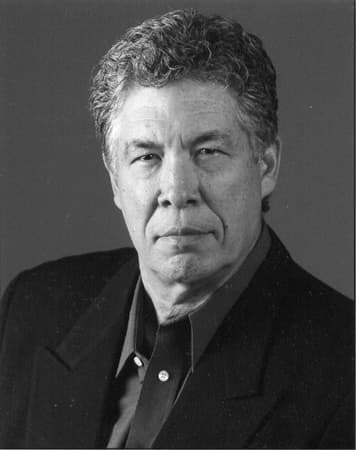
Biography coming soon.







