“There are some people who, if they don’t already know, you can’t tell.”
— Alex-Li talking about his mother's inability to grasp his life choices.

Zadie Smith (2002)
Genre
Literary Fiction
Reading Time
9-12 hours
Key Themes
See below
Sign in to track this book
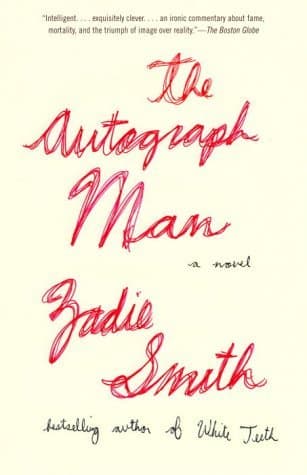
A witty exploration of identity, faith, and celebrity culture, 'The Autograph Man' follows Alex-Li Tandem, a dealer in famous signatures, as he navigates a world obsessed with symbols while searching for authenticity and the autograph of a forgotten film star.
Alex-Li Tandem, a young Jewish-Chinese man in London, works as an autograph dealer, a trade he inherited from his deceased father. His life shows cynicism, intellectual pretensions, and a deep desire for meaning. He is particularly interested in the reclusive 1940s Hollywood actress, Kitty Alexander, whose autograph he wants. Alex spends his days at autograph conventions, faking signatures, and dealing with his eccentric friends and customers, all while grieving his father's recent death. His girlfriend, Esther, struggles to connect with him due to his emotional distance and focus on the past and celebrity culture.
The story often goes back to Alex's childhood, especially his relationship with his father, Adam. Adam, a charming but flawed man, gave Alex a love for collecting and a peculiar worldview, often involving obscure philosophical ideas and a flair for the dramatic. The flashbacks show that Adam died from a sudden heart attack while watching a boxing match. This event traumatized Alex and left him with unresolved grief and a feeling of abandonment. These memories explain Alex's current emotional stagnation and his struggle to move beyond his father's influence, fueling his search for external validation through autographs and celebrity.
Alex's closest friends are Joseph, a devout Orthodox Jew who is a rabbi, and Ruben, a more pleasure-seeking and less religious person. Their friendship is a mix of different ideas: Alex's cynical secularism, Joseph's strong faith, and Ruben's pursuit of pleasure. They grew up together in a small, close-knit Jewish community in North London, and their shared history is marked by inside jokes, intellectual arguments, and unspoken tensions. Joseph often tries to guide Alex toward a more spiritual path, while Ruben encourages Alex's more impulsive actions. These interactions show Alex's inner conflict between tradition and modernity, belief and skepticism.
Driven by his desire to get Kitty Alexander's autograph, Alex decides to travel to New York City, believing she lives there. This trip is prompted by a tip from another autograph dealer and a deep belief that meeting Kitty will solve his existential problems. He sees Kitty not just as a celebrity, but as a symbol of a lost era, a connection to a perceived authenticity that he feels is missing in his own life. His trip to New York becomes a symbolic journey, a desperate attempt to fill the void left by his father's death and his general dissatisfaction.
In New York, Alex meets several characters and situations that slowly change his romantic view of celebrity. He meets other autograph hunters, some more ruthless and cynical than he, and experiences the superficiality and commercialism of the autograph world firsthand. He also deals with loneliness and feeling out of place in the busy city. His initial excitement gives way to a growing sense of disappointment as his quest proves more challenging and less fulfilling than he had imagined. The reality of his search begins to conflict with the idealized image he had of Kitty Alexander and the meaning her autograph would bring.
Through luck and persistence, Alex finally finds Kitty Alexander. However, the encounter is not the transcendent experience he expected. He finds her to be a very old, frail, and somewhat confused woman, living in a modest apartment. She is nothing like the glamorous, enigmatic figure he had imagined. The meeting is brief and awkward, and Kitty seems indifferent to her past fame and the importance Alex places on her. This anti-climax forces Alex to confront the stark difference between his idealized fantasy and the mundane reality of his idol, shattering his illusions.
After meeting Kitty, Alex feels empty and disoriented. The object of his lifelong obsession is an ordinary, aging woman, and her autograph, which he gets, now feels meaningless. The encounter removes his main source of external validation and forces him to confront the emptiness within himself. He questions the value of celebrity, the nature of authenticity, and the purpose of his own life. This moment marks a turning point, where Alex must look inward rather than outward for answers, beginning a painful process of self-reflection and re-evaluation.
Alex returns to London, carrying his disappointment. He is at a crossroads, unsure of his future or the direction of his autograph business. He tries to reconnect with Esther, who has grown increasingly frustrated with his emotional unavailability and his obsession with Kitty Alexander. Their relationship is strained, but the experience in New York has softened Alex, making him more open and vulnerable. He starts to realize the importance of genuine human connection over the pursuit of fleeting celebrity and begins to make small efforts to be present in his life and with Esther.
The lessons learned from his search for Kitty Alexander slowly appear in Alex's life. He starts to see the autograph business and the pursuit of fame for what it is: a hollow effort that offers no real spiritual or emotional fulfillment. He thinks about his father's legacy, not just in collecting, but in the deeper philosophical questions his father asked. Alex begins to explore alternative paths, considering how he might find meaning in his own life, perhaps through his relationships, his heritage, or even a new profession, rather than through the reflected glory of others.
As the novel ends, Alex makes progress toward reconciling with his past and embracing a more authentic future. He begins to understand the complexities of his relationship with his father and the role of his Jewish heritage in his identity. While not a complete transformation, there is a clear shift in his perspective. He starts to value the tangible connections in his life, particularly with Esther, over the abstract pursuit of celebrity. The ending suggests a hopeful, if uncertain, future for Alex, where he is more grounded in reality and open to finding meaning in the ordinary rather than the extraordinary.
The Protagonist
Alex moves from a state of emotional stagnation and celebrity obsession to a gradual acceptance of reality and a tentative embrace of genuine human connection.
The Supporting/Mentioned
Though deceased, Adam's influence on Alex is gradually understood, revealing the complexities of his legacy and its impact.
The Supporting
Esther's arc reflects her growing frustration and eventual hope for a more present Alex.
The Supporting
Joseph remains steadfast in his faith, serving as a consistent moral compass for Alex.
The Supporting
Ruben remains largely unchanged, providing a stable, if less profound, presence in Alex's life.
The Supporting
Kitty's reality shatters Alex's illusions, forcing him to confront the emptiness of his obsession.
The Supporting/Mentioned
Ike serves as a catalyst for Alex's journey to New York.
The Mentioned
Her presence reinforces the theme of heritage and tradition within Alex's life.
The novel examines society's obsession with celebrity and the often-empty pursuit of fame. Alex-Li's life centers on collecting signatures, believing these papers hold a fragment of the 'authentic' individual. His disappointment upon meeting the frail, ordinary Kitty Alexander shatters this illusion, showing that celebrity is a constructed image. True authenticity must be found within oneself rather than through external idols. The novel suggests that the desire for celebrity is often a substitute for deeper spiritual or existential longings, as seen in Alex's quest to fill the void left by his father.
“What does a signature mean? It means 'I was here.'”
Alex's journey is rooted in his unresolved grief over his father's sudden death. His obsession with Kitty Alexander and his intellectual pursuits are partly a coping mechanism and a way to avoid confronting his emotional pain. The novel explores how individuals deal with loss, often seeking external distractions or idealized figures to fill the void. Alex's eventual realization that his search for Kitty was an attempt to find a stand-in for his father, and for a deeper meaning in life, is central to his character development. The book suggests that true healing comes from processing grief and finding meaning in present-day relationships.
“He knew that the dead don't care about the living. But he couldn't help but care about the dead.”
Alex's mixed heritage (Jewish-Chinese) and his upbringing in a specific Jewish community form a significant background to his identity crisis. He deals with the expectations of his heritage, the pull of religious tradition (represented by Joseph), and his own secular, cynical worldview. The novel explores the tension between tradition and modernity, and how individuals form their identities in a fragmented, globalized world. Alex's journey is also about understanding his place within his family's legacy and finding a sense of belonging that does not depend on external validation or the reflected glory of others.
“He was an expert at being somewhere else, at being someone else.”
Memory and nostalgia are important in shaping Alex's view of the world. He constantly revisits his childhood, especially his relationship with his father, and idealizes the past, symbolized by Kitty Alexander and the golden age of Hollywood. The novel explores how memory can be both a comfort and a trap, preventing individuals from living in the present. Alex's journey forces him to distinguish between authentic memories and idealized nostalgia, leading him to a more realistic understanding of his past and the people in it.
“The past was a foreign country, but he had a visa.”
Non-linear narrative jumps to Alex's childhood and his father's life.
Flashbacks are extensively used to reveal Alex's past, particularly his relationship with his deceased father, Adam. These non-linear narrative segments illuminate the origins of Alex's obsessions, his intellectual leanings, and his unresolved grief. They provide crucial context for his present-day emotional stagnation and his search for meaning, showing how his father's life and death profoundly shaped his identity and worldview. The flashbacks gradually unfold the complexities of Adam's character and the impact he had on Alex, making his current quest more understandable.
Autographs represent authenticity, connection, and the pursuit of fame.
Autographs serve as the central symbolic motif in the novel. Initially, they represent authenticity, a tangible connection to a celebrated individual, and a form of immortality. For Alex, they are a means to access a perceived 'realness' missing in his own life. However, as the story progresses, their symbolic meaning shifts. The act of faking autographs highlights their inherent superficiality, and Alex's disillusionment with Kitty Alexander reveals that these 'symbols' are ultimately empty, failing to provide the genuine connection or meaning he seeks. They become a symbol of hollow consumerism and the illusion of fame.
Alex's journey to New York to find Kitty Alexander as a spiritual and existential quest.
Alex's journey to New York in pursuit of Kitty Alexander functions as a modern-day quest or pilgrimage. He imbues this physical journey with deep spiritual and existential significance, believing that finding Kitty will somehow provide answers to his life's big questions and fill the void left by his father. The quest narrative allows for a series of encounters and challenges that test Alex's beliefs and ultimately lead to his disillusionment, forcing him to confront the true nature of his desires and the emptiness of his external pursuits. It's a journey of self-discovery disguised as a search for celebrity.
References to philosophy, cinema, literature, and Jewish texts.
The novel is rich with intertextuality and allusions, drawing from a wide range of sources including philosophy (e.g., Martin Buber, Emmanuel Levinas), classic Hollywood cinema, literature, and Jewish religious texts. These allusions serve to deepen the intellectual landscape of the novel, reflecting Alex's own erudition and his tendency to intellectualize his emotional struggles. They also highlight the novel's themes of identity, tradition, and the search for meaning in a world saturated with information and cultural references, often contrasting high culture with popular celebrity culture.
“There are some people who, if they don’t already know, you can’t tell.”
— Alex-Li talking about his mother's inability to grasp his life choices.
“The past is a foreign country; they do things differently there. But it's also your home.”
— Alex-Li reflecting on his past and its inescapable influence.
“You can't buy happiness, but you can buy a private jet and fly to where it is.”
— A cynical observation on wealth and its perceived ability to solve problems.
“Everyone wants to be a legend, but no one wants to do the work.”
— A reflection on the desire for fame versus the reality of effort.
“To be truly modern is to know that modernity is a lie.”
— A philosophical musing on the nature of contemporary existence.
“There's nothing more dangerous than a man who knows what he wants and has no idea how to get it.”
— A description of a certain type of misguided ambition.
“We are all collectors of something, even if it's just regret.”
— Alex-Li's internal monologue about human nature and accumulation.
“Fame is a mirror, not a window.”
— A character's insight into the self-reflective nature of celebrity.
“The trick is to want what you get, not to get what you want.”
— A piece of advice given to Alex-Li about contentment.
“Every generation imagines itself to be more intelligent than the one that went before it, and wiser than the one that comes after it.”
— A general observation on generational arrogance.
“The world is full of people who are trying to find themselves, and they're all looking in the wrong places.”
— Alex-Li's cynical view of self-discovery.
“Memory is a kind of author, and some authors are more reliable than others.”
— A reflection on the subjective and unreliable nature of memory.
“To be truly free, you have to give up the idea of being free.”
— A paradoxical statement about the nature of freedom.
“The greatest trick the devil ever pulled was convincing the world he didn't exist. The greatest trick the internet ever pulled was convincing the world it was real.”
— A modern take on a classic quote, reflecting on digital reality.
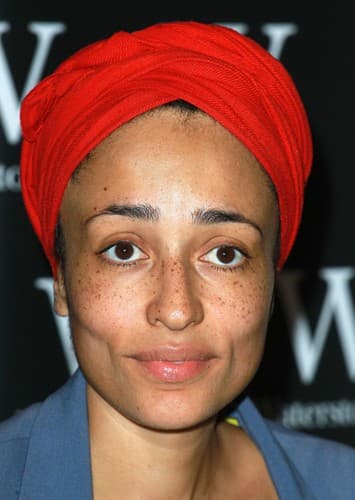
Ready to see how well you understood this book? Take our interactive quiz with 10 questions.
Zadie Smith FRSL is an English novelist, essayist, and short-story writer. Her debut novel, White Teeth (2000), immediately became a best-seller and won a number of awards. She has been a tenured professor in the Creative Writing faculty of New York University since September 2010.







