“I was born in the year of 1860, the year Abraham Lincoln was elected president.”
— Jane Pittman's opening statement, establishing her birthdate and a significant historical marker.

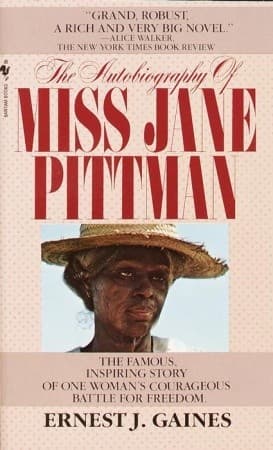
Ernest J. Gaines (1971)
Genre
Literary Fiction / Historical Fiction
Reading Time
450 min
Key Themes
See below
Sign in to track this book
Miss Jane Pittman's century-long journey, from slavery's whip scars to the Civil Rights era, shows the enduring spirit of a Black woman who saw and shaped the fight for freedom in America.
The story begins with Jane, a young enslaved girl on a Louisiana plantation, as the Civil War ends. When Union soldiers declare the enslaved people free, a celebratory but uncertain mood takes hold. Jane, whose birth name was Ticey, receives the name Jane from a Union soldier. She quickly bonds with Ned, a slightly older boy whose mother is murdered by a Confederate patrol while trying to leave. This event strengthens Jane's decision to leave. Together, they plan to journey to Ohio, a mythical land of freedom, believing it will offer a better life than the Reconstruction-era South.
Jane and Ned's journey north is full of danger and hardship. They meet both kind and hostile white people, and their new freedom is constantly tested. During one encounter, a group of white men, former Confederates, ambush their group. Ned defies them, leading to a brutal attack. He is separated from Jane and presumed dead, leaving her alone and disheartened. Jane eventually finds safety with a kind, elderly Black woman who takes her in and helps her heal from the trauma. The dream of Ohio is broken.
After the failed journey north, Jane spends decades working on various plantations across Louisiana, mostly as a field hand. She experiences the harsh realities of the sharecropping system, which many Black people felt was a continuation of slavery. She works for families like the Boneys and the Madeas, seeing the endless cycle of debt, poverty, and racial discrimination. Despite the hardships, Jane works hard and keeps her quiet dignity. She observes the changing social scene and her community's ongoing efforts to gain true independence and respect.
While working on the Samson plantation, Jane meets Joe Pittman, a skilled horse trainer. Joe is strong, kind, and hardworking, and Jane falls in love with him. They marry, and for a time, Jane feels a peace and belonging she has not known since childhood. Joe's love gives her stability and emotional support. However, their happiness ends when Joe dies in an accident involving a wild stallion he was trying to break. Jane becomes a widow, facing life's challenges alone again.
Years later, Jane reunites with Ned, whom she thought was dead. He has returned from the North as an educated teacher and a strong supporter of Black rights and education. Ned establishes a school for Black children, challenging the existing racial hierarchy and empowering his community. His activism, however, is seen as a threat by the white power structure, especially the local white supremacist group known as the 'Patrol.' Ned's work becomes more dangerous as he openly confronts racial injustice, leading to rising tensions and threats against his life.
Ned's commitment to education and civil rights leads to his death. He is murdered by the white 'Patrol' for his activism and his efforts to uplift his community. His death is a severe blow to Jane and the entire Black community. It is a harsh reminder of the violent resistance to racial equality. Despite deep grief, Jane's spirit remains strong. She continues to carry Ned's legacy, enduring hardships and maintaining her quiet strength. She becomes a living example of her people's resilience.
After Ned's death, Jane takes in a young orphan boy named Tee Man, whom she raises as her own. Tee Man represents the next generation facing racial oppression in the Jim Crow South. Jane observes his struggles to find his place, his involvement in minor crimes, and his eventual enlistment in the army during World War I. His life shows the limited opportunities for young Black men and how systemic racism affects individual lives, even as Jane tries to give him dignity and purpose.
Decades later, as Jane nears her hundredth birthday, the Civil Rights Movement begins to spread across the South. She sees the growing unrest and demands for equality. A young leader named Jimmy Aaron emerges from her community. Jimmy, a child Jane once knew, becomes a strong voice for change, inspired by Martin Luther King Jr. and the national movement. Jane sees in Jimmy a rekindling of Ned's spirit and new hope for the future, though she remains aware of the dangers he faces.
Jimmy Aaron becomes a central figure in the local Civil Rights struggle. He organizes protests and advocates for voter registration and desegregation. He plans a major demonstration at a segregated water fountain in Bayonne, a bold act of defiance against deeply ingrained racial laws. Jimmy often visits Jane, seeking her wisdom and drawing strength from her long history of endurance. He recognizes her as a living link to past struggles and a strong symbol of resilience for the entire community. Her presence strengthens his resolve.
On the eve of the planned protest at the water fountain, history repeats itself. Jimmy Aaron is murdered, a victim of the same racial violence that killed Ned decades earlier. His death shocks the community, threatening to extinguish the hope he had lit. The assassination shows the brutal realities of the fight for civil rights and the immense personal cost for its leaders. Jane, having lived through similar losses, feels the weight of this new tragedy, but also a growing resolve.
Despite the fear and despair from Jimmy's death, the community is determined to continue his work. On the day of the planned protest, Miss Jane Pittman, now over 100 years old, decides to lead the march to the segregated water fountain in Bayonne. Her decision is a spontaneous, strong act of defiance. Supported by her community, she walks with dignity and courage. Her frail body embodies a century of struggle and resilience. Her symbolic act is more than a protest; it is a profound statement of lasting hope and the fight for human dignity.
As Miss Jane Pittman approaches the segregated water fountain, the eyes of the community and the nation are on her. Her solitary act of defiance, leading the march Jimmy Aaron had planned, becomes a strong symbol. The white authorities, initially stunned, hesitate to act against such an old and respected figure. Jane's journey to the fountain, and her simple act of drinking from it, represents not just a victory against segregation, but a testament to the enduring human spirit, the power of collective memory, and the slow, difficult, but ultimately unstoppable march toward freedom and justice. Her life story culminates in this moment, embodying the century-long struggle of Black Americans.
The Protagonist
From a young, enslaved girl seeking freedom, Jane evolves into a wise, centenarian matriarch who becomes a living symbol of her people's enduring struggle and ultimate defiance.
The Supporting/Adoptive Son
From a hopeful boy seeking freedom, Ned becomes a courageous, martyred leader whose legacy inspires future generations.
The Supporting/Husband
Joe provides a brief but impactful period of joy and stability in Jane's life, his death becoming another poignant marker of her endurance.
The Supporting/Spiritual Grandson
From a hopeful young boy, Jimmy grows into a courageous civil rights leader whose martyrdom propels the community to action.
The Supporting
Tee Man represents the limited options and struggles of a generation, his life reflecting the slow pace of change.
The Mentioned/Antagonist
Remains a static representation of the white establishment throughout Jane's working life.
The Supporting
Facilitates the telling of Jane's story, his own understanding of history deepening through her narrative.
The Antagonist
Remains a consistent, violent force of oppression throughout the century.
Miss Jane Pittman's life shows the resilience of Black Americans in the face of immense hardship. From slavery's trauma and Reconstruction's violence to Jim Crow's oppression and the Civil Rights Movement's dangers, Jane endures. Her ability to survive, maintain dignity, and find joy and love, despite constant loss, embodies her people's collective strength. Her final act of defiance at the water fountain symbolizes this spirit, showing that even a century of oppression cannot break the will for freedom. The passing of knowledge and strength from Ned to Jane, and then to Jimmy, highlights this unbroken chain of resilience.
“''I was a slave for eighteen years, and I have been free for ninety-eight. I have seen the world change, but the struggle remains the same. But we keep on fighting, because that's all we know to do.'”
The novel shows how racial injustice, though changing forms, remains a persistent force throughout a century of American history. The violence against Ned's mother at slavery's end is mirrored by Ned's murder during Reconstruction and Jimmy Aaron's during the Civil Rights era. The sharecropping system, while legally different from slavery, functions similarly to keep Black people indebted and without rights. This cycle emphasizes that the fight for freedom is not a single event but a continuous, generations-long struggle, where progress often meets renewed resistance. Jane's long life allows her to witness these patterns, highlighting the slow and difficult path to true equality.
“''It was just like slavery, but they called it something else. You worked all year, and come time to settle up, you owed 'em more than you made.'”
The novel is framed as an oral history, with Jane Pittman telling her story to a history teacher. This structure emphasizes the importance of preserving personal stories and the collective memory of a people, especially those whose voices have been overlooked. Jane's detailed memories provide a personal, human view of historical events, making abstract concepts like 'Reconstruction' or 'Jim Crow' real through her experience. Her memory links generations, ensuring that past struggles and triumphs are not forgotten, and providing context and inspiration for future movements. Telling her story is an act of empowerment and historical documentation.
“''You see, I done lived so long, I got to tell somebody what it was like. You got to know where you been to know where you going.'”
The novel highlights the role of strong leadership in social change, often at great personal cost. Characters like Ned and Jimmy Aaron emerge as charismatic leaders who inspire their communities to demand justice and equality. Both are educated, articulate, and willing to challenge the status quo, and both ultimately die for their activism. Their deaths show the dangerous reality faced by those who lead movements for racial justice in a segregated society. However, their sacrifices are not wasted; they energize their communities and inspire continued resistance, showing that even in death, leaders can spark further action. Jane's support for them shows the community's role in nurturing these leaders.
“''Some people got to lead, and some people got to follow. But we all got to be going in the same direction.'”
Throughout her life, Jane and other Black characters grapple with identity and belonging in a society that constantly tries to define and limit them. Jane's renaming from Ticey to Jane by a Union soldier symbolizes the loss and redefinition of identity after emancipation. Her search for a 'free' life, first in Ohio and then on various Southern plantations, reflects a continuous quest for a place where she can truly belong and be recognized as a full human being. Ned's education and return, and Jimmy's leadership, are also acts of self-definition against racial prejudice, asserting their right to determine their own identities and destinies.
“''I was Ticey, then I was Jane. I been a slave, and I been free. But always, I been myself.'”
The entire novel is presented as Miss Jane Pittman's spoken autobiography, recorded by an unnamed interviewer.
This device immediately immerses the reader in Jane's perspective, lending authenticity and immediacy to her century-long story. It allows for a deeply personal and subjective account of historical events, filtering them through the lens of one individual's lived experience. The conversational tone makes complex historical periods accessible and relatable, fostering empathy. It also subtly emphasizes the importance of preserving the voices of marginalized communities and the power of storytelling as a means of historical documentation and cultural transmission. The frame narrative of the interviewer provides a sense of a 'real' person telling their story.
The segregated water fountain in Bayonne represents the pervasive nature of racial segregation and the eventual triumph over it.
The water fountain serves as a powerful symbol of racial segregation and the indignity it imposed. It is a seemingly small, everyday object, yet it embodies the entire system of Jim Crow laws that dictated where Black people could and could not go, and how they were treated. Jimmy Aaron's planned protest at this specific fountain highlights its symbolic weight. When Miss Jane Pittman, at over 100 years old, defies fear and leads the march to drink from it, her act is not just about water, but about reclaiming dignity, challenging systemic injustice, and demonstrating the ultimate victory of the human spirit over oppression. It becomes a tangible representation of the century-long struggle culminating in a moment of triumph.
The lives and deaths of Ned and Jimmy Aaron mirror each other, highlighting the cyclical nature of the struggle and sacrifice.
The striking parallels between Ned and Jimmy Aaron—both intelligent, educated, charismatic leaders who advocate for Black rights and are ultimately assassinated for their efforts—underscore the cyclical nature of racial injustice and the immense personal cost of challenging it. Ned's murder during Reconstruction and Jimmy's during the Civil Rights Movement demonstrate that while the specific contexts change, the violent resistance to Black empowerment remains a constant. This parallelism reinforces the theme that the fight for freedom is a continuous, generational struggle, and that each generation must confront similar battles, often with similar sacrifices. It also shows how the legacy of one leader can inspire the next.
Miss Jane Pittman's extraordinary lifespan allows her to witness and connect nearly a century of African American history.
Jane's age is a crucial plot device, as it allows the novel to cover the vast span from slavery to the Civil Rights Movement through a single, continuous perspective. Her long life makes her a living repository of history, enabling the author to weave together disparate eras and demonstrate the evolution (or sometimes, lack thereof) of racial relations in America. Her memories provide a unique, unbroken thread connecting the past to the present, giving the narrative a profound sense of historical depth and continuity. Her advanced age also makes her final act of defiance even more powerful and symbolic.
“I was born in the year of 1860, the year Abraham Lincoln was elected president.”
— Jane Pittman's opening statement, establishing her birthdate and a significant historical marker.
“I seen the last of slavery, and I seen the first of freedom.”
— Jane reflecting on her life spanning the end of slavery and the beginning of the Reconstruction era.
“Mr. Brown, he said that a man got to be free in his mind before he can be free in his body.”
— Jane recalling a lesson learned from a wise man, emphasizing mental liberation.
“We was free, but we wasn't free. We was like a bird with a string on its leg.”
— Jane's poignant description of the limited freedom experienced by newly emancipated slaves.
“You got to stand up for yourself, no matter what.”
— A recurring theme and lesson Jane learns and imparts throughout her life.
“They got the power, but we got the patience. And patience can wear out power.”
— Jane's quiet but firm belief in the long-term strength of perseverance against oppression.
“I lived to be a hundred and ten years old, and I ain't seen nothing but trouble. But I ain't quit yet.”
— Jane's summary of her long, hard life, yet affirming her continued will to live and fight.
“The past is never dead. It's not even past.”
— A profound statement on the lasting impact of history, particularly on the lives of African Americans.
“Every time somebody stand up and say something, a little piece of the rock break off.”
— Jane's metaphor for the slow but steady progress made through individual acts of defiance and speaking out.
“You can't live in the past, but you got to know the past.”
— A balanced perspective on understanding history without being consumed by it.
“I reckon I was born to suffer, but I was born to live too.”
— Jane's acceptance of hardship as part of life, but also her strong will to survive and experience life fully.
“Ain't no use crying over spilled milk, but you can learn from it.”
— A practical philosophy on learning from mistakes and moving forward.
“They can kill the body, but they can't kill the spirit.”
— Jane's unwavering belief in the indomitable human spirit, even in the face of violence.
“I never did stop hoping. Hope is a thing that keep you going.”
— Jane's enduring optimism and the role of hope in her long life of struggle.
Ready to see how well you understood this book? Take our interactive quiz with 10 questions.
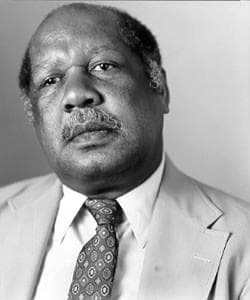
Biography coming soon.







