BookBrief
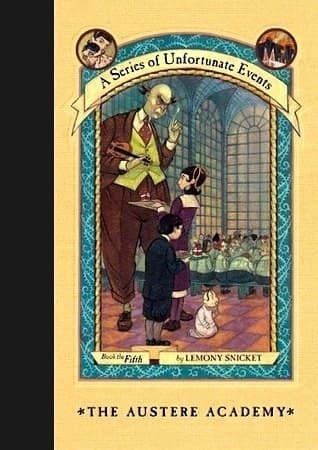
The Austere Academy cover
Archivist's Choice

The Austere Academy

Lemony Snicket (2000)

Genre

Fantasy / Children's / Mystery / Young Adult

Reading Time

200 min

Key Themes

See below

Track Your Reading

Sign in to track this book

At a boarding school filled with tyrannical teachers, devious plots, and an abundance of crabs, the Baudelaire orphans must outwit their guardians and uncover a sinister secret before they become the next victims.

Synopsis

The Baudelaire orphans, Violet, Klaus, and Sunny, are sent to Prufrock Preparatory School, a dismal boarding school run by the tyrannical Vice Principal Nero. They quickly discover that life at Prufrock is no better than their previous unfortunate experiences, as they are forced to live in a shack, eat terrible food, and endure Nero's constant, unfair punishments. They befriend the Quagmire triplets, Duncan and Isadora, who are also orphans and share a similar tragic past involving a fire and the loss of their parents and a sibling. The Baudelaires soon realize that Count Olaf, disguised as the school's new gym teacher, Coach Genghis, is once again after their fortune. He forces them into grueling 'Special Orphan Running Exercises' (S.O.R.E.) designed to make them fail their comprehensive exams and get expelled, allowing Olaf to gain custody. The Quagmire siblings, who are researching the mysteries of their own family and the Baudelaires', uncover a secret about a survivor of the Baudelaire fire and attempt to warn the Baudelaires. However, Olaf, with the help of his associates, kidnaps the Quagmires. The Baudelaires, despite their efforts to expose Olaf and save their friends, are unable to prevent the Quagmires' abduction and are left once again to face their grim future alone, realizing that the villains are always one step ahead.
Reading time
200 min
Difficulty
Easy
Pacing
Moderate
Mood
Melancholy, Witty, Suspenseful, Absurd
✓ Read this if...
You enjoy dark humor, mysteries, and a series where intelligent children outwit incompetent adults.
✗ Skip this if...
You prefer stories with happy endings, straightforward narratives, or don't appreciate a narrator's constant interjections.

Plot Summary

Arrival at Prufrock Preparatory School

After escaping the clutches of Count Olaf in the previous book, Violet, Klaus, and Sunny Baudelaire are placed by Mr. Poe at Prufrock Preparatory School. From the moment they arrive, the school is a bleak and uninviting place. The building is crumbling, the students are mostly unpleasant, and the Vice Principal Nero is a self-important, violin-playing tyrant who makes their lives difficult. The children are assigned to a dark, crab-infested shack in the 'Orphan Shack' area, separated from the regular dorms. They quickly learn about the school's strict rules, including mandatory attendance at Vice Principal Nero's excruciatingly long violin recitals, and the general air of misery that pervades the institution.

Meeting Duncan and Isadora Quagmire

Amidst the gloom, the Baudelaires find a glimmer of hope when they meet two fellow orphans, Duncan and Isadora Quagmire. They are triplets, though their third sibling, Quigley, was lost in a fire that also destroyed their home and killed their parents, much like the Baudelaire's own tragedy. The Quagmire children are kind and intelligent, with a shared passion for research and note-taking; Duncan is an aspiring journalist, and Isadora is a poet. They also possess an inheritance that Count Olaf is after, and they are aware of his disguises. The children quickly bond over their shared experiences and their mutual suspicion of Vice Principal Nero and the school's unusual atmosphere.

Vice Principal Nero's Cruelty and Olaf's Disguise

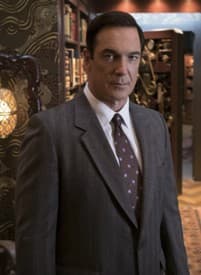
Vice Principal Nero's tyranny becomes clear. He forces the Baudelaires to attend his terrible violin recitals and threatens them with S.O.R.E. (Special Orphan Related Events) if they fail their comprehensive exams or miss his performances. Soon after their arrival, a new gym teacher, Coach Genghis, joins the faculty. The Baudelaires immediately recognize his single eyebrow and tattooed eye as belonging to Count Olaf, despite his attempts at disguise with a turban and running shoes. They try to warn Mr. Poe, but he, as usual, dismisses their concerns, believing they are simply unhappy with their new school.

The Baudelaires' Unfair Treatment

Coach Genghis begins to systematically sabotage the Baudelaire children. He forces them to run laps all night, every night, making them too exhausted to study for their comprehensive exams during the day. This unfair treatment is a direct violation of the school rules, but Vice Principal Nero, swayed by Coach Genghis's supposed concern for the children's 'fitness,' ignores their pleas. The Quagmire triplets attempt to help by bringing them food and notes, but the Baudelaires' energy levels plummet, making it nearly impossible for them to focus on their studies or think clearly about how to expose Olaf.

The Quagmires' Research and Discovery

While the Baudelaires are forced to run laps, Duncan and Isadora Quagmire continue their research into the mysterious organization their parents were involved with, and which they believe the Baudelaire parents were also a part of. They discover that their parents were investigating the same organization that the Baudelaires' parents were. They find an important couplet about 'V.F.D.' and a secret tunnel under the school. They try to share their findings with Violet, Klaus, and Sunny, hinting at a secret society and the possible survival of one of their own relatives, but the Baudelaires are too exhausted to fully grasp the significance of their cryptic messages.

The Comprehensive Exams and S.O.R.E.

The day of the comprehensive exams arrives, and the Baudelaires, utterly sleep-deprived from Coach Genghis's nightly 'training,' perform terribly. Klaus falls asleep during his math exam, Violet struggles to invent anything useful, and Sunny's babbling is misinterpreted. As a result, Vice Principal Nero announces that they have failed their exams. According to school rules, this means they will be subjected to S.O.R.E. – Special Orphan Related Events – a series of extremely unpleasant tasks, including living in the crab-infested shack indefinitely and being forced to listen to Nero's violin recitals for hours on end, all while being deprived of silverware.

The Quagmires' Attempt to Warn the Baudelaires

Realizing the Baudelaires are in grave danger, Duncan and Isadora Quagmire frantically try to convey their discoveries about V.F.D. and the secret tunnel. They scribble notes, but the Baudelaires are too exhausted to fully understand. As the comprehensive exams conclude, Coach Genghis, revealing himself fully as Count Olaf, appears. He swiftly captures Duncan and Isadora, stuffing them into his car. As they are driven away, Duncan shouts, 'V.F.D.!' and Isadora yells, 'Quigley!' leaving the Baudelaires with fragmented clues and a sinking feeling of dread.

Olaf's Escape and the Baudelaires' Realization

Count Olaf, in his Coach Genghis disguise, drives away with the Quagmire triplets, leaving the Baudelaires behind. Mr. Poe arrives, once again too late and too oblivious to grasp the severity of the situation. The Baudelaires try to explain that Coach Genghis was Count Olaf and that he has kidnapped their friends, but Mr. Poe, as always, dismisses their claims, attributing their distress to their failure in the exams. Left alone, Violet, Klaus, and Sunny finally begin to piece together the clues left by the Quagmires – the mention of V.F.D., their third sibling Quigley, and the secret tunnel. They realize the Quagmires were researching a much larger mystery.

The Secret Tunnel and the Baudelaires' Escape

Armed with the Quagmires' cryptic clues, the Baudelaires begin to investigate the school grounds more thoroughly. They find a hidden tunnel entrance, exactly as the Quagmires had hinted. Realizing that Prufrock Preparatory School offers no safety or answers, and that Mr. Poe is useless, the Baudelaires decide they must escape to follow the trail of V.F.D. and rescue their friends. They understand that their journey to uncover the truth about their parents and the mysterious organization is far from over, and that they cannot rely on adults for help.

Leaving Prufrock

The Baudelaire orphans, now more determined than ever, make the difficult decision to leave the supposed safety of Prufrock Preparatory School. They know that staying there under Vice Principal Nero's cruel rule and Mr. Poe's incompetence would only lead to more misery and prevent them from rescuing the Quagmire triplets. They slip away from the school, carrying only their few possessions and the fragmented clues about V.F.D. and the secret tunnel. Their journey continues, now with the added burden of finding their friends and unraveling the larger mystery that connects their families.

Principal Figures

Violet Baudelaire

The Protagonist

Violet's resourcefulness is severely tested by physical exhaustion, but she eventually uses her inventiveness to understand the Quagmires' clues and orchestrate their escape.

Klaus Baudelaire

The Protagonist

Klaus's intellectual prowess is challenged by extreme fatigue, but he ultimately helps piece together the Quagmire's clues, driving the search for V.F.D.

Sunny Baudelaire

The Protagonist

Sunny's contributions, though small, remain vital, showcasing her growing understanding and unique skills despite her age.

Count Olaf

The Antagonist

Olaf successfully manipulates the school system and kidnaps the Quagmire triplets, demonstrating his escalating ruthlessness and continued success in evading justice.

Vice Principal Nero

The Supporting

Nero remains stubbornly oblivious and self-absorbed, reinforcing the theme that adults are often unhelpful or actively detrimental to the Baudelaires.

Mr. Poe

The Supporting

Mr. Poe continues to be a symbol of adult incompetence, failing once again to protect the Baudelaires or recognize Olaf's schemes.

Duncan Quagmire

The Supporting

Duncan's journalistic drive leads him to uncover vital clues, but his capture underscores the constant danger faced by intelligent orphans.

Isadora Quagmire

The Supporting

Isadora's poetic nature helps her create memorable clues, but she too becomes a victim, highlighting the vulnerability of the orphans.

Quigley Quagmire

The Mentioned

Quigley's mention introduces a significant mystery, suggesting that not all fire victims are truly gone and hinting at the existence of survivors and a secret organization.

Themes & Insights

The Incompetence of Adults

A pervasive theme throughout the series, the adults in 'The Austere Academy' are consistently unhelpful, oblivious, or actively detrimental to the Baudelaires' well-being. Mr. Poe's inability to recognize Count Olaf or believe the children's warnings is a prime example. Vice Principal Nero's self-absorption and arbitrary rules create a hostile environment, while his susceptibility to Coach Genghis's manipulation allows Olaf's plan to unfold. This theme highlights the children's isolation and their need to rely solely on their own intelligence and resourcefulness for survival. For instance, Nero's decision to punish the Baudelaires with S.O.R.E. despite their obvious exhaustion from Olaf's scheme perfectly illustrates this.

It is a truth known to all intelligent children that when a grown-up asks you to move to a new location, you are in for trouble.

Lemony Snicket (Narrator)

The Power of Knowledge and Research

Despite the dire circumstances, knowledge and research are the most potent tools for the Baudelaire and Quagmire orphans. Klaus's extensive reading often provides vital information, while Violet's inventive mind allows her to apply that knowledge. Most notably, Duncan and Isadora Quagmire's dedication to journalism and poetry, respectively, leads them to uncover important clues about V.F.D. and the secret organization their parents were involved in. Their note-taking and research, even in the face of danger, directly provide the Baudelaires with the fragmented information they need to continue their quest and understand the larger mystery at play.

A library is an excellent place to find information, no matter what you are looking for. From inside the library, you can research anything and everything, and you can even make a new friend or two, if you are lucky.

Lemony Snicket (Narrator)

The Importance of Friendship and Solidarity

In a world where adults constantly fail them, the bond between the Baudelaire siblings and their friendship with the Quagmire triplets becomes essential for their survival and emotional well-being. The Baudelaires rely on each other's unique skills – Violet's inventing, Klaus's research, and Sunny's biting. The Quagmires, sharing a similar tragic past and intellectual curiosity, offer not just emotional support but also practical help, such as bringing food and notes to the exhausted Baudelaires. Their shared struggle against Count Olaf and the adult world creates a strong sense of solidarity, proving that mutual support is essential in overcoming adversity. The Quagmires' desperate attempts to warn the Baudelaires before their capture exemplify this theme.

It is a curious thing, the fate of orphans, and it seems that the only people who understand it are other orphans.

Lemony Snicket (Narrator)

The Nature of Disguise and Deception

Count Olaf's ability to seamlessly adopt various disguises and deceive unsuspecting adults is a central element of the plot. In 'The Austere Academy,' he reappears as Coach Genghis, complete with a turban and running shoes, which is enough to fool Mr. Poe and Vice Principal Nero. This theme highlights how easily appearances can be manipulated and how adults often fail to look beyond the surface, even when the children provide clear evidence. It also shows the Baudelaires' constant struggle to expose the truth when those in authority refuse to see it, forcing them to develop their own critical thinking skills to pierce through the deception.

It is a rare person who can be both a good actor and a good person. Most people are one or the other, and some are neither.

Lemony Snicket (Narrator)

Plot Devices & Literary Techniques

The Unreliable Narrator

Lemony Snicket's narrative voice consistently warns the reader of the story's dismal nature.

Lemony Snicket's narrative voice is a key plot device, serving as a meta-commentary throughout the story. He frequently breaks the fourth wall to directly address the reader, offering cynical warnings about the unpleasantness of the events and advising them to stop reading. This device creates a unique tone, blending dark humor with genuine sympathy for the children. It also reinforces the theme of adult helplessness, as the narrator himself, despite knowing the children's fate, is powerless to intervene, only able to document their misfortunes.

Count Olaf's Disguises

Olaf's ability to transform his appearance to deceive adults.

Count Olaf's various disguises are a recurring and central plot device. In 'The Austere Academy,' he assumes the identity of Coach Genghis, using a turban and running shoes to conceal his distinguishing features. This device allows Olaf to repeatedly infiltrate the children's lives and continue his schemes undetected by the oblivious adults. It highlights the adults' gullibility and the children's sharp observational skills, as they are always the first to recognize his true identity, only to be disbelieved.

Cryptic Clues and Messages

Fragmented pieces of information that hint at a larger mystery.

The use of cryptic clues and messages is a vital plot device, particularly through the Quagmire triplets. Duncan's journalistic notes and Isadora's couplets provide the Baudelaires with fragmented but crucial information about V.F.D., the secret tunnel, and the potential survival of Quigley. These clues are often delivered under duress or in haste, forcing the Baudelaires (and the reader) to piece them together, driving the plot forward and deepening the overarching mystery of the series.

The Orphan Shack

A physical manifestation of the Baudelaires' isolation and mistreatment.

The Orphan Shack at Prufrock Preparatory School serves as a symbolic plot device, representing the Baudelaires' marginalized status and the indifferent, often cruel, treatment they receive from adults. It is a dilapidated, crab-infested shed, separate from the main dorms, emphasizing their isolation and the school's neglect. Being confined to this shack, and the threat of indefinite residency there as part of S.O.R.E., underscores their vulnerability and the constant discomfort of their lives.

Critical analysis

Notable Quotes

There are some people who believe that there is a conspiracy to make sure that the Baudelaire orphans never receive their inheritance. If you are one of those people, then you will feel a terrible sense of dread as you read this sentence.

Narrator's meta-commentary on the reader's suspicions.

It is a curious thing, the death of a parent. We are told that it is sad, and it is, but it is also a shock, a sudden, brutal wrenching away of what we thought was permanent.

Reflecting on the emotional impact of losing a parent.

The Baudelaire orphans knew that it was never a good idea to put off something important, because you never knew what terrible thing might happen while you were procrastinating.

The orphans' learned wisdom about urgency.

The world is a series of interconnected events, and it is impossible to understand any one of them without understanding the others.

A philosophical observation about causality and interconnectedness.

It is a truth universally acknowledged that a single man in possession of a good fortune must be in want of a wife. It is also a truth universally acknowledged that a single orphan in possession of a good fortune must be in want of a guardian. And it is a truth universally acknowledged that a single orphan in possession of a good fortune who is in want of a guardian will probably end up with a terrible one.

A playful, dark twist on a famous literary opening.

When you are a member of a secret organization, it is very important to keep your secrets. If you don't, then you won't be a member of a secret organization for very long.

A dry observation about the nature of secret societies.

There are many things in the world that are difficult to understand, but one of the most difficult is why people do bad things.

A reflection on human evil and its motivations.

The expression 'the apple doesn't fall far from the tree' is a common saying, but it is not always true. Sometimes the apple falls very far indeed, and sometimes it rolls away and becomes something else entirely.

Challenging the idea of inherited traits or destiny.

It is a rare and beautiful thing when you find a friend who understands you, even when you don't understand yourself.

Highlighting the importance of deep friendship and empathy.

The Baudelaire orphans were accustomed to misfortune, but even they were surprised by how quickly things could go from bad to worse, and then to truly, utterly dreadful.

Describing the escalating misfortunes the orphans face.

Sometimes, the only way to get through a difficult situation is to pretend that you are not in a difficult situation at all.

A coping mechanism employed by the orphans.

The world is a place of wonder and mystery, but it is also a place of danger and despair. It is up to each of us to decide which we will focus on.

A general philosophical statement about perspective.

There are some books that are so important that they should be read by everyone, and there are some books that are so terrible that they should be burned. This book, unfortunately, is one of the latter.

The narrator's self-deprecating and ironic comment about his own book.

The phrase 'ignorance is bliss' is often used to describe a situation in which someone is happier because they do not know about something unpleasant. But the Baudelaire orphans knew that ignorance was rarely bliss; it was usually just ignorance, and it could be very dangerous.

Contrasting common idiom with the orphans' harsh reality.

Quiz

Test Your Knowledge

Ready to see how well you understood this book? Take our interactive quiz with 10 questions.

10
Questions
~5
Minutes
?
Best Score

Key Questions (FAQ)

The Baudelaire orphans, Violet, Klaus, and Sunny, are sent to Prufrock Preparatory School, a dreary boarding school characterized by its austere architecture, numerous rules, and a pervasive sense of unhappiness. The school's motto, 'Memento Mori,' further underscores its gloomy atmosphere and the challenges awaiting the children.

About the author