“The greatest discoveries are often made by accident, when you're looking for something else entirely.”
— David and Kate discussing scientific discovery.

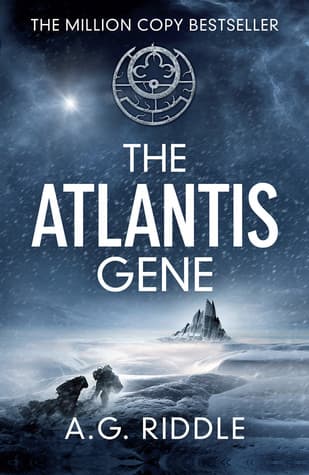
A.G. Riddle (2014)
Genre
Thriller / Fantasy / Mystery / Science Fiction
Reading Time
9-10 hours
Key Themes
See below
Sign in to track this book
An ancient Antarctic discovery and a modern genetic breakthrough spark a global conspiracy, forcing a geneticist and an agent to race against a powerful enemy intent on unleashing the next, deadly stage of human evolution.
Off Antarctica, a research vessel finds an ancient, mysterious structure in an iceberg. This discovery points to a civilization far older than previously thought, possibly the city of Atlantis. In a Jakarta laboratory, Dr. Kate Warner, a geneticist specializing in autism research, believes she has made a monumental breakthrough: a revolutionary autism treatment. Unbeknownst to her, this 'treatment' is more complex and dangerous, holding the key to a global conspiracy and the future of human evolution. These two events are about to converge, threatening humanity itself.
In Jakarta, Agent David Vale, a former intelligence operative, tries to expose a vast, shadowy conspiracy. His efforts are hindered when his informant is murdered, and he realizes his agency is compromised. Now a hunted man, Vale receives a cryptic message hinting at an imminent global attack. He understands he needs help. His search for the truth leads him to Dr. Kate Warner, whom he believes holds a crucial piece of the puzzle, forcing him to risk everything to protect her and decipher the impending threat.
David Vale finds Dr. Kate Warner, warning her of extreme danger. Initially skeptical, Kate trusts Vale when their pursuers, the Immari Corporation, attack her lab, attempting to seize her research. They escape Jakarta, forming an alliance as they race against time. Their journey begins to reveal the true nature of Kate's research, which is not merely an autism treatment but a genetic trigger linked to humanity's origins. The Immari, led by their enigmatic leader, pursue them relentlessly, determined to control Kate and her work.
As Kate and David investigate, they learn the horrifying truth: Kate's 'treatment' is the key to activating the 'Atlantis Gene,' a dormant genetic sequence in a small percentage of humans. The Immari Corporation believes this gene is the next stage of human evolution, intended to create a superior race. Their plan involves triggering this gene globally, which would result in the catastrophic death of 99.9% of the world's population, leaving only those with the active gene to inherit the Earth. This revelation solidifies the immense stakes and the urgency of their mission to stop the Immari.
Kate and David's investigation takes them across the globe, following ancient clues and historical puzzles. They discover that the Immari are an ancient secret society that has manipulated human history for millennia, waiting for the opportune moment to trigger the next evolutionary leap. Their research leads them to various historical sites, each containing fragments of information about the Atlantis Gene, its origins, and the true purpose of the structure found in Antarctica. They realize the conspiracy is older and more deeply rooted than they imagined.
The mysterious structure discovered in Antarctica is more than an ancient ruin; it is a critical component of the Immari's grand scheme. It functions as a beacon or control center, designed to facilitate the global activation of the Atlantis Gene. This structure, built by an ancient civilization, holds the technology necessary to disseminate the genetic trigger on a massive scale. Kate and David realize that disabling or destroying this structure is paramount to preventing the Immari from executing their devastating plan, making it their ultimate destination and the focal point of the looming confrontation.
As they race against time, Kate and David uncover surprising personal connections to the Immari and the Atlantis Gene. Kate learns about her family's secret history, realizing her lineage is linked to the gene and the ancient society. David confronts ghosts from his past, including betrayals within his former intelligence network that allowed the Immari to infiltrate and gain power. These personal revelations add an emotional layer to their mission, forcing them to question whom they can trust and solidifying their resolve to fight for humanity's future, despite the personal cost.
With the Immari's plan nearing fruition, Kate and David race to Antarctica. They are pursued relentlessly by the Immari's forces, led by ruthless operatives, who will stop at nothing to ensure the plan's success. The journey is dangerous, involving narrow escapes, intense confrontations, and strategic maneuvers to evade capture. Their objective is clear: reach the Antarctic structure before the Immari can activate the global gene sequence and unleash the evolutionary purge that would decimate humanity. The world's fate rests on their ability to overcome their powerful adversaries.
Upon reaching the colossal Antarctic structure, Kate and David face a final, climactic confrontation with the Immari. Inside the ancient facility, the Immari leader prepares to initiate the global activation of the Atlantis Gene. Kate, using her scientific expertise, attempts to find a way to disable the system or reverse its effects, while David fights the Immari's security forces. The stakes are incredibly high, as every second brings humanity closer to extinction. The battle is not just for survival, but for the very definition of what it means to be human.
Through scientific ingenuity and determination, Kate and David disrupt the Immari's activation sequence, averting immediate global catastrophe. However, the victory is not absolute. The Immari organization, though thwarted, remains a formidable force, and the Atlantis Gene's existence and its potential for future activation still loom. The book concludes with the world saved from immediate destruction, but with lingering questions about human origins, the gene's true nature, and the continuing threat posed by those who seek to control humanity's evolutionary path, setting the stage for future conflicts.
The Protagonist
Kate evolves from an isolated scientist to a world-saving hero, confronting her own family's secrets and embracing a more active, dangerous role in protecting humanity.
The Protagonist
David transitions from a lone wolf seeking redemption to a committed partner, learning to trust and fight for a cause greater than himself.
The Antagonist
Dorian remains steadfast in his extremist ideology, serving as the unwavering force behind the Immari's genocidal plan.
The Supporting
Grier moves from a position of ignorance to one of cautious involvement, realizing the depth of the threat and the need for extraordinary measures.
The Supporting
Tasev is drawn from isolation into the conflict, using his knowledge to aid Kate in her fight against the Immari.
The Mentioned
Her past research and secret involvement are slowly uncovered, revealing her pivotal role in the gene's history.
The Supporting
The gene is initially a scientific curiosity, then becomes the central object of a genocidal plot, and finally, a symbol of humanity's precarious future.
The Antagonist
The Immari act as the persistent, organized force driving the conflict, their plans evolving in response to Kate and David's actions.
The novel explores the moral and ethical dilemmas surrounding genetic manipulation and human evolution. The Immari Corporation believes they have the right and responsibility to 'accelerate' human evolution, even if it means sacrificing billions. Kate Warner, a geneticist, grapples with her research's potential for catastrophic ends, forcing her to confront the implications of altering human DNA. This theme is central to the conflict, as characters debate whether humanity should interfere with its own development or if such power is corrupting. The question of who decides humanity's future is constantly at play.
“Is it not our right, our duty, to guide humanity to its next, glorious stage?”
A core theme is the idea that much of human history is hidden, manipulated by powerful, unseen forces. The Immari Corporation represents an ancient conspiracy that has secretly guided events for millennia, waiting for the opportune moment to enact their plan. David Vale's background as an intelligence agent makes him suited to uncovering these layers of deception, but even he is shocked by the Immari's deep infiltration. The discovery of the Antarctic structure and the true origins of the Atlantis Gene challenge conventional understandings of human civilization, suggesting a much older, more complex past. This theme creates a sense of paranoia and urgency.
“History is written by the victors, but the future belongs to those who understand the past no one else remembers.”
The theme of trust is critical for the two protagonists, Kate Warner and David Vale. Both have reasons to be wary: Kate's scientific world is suddenly invaded by violence and deceit, while David has been betrayed by his own organization. Their initial alliance is built on necessity, and they must learn to rely on each other in life-or-death situations. The story is filled with betrayal, from murdered informants to allies turning out to be Immari operatives. This constant questioning of who can be trusted heightens the suspense and forces the characters to make difficult choices about their allegiances.
“In this world, trust is a luxury few can afford, and even fewer survive.”
The novel forces characters and readers to confront what it means to be human and what is worth fighting for. The Immari's plan to activate the Atlantis Gene and cull the 'unfit' challenges the definition of humanity, suggesting that only those with the activated gene are worthy of survival. Kate and David, in contrast, fight for the right of all humanity to exist, regardless of genetic makeup. This theme explores whether genetic superiority means moral superiority and highlights the inherent value of human life, even with its imperfections. The struggle is ultimately for humanity's soul.
“Is evolution truly progress if it costs us our very humanity?”
A mysterious genetic sequence driving the central conflict.
The Atlantis Gene serves as the primary MacGuffin of the story. It is the object of desire for the antagonists (the Immari Corporation) and the source of the central mystery for the protagonists (Kate Warner and David Vale). While its existence and properties are slowly revealed, its ultimate purpose—to trigger a global evolutionary shift—is what propels the plot forward. The gene itself is less important than what characters do to obtain, understand, or prevent its activation, making it a powerful catalyst for the narrative.
Historical clues and relics that guide the protagonists.
The narrative frequently employs ancient prophecies, historical texts, and mysterious artifacts to guide Kate and David on their quest. These clues are scattered across the globe, leading them from one location to another, revealing fragments of the Immari's history and the Atlantis Gene's origins. This device adds a sense of epic scale and historical depth to the conspiracy, suggesting that the threat is not new but a culmination of millennia of planning. It also provides exposition in an engaging, puzzle-solving manner.
A constant sense of urgency created by an impending global catastrophe.
A prominent plot device is the 'ticking clock,' which establishes a relentless sense of urgency throughout the story. The Immari Corporation has a specific timeline for activating the Atlantis Gene, which would result in the widespread culling of humanity. This impending catastrophe creates high stakes and forces Kate and David to move quickly, often under extreme pressure. Every setback or delay intensifies the tension, making their race against time a central driver of the plot and character actions.
Characters whose allegiances are ambiguous or shift unexpectedly.
This device is used to heighten suspense and complicate the protagonists' journey. David Vale initially finds himself unable to trust his own agency due to infiltration, and throughout their adventure, Kate and David encounter individuals whose loyalties are unclear. An ally might turn out to be an Immari operative, or a seemingly hostile character might offer unexpected help. This constantly keeps the protagonists (and the reader) on edge, questioning motives and making alliances precarious, thereby increasing the danger and the sense of a pervasive, insidious threat.
“The greatest discoveries are often made by accident, when you're looking for something else entirely.”
— David and Kate discussing scientific discovery.
“History isn't just a record of the past. It's a map to the future.”
— The characters reflecting on the importance of ancient knowledge.
“Some secrets are meant to stay buried. Others are meant to be found.”
— A general theme throughout the narrative as they uncover mysteries.
“Fear is a powerful motivator. It can make you do things you never thought possible.”
— Characters facing life-threatening situations.
“The world is full of wonders, if only you know where to look.”
— Describing ancient sites and hidden truths.
“Sometimes, the only way to save humanity is to risk everything.”
— The ultimate sacrifice considered by the protagonists.
“The truth is rarely simple, and often inconvenient.”
— As they uncover complex layers of conspiracy and ancient history.
“What if everything we know about our origins is wrong?”
— A central question posed by the existence of the Atlantis Gene.
“The past is never truly gone. It leaves echoes, if you know how to listen.”
— Exploring ancient ruins and deciphering old texts.
“Even the most advanced technology can't solve human nature.”
— Discussing the interplay between science and human behavior.
“There are no coincidences, only patterns we haven't recognized yet.”
— Connecting seemingly unrelated events and clues.
“The greatest strength lies not in power, but in knowledge.”
— The characters valuing information over physical force.
“We are all connected, more deeply than we can imagine.”
— Referring to the genetic link of humanity and the Atlantis gene.
“Sometimes, the only way forward is to look back.”
— Emphasizing the importance of historical context to present dilemmas.
Ready to see how well you understood this book? Take our interactive quiz with 10 questions.







