“There was no such thing as a small bomb. In the aftermath, it was always the largest bomb in the world.”
— Reflecting on the devastating impact of the bomb in Lajpat Nagar market.

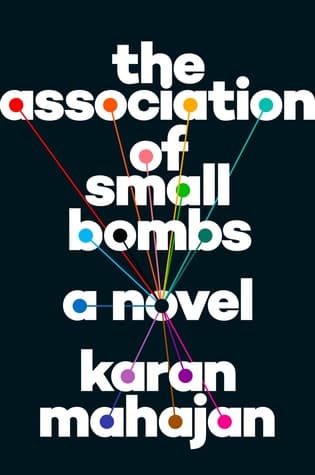
Karan Mahajan (2016)
Genre
Literary Fiction
Reading Time
360 min
Key Themes
See below
Sign in to track this book
After a marketplace bombing shatters two families, a surviving boy deals with trauma and radicalization, while the bomber's story shows the effects of political violence.
In 1996, brothers Tushar and Nakul Khurana, with their friend Mansoor Ahmed, visit the Lajpat Nagar market in Delhi to pick up a repaired television. While they wait, a small bomb, planted by a Kashmiri militant named Shockie, goes off. Tushar and Nakul die instantly, their bodies dismembered, leaving their parents, Vikas and Deepa Khurana, in deep grief. Mansoor survives the blast but gets severe shrapnel wounds, including ear damage and a permanent limp. This event changes the lives of all three families forever, setting the stage for a story about the long-term effects of such a terror act.
After Tushar and Nakul's deaths, Vikas and Deepa Khurana are overcome by grief. Deepa withdraws, finding comfort in a support group for terrorism victims, where she meets others who have lost loved ones. Vikas, at first numb, later pursues justice, trying to sue the Indian government for negligence. Their shared tragedy, instead of uniting them, creates a divide. Deepa resents Vikas's emotional distance and his intellectual approach to their pain, while Vikas struggles with Deepa's consuming sorrow. Their stable marriage begins to fall apart under the weight of their loss.
Mansoor Ahmed, having survived the Lajpat Nagar bombing, is haunted by the experience. He undergoes physical therapy for his injuries but also suffers from deep survivor's guilt, always asking why he lived while his friends died. The trauma causes anxiety, nightmares, and a profound sense of alienation. His parents, though relieved he is alive, struggle to understand his psychological wounds. Mansoor finds it hard to connect with his peers and feels forever marked by the event, setting him apart and influencing his future choices and relationships.
The story moves to Kashmir, introducing Shockie, the young man who planted the Lajpat Nagar bomb. Raised in a village deeply affected by conflict and Indian military presence, Shockie sees firsthand the injustices and violence against his community. His family experiences personal tragedy, pushing him towards radicalization. He joins a militant group, driven by a desire for Kashmiri independence and revenge. The story explores his training, his indoctrination, and the dehumanization needed to carry out terror acts, showing him not as a simple villain but as a product of his environment.
To escape the memories and the stifling atmosphere of Delhi, Mansoor Ahmed accepts an offer to study at an American university. He hopes for a fresh start, a place where his past does not define him. However, the bombing's trauma follows him. He struggles to form connections, his anxiety and survivor's guilt remain. He finds comfort in photography, using it to observe the world from a distance, but stays emotionally detached. His time in America is marked by displacement and an inability to truly shed his psychological burden, eventually leading him back to Delhi.
Deepa Khurana, unable to reconcile with Vikas's way of grieving, dedicates herself to a support group for terrorism victims. Here, she finds a community of people who share her pain, offering understanding and solidarity that she lacks at home. She becomes active, sharing her story and listening to others, finding some relief in collective mourning. This involvement gives her new purpose, a way to honor her sons' memory, and a platform to advocate for more recognition and support for victims of such violence, though it further separates her from Vikas.
After returning to Delhi, Mansoor Ahmed's life changes unexpectedly when he meets Ayub. Ayub is a charismatic and enigmatic young man who runs a small, vaguely defined activist organization. He is articulate, intelligent, and passionate about various social and political causes, though his loyalties seem fluid. Mansoor is drawn to Ayub's intensity and idealism, seeing in him a potential mentor or friend who might understand his own complex feelings about violence and injustice. Ayub's influence begins to subtly change Mansoor's perspective, introducing him to new ways of thinking about victimhood, justice, and political action.
As Mansoor spends more time with Ayub, he notices Ayub's changing political and ideological commitments. Ayub seems to move fluidly between different causes—from advocating for victims of state violence to showing sympathy for radical groups, and even dabbling in right-wing nationalism. Mansoor is initially fascinated but gradually becomes unnerved by Ayub's lack of fixed principles, his ability to justify almost any position, and his increasingly radical talk. Ayub’s intellectual maneuvers and moral ambiguity begin to challenge Mansoor's own understanding of justice and morality, making him question Ayub's true motives and the effectiveness of his activism.
Vikas Khurana's attempts to sue the Indian government for its negligence in preventing the Lajpat Nagar bombing fail. He pours his energy, time, and shrinking money into the legal battle, hoping to find accountability and meaning in his sons' deaths. However, the legal system is slow, indifferent, and cannot provide the closure he seeks. The constant setbacks and the government's resistance leave Vikas deeply disappointed, reinforcing his sense of powerlessness and further isolating him from Deepa, who believes his efforts are misguided.
Years after the Lajpat Nagar bombing, another 'small bomb' goes off in a different part of Delhi. This event reminds everyone of the ongoing cycle of violence and terror in the region. For Mansoor, it reawakens his trauma and reinforces his anxieties. For the Khuranas, it shows the futility of their past struggles and the persistence of the threat. The novel implies that the perpetrators of this new attack might be inspired by or connected to the same ideas that motivated Shockie, showing how such acts of violence continue and leave lasting scars on society.
As Ayub's talk becomes more extreme and his actions more suspicious, Mansoor begins to suspect a darker agenda. He finds evidence suggesting Ayub's deeper involvement with radical elements, possibly those responsible for the recent bombings. Mansoor confronts Ayub, who, instead of denying, gives a complex and disturbing justification for his actions. He believes extreme measures are necessary to achieve political goals, even at the cost of innocent lives. This confrontation forces Mansoor to face the moral implications of Ayub's philosophy and his own role in observing it.
The novel ends without offering easy answers or complete closure for its characters. Vikas and Deepa Khurana remain adrift in their separate griefs, forever marked by their sons' loss. Mansoor Ahmed continues to live with the physical and psychological scars of the bombing, forever changed by his survival and his involvement with Ayub. The cycle of violence, shown by the second bombing, suggests that such acts are not isolated but part of a larger, difficult conflict. The characters must navigate a world where peace is fragile and the wounds of terror last indefinitely, forcing them to find their own ways to live with what happened.
The Protagonist
Mansoor evolves from a traumatized, withdrawn survivor into someone who confronts the insidious nature of radicalization, ultimately seeking a path towards understanding rather than revenge.
The Protagonist
Deepa transforms from a woman overwhelmed by personal grief into an advocate for victims, finding a collective voice and purpose in shared suffering.
The Protagonist
Vikas's initial pursuit of justice through legal means gives way to disillusionment, forcing him to confront the limits of rationality in addressing profound loss.
The Antagonist
Shockie's journey depicts a descent from a traumatized youth into a committed militant, illustrating the process of radicalization and the cycle of violence.
The Supporting
Ayub reveals himself to be an increasingly radical and morally compromised figure, exposing Mansoor to the complexities and dangers of extremist thought.
The Mentioned
His death is the inciting incident, and his memory continues to shape the lives of the surviving characters.
The Mentioned
His death is the inciting incident, and his memory continues to shape the lives of the surviving characters.
The Supporting
They remain a constant, supportive presence for Mansoor, navigating the challenges of his trauma alongside him.
The novel explores the lasting psychological and emotional impact of a single act of terrorism. The Khurana parents, Deepa and Vikas, grieve for years, each coping in very different, often isolating ways. Deepa finds comfort in a victims' support group, while Vikas seeks legal retribution. This shows the varied and often incompatible paths of mourning. Mansoor Ahmed, as a survivor, struggles with guilt, anxiety, and a deep sense of alienation that follows him even to America. The book shows how trauma does not just fade but reshapes identities and relationships over decades, making true closure difficult. The bombing is not just an event, but a permanent state of being for those affected.
“What does a person do with grief, after all? There were no instructions.”
The novel looks at where violence comes from and how it continues, especially 'small bombs' that are often overlooked. It examines the radicalization of Shockie, the Kashmiri bomb maker, showing how political oppression and personal tragedy can lead people to extremism. The story also explores the reasons for violence through Ayub, whose changing beliefs show the complex and often contradictory motives behind such acts. The recurrence of bombings in Delhi highlights the cyclical nature of this violence, suggesting that each act leads to more acts, trapping societies in endless retaliation and suffering. The book avoids simple condemnations, instead trying to understand the human elements within this cycle.
“Small bombs, it turned out, were not so small. They killed you, and they killed those around you. They killed your future.”
A main theme is the difficulty of getting true justice and accountability for acts of terrorism. Vikas Khurana's long and ultimately failed legal battle against the Indian government is an example. He tries to assign blame and find a rational explanation for his sons' deaths, but the legal system is slow and unyielding. The novel suggests that for victims, legal or political justice often fails to provide emotional closure. Instead, characters must deal with the arbitrary nature of the violence and the systemic failures that allow it to continue, showing the limits of traditional justice when faced with such deep loss.
“Justice was a word for a court, and courts were for people who had not lost everything.”
The characters in 'The Association of Small Bombs' struggle with their identity and belonging in a world marked by violence and political division. Mansoor, a Muslim survivor in a mainly Hindu city, feels alienated and forever marked by the bombing, questioning his place in India and during his time abroad. Shockie's identity is formed by the Kashmiri conflict, leading him to embrace a militant cause. Ayub's changing loyalties reflect a fractured society where people might align with various, sometimes contradictory, groups. The novel explores how personal tragedies and broader geopolitical conflicts shape individual identities, often leading to feelings of displacement and a search for meaning in a world that feels increasingly fragmented.
“He was a survivor, yes, but what did that mean? It meant he was a ghost, walking among the living.”
Alternating perspectives between victims and perpetrators.
The novel employs a dual narrative structure, alternating between the perspectives of the victims (the Khurana family and Mansoor Ahmed) and the perpetrator (Shockie, the Kashmiri bomb maker). This device allows the reader to understand the motivations and circumstances that lead to an act of terror, humanizing both sides of the conflict. It prevents the antagonist from being a one-dimensional villain and deepens the reader's empathy, while also highlighting the devastating impact of such actions on innocent lives. This structure emphasizes the interconnectedness of seemingly disparate lives and the complex web of cause and effect.
Interspersing past events with the present to reveal character motivations and consequences.
The story does not unfold strictly chronologically. It frequently uses flashbacks to delve into the past lives of the characters, particularly Shockie's radicalization and the Khurana family's life before the bombing. This non-linear approach allows the author to gradually reveal the layers of trauma, grief, and ideological development, showing how past events continue to shape the present. It creates a richer, more complex understanding of the characters' motivations and the long-term repercussions of the bombing, emphasizing that the past is never truly over for those affected.
A symbol for overlooked acts of violence and their profound impact.
The 'small bomb' itself functions as a powerful metaphor. While seemingly insignificant in the context of larger global conflicts, these bombs have devastating, life-altering consequences for individuals and families. The term highlights how certain acts of terror, particularly in non-Western countries, are often minimized or ignored by international media and political discourse. The metaphor underscores the idea that no act of violence is truly 'small' to those who experience it, and that its ripples extend far beyond the immediate blast, affecting entire communities and generations.
Mansoor's camera as a tool for observation, distance, and grappling with reality.
Mansoor Ahmed's use of photography is a significant symbolic device. For him, the camera is a way to engage with the world while maintaining a safe emotional distance. It allows him to observe, frame, and attempt to make sense of the chaos and beauty around him, but also serves as a barrier against true connection. Photography becomes a metaphor for his struggle to process trauma and his desire to capture fleeting moments of normalcy amidst enduring pain, reflecting his detached perspective as a survivor who feels perpetually outside of ordinary life.
“There was no such thing as a small bomb. In the aftermath, it was always the largest bomb in the world.”
— Reflecting on the devastating impact of the bomb in Lajpat Nagar market.
“The bomb had taken away everything that was familiar, and replaced it with a landscape of jagged edges and questions.”
— Mansoor's internal struggle after the bombing.
“Grief was a country no one wanted to visit, but once you were there, you couldn't leave.”
— A reflection on the enduring nature of sorrow after losing loved ones.
“He understood that the world was full of people who wanted to make sense of things, and people who wanted to destroy sense.”
— Mansoor's observations about human nature and conflict.
“Terrorism was not just about the explosion; it was about the aftershocks, the way it rippled through lives, changing everything.”
— A deeper understanding of the long-term effects of terrorist acts.
“The past was not dead. It was not even past. It was a constant, living thing, breathing down your neck.”
— Mansoor grappling with the lingering presence of his past trauma.
“To be a victim was to be forever defined by the event, to carry it like a brand.”
— Exploring the identity and stigma associated with being a survivor of terrorism.
“He wondered if forgiveness was a luxury only the uninjured could afford.”
— Mansoor's struggle with forgiveness for those responsible for the bombing.
“The world was a series of small bombs going off, one after another, in different places, at different times, for different reasons.”
— A philosophical take on the pervasive nature of violence and disruption.
“There was no closure, only a kind of ragged persistence.”
— The ongoing nature of grief and healing.
“The idea of a 'good' bomb, a 'necessary' bomb, was a delusion. All bombs were bad. All bombs were evil.”
— A strong moral stance against violence and its instruments.
“He realized that hatred was a language, and like any language, it had its own grammar, its own rules, its own terrible beauty.”
— Exploring the complex nature of hatred and its appeal.
“The greatest weapon against fear was not courage, but understanding.”
— Mansoor's journey towards comprehending the motivations behind the bombing.
“Loss was not an absence, but a presence. A heavy, insistent presence that never truly left.”
— A poignant description of how loss continues to shape life.
Ready to see how well you understood this book? Take our interactive quiz with 10 questions.

Biography coming soon.







