“The past is not a straight line, but a labyrinth.”
— A central theme of the novel, reflecting Anton's struggle to understand the past.

Genre
Historical Fiction
Reading Time
180 min
Key Themes
See below
Sign in to track this book
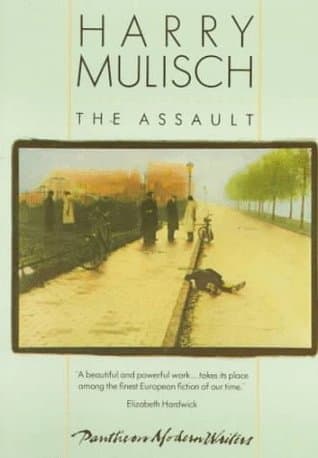
After Nazis burn his family home in retaliation for a collaborator's assassination, a young boy's attempt at a normal life is haunted by the past, forcing him to face the truth of that night in occupied Holland.
In January 1945, during the final months of World War II, twelve-year-old Anton Steenwijk plays a board game with his family in their Haarlem villa. Outside, a notorious Dutch Nazi collaborator, Fake Ploeg, is shot and killed on his bicycle. Peter Korteweg, the Steenwijks' neighbor, moves the body from in front of his own house to the Steenwijks' property. German soldiers soon arrive and find Ploeg's body. In retaliation, they set the Steenwijk house on fire. Anton's parents and older brother, Peter, are taken away and executed. Anton is separated from his family and watches his home burn, beginning his lifelong struggle with the past.
After his family's execution and the destruction of his home, Anton is put in a dark bunker, a cell in a local police station. He is not alone; a woman is also there. Her presence is both scary and comforting. She speaks to him in the dark, offering comfort and defiance against their captors, though he does not know her identity. She tells him he will one day be avenged. This short, intense meeting leaves a lasting impression on Anton, shaping his early understanding of resistance and loss. He is later taken away, leaving the woman behind, and eventually brought to his uncle and aunt's home in Amsterdam.
Anton moves in with his uncle and aunt in Amsterdam, where he tries to forget the memories of that night. He avoids thinking about the war and his family's fate, focusing instead on his studies and creating a seemingly normal, if somewhat passive, life. His relatives, though caring, do not push him to talk about his trauma, which unintentionally reinforces his strategy of repression. Anton does well in school, eventually pursuing a career in medicine, a deliberate choice to distance himself from the chaos and violence of his past. This period sets his lifelong pattern of emotional detachment and a desire for an uneventful life.
Years later, in 1956, during a student protest against the Soviet invasion of Hungary, Anton, now a medical student, meets Cor Takes. Takes, a former resistance fighter, recognizes Anton from the night of the assault. They briefly discuss the events of January 1945. Takes reveals his part in Fake Ploeg's assassination, confirming Anton's long-held suspicion that the murder was a deliberate act of resistance. This encounter breaks Anton's carefully built facade of indifference, making him face the reality of his past and the individuals directly involved in the cause of his family's tragedy. He learns that Takes was driven by a strong sense of justice.
In 1966, Anton attends the funeral of Mr. Korteweg, his former neighbor in Haarlem. There, he meets Karin Korteweg, Mr. Korteweg's daughter, whom he remembers from childhood. Their conversation brings back the night of the assault clearly. Karin reveals that her father, Mr. Korteweg, moved Fake Ploeg's body from their house to the Steenwijks' property. She explains her father's desperate, misguided attempt to save his own family, an act that directly caused the Steenwijks' destruction. This revelation adds another layer of complexity and moral ambiguity to Anton's understanding of the events, challenging his simple view of perpetrators and victims.
Anton marries Saskia, a woman he meets at university. They have a daughter named Sandra. Anton tries to maintain a seemingly normal family life, but his past trauma subtly affects his relationships. He remains emotionally distant, finding it hard to fully connect or express deep feelings. Saskia senses his guardedness but does not fully understand the depth of his unresolved history. Sandra represents a new generation, untouched by the war, and Anton hopes to shield her from its shadows. Despite his efforts, the unaddressed trauma subtly affects their family life, a silent reminder of the events of 1945.
At a party, Anton unexpectedly meets Fake Ploeg Jr., the son of the Nazi collaborator whose assassination caused the retaliatory burning of the Steenwijk home. Fake Jr. is a right-wing extremist who still praises his father's actions and blames the resistance for his death. Their encounter is tense and confrontational. Fake Jr. expresses his bitter anger towards the resistance fighters and those who, in his view, unjustly condemned his father. This meeting makes Anton confront the lasting effects of the war and the deeply divided viewpoints that still exist, showing how hatred can repeat and how difficult true reconciliation is.
After Saskia's untimely death, Anton remarries Liesbeth. He continues his successful career as an anesthesiologist, a profession he chose for its precision and detachment, further strengthening his emotional distance. Despite building a new family and professional life, Anton's internal struggle with the past continues. He still avoids directly confronting the trauma, choosing a controlled and predictable existence. His second marriage, like his first, is marked by his quiet reserve. He cares for his children but maintains an emotional barrier, a coping mechanism developed after the assault. The war's shadow, though unseen, continues to influence his every interaction.
In 1981, Anton takes part in a large anti-nuclear weapons demonstration in Amsterdam. In the crowd, he meets Cor Takes again. Takes, now older and more thoughtful, tells the full story of the assassination and, importantly, the identity of the woman in the bunker: Truus Coster. Truus was a resistance fighter, Takes's comrade, and the true leader behind the operation. He explains that she was executed shortly after their shared confinement. This final revelation gives Anton the missing piece of his traumatic puzzle, putting a name and a face to the defiant voice that offered him comfort and hope in his darkest hour. Her image, previously anonymous, now becomes clear.
Cor Takes recounts Truus Coster's bravery, her dedication to the resistance, and her execution by the Germans. He explains the moral dilemmas resistance fighters faced, including the difficult decision to assassinate Fake Ploeg, knowing the potential for brutal retaliation. Learning Truus's story, her courage, and her ultimate sacrifice, allows Anton to finally process the events of that night. He understands that the assault was not a random act of cruelty but a tragic consequence of war and resistance. This understanding brings some peace, allowing Anton to integrate his past into his present, rather than constantly suppress it. He finally begins to accept the deep and complex impact of the war on his life.
The Protagonist
Anton begins as a traumatized boy who represses his past, but through a series of chance encounters, he slowly uncovers the full truth of the assault, leading to a more complete, if painful, understanding and acceptance of his history.
The Supporting
Truus's arc is not explicitly shown but revealed through others' accounts; she is a steadfast resistance fighter who makes difficult choices and ultimately sacrifices her life for the cause.
The Supporting
Takes remains committed to his wartime convictions but provides the necessary truths to Anton, ultimately helping him achieve closure.
The Antagonist (posthumous)
Fake Ploog's 'arc' is entirely retrospective; his death is the inciting incident, and his character is defined by the consequences of his life and death.
The Supporting
Mr. Korteweg's arc is largely unseen, but his desperate act to save his family sets the stage for Anton's lifelong struggle.
The Supporting
Karin carries the burden of her father's actions until she shares the truth with Anton, offering him a new perspective.
The Supporting
Fake Ploeg Jr. remains steadfast in his pro-Nazi, anti-resistance views, serving as a foil to Anton's journey toward understanding.
The Supporting
Saskia provides Anton with a family life, but her early death is another loss that Anton must process.
The novel explores how the past, especially traumatic events, affects and haunts a person's entire life. Anton's initial strategy of repression and denial shows the human tendency to avoid painful memories. However, through chance encounters and revelations, the past keeps returning, forcing Anton to face the truth. The story illustrates that true healing is not about forgetting, but about understanding and integrating the past into one's identity. The war's legacy affects not just Anton, but also the Kortewegs, Cor Takes, and Fake Ploeg Jr., showing how collective memory is shaped by individual experiences and viewpoints.
“''The past is not a wound, it's a hole. A void. And in that void, everything that was, is still there, not gone, not forgotten, just unseen.'”
The story looks at the complex nature of guilt and responsibility during wartime. Mr. Korteweg's act of moving Fake Ploeg's body, while an attempt to save his own family, directly leads to the Steenwijks' death, highlighting the moral compromises made under pressure. The resistance fighters, Cor Takes and Truus Coster, are responsible for an act they knew would provoke retaliation, raising questions about whether such actions are justified. The novel avoids simple answers, presenting a world where heroes and villains are not always clear, and where seemingly innocent actions can have devastating consequences, leaving a lasting moral mark on everyone involved.
“'What if everything you've ever believed about good and evil, about right and wrong, was based on a lie, or at least on an incomplete truth?'”
The central event of the novel—Fake Ploeg's assassination and the subsequent German retaliation—raises questions about justice, revenge, and the cycle of violence. The resistance fighters believe they are enacting justice against a collaborator, but their act leads to innocent deaths. The Germans' retaliation is a brutal act of collective punishment. The story explores how these acts, meant to restore balance or assert power, often continue a chain of suffering. Anton's journey is, in part, a search for understanding the 'why' behind these events, rather than just the 'what,' leading him to a more nuanced view of the often-destructive pursuit of justice during conflict.
“'You can't pay for the dead with the dead. You can only pay for the dead with the living.'”
Anton's life is a long search for identity and meaning after trauma. Stripped of his family and home, he tries to build an identity based on normalcy and emotional detachment. However, the recurring encounters with figures from his past force him to confront how deeply the assault affected who he is. His journey is about piecing together the fragmented truth of that night, not just for historical accuracy, but to understand his own place within that history. Ultimately, finding meaning comes not from forgetting, but from fully acknowledging and integrating his traumatic past into his present self, allowing him to move forward with a more complete, if burdened, identity.
“'You don't get rid of a stone in your shoe by taking off your shoe. You have to take out the stone.'”
The novel shows that the scars of war extend far beyond the battlefield and the immediate conflict. Anton's entire life is shaped by a single night of violence, even though he was a child and not a combatant. The psychological and emotional cost for survivors, the moral compromises forced upon ordinary people, and the lasting divisions within society (as seen with Fake Ploeg Jr.) are all 'unseen scars.' The story reveals that even decades later, the trauma of war continues to influence personal relationships, political beliefs, and the collective consciousness, showing its long-lasting and hidden impact on individuals and nations.
“'The war was long over, but it was still going on inside him.'”
The narrative unfolds through distinct encounters across different decades.
The novel is structured episodically, with Anton encountering individuals connected to the assault at significant intervals in his life (1956, 1966, 1981). These time jumps serve to gradually reveal layers of truth about the traumatic event, mirroring Anton's own slow process of uncovering and confronting his past. Each episode acts as a catalyst, forcing Anton to re-evaluate his understanding and bringing him closer to a complete picture. This structure emphasizes the long-term impact of trauma and how memory is reconstructed over time, rather than a single, linear unveiling.
A recurring metaphor for Anton's repressed trauma.
The 'stone' in Anton's shoe, mentioned by the narrator, serves as a powerful metaphor for his repressed trauma. It represents the persistent, uncomfortable presence of the past that he tries to ignore or walk around. Despite his attempts to lead a 'normal' life, the 'stone' remains, causing subtle pain and influencing his every step. The eventual removal or confrontation of this 'stone' symbolizes Anton's journey toward understanding and acceptance, rather than mere suppression, of his traumatic memories. It underscores the idea that true healing requires acknowledging and processing the source of discomfort.
A mysterious figure who represents hope and resistance, later revealed as Truus Coster.
The anonymous woman in the bunker is a significant plot device. Her initial anonymity allows her to function as a universal symbol of comfort, defiance, and resilience for the young Anton. Her voice in the darkness offers him solace and a glimpse of human connection amidst his despair. The eventual revelation of her identity as Truus Coster, a resistance fighter, transforms this symbolic figure into a concrete historical person, connecting Anton's personal trauma to the larger narrative of wartime resistance and sacrifice. This device builds suspense and allows for a profound emotional impact when her story is fully unveiled.
A symbol of everyday life tragically interrupted by violence.
The bicycle, specifically Fake Ploeg's, is a potent symbol. It represents the mundane, everyday life in Holland that is violently disrupted by war. Ploeg is shot while riding his bicycle home, an ordinary act that becomes the catalyst for extraordinary horror. The image of the bicycle lying in the snow, then being moved, underscores the sudden intrusion of war into domesticity and the arbitrary nature of fate. It highlights how ordinary objects can become charged with tragic significance, linking the personal and the historical in a stark, unforgettable image.
“The past is not a straight line, but a labyrinth.”
— A central theme of the novel, reflecting Anton's struggle to understand the past.
“The war was not over, it had merely gone underground.”
— Reflecting on the lingering effects of World War II on Dutch society and individuals.
“You can never really escape your past, can you?”
— A recurring question Anton faces as he encounters people connected to the assault.
“Sometimes it is better not to know everything.”
— A reflection on the painful truths that Anton uncovers about the night of the assault.
“The dead live on in us, in our memories, in our actions.”
— Anton's contemplation of the lasting impact of those he lost.
“Every life is a story, and every story has its secrets.”
— A general observation about the hidden complexities of human lives encountered by Anton.
“Justice is a complicated thing, especially when the past is involved.”
— Anton's evolving understanding of justice as he learns more about the events surrounding the assault.
“He knew that some wounds never truly healed, only scarred over.”
— Anton's internal reflection on his own trauma and the experiences of others.
“The line between perpetrator and victim is often blurred.”
— A challenging realization for Anton as he learns about the complex motivations and circumstances of various characters.
“Silence can be a heavier burden than words.”
— Referring to the unspoken truths and secrets that weigh on characters.
“History is not just dates and events, but the lives of people caught within them.”
— Emphasizing the human element and personal stories within the larger historical narrative.
“He had survived, but at what cost?”
— Anton's internal question about the psychological toll of his survival and the loss of his family.
“The world had moved on, but for him, that night was always present.”
— Illustrating Anton's struggle to reconcile his personal trauma with the passage of time.
“There are no simple answers, only different shades of truth.”
— A concluding thought about the complexities and ambiguities of the past and human actions.
Ready to see how well you understood this book? Take our interactive quiz with 10 questions.
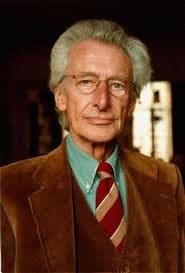
Harry Kurt Victor Mulisch was a Dutch writer. He wrote more than 80 novels, plays, essays, poems, and philosophical reflections. Mulisch's works have been translated into over thirty languages.







