“The important thing is not to be afraid of the future. The important thing is to be afraid of being afraid.”
— Adam's internal struggle with fear and courage in the face of danger.


Madeleine L'Engle (1965)
Genre
Fantasy / Children's / Mystery / Science Fiction / Young Adult
Reading Time
360 min
Key Themes
See below
Sign in to track this book
A marine biology student becomes caught in a dangerous international plot when a chance airport meeting pulls him into a fight between shadowy groups seeking a world-changing secret.
Adam Eddington, a marine biology student from the University of California, travels to Portugal to work as a research assistant for Dr. O'Keefe, who studies starfish regeneration. At Kennedy Airport, he meets Kali Cutter, a beautiful and seemingly innocent young woman who says she is also a passenger. During the flight, Kali subtly tries to get information from Adam about Dr. O'Keefe's work. When he arrives, Adam is met by Poly O'Keefe, Dr. O'Keefe's bright twelve-year-old daughter, and her older brother, Charles O'Keefe, a medical student. They immediately warn Adam about Kali, saying they know her and she cannot be trusted, hinting at their family's involvement in a complex, dangerous situation.
Adam joins the O'Keefe family at their large estate on the coast of Portugal, where he meets Dr. O'Keefe, a kind but somewhat preoccupied scientist. Poly and Charles again express their worries about Kali, explaining that she is linked to a secret group trying to steal Dr. O'Keefe's research, specifically his work on starfish arm regeneration, which has implications beyond marine biology. They suggest the research could be used for good or bad, creating a race against time to protect it. Adam, at first doubtful of the children's claims, starts to notice Kali's suspicious behavior and the unusual security around the O'Keefe property.
The tension rises sharply when Calvin O'Keefe, the youngest of the O'Keefe children, is kidnapped. Calvin has a unique gift for empathic communication and is important to the plans of the opposing group, called the 'Bloodhounds.' This event confirms the warnings Adam received and removes any remaining doubts he had about how serious the situation is. Dr. O'Keefe is upset, and Charles and Poly are determined to find their brother. The kidnapping shows the true importance of the conflict, drawing Adam further into the O'Keefe family's fight against a powerful and morally unclear organization.
Even with clear evidence of Kali's involvement with the bad guys, Adam finds himself strangely attracted to her. Kali, using charm, manipulation, and veiled threats, tries to get Adam to switch sides. She tells a convincing, though twisted, story about her side's reasons, suggesting Dr. O'Keefe's research is dangerous and should be controlled by them for the greater good. Adam struggles with this moral problem, torn between his growing affection for Poly and the O'Keefe family, and Kali's tempting appeal and persuasive arguments, which challenge his first ideas of right and wrong.
Determined to save Calvin, Adam, Poly, and Charles start their own investigation, following clues and putting together information. Their search leads them to various places, including a remote island and a mysterious compound, where they meet members of Kali's organization. They learn more about the 'Bloodhounds' and their leader, Dr. Leopold, who believes that humanity's destructive habits require a form of control, which he plans to achieve using Dr. O'Keefe's regeneration research. The children's bravery and cleverness are tested as they face dangerous situations, often relying on Poly's intuition and Adam's scientific knowledge.
Adam learns more about Dr. O'Keefe's research, understanding that the starfish's ability to regrow lost limbs is key to a much bigger scientific discovery. The research is not just about physical regeneration, but also about cellular memory and the chance for a new kind of communication or even control. Dr. O'Keefe believes this power should be used for healing and understanding, while Dr. Leopold's group wants to use it for global power and manipulation. Adam realizes the huge ethical questions of the discovery and the great responsibility that comes with protecting it from those who would misuse it.
Adam finally confronts Kali, asking for answers about her real intentions and Calvin's kidnapping. Kali, under pressure, reveals more about her organization's goals, trying to justify their actions as necessary for global peace and order. She tries one last time to convince Adam to join her side, appealing to his intelligence and his wish for a better world. This confrontation forces Adam to make a clear choice about his loyalties. He ultimately rejects Kali's ideas, recognizing the dangers in her group's methods and their disregard for individual freedom and ethical limits, strengthening his commitment to the O'Keefes.
With Adam's decision firm, the trio, helped by some unexpected allies, plan to get into the 'Bloodhounds'' hidden facility where Calvin is held. They find that Calvin is not just a hostage but is being used by Dr. Leopold to advance his research, using Calvin's unique empathic abilities. The rescue attempt is risky, requiring stealth, quick thinking, and facing armed guards. Poly's understanding of Calvin's needs and Adam's scientific insights are important in navigating the complex facility and overcoming the obstacles set by Dr. Leopold's agents.
During the rescue, Calvin's extraordinary empathic abilities become a main point. He is not just a victim; his sensitivity to others' thoughts and feelings provides important information and, surprisingly, helps to disrupt Dr. Leopold's plans. Calvin's presence, and how he connects with people on a basic level, contrasts sharply with the manipulative and controlling tactics of the 'Bloodhounds.' His innocence and deep ability to understand become a powerful force against the cold, calculating ambition of the bad guys, showing the importance of human connection over scientific control.
Calvin is rescued, and the immediate threat to Dr. O'Keefe's research is stopped. Dr. Leopold's organization is disrupted, though its full network remains a threat. Adam, having shown his loyalty and courage, fully accepts his place within the O'Keefe family's trust. The experience leaves Adam with a deeper understanding of science's ethical responsibilities and the complexities of human nature. While the immediate danger has passed, the novel ends with the understanding that the fight between good and evil, and the possible misuse of powerful knowledge, is an ongoing battle, leaving Adam changed by his experiences.
The Protagonist
Adam evolves from an innocent, academically focused student into a morally astute and courageous young man, capable of discerning truth amidst deception and acting decisively in a crisis.
The Supporting
Poly grows in confidence and proves her resourcefulness and bravery, becoming an indispensable part of the effort to protect her family and their research.
The Antagonist
Kali remains largely static in her convictions, serving as a constant challenge to Adam's moral compass and representing the opposing ideology.
The Supporting
Dr. O'Keefe's arc primarily involves grappling with the unexpected dangers and ethical dilemmas his research creates, forcing him to be more guarded and strategic.
The Supporting
Charles acts as a steadfast protector and ally, reinforcing the family's resilience in the face of adversity.
The Supporting
Calvin's arc highlights the power and vulnerability of profound empathy, as his abilities are both a target and a source of strength.
The Antagonist
Dr. Leopold remains a consistent force of opposition, embodying the intellectual and ethical challenge to the protagonists' values.
The Supporting
Canon Tallis serves as a consistent source of wisdom and moral guidance, helping characters find their ethical footing.
The novel explores the moral responsibility that comes with new scientific knowledge. Dr. O'Keefe's research into regeneration could do great good, but also great harm, as shown by Dr. Leopold's wish to turn it into a weapon for global control. Adam's journey makes him face this dual nature, moving beyond simple scientific curiosity to consider the social and ethical effects of his work. Calvin's kidnapping and the 'Bloodhounds'' plans show how even good intentions can lead to dangerous and dehumanizing results if not guided by a strong moral sense.
“Science alone is not enough. There must be wisdom, too.”
A main conflict is the debate about whether humanity should have free will, even with its flaws, or if it needs to be controlled for its own good. Dr. Leopold and the 'Bloodhounds' argue for control, believing humanity is too flawed to govern itself and that their scientific advances can create a more orderly, though forced, world. The O'Keefes and Adam support free will, stressing the importance of individual choice, love, and the value of human experience, even with its risks. This theme is especially clear with Calvin's empathic abilities, which could be used to manipulate or to connect.
“To be free is to be responsible. To be responsible is to be free.”
The story looks at the complexities of good and evil, showing they are not always clear. Kali Cutter, for example, believes she is working for a greater good, even when her actions are manipulative and harmful. This challenges Adam's first black-and-white view of the world. The novel suggests that true evil often pretends to be good, driven by twisted logic and a desire for power. The O'Keefes represent a more selfless, kind approach, showing that real good is found in protecting others and upholding ethical principles, even at personal risk.
“It's not always easy to tell who is good and who is bad, Adam. Sometimes the bad people think they are doing good.”
The O'Keefe family is a strong unit, held together by love, trust, and shared purpose, contrasting sharply with the cold, calculating nature of the 'Bloodhounds.' Their strong family ties, especially Poly's loyalty to Calvin, provide the emotional center of the story and drive much of the action. Adam, at first an outsider, is drawn into this warmth and loyalty, finding a sense of belonging he had not known. The theme emphasizes that human connection, empathy, and mutual support are important forces against isolation and manipulation, reinforcing that these relationships are a powerful answer to the dehumanizing goals of the bad guys.
“We are not alone, Adam. We have each other.”
The scientific breakthrough that drives the central conflict.
Dr. O'Keefe's research into the regenerative properties of starfish serves as the primary MacGuffin. While its specific scientific details are important, its main function is to be the coveted object that both sides are fighting over. Its potential applications, from healing to mind control, make it immensely valuable and dangerous, propelling the plot forward and creating the high stakes of the narrative. The research itself is less important than what it represents: immense power that can be used for good or ill.
Adam's internal struggle between two opposing ideologies.
Adam Eddington faces a profound moral dilemma as he is pulled between the O'Keefe family's ethical stance and Kali Cutter's seductive arguments for a controlled world. This device forces Adam, and by extension the reader, to question what constitutes 'good' and 'evil' and to critically examine the justifications for different actions. His struggle to choose a side is central to his character arc and highlights the novel's exploration of free will versus control, making the conflict not just external but deeply internal.
Calvin O'Keefe's empathic gifts as a catalyst for conflict and resolution.
Calvin O'Keefe, the youngest and most vulnerable member of the O'Keefe family, possesses unique empathic abilities that make him a target for Dr. Leopold. This device serves multiple purposes: it raises the emotional stakes of the kidnapping, highlights the danger of exploiting innocence, and ultimately provides a surprising element of resolution. Calvin's ability to connect on a fundamental emotional level contrasts with the antagonists' cold rationality, emphasizing the power of non-scientific forms of understanding and connection.
Kali Cutter's use of beauty and charm to manipulate the protagonist.
Kali Cutter embodies the classic femme fatale archetype. Her striking beauty, charm, and seemingly innocent demeanor are used to draw Adam in, confuse his loyalties, and extract information. She represents the seductive nature of temptation and the difficulty of discerning truth when it is cloaked in allure. This device not only adds a layer of romantic tension but also serves to test Adam's moral resolve and force him to look beyond superficial appearances to judge character and intent.
“The important thing is not to be afraid of the future. The important thing is to be afraid of being afraid.”
— Adam's internal struggle with fear and courage in the face of danger.
“There are some things that once they are set in motion, you cannot stop them. You can only try to guide them.”
— A realization about the unstoppable nature of certain events, particularly regarding the starfish.
“Sometimes the only way to find out what you believe is to be forced to defend it.”
— Adam's journey of self-discovery and defining his own moral compass.
“Truth is not always a straight line. Sometimes it's a tangled skein, and you have to unravel it thread by thread.”
— Reflecting on the complex and often misleading nature of the mystery Adam is trying to solve.
“It's a terrible thing to be an adult and to realize that the world isn't as simple as you thought it was when you were a child.”
— Adam's loss of innocence and confrontation with adult complexities.
“Love isn't a feeling, it's a decision. And it's a decision you have to make every single day.”
— A discussion about the nature of enduring relationships amidst trials.
“The greatest danger is not in failing, but in ceasing to try.”
— Adam's perseverance in the face of seemingly insurmountable odds.
“To be truly free, one must first understand what it is to be bound.”
— A philosophical reflection on the meaning of freedom through the lens of captivity or constraint.
“Sometimes the most dangerous things are the ones that look the most beautiful.”
— A warning about deceptive appearances, particularly in the context of the antagonist's charm.
“There are no ordinary people. Everyone is extraordinary in some way.”
— A statement about the inherent value and uniqueness of every individual.
“It takes more courage to live with doubt than to live with certainty.”
— Adam grappling with uncertainty and conflicting information.
“The universe is full of wonders, and not all of them are pretty.”
— Contemplating the awe-inspiring yet sometimes frightening aspects of scientific discovery and the natural world.
“To truly know someone, you must see them not just in their strengths, but in their weaknesses as well.”
— Adam's evolving understanding of the complex characters around him.
“We are all connected, like the arms of a starfish, even when we don't realize it.”
— A metaphorical connection to the title, emphasizing the interconnectedness of lives and events.
Ready to see how well you understood this book? Take our interactive quiz with 10 questions.
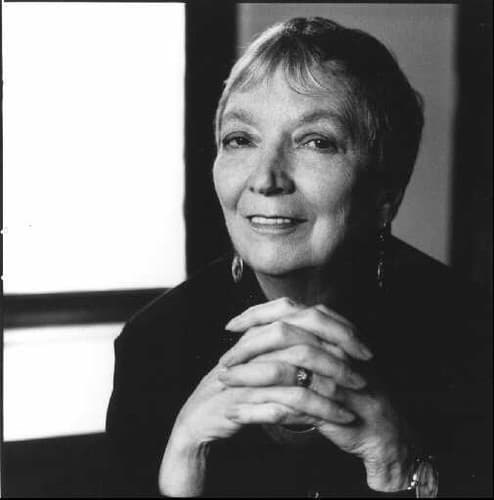
Madeleine L'Engle was an American writer of fiction, non-fiction, poetry, and young adult fiction, including A Wrinkle in Time and its sequels: A Wind in the Door, A Swiftly Tilting Planet, Many Waters, and An Acceptable Time. Her works reflect both her Christian faith and her strong interest in modern science.







