“Every single day, even the bad ones, is a gift. And it’s up to you to unwrap it.”
— Oscar's reflection on life's value.

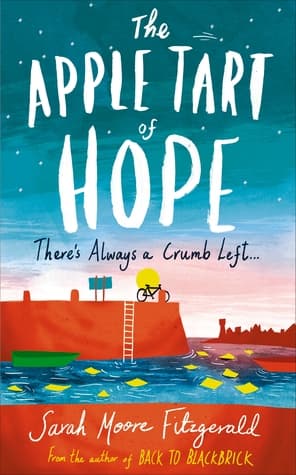
Sarah Moore Fitzgerald (2014)
Genre
Children's / Mystery / Young Adult / Romance
Reading Time
170 min
Key Themes
See below
Sign in to track this book
When the boy who baked the world's most perfect apple tarts disappears and everyone thinks he's dead, his best friend and little brother search for the truth, showing that even in deep sadness, hope is a strong force.
The story begins with the news that Oscar Dunleavy, a quiet, kind boy famous for his apple tarts, has disappeared. A note found near the river suggests he planned to end his life, leading most of the town, including the police and Oscar's parents, to think he drowned. But his best friend, Meg, and his younger brother, Stevie, refuse to believe it. Meg, who had a close bond with Oscar, immediately feels sure he would not do such a thing. Stevie, though young, also senses something is wrong, driven by his love for his older brother. The community grieves, but their sadness includes a quiet acceptance of the presumed tragedy, a feeling Meg and Stevie strongly reject.
Believing Oscar is still alive, Meg and Stevie start their own investigation. They begin by retracing Oscar's last known steps, putting together bits of information from the days before he vanished. Meg remembers small changes in Oscar's behavior, new secrets, and a nervous energy he could not hide. Stevie adds his observations, often surprisingly sharp for a child, about Oscar's moods and interactions. Adults meet their first efforts with doubt and pity, seeing their persistence as part of their grief. Not giving up, the two focus on details that do not fit the official story, especially the unusual nature of the note found.
Meg remembers Oscar's last apple tart, baked just before he disappeared. Oscar was known for his baking skill, but this tart was called 'perfect beyond perfect,' a detail that now bothers Meg. She recalls his intense focus and almost desperate need for it to be flawless. This memory, plus her knowledge of Oscar's careful nature, makes her wonder if the tart had a deeper meaning. She questions if it was a message, a goodbye, or a clue. Stevie also remembers the tart clearly, especially its taste. The tart becomes a symbol of Oscar's presence and absence, gently guiding their thoughts toward the idea of a staged disappearance rather than a suicide.
Their investigation leads them to Damien, a local bully who often picked on Oscar. Damien's scary presence and history of bothering Oscar make him a suspect in Meg's mind, though she cannot explain why. They approach Damien carefully, trying to get information, but he is evasive and mean, offering only insults and dismissals. Damien's behavior strengthens Meg's suspicion that he knows more than he says, or at least played a part in Oscar's distress. Stevie, though scared, bravely stays with Meg, watching Damien's reactions closely. This meeting confirms their understanding that Oscar's life was not as simple or happy as some believed.
As Meg looks deeper into Oscar's things, she finds a series of anonymous letters sent to him. These letters are mysterious, hinting at a secret, a challenge, or even a threat. They suggest Oscar was involved in something he could not share, adding another layer to his disappearance. The letters are vague but troubling, talking about a 'game' and 'consequences.' Meg realizes that Oscar had been carrying a burden she knew nothing about, despite their close friendship. These letters become an important piece of the puzzle, showing that Oscar's disappearance was not a sudden act of sadness but a response to outside pressures.
Through careful thinking and putting together clues from the letters and Oscar's recent behavior, Meg and Stevie realize that Oscar's disappearance is connected to a national baking competition he had secretly entered. The letters mention the competition, and Oscar's focus on the 'perfect apple tart' now makes sense in this context. It becomes clear to them that the competition stakes were much higher for Oscar than anyone knew, possibly involving a large sum of money or a life-changing chance. This discovery shifts their focus from just finding Oscar to understanding the pressures he faced and who might have wanted to harm him.
Meg and Stevie's investigation uncovers a darker truth: Oscar was not only under great pressure from the competition but was being sabotaged and blackmailed. They find subtle clues pointing to someone tampering with his baking ingredients and threatening him if he did not quit. The anonymous letters, they now realize, were part of this blackmail plan, forcing Oscar into a corner. The reason seems to be to remove Oscar as a competitor, likely to ensure someone else's win. This discovery confirms their belief that Oscar would never have simply given up or taken his own life, but was forced into a desperate act to protect something or someone.
A key breakthrough happens when Meg looks again at the 'suicide' note found by the river. Using her deep understanding of Oscar's personality and his small habits, she notices a tiny detail, a specific way of speaking, or a type of paper that only Oscar would use in a certain situation. She realizes that the note, while looking like a suicide message, was actually a clever distraction, a coded message for *her*. Oscar had written it to make it seem he was gone, but with just enough uncertainty or a hidden clue that only Meg, his closest friend, would recognize, signaling he was still alive and needed help, not mourning.
With the true meaning of the note understood, Meg and Stevie follow the path Oscar carefully laid out. These clues are not obvious; they are hidden in shared memories, inside jokes, and Oscar's unique way of thinking. They lead them to places important to their friendship or Oscar's secret life, each step bringing them closer to understanding his plan. The journey is tense and urgent, but their hope never fades. Stevie's innocent observations often give important insights, helping Meg's more thoughtful approach. They understand that Oscar is not just hiding, but waiting to be found by the people who truly believe in him.
Meg and Stevie finally find Oscar, who has been hiding, waiting for them. The reunion is full of emotion, relief, and unspoken understanding. Together, the three of them confront the person responsible for the blackmail and sabotage — a rival baker from the competition, driven by jealousy and desperation. The confrontation reveals how much Oscar was manipulated. With Meg and Stevie's steady support and the evidence they gathered, Oscar finds the courage to tell the truth. Finding Oscar alive and revealing the scheme shocks the town, turning their first belief of tragedy into a story of strength and friendship.
The truth about Oscar's disappearance and the blackmail plan is revealed. The rival baker's actions are exposed, and the community has to rethink its quick judgments. Oscar's name is cleared, and the town, which quickly mourned, now celebrates his return and the bravery of Meg and Stevie. The police investigate further based on the evidence the three provided. The story ends with justice being served and hope returning. Oscar, though changed by the experience, is surrounded by the love and loyalty of his friends and family, ready to bake again, perhaps even better than before.
The Protagonist
Oscar transforms from a victim of bullying and blackmail into a resilient individual who, with the help of his friends, finds the courage to confront his fears and reclaim his life.
The Protagonist
Meg's unwavering loyalty and detective skills evolve as she navigates grief and doubt, ultimately proving the power of friendship and intuition.
The Supporting
Stevie matures through the ordeal, demonstrating courage and insight beyond his years while never losing his hopeful spirit.
The Antagonist
Damien remains largely unchanged, serving as a static representation of the adversity Oscar faces, though his actions are ultimately overshadowed by the larger conspiracy.
The Supporting
They move from a state of resigned grief to renewed hope and ultimately joy, learning to trust their children's intuition.
The Antagonist
The Rival Baker's ambition leads to their downfall, as their scheme is exposed and their reputation ruined.
At its heart, the novel shows the lasting power of hope and the importance of believing in someone, even when everything seems lost. Meg and Stevie's steady belief that Oscar is alive, despite police and adults accepting his presumed death, drives the whole story. Their hope is not foolish but comes from their deep understanding of Oscar. This theme is clear when Meg refuses to accept the suicide note at face value, instead looking for a hidden meaning, proving that hope can show truths that logic alone might miss. It highlights how believing in a person can give them strength and inspire others to act.
““Hope is like an apple tart, Meg. You never know how good it’s going to be until you taste it.””
The novel deeply explores loyalty and the strong bonds of friendship. Meg's fierce dedication to Oscar, and Stevie's steady support for both his brother and Meg, are the main forces behind the investigation. Their loyalty makes them go against adult doubts, face bullies, and handle emotional stress. The depth of their friendship allows Meg to understand Oscar's hidden messages, as only someone who truly knows and loves him would understand. This theme is especially strong in scenes where Meg and Stevie work together, their different strengths helping each other, showing how real friendship can overcome big problems.
““Because I know Oscar. And Oscar wouldn’t do that. Not without telling me.””
The story quietly addresses the harmful impact of bullying and the great pressure young people can face, both from friends and from their own expectations. Oscar's choice to fake his disappearance is a direct result of the torment from Damien and the blackmail he experiences related to the baking competition. The novel shows how these pressures can push people to desperate acts, making them feel alone and unseen. It highlights the importance of recognizing the quiet struggles others may be facing and the need for support. Oscar's story reminds us that what seems like a simple competition can have deep effects on someone's mind.
““Sometimes, Meg, it feels like everyone wants a piece of you, and there’s nothing left for yourself.””
A main theme is the difference between how things look on the surface and the real situation underneath. The whole town, including Oscar's parents and the police, sees his disappearance as a suicide, based on a seemingly clear note. But Meg and Stevie, using their close knowledge of Oscar, see a different truth. They see that his disappearance was faked and find the hidden clues. This theme challenges the reader to look past obvious evidence and trust their gut feeling, especially when trying to understand people. The 'perfect apple tart' itself symbolizes this, looking flawless but hiding a deeper, more complex message.
““Everyone sees what they want to see, Meg. It’s harder to see what’s really there.””
A cleverly disguised message from Oscar to Meg.
Initially presented as a straightforward suicide note, this device serves as a major red herring for most characters, confirming their assumption of Oscar's death. However, for Meg, it functions as a crucial piece of coded communication. Its subtle nuances, known only to Meg due to their deep friendship, allow her to decipher Oscar's true intention: that he is alive and needs help. This device is pivotal in shifting the narrative from a tragedy to a mystery, empowering Meg to initiate the investigation and demonstrating Oscar's intelligence and his trust in Meg.
A recurring symbol representing Oscar's identity, talent, and hidden messages.
Oscar's apple tarts are more than just a baked good; they symbolize his identity, his extraordinary talent, and his meticulous nature. The 'perfect beyond perfect' last tart he bakes before his disappearance becomes a significant clue for Meg, hinting at a hidden meaning or a staged event. The tart represents Oscar's unique way of communicating and leaving his mark. It also acts as a metaphor for hope and the seemingly simple things that can hold profound significance, reminding Meg of Oscar's presence even in his absence.
Cryptic messages that reveal the blackmail and pressure Oscar faced.
These mysterious letters, discovered by Meg, initially deepen the enigma surrounding Oscar's disappearance. They are vague and threatening, hinting at a secret 'game' and 'consequences' related to the baking competition. As the story progresses, these letters are revealed to be instruments of blackmail and sabotage, designed to force Oscar out of the competition. They serve to expose the external pressures Oscar was under, providing crucial evidence that his disappearance was not a suicide but a response to deliberate manipulation, thus shifting the blame from Oscar to his tormentor.
“Every single day, even the bad ones, is a gift. And it’s up to you to unwrap it.”
— Oscar's reflection on life's value.
“Sometimes you have to be lost to find something even better.”
— Meg's perspective on new beginnings.
“It’s funny how the things you think will break you are sometimes the things that make you.”
— Oscar considering past hardships.
“Hope is a powerful thing, a little bit of magic in a world that often tries to take it away.”
— The overarching theme of the book.
“You can’t just wait for good things to happen. You have to go out and make them happen.”
— Oscar's advice on taking initiative.
“The past is like a story you can’t change, but the future is a story you get to write.”
— Meg looking forward after difficult events.
“Sometimes the quietest people are the ones with the loudest thoughts.”
— A reflection on Oscar's internal world.
“A secret is only a secret if you keep it. Once you tell someone, it becomes a shared burden.”
— A character's realization about honesty.
“Love isn't about finding someone perfect. It's about finding someone who makes the imperfections feel perfect.”
— A romantic sentiment expressed in the story.
“Even the smallest kindness can make the biggest difference.”
— A lesson learned through community support.
“The best way to get over something is to go through it, not around it.”
— Oscar confronting his fears.
“Don't let yesterday take up too much of today.”
— A reminder to live in the present.
“Sometimes all you need is a little bit of imagination and a whole lot of courage.”
— Oscar embarking on a new adventure.
Ready to see how well you understood this book? Take our interactive quiz with 10 questions.

Biography coming soon.

Dan Gemeinhart
4.5

Kate O'Hearn
4.4

Jeanne Birdsall
4.4

Jen Wang
4.4

Wendelin Van Draanen
4.3

John Marsden
4.3

Chris Van Allsburg
4.3
Jennifer A. Nielsen
4.2