“The thing about being a writer is that you are always, always, always at work. Even when you’re not writing, you’re thinking about writing. You’re observing. You’re collecting.”
— Sharon's internal monologue about the nature of her profession.

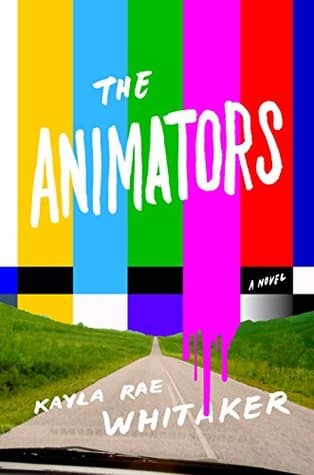
Kayla Rae Whitaker (2017)
Genre
Literary Fiction / Creativity
Reading Time
9-10 hours
Key Themes
See below
Sign in to track this book
Two animators, bonded by their working-class past and artistic drive, find their decade-long partnership and friendship strained when their successful film, based on one's traumatic past, forces them to confront the real cost of their creative bond.
Mel Vaught and Sharon Kisses, best friends and animation partners, achieve their breakthrough with their first full-length animated feature, 'Kentucky.' The film is a raw, visually striking adaptation of Mel's difficult childhood in rural Kentucky, focusing on her family's poverty, her mother's mental health issues, and her father's absence. Sharon, the meticulous animator, and Mel, the visionary storyteller, become popular in the indie film scene. Their Brooklyn studio, a result of their decade of shared artistic struggle, is busy with their new success and the promise of a profitable future, including a potential deal with a major studio. Despite their triumph, Sharon feels a familiar unease, a sense of being overshadowed by Mel's big personality and the very personal nature of the film's source material.
After 'Kentucky's' success, Sharon feels more and more insecure about her own artistic contribution. She believes the public and critics mainly credit Mel for the film's emotional depth, given its autobiographical nature. Meanwhile, Mel's already loud personality leads to reckless behavior, fueled by alcohol and her growing celebrity. She often pushes boundaries, professionally and personally, alienating potential collaborators and creating tension within their partnership. Sharon often finds herself doing damage control, trying to lessen Mel's excesses and maintain their professional image, which further highlights the power imbalance she sees in their relationship.
The duo travels to Kentucky for a special screening of 'Kentucky' in Mel's hometown. The event is a mix of success and discomfort, as Mel faces her past publicly. During a Q&A, a local journalist questions Mel about the accuracy of certain events in the film, especially her father's disappearance. The journalist reveals that Mel's father, Ray Vaught, was not just absent but was involved in a serious crime—a robbery that resulted in a death—and served time in prison. This revelation shatters Mel's carefully built story of her childhood and deeply affects Sharon, who realizes how little she truly knew about her best friend's past despite animating it.
Stung by Mel's deception and her own feelings of inadequacy, Sharon decides to stay in Kentucky after the premiere, seeking comfort in her childhood home and family. She reconnects with Teddy, her charismatic and troubled ex-boyfriend, who still lives in the area. Their rekindled friendship quickly grows, as Teddy offers Sharon the unconditional admiration and understanding she feels is missing in her partnership with Mel. Teddy's presence and their shared history contrast sharply with the high-pressure, emotionally complex world Sharon lives in with Mel, making her question the future of her artistic partnership and her own identity.
Back in Brooklyn, Mel struggles with Sharon's sudden departure and the unraveling of her carefully constructed past. She tries to contact Sharon several times, first through calls and texts, then by sending gifts and heartfelt apologies. Mel expresses regret for lying about her father and for her often-overbearing behavior, recognizing the depth of Sharon's hurt. However, Sharon, still processing the revelations and finding comfort with Teddy, remains distant. Her resentment towards Mel's past deceptions and her overshadowed role in their success has solidified, making reconciliation seem unlikely.
Despite their personal rift, a major studio, impressed by 'Kentucky's' success, offers Mel and Sharon a deal to produce a sequel, 'Kentucky 2.' This is both a huge opportunity and a significant challenge. Mel, still recovering from the exposure of her father's past, sees the sequel as a chance to re-examine her family history with more honesty, focusing on her father's life and the aftermath of his crime. Sharon, however, is cautious. She feels exploited by the first film's intensely personal narrative and wants to create something entirely her own, a story not based on Mel's trauma. Their creative visions clash, reflecting the deeper problems in their friendship.
While in Kentucky, Teddy encourages Sharon to explore her own artistic voice, separate from Mel. He praises her animation skills and unique perspective, boosting her confidence and making her feel truly seen as an artist. Sharon begins to sketch and develop ideas for her own independent projects, stories not tied to Mel's autobiography. This period of artistic exploration, supported by Teddy, strengthens Sharon's desire for creative independence and makes the idea of returning to Mel's shadow for 'Kentucky 2' less appealing. She starts to imagine a future where her art is entirely her own.
As Sharon stays in Kentucky, Mel's already unstable mental state worsens. Isolated, feeling betrayed, and struggling with alcohol addiction, she spirals into self-destruction. Her erratic behavior becomes increasingly public, leading to a highly publicized incident where she lashes out at a journalist or during a public appearance, making inflammatory statements and appearing visibly intoxicated. This breakdown severely damages their studio's reputation and jeopardizes the lucrative 'Kentucky 2' deal, forcing Sharon to confront the devastating consequences of Mel's actions and the fragility of their entire operation.
Alarmed by Mel's public meltdown and the potential ruin of their career, Sharon reluctantly returns to Brooklyn. A tense and emotional confrontation follows, during which Mel finally reveals the full truth about her father, Ray Vaught. She confesses the details of his involvement in a fatal robbery, his time in prison, and the shame and secrecy that haunted her family. Mel explains how this trauma shaped her and why she felt compelled to fictionalize parts of her past, not just for the film but as a way to cope throughout her life. This painful honesty, though long overdue, marks a turning point in their fractured relationship.
After Mel's confession, Sharon and Mel face a difficult discussion about their partnership. Sharon expresses her feelings of being undervalued, her desire for creative independence, and her inability to continue animating Mel's deeply personal and often traumatic stories. Mel, humbled by her breakdown and the potential loss of Sharon, acknowledges her friend's pain and her own destructive patterns. They conclude that, for the sake of their individual artistic growth and personal well-being, they must end their formal animation partnership. This decision, while heartbreaking, allows each woman to pursue her art on her own terms.
After the partnership ends, Sharon begins her independent artistic journey. She uses her experiences and new confidence to create her own animated short film, a personal project reflecting her unique voice and perspective. This film shows her growth as an artist, no longer a collaborator in someone else's story but the sole author of her own. She finds fulfillment and self-worth in this creative autonomy, proving to herself that her talent goes beyond simply bringing Mel's visions to life. The film receives its own quiet recognition, confirming her decision.
Mel, recognizing the severity of her addiction and mental health struggles, commits to recovery. She starts therapy and begins to address the underlying trauma that fueled her erratic behavior and her need to fictionalize her past. While no longer working with Sharon, Mel continues to make art, exploring new mediums and storytelling approaches less tied to the public spectacle of her personal history. Her new work is more introspective and less performative, reflecting a deeper understanding of herself and a more authentic artistic expression. She begins to heal, personally and creatively, finding a path forward that doesn't rely on her past destructive patterns.
The Protagonist
Sharon evolves from a self-doubting collaborator to a confident, independent artist who finds her own voice and asserts her creative autonomy.
The Co-protagonist/Antagonist (at times)
Mel descends into self-destruction before confronting her trauma, seeking recovery, and finding a more authentic artistic expression, free from her past's grip.
The Supporting
Teddy remains a consistent, supportive presence for Sharon, helping her recognize her own worth and desires.
The Mentioned
His true story is revealed, forcing Mel to confront her past and impacting her relationship with Sharon.
The Supporting
Remains a constant, supportive figure, representing Sharon's steady roots.
The Mentioned
Her past struggles are revealed through Mel's narrative, shaping Mel's character and art.
The Supporting
Their offers and demands drive plot points, particularly the discussion around 'Kentucky 2.'
The Mentioned
Their reporting and commentary influence the plot by revealing truths and documenting Mel's decline.
The novel explores creative collaboration, especially when one partner's personal trauma is at the core of their shared art. Sharon's struggle for recognition and her feeling of being overshadowed by Mel's 'story' highlights the tension between the storyteller and the animator. The question of who truly 'authors' a work when one provides the narrative and the other brings it to life visually is central. The eventual end of their partnership shows that true artistic independence may require individual paths, even if it means sacrificing a once-powerful synergy. This is clear in Sharon's thoughts about 'Kentucky' being Mel's story, not hers, despite her large contribution to its visual creation.
““She was the one with the story. I was just the one who drew it.””
The Animators looks into how personal trauma shapes identity and artistic expression, and the often-unclear line between memory, fiction, and truth. Mel's film 'Kentucky' is a fictionalized account of her real, painful childhood, but the extent of its fictionalization—especially regarding her father's criminal past—is a major source of conflict. The novel examines the denial and reinvention people use to cope with trauma, and the devastating results when those carefully built stories are exposed. Mel's inability to fully confront her past without inventing details ultimately leads to her breakdown and the collapse of her partnership, forcing her to confront a more authentic, though painful, truth.
““Some stories you tell to make sense of what happened. Other stories you tell to make sense of what didn't.””
The novel subtly explores the challenges faced by women in the male-dominated animation industry, especially regarding recognition and self-worth. Both Mel and Sharon, despite their talent, navigate a world where their voices can be overlooked or diminished. Sharon's insecurity about her contribution is made worse by the industry's tendency to praise the 'auteur' and the 'visionary' (often male), while the detailed, technical work of animation (often associated with women) is less celebrated. Her journey to find her own artistic voice and assert her independence is also a journey to reclaim her identity as an artist, not just a collaborator, in a field that often demands conformity or self-effacement from women.
““It was always Mel's genius, Mel's vision. I was just the hands.””
Mel's struggle with alcohol addiction and her pattern of self-destructive behavior are central to the novel's look at coping mechanisms and the dark side of creative talent. Her addiction is shown not just as a weakness, but as a symptom of her unaddressed trauma and her inability to cope with success, scrutiny, and the weight of her own past. Her reckless actions, fueled by alcohol, directly affect her professional reputation, her personal relationships, and ultimately lead to a public breakdown. The theme highlights how unresolved pain can appear in destructive ways, jeopardizing everything a person has built.
““The more successful we got, the more Mel seemed determined to burn it all down.””
At its heart, the novel is a story about a complex and intense friendship between two women. The bond between Mel and Sharon is formed by shared artistic passion and working-class backgrounds, but it is tested by Mel's deceptions, her self-destructive tendencies, and Sharon's growing resentment over feeling creatively unacknowledged. The revelation of Mel's father's true past is a deep betrayal that shatters Sharon's trust. The story explores the pain of such betrayals within a close friendship and the difficult, often incomplete, path towards understanding and a different kind of forgiveness—one that allows for individual growth even if the original bond cannot be fully restored.
““Friendship was like a drawing, she thought. You could erase parts, but the lines always left a ghost.””
A film within a novel, serving as both product and catalyst for conflict.
The animated feature 'Kentucky' functions as a central plot device. It is the tangible product of Mel and Sharon's collaboration, representing their shared success and artistic vision. However, because the film is based on Mel's deeply personal (and partially fictionalized) childhood trauma, it also becomes the primary source of conflict. Its success amplifies Sharon's insecurities, its narrative secrets lead to public exposure, and its potential sequel becomes the battleground for their creative and personal differences. The film is not just a story; it's a living entity that reflects and shapes the characters' lives.
Interspersed recollections that reveal character backstories and motivations.
The novel utilizes flashbacks and internal memory sequences, primarily from Sharon's perspective, to flesh out the backstories of both Sharon and Mel. These sequences reveal their early days in college, their struggles establishing their studio in Brooklyn, and key moments that forged their friendship and artistic partnership. They also delve into Sharon's childhood in Kentucky, providing context for her relationship with Teddy and her sense of belonging. These memories serve to deepen the reader's understanding of the characters' motivations and the historical roots of their current conflicts.
A symbolic return to roots and a place of comfort and confrontation.
Sharon's return to her childhood home in Kentucky after the 'Kentucky' premiere serves as a significant plot device. Geographically, it removes her from the direct influence of Mel and their intense Brooklyn studio environment, allowing her space for introspection and artistic independence. Symbolically, it represents a return to her roots, a simpler life, and a reconnection with a part of herself she had suppressed. It is also the place where uncomfortable truths about Mel's past are revealed, and where Sharon rekindles her relationship with Teddy, offering an alternative future and challenging her commitment to Mel.
A dramatic turning point that forces confrontation and change.
Mel's public breakdown, fueled by alcohol and unaddressed trauma, is a crucial plot device. It serves as the ultimate culmination of her self-destructive behavior and directly jeopardizes their studio's future and the 'Kentucky 2' deal. This dramatic event forces Sharon to return to Brooklyn and confront Mel, leading to the long-overdue revelation of Mel's father's true story. The breakdown acts as a catalyst for the dissolution of their partnership, forcing both women to acknowledge the unsustainability of their current dynamic and embark on separate paths towards healing and artistic autonomy.
“The thing about being a writer is that you are always, always, always at work. Even when you’re not writing, you’re thinking about writing. You’re observing. You’re collecting.”
— Sharon's internal monologue about the nature of her profession.
“The greatest freedom in the world is to be able to make things up.”
— Sharon reflecting on the power and liberation of fiction.
“We were not just making a film; we were making a world.”
— Sharon describing the intense collaborative effort with Mel.
“Grief is a thing with feathers, but sometimes those feathers are made of lead.”
— Sharon grappling with a significant loss.
“Every character you create is a piece of you, whether you want them to be or not.”
— Sharon's understanding of the deeply personal nature of character creation.
“The trick of it, the real trick, was to make something so personal it felt universal.”
— Sharon contemplating the balance between individual experience and broader appeal in art.
“You don't just tell a story; you build a cathedral for it.”
— A description of the intricate and dedicated process of animation.
“There’s a difference between remembering and reliving. One is a choice.”
— Sharon's reflection on processing traumatic memories.
“Creativity is not about what you have, but what you do with what you have.”
— A thought on the resourcefulness required in artistic endeavors.
“We were two halves of something whole, and when one half went missing, the other struggled to breathe.”
— Sharon's profound description of her relationship with Mel.
“The most dangerous stories are the ones we tell ourselves about ourselves.”
— Sharon realizing the power of internal narratives.
“Sometimes the only way to move forward is to look back, really look back, at everything you’ve tried to outrun.”
— Sharon confronting her past to achieve personal growth.
“Art doesn’t just imitate life; it interprets it, distorts it, sometimes even saves it.”
— Sharon's view on the transformative power of art.
“The past is a country, and you can visit it, but you can’t live there anymore.”
— Sharon accepting the finality of past events.
Ready to see how well you understood this book? Take our interactive quiz with 10 questions.







