“There was a tide in her affairs now, and she must take it at the flood or lose her venture.”
— Judith thinking about her opportunities and the need for decisive action.


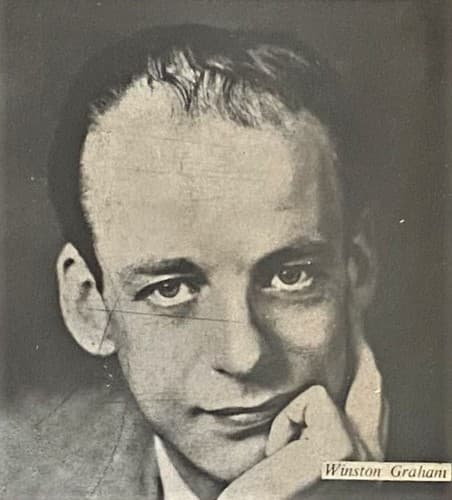
Winston Graham (1977)
Genre
Historical Fiction / Romance
Reading Time
15-20 hours (approx. based on 560 pages)
Key Themes
See below
Sign in to track this book
Ross Poldark navigates London politics and his marriage in Cornwall. The feud with George Warleggan and the forbidden love of Morwenna and Drake threaten to cause new conflicts.
Ross Poldark, elected Member of Parliament for Truro, divides his time between London and Cornwall. His political work in the capital involves influential figures and debates, often leaving Demelza alone at Nampara. Demelza, pregnant with their fourth child, feels neglected and isolated. She struggles with managing the estate and children without Ross, and her lively spirit fades under the stress and loneliness. Ross finds the political world both exciting and frustrating, dealing with slow change and powerful men's schemes.
Morwenna Chynoweth, now Mrs. Whitworth, lives a miserable life with her cruel husband, Reverend Osborne Whitworth. He continues to torment her emotionally and physically, especially regarding her affection for their son, John Conan. Morwenna often falls into a state of despair. Meanwhile, Drake Carne, Demelza's brother, remains deeply in love with Morwenna, despite her marriage. He visits her often, offering comfort, leaving small gifts, or just sitting with her. His steady devotion is a source of hope for Morwenna, even if she cannot fully show it.
George Warleggan, always ambitious, continues to increase his money and social standing. He buys more land, invests in businesses, and strengthens his position in Cornwall. He focuses on ensuring his son, Valentine, inherits a large fortune. Elizabeth Warleggan, however, starts to show subtle signs of illness, with periods of weakness and tiredness. Her condition is at first dismissed as minor, but a more concerning pattern appears, causing quiet worry for her family, though George remains mostly unaware, busy with his own pursuits.
Feeling lonely and unappreciated by Ross, Demelza is drawn to Lieutenant Hugh Armitage. Hugh, a sensitive and artistic young man, is captivated by Demelza's beauty and spirit. He openly expresses his admiration and affection, giving her the emotional connection she feels is missing in her marriage. Demelza is flattered by his devotion, and while she struggles with her loyalty to Ross, she enjoys Hugh's company and his warmth. Their bond deepens, creating a significant emotional challenge for Demelza.
Reverend Osborne Whitworth dies in a riding accident while trying to visit his mistress, a servant girl named Rowella. His horse bolts, and he is thrown, suffering a fatal head injury. His death brings a complex mix of relief and shock. Morwenna is finally free from her torment, though she has deep psychological scars. Drake Carne is overjoyed, seeing a clear path to his beloved. The community, while pretending sympathy, secretly acknowledges the fitting end for a cruel and hypocritical man.
Hugh Armitage's health, already fragile from war wounds, quickly declines. He suffers from a lung condition that worsens steadily. Demelza spends more time at his side, offering comfort. Their emotional connection deepens as Hugh faces his death with grace, expressing his love for Demelza. His death leaves Demelza heartbroken, forcing her to face her deep feelings for him and the void he leaves, greatly affecting her relationship with Ross.
After Osborne Whitworth's death, Drake Carne immediately proposes to Morwenna again. Despite her initial hesitation due to her trauma and perceived unworthiness, and some social disapproval, Morwenna eventually agrees to marry Drake. Their wedding is a quiet event, showing their lasting love. However, Morwenna's psychological scars from her marriage to Whitworth are deep. She struggles with intimacy and the idea of having children, fearing a repeat of her past suffering. Drake, with patience and understanding, slowly works to heal her wounds, showing his steady commitment.
Concerned by a late period and the possibility of a long pregnancy, and perhaps wanting to avoid more questions about Valentine's paternity, Elizabeth Warleggan makes a desperate decision. She consults an apothecary and gets a potion believed to induce labor. Her goal is to bring on an early, but not dangerously premature, birth to match her story about Valentine's conception. However, the potion is too strong, and Elizabeth suffers a severe, painful illness. Despite Dr. Dwight Enys's efforts, she dies from the complications.
Elizabeth's sudden death plunges George Warleggan into deep grief. He is inconsolable, his world shattered. His ambition and feuds with Ross suddenly seem meaningless in the face of such a personal loss. He blames Dr. Enys and others for her passing, retreating into bitter mourning. Ross Poldark, hearing the news, feels a complex mix of emotions. While their relationship was difficult, Elizabeth was his first love and the mother of Geoffrey Charles. He feels a deep sadness for her lost life and for her children's suffering.
The various difficulties, especially Demelza's emotional affair with Hugh and the shock of Elizabeth's death, force Ross and Demelza to confront their marriage. Ross, realizing how close he came to losing Demelza, acknowledges his past neglect and his need to be more present and emotionally available. Demelza, having grieved Hugh, reaffirms her love and commitment to Ross. They have honest, difficult conversations, airing their complaints and reaffirming their bond. Their relationship emerges stronger, built on renewed understanding and appreciation for each other, promising a more stable future.
After Elizabeth's death, George Warleggan's grief slowly turns into a nagging suspicion about Valentine's father. The circumstances of Valentine's birth, along with lingering gossip about Ross and Elizabeth, begin to trouble him. He remembers details, notices Valentine's resemblance to Ross, and becomes convinced that Valentine is not his biological son. This realization adds another layer of torment to his grief and rekindles his hatred for Ross Poldark, setting the stage for future conflict.
Prudie Paynter, after working in various places, eventually returns to Nampara, bringing her loyalty and directness back to the Poldark household. Her return provides a sense of continuity. Meanwhile, Drake and Morwenna Carne, despite Morwenna's initial fears, overcome her trauma and start their family. Morwenna becomes pregnant, showing a triumph over her past suffering and the promise of a brighter future for the couple, solidifying the Carne family line.
The Protagonist
Ross learns to be more emotionally present in his marriage and to acknowledge the impact of his actions on Demelza, moving towards a deeper understanding of partnership.
The Protagonist
Demelza navigates emotional infidelity and grief, ultimately reaffirming her love for Ross and demanding a more reciprocal partnership.
The Antagonist
George experiences profound personal loss, which initially breaks him, but then hardens his resolve and intensifies his animosity towards Ross.
The Supporting
Elizabeth's health declines, and her desperation to control her personal narrative leads to her tragic death.
The Supporting
Morwenna transitions from a victim of abuse to a survivor who finds love and begins to heal, slowly overcoming her profound trauma.
The Supporting
Drake's unwavering love and patience are finally rewarded, as he marries Morwenna and helps her heal from her past trauma.
The Antagonist
Osborne's depravity intensifies until his sudden, ironic, and deserved death.
The Supporting
Hugh provides emotional solace to Demelza, experiences a tragic decline in health, and dies, leaving a lasting impact on Demelza's heart.
The Supporting
Dwight continues his dedicated medical practice and offers steadfast friendship and support to those around him.
The Supporting
Caroline supports her husband and observes the social landscape with her characteristic wit and insight.
The Supporting
Prudie wanders for a time but ultimately returns to her cherished place at Nampara, reinforcing her loyalty to the Poldarks.
This theme explores the many forms of love—romantic, familial, and platonic—and the demands of loyalty. Demelza's emotional affair with Hugh Armitage shows how vulnerable a marriage is when emotional needs are not met, questioning if loyalty can withstand such a test. Drake's steady devotion to Morwenna, even in her darkest times, shows a pure and lasting love that overcomes obstacles. Ross's changing understanding of his loyalty to Demelza, moving from a possessive love to an empathetic partnership, also illustrates the theme. The book suggests that true love needs constant care and understanding, and loyalty, while basic, can be tested by human weaknesses and outside pressures.
““Love was not enough. Not always. It needed to be fed, to be nurtured, to be cherished.””
The strict social hierarchy of 18th-century Cornwall and England is a constant background, affecting characters' choices and conflicts. George Warleggan's ambition to rise socially and gain wealth drives much of his opposition to Ross, who, despite his gentry status, often challenges class expectations. Ross's parliamentary career highlights the power structures and slow social reform. The difference between the lives of the gentry (Poldarks, Warleggan) and the working class (Carnes) shows the disparities in opportunity and privilege. The theme shows how unchecked ambition can lead to destructive outcomes, while class prejudice can fuel lifelong feuds.
““It was not enough to be rich; one must be seen to be rich, and to mix with the right sort.””
Morwenna's story is central to this theme, as she endures deep psychological and physical trauma from Osborne Whitworth. Her later struggles with intimacy and fear of motherhood show the deep and lasting scars of abuse. Drake's patient and unconditional love becomes a key factor in her healing, showing the power of compassion and understanding in overcoming past horrors. Even after Whitworth's death, Morwenna's recovery is not instant, emphasizing the long process of psychological healing. The theme highlights the resilience of the human spirit but also acknowledges the lasting impact of suffering.
““The past was not a thing to be simply put aside; it clung, a dark and persistent shadow.””
The novel explores how secrets, especially those about Valentine's father, affect the lives of Elizabeth, George, and Ross. Elizabeth's desperate attempt to keep this secret leads to her tragic death, showing the destructive power of hidden truths. The lingering suspicions about Valentine's parentage fuel George's renewed anger towards Ross, showing how unresolved past actions continue to shape present conflicts. The theme highlights that even well-kept secrets can have devastating, unforeseen consequences, affecting not only those who hold them but also innocent people caught in their wake.
““A secret, once sown, had a way of sprouting in the most inconvenient ground.””
Ross's double life as a Member of Parliament and a Cornish landowner highlights the tension between public duty and personal life. His political goals in London often lead to neglect of his family and estate, causing conflict with Demelza. The slow, often frustrating pace of political change contrasts sharply with the immediate, personal dramas in Cornwall. This theme questions the sacrifices individuals make for public service and how personal relationships can be strained or enriched by such commitments. It also suggests that true change often begins at home, affecting individual lives before it can manifest on a larger scale.
““The affairs of the nation, however weighty, seemed to pale beside the quiet battles of the heart.””
A romantic rivalry that creates emotional tension and character development.
This classic device is employed to explore the vulnerabilities within Ross and Demelza's marriage. Hugh Armitage's genuine affection for Demelza provides her with the emotional validation and romantic attention she feels is lacking from Ross, particularly during his prolonged absences. This creates significant emotional tension, forcing Demelza to confront her loyalties and Ross to acknowledge his shortcomings. The triangle ultimately serves to strengthen Ross and Demelza's bond after Hugh's death, as they are forced to openly communicate and reaffirm their commitment, learning valuable lessons about the fragility and importance of their relationship.
Hints of future events, particularly Elizabeth's tragic end.
Winston Graham subtly foreshadows Elizabeth's declining health and her eventual demise through recurring mentions of her fragility, fatigue, and her increasingly desperate state of mind regarding Valentine's paternity. The introduction of the apothecary and her interest in potions to induce labor are direct hints at the tragic decision she will make. This device builds suspense and a sense of impending doom, making her death, while shocking, feel like an inevitable consequence of her circumstances and choices, rather than a sudden, out-of-the-blue event. It underscores the theme of consequences stemming from secrets.
The audience knows more than the characters, creating a sense of poetic justice.
The dramatic irony surrounding Osborne Whitworth's death is particularly potent. The audience is well aware of his cruelty, hypocrisy, and his secret mistress, Rowella. When he dies in a ridiculous riding accident while attempting to visit Rowella, the circumstances are known to the reader, though not immediately to all characters. This creates a sense of poetic justice, as the 'pious' reverend meets his end in a morally compromising situation. It provides a satisfying, if grim, conclusion to his tyrannical reign over Morwenna and offers a moment of dark humor amidst the novel's more serious themes.
A physical and metaphorical journey that broadens perspective and creates distance.
Ross's regular journeys between Cornwall and London serve as both a literal plot device and a metaphorical journey of self-discovery. His time in Parliament exposes him to new ideas and challenges his worldview, expanding his political and social consciousness. However, this physical distance also creates emotional distance from Demelza and the daily realities of Nampara, leading to marital strain. The journey highlights the contrast between the provincial and metropolitan worlds, and how one's environment can shape character and relationships, forcing Ross to reconcile his public ambitions with his private obligations.
“There was a tide in her affairs now, and she must take it at the flood or lose her venture.”
— Judith thinking about her opportunities and the need for decisive action.
“Love was not a thing to be measured, but to be felt, and when it was felt truly, it did not care for obstacles.”
— Judith reflecting on her feelings for Mark and the societal barriers.
“The past was a heavy cloak, but one could choose whether to wear it or cast it off.”
— Mark considering his family history and the expectations placed upon him.
“Sometimes the greatest courage lay not in fighting, but in enduring.”
— An observation made during a period of hardship and waiting.
“A secret shared was a secret weakened, and a secret kept was a burden.”
— A character weighing the pros and cons of revealing a personal secret.
“The sea took what it wanted, and gave back only what it pleased, and man was a fool to think he could command it.”
— A fisherman reflecting on the power and unpredictability of the ocean.
“It was not the grand gestures that built a life, but the small, persistent acts of kindness and understanding.”
— A quiet moment of reflection on the nature of relationships.
“Hope was a fragile thing, easily crushed, but impossible to live without.”
— A character facing a difficult situation, clinging to a glimmer of hope.
“The world was changing, and those who refused to change with it would be left behind.”
— A character discussing the industrial revolution and its impact on society.
“There was a difference between knowing a person and truly understanding them.”
— Judith realizing the depth of her connection with someone, beyond superficial acquaintance.
“Grief was a solitary journey, but it did not mean one had to walk it alone.”
— A character experiencing loss and the comfort offered by others.
“Duty was a hard master, but it gave a man purpose, even if that purpose was unwelcome.”
— Mark grappling with his responsibilities to his family and estate.
“The truth had a way of surfacing, no matter how deeply it was buried.”
— A character fearing the revelation of a long-held secret.
“One could not choose where one's heart led, only whether to follow it.”
— Judith contemplating a difficult romantic choice.
Ready to see how well you understood this book? Take our interactive quiz with 10 questions.
Biography coming soon.







