“The past is a foreign country; they do things differently there.”
— A reflection on the historical setting and the differences in societal norms.


Caleb Carr (1997)
Genre
Thriller / Historical Fiction / Mystery
Reading Time
15-20 hours
Key Themes
See below
Sign in to track this book
In 1897 New York, Dr. Kreizler's team, seen through the eyes of a former street boy, searches for a kidnapped diplomat's baby. They race against war and a courtroom drama that questions what motherhood means.
The story begins in June 1897, a year after the Beecham case. Stevie Taggert, now working for Dr. Kreizler, tells the story. Sara Howard, who runs her own detective agency, gets a visit from Doña Emilia Merida, wife of the Spanish military attaché. Doña Emilia's infant daughter, Josefina, was taken from their home. Fearing political trouble due to rising tensions between Spain and the U.S., and not trusting the police, Doña Emilia asks Sara to find her child. Sara sees the seriousness and danger, so she brings the old team back together: Dr. Kreizler, John Schuyler Moore, and the Isaacson brothers, to look into the kidnapping quietly.
Dr. Kreizler, John Moore, and the Isaacson brothers agree to help Sara. Their first look at the Merida home reveals few clues, but Dr. Kreizler quickly realizes the kidnapping was personal, not political, because of how carefully it was done and the lack of a ransom note. The team focuses on the house staff and the Merida family's private life. Stevie, using his street smarts, finds a young boy, Joey, who says he saw a woman with a baby like Josefina. This leads them to a possible suspect: a mysterious, heavily veiled woman who was often in the Merida's neighborhood.
Through careful detective work, including tracking clothing descriptions and talking to contacts, the team identifies the abductor as Elodie Anderson. She was a former nursemaid who briefly worked for the Meridas. Elodie has a troubled past, marked by the loss of her own child and a habit of believing other children are hers. Dr. Kreizler explains that Elodie suffers from a maternal delusion. The team learns Elodie moved often and used different names, making her hard to track. They realize they are dealing with a disturbed person, not a common criminal.
The investigation leads the team to Saratoga Springs, a popular summer resort known for horse racing and gambling. They find that Elodie Anderson, using a new name, has been seen in Saratoga, often at grand hotels. John Moore's connections in high society and the Isaacsons' careful detective work help them track Elodie's movements. They learn she tries to appear as a respectable mother, despite her increasingly odd behavior. Stevie's observations of children in Saratoga also give important details about Elodie's interactions and how she keeps up her deception.
The team finally corners Elodie Anderson in Saratoga. The confrontation is tense, as Elodie is deep in her delusion, believing Josefina is her lost child. Dr. Kreizler tries to reason with her, using his psychological knowledge, while Sara, Marcus, and Lucius keep a careful watch. Stevie and Cyrus are key in keeping the baby safe. After a careful and risky negotiation, they get Josefina away from Elodie. Elodie is caught, but her mental state is clearly fragile, setting up a complex legal fight instead of a simple criminal case.
Elodie Anderson is on trial for kidnapping, but the case quickly focuses on her mental state. The defense, led by Clarence Darrow, argues for her insanity, presenting her delusion as a tragic illness. Dr. Kreizler testifies as an expert, explaining the complexities of maternal delusion and its origins in trauma. The prosecution, however, tries to show Elodie as a calculating criminal. The trial becomes a public show, with the press reporting every detail and the idea of motherhood itself seemingly on trial. Stevie, deeply affected by Elodie's situation and that of neglected children, watches closely.
During the trial, Dr. Kreizler's testimony is vital. He carefully outlines Elodie's psychological profile, explaining how her past trauma—the loss of her child and later abuse—led to her deep delusion. He argues that while her actions were wrong, they came from a disturbed mind, not a bad one. Clarence Darrow skillfully uses Kreizler's insights to build his defense, painting Elodie as a victim of circumstance and mental illness, not a villain. The courtroom becomes a place for a clash of ideas about justice, mental health, and societal duty, with the jury facing new psychological concepts.
The jury finds Elodie Anderson not guilty by reason of insanity. She is sent to an asylum for treatment, not prison. The verdict causes widespread public debate, with many struggling to understand mental illness and criminal acts. For the team, the outcome is mixed. Josefina is safe, but the case leaves a lasting mark, especially on Dr. Kreizler and Stevie. Stevie, seeing Elodie's sad journey, starts to think about the societal failures that lead to such suffering and delusion, deepening his understanding of human nature and justice.
Throughout the investigation and trial, Stevie Taggert is not just an observer but an active participant whose unique view adds depth to the story. His own past as a neglected street boy allows him to feel for the vulnerable, including Elodie and the street children he meets. He sees the societal failures that lead children to crime and despair, and he actively tries to protect others like himself, strengthening his bond with the Kreizler team and his mentor.
Unlike the previous case with a cruel killer, Josefina's kidnapping forces Dr. Kreizler and his team to face a different, perhaps more complex, kind of 'wrong': one born from deep psychological trauma and delusion rather than pure malice. The case challenges their understanding of criminal intent and shows how early forensic psychiatry struggled to define and treat mental illness within the legal system. The experience deepens their collective understanding of the human mind and the various ways darkness can appear, leaving them with a more nuanced view of the world.
The Narrator, Supporting
Stevie matures significantly, developing a deeper understanding of human nature and societal injustices, and solidifying his commitment to helping vulnerable children.
The Protagonist, Alienist
Kreizler refines his understanding of mental illness, particularly maternal delusion, and confronts the limitations of the legal system in addressing psychological pathology.
The Protagonist, Private Detective
Sara continues to assert her independence and leadership, successfully running her own agency and demonstrating her unique investigative skills.
The Supporting, Reporter
Moore grapples with the ethical implications of reporting on sensational cases while remaining a loyal friend and essential member of the team.
The Supporting, Detective
Marcus continues to hone his forensic skills and adapt his investigative methods to increasingly complex psychological cases.
The Supporting, Detective
Lucius further develops his intuitive interviewing techniques and adapts to the psychological nuances of the new case.
The Supporting, Kreizler's Assistant
Cyrus continues to be a steadfast protector and moral anchor for the team, particularly for Stevie.
The Antagonist
Elodie's tragic arc culminates in her trial and commitment to an asylum, highlighting the devastating impact of untreated mental illness.
The Mentioned, Historical Figure
Darrow's role is to challenge the legal system's understanding of mental illness and advocate for a compassionate view of Elodie's actions.
The Supporting
Doña Emilia's arc is one of intense fear and relief as she awaits the return of her daughter.
Unlike the clear evil of the previous killer, this novel looks at a more complex kind of 'wrong' that comes from deep psychological trauma and delusion. Elodie Anderson's actions, though criminal, come from a tragic mental illness, not bad intentions. Dr. Kreizler's work shows the difference between planned cruelty and the destructive power of a disturbed mind, making the characters and reader think about blame and empathy. Elodie Anderson's trial, with Clarence Darrow's defense, highlights this theme, asking how society should judge those whose crimes come from madness.
“Evil, in its truest form, is not merely the absence of good, but often the profound distortion of it, born from suffering too immense for the mind to bear.”
The novel clearly shows how societal neglect, especially of children and those with mental vulnerabilities, can lead to terrible outcomes. Stevie Taggert's perspective, from his own past as a street boy, highlights the struggles of forgotten children in New York. Elodie Anderson's sad history of abuse and losing her child, along with a lack of mental health support, directly cause her delusion and actions. The story suggests that society's failure to care for its most vulnerable members creates suffering and, sometimes, crime.
“There were thousands of children like Joey and like I had once been, cast off by a world that had no use for them, left to carve out their own justice.”
Elodie Anderson's case pushes early forensic psychiatry further into the legal system, challenging old ideas of justice. Dr. Kreizler's detailed psychological analysis is key to understanding Elodie's reasons, but the legal system struggles to use these new ideas. The trial becomes a public stage for the conflict between legal tradition and psychological understanding, arguing for a more humane, if controversial, approach to criminal responsibility when mental illness is involved. It shows the difficult, often misunderstood, work of pioneers like Kreizler in shaping modern justice.
“Justice, gentlemen, is not merely retribution. It is understanding, and in understanding, perhaps, lies the true path to healing.”
Sara Howard's character shows the struggles and successes of women seeking independence and professional recognition in the late 19th century. Running her own detective agency, she goes against social expectations and proves herself a valuable, intelligent, and brave leader. The story highlights the challenges she faces, but also her strength and skill. Also, the theme of motherhood, both idealized and tragically warped through Elodie's delusion, is central, looking at social pressures and expectations placed on women.
“I had built my own agency, not by the grace of men, but by sheer will and competence. And no man, no matter how powerful, would ever take that from me.”
Despite the dark subject matter, the novel emphasizes the importance of empathy and the connections between the core team members. Stevie's ability to connect with street children, Kreizler's deep, if sometimes distant, empathy for the mentally ill, and the team's loyalty to each other are key to their success. The story argues that understanding and compassion, even for those who commit crimes due to illness, are essential for true justice and human progress. The team's collective strength comes from their different viewpoints and their shared commitment to helping others.
“It was not enough to merely observe; one had to strive to understand, to feel, even the most fractured corners of the human heart.”
The story is told through the eyes of a former street urchin, offering a unique, grounded perspective.
Stevie Taggert's first-person narration provides a distinct voice and perspective compared to the previous book's third-person. His background as a street urchin allows for intimate insights into the lives of the poor and neglected children, grounding the often-academic discussions of Dr. Kreizler. His observations are sharp, often poignant, and his emotional reactions add a layer of humanity to the complex psychological and legal proceedings, making the themes of societal neglect and the plight of the vulnerable particularly impactful. This narrative choice also allows for a more personal reflection on the events.
Incorporation of real historical figures and meticulous period detail.
The novel is steeped in historically accurate details of late 19th-century New York City, from its social strata and technological advancements to its cultural nuances. The inclusion of real historical figures like Clarence Darrow and Elizabeth Cady Stanton lends authenticity and gravitas to the narrative. This device grounds the fictional mystery in a tangible historical context, making the societal issues and the pioneering work of the characters feel more immediate and relevant, while also enriching the reader's understanding of the era.
Dr. Kreizler's use of early forensic psychiatry to understand criminal motives.
Dr. Kreizler's role as an 'alienist' is central to the plot. His method of psychological profiling, based on understanding the childhood traumas and mental states of criminals, is the primary tool for solving the mystery. This device allows the narrative to delve deeply into the motivations behind Elodie Anderson's actions, moving beyond simple criminal intent to explore the complexities of mental illness. It positions the novel as a pioneer in the genre of psychological thrillers, showcasing the nascent stages of forensic psychology as a scientific discipline within the legal system.
The looming war between Spain and the U.S. creates initial misdirection and heightened stakes.
The political tension between Spain and the United States, on the brink of war, serves as a crucial plot device. It initially creates a powerful red herring, suggesting the kidnapping is a political act, and raises the stakes, as any misstep could ignite international conflict. This backdrop not only adds historical depth but also complicates the team's investigation, forcing them to operate with extreme discretion and navigate delicate diplomatic waters before the true, personal nature of the crime is revealed. It highlights the volatile atmosphere of the era.
“The past is a foreign country; they do things differently there.”
— A reflection on the historical setting and the differences in societal norms.
“There are some things that cannot be unseen, some knowledge that, once gained, burns its way into the soul.”
— Dr. Kreizler contemplating the horrors of the crimes he investigates.
“The human mind, like a deep and dark ocean, holds many secrets, many monsters.”
— A recurring theme in Kreizler's psychological analysis of criminals.
“Justice, true justice, is not always about punishment, but about understanding.”
— Kreizler's philosophy on criminal justice and rehabilitation.
“To truly see the darkness, one must first confront the darkness within oneself.”
— A challenge posed to the investigative team as they delve into depraved acts.
“The greatest evil often masquerades as the greatest good.”
— A realization made during the unraveling of the antagonist's motives.
“Fear is a powerful motivator, capable of twisting even the most righteous intentions.”
— Examining the underlying reasons for characters' actions and betrayals.
“History does not repeat itself, but it often rhymes.”
— A commentary on the cyclical nature of societal problems and human failings.
“The truth, like a stubborn weed, will always find a way to break through, no matter how deeply buried.”
— The perseverance of the team in uncovering hidden facts.
“In the labyrinth of the human heart, reason often loses its way.”
— Reflecting on the emotional complexities and irrationality of human actions.
“Sometimes the most dangerous monsters are not those with fangs and claws, but those with smiles and persuasive words.”
— A warning about the insidious nature of certain antagonists.
“The past is never truly dead; it merely waits for an opportunity to rise again.”
— A sense of lingering historical echoes and their impact on the present.
“We are all products of our time, shaped by the forces we often fail to comprehend.”
— An observation on the influence of historical and social context on individual lives.
“To understand a monster, one must first acknowledge the humanity within it, however distorted.”
— Kreizler's approach to criminal psychology, even with the most heinous offenders.
Ready to see how well you understood this book? Take our interactive quiz with 10 questions.
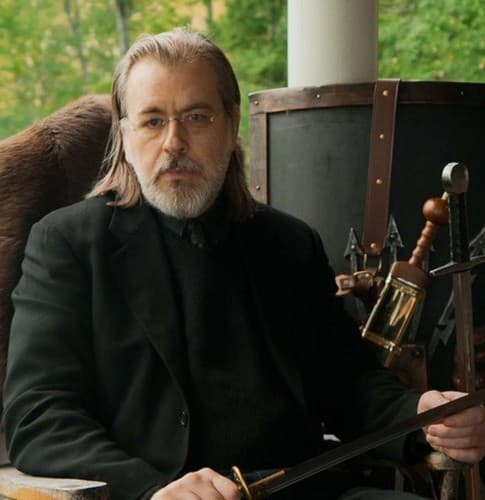
Caleb Carr is an American military historian and author. Carr is the second of three sons born to Lucien Carr and Francesca Von Hartz.







