Project Scoop and the Piedmont Disaster
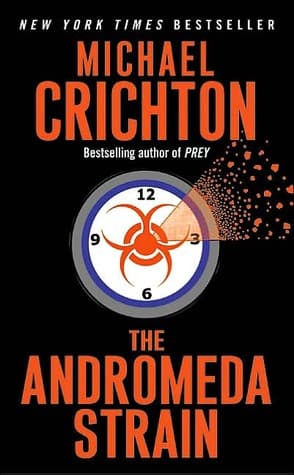
Near Piedmont, Arizona, the military satellite Scoop VII crashes. This satellite is part of Project Scoop, which collects alien microorganisms. Soon after its retrieval, a two-man military team, led by Captain Morton, finds every resident of Piedmont dead, except for an infant and an elderly man. The dead are frozen in their daily routines. Morton suspects a biological contaminant and issues a Code Red, activating Wildfire, a secret biological containment facility. The surviving infant and old man are taken to Wildfire, while a team prepares to recover the satellite and the deceased townspeople.
Activation of Project Wildfire
After the Code Red from Piedmont, Project Wildfire activates. This classified underground facility, designed to study and contain alien biological threats, calls its key scientific team. Dr. Jeremy Stone, a Nobel laureate in bacteriology and the project's lead, is summoned. He contacts the other core members: Dr. Charles Burton, a pathologist; Dr. Peter Leavitt, a clinical microbiologist; and Dr. Mark Hall, a surgeon and the team's designated 'odd man out' due to a security protocol. These four are briefed on the Piedmont incident and the potential for a deadly alien organism, preparing for the challenge.
Arrival at Wildfire and Initial Assessment
The Wildfire team, Drs. Stone, Burton, Leavitt, and Hall, arrive at the desolate Nevada desert site and go deep underground to the multi-level, self-destructing Wildfire facility. Their entry involves a strict, multi-stage decontamination process, stripping them of personal items and sterilizing them. Inside, they are briefed on preliminary findings from Piedmont: the rapid deaths, the two survivors, and the retrieved Scoop VII satellite. Their immediate task is to analyze the satellite, Piedmont samples, and blood from the survivors, all under strict containment, to identify the unknown agent.
Retrieval of Scoop VII and Autopsies
A specialized recovery team, working under extreme biohazard conditions, retrieves the Scoop VII satellite from Piedmont and takes it to Wildfire. Meanwhile, Wildfire scientists begin autopsies on the dead Piedmont residents. Dr. Burton, the pathologist, finds no visible trauma or disease. The victims' blood is dark and clotted, but the cause of death is unclear. The only consistent finding is apparent spontaneous blood coagulation. The team also begins studying the retrieved satellite, carefully opening it in a sterile environment, hoping to find the contamination source within its mechanisms, while maintaining absolute isolation.
The Andromeda Organism Revealed
After meticulous analysis of samples from the Scoop VII satellite, Dr. Stone and Dr. Leavitt discover a microscopic, non-cellular, crystalline organism. They name it 'Andromeda.' Initial tests show Andromeda is a rapidly mutating, protein-based life form that converts energy directly, without metabolic waste. It 'grows' by incorporating matter from its environment. Its simple yet adaptable structure is unique. The team hypothesizes that Andromeda caused the Piedmont residents' blood to coagulate instantly, leading to their rapid deaths. Andromeda's unique properties, including its ability to bypass standard biological processes, challenge the scientific team.
Studying the Survivors
Drs. Hall and Leavitt study the two survivors from Piedmont: an elderly man named Peter Jackson and an infant. Jackson is a cantankerous alcoholic; the baby seems unaffected. Blood tests show Jackson's blood pH is highly acidic, while the baby's pH is highly alkaline. The scientists theorize that Andromeda, a pH-sensitive organism, could not thrive or replicate in either extreme. Jackson's chronic alcoholism caused his acidosis, and the baby's rapid metabolism kept its blood alkaline. This discovery suggests a potential weakness for Andromeda and offers hope for a countermeasure, while also showing the organism's unique biological interactions.
Andromeda's Mutation and Escape
During experiments, Andromeda mutates, changing from a blood-clotting agent to a form that degrades synthetic rubber and plastic. This new mutation allows it to escape its containment vessel within the Wildfire lab. The organism spreads through the facility's ventilation system, causing critical equipment failures, including the destruction of seals and filters. The automated defense systems interpret these breaches as a full containment failure, triggering a countdown to the facility's self-destruct sequence, designed to incinerate Andromeda and the entire lab to prevent global contamination. Panic spreads as scientists realize the danger.
The Self-Destruct Countdown
With Andromeda spreading and the self-destruct sequence initiated, Dr. Mark Hall, designated as the 'odd man out' by the Wildfire protocol (meaning he is the only one who can abort the self-destruct in case of a computer error), is the only hope. He must navigate the increasingly dangerous and contaminated levels of the facility, bypassing automated defenses and the spreading Andromeda, to reach a central control console on the lowest level. The other scientists, trapped in their labs, provide guidance via intercom but cannot directly help him. The clock ticks down, threatening to incinerate the facility and potentially release a mutated, even more dangerous Andromeda into the atmosphere.
Hall's Desperate Race
Dr. Hall's journey through the Wildfire facility is a perilous race against time. He encounters numerous automated security measures, including lasers and tranquilizer darts, which he must disable or avoid. The spreading Andromeda has compromised various systems, making his path unpredictable and dangerous. He faces extreme claustrophobia and physical exertion, barely making it through rapidly closing doors and contaminated sections. His colleagues, Dr. Stone, Burton, and Leavitt, monitor his progress and offer crucial advice, calculating the fastest, safest routes. Hall's determination is tested as he navigates the complex, multi-level maze, knowing the world's fate rests on his success.
Aborting the Self-Destruct
After a harrowing descent, Dr. Mark Hall reaches the central control console on Wildfire's lowest level. With seconds left on the countdown, he inputs the correct abort code, stopping the self-destruct sequence. The facility is saved from incineration, and with it, the potential release of aerosolized Andromeda into the atmosphere. Exhausted but relieved, Hall tells his colleagues of his success. The immediate threat of the self-destruct is averted, but the Andromeda strain remains a formidable danger, though now contained within Wildfire, allowing scientists to regroup and continue efforts to understand and neutralize it.
Andromeda's Final Mutation and Departure
With the self-destruct aborted, the Wildfire team reassesses Andromeda. They discover the organism has undergone another, unexpected mutation. This time, Andromeda has transformed into a non-pathogenic, inert form. It is no longer harmful to biological life and cannot degrade synthetic materials. The organism, having apparently exhausted its capacity for harmful mutation or having adapted to an 'ideal' form, begins to disperse. It drifts harmlessly into the upper atmosphere, where it is expected to dissipate and become inert. The crisis ends, not by human intervention, but by Andromeda's own unpredictable evolution, leaving the scientists with relief and wonder.
Aftermath and Lessons Learned
After the Andromeda crisis, the Wildfire team reflects on the near-global catastrophe. Dr. Stone reports their findings to the President and other government officials, emphasizing the extreme danger of alien contamination and the unpredictable nature of alien life. The incident highlights the need for better sterilization protocols for all returning space probes and the importance of facilities like Wildfire, despite their risks. The scientists grapple with Andromeda's spontaneous mutation into a harmless form, acknowledging that humanity was saved by chance rather than scientific mastery. The experience leaves them with respect for the unknown and a sober understanding of humanity's vulnerability to alien threats.