“He was a man of magnificent intentions, but his ideas were not always of the clearest.”
— Describing Christopher Newman's character and his approach to life.

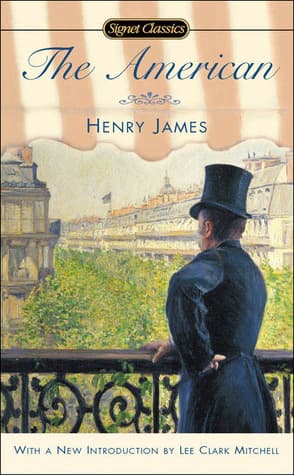
Genre
Literary Fiction / Historical Fiction / Romance
Reading Time
1000 min
Key Themes
See below
Sign in to track this book
An American millionaire, new to European society, falls for an aristocratic French widow, uncovering her family's dark past and facing a choice between revenge and personal honor.
Christopher Newman, a rich American businessman, arrives in Paris after a successful career, feeling a sense of emptiness and a wish for a more refined life. He made his money through hard work but now wants experiences beyond business. He plans to find a beautiful, cultured European wife and immerse himself in art and history. His first experiences in Parisian society show his unpolished American style and an almost childlike interest in European art, which he first sees with a buyer's mindset. He soon meets Mrs. Tristram, an American friend living in Paris, who takes an interest in his search.
Through Mrs. Tristram, Newman meets Madame de Cintré, formerly Claire de Bellegarde, a beautiful and sad young widow from an old, aristocratic French family. Newman is immediately drawn to her grace, quiet dignity, and sorrow. He learns that Claire was married to an older man by her family for money and social status, a marriage that brought her little happiness. Despite her reserved nature, Newman feels an instant connection and a strong wish to win her affection. He starts to visit the Bellegarde home, patiently enduring the formal and often cold welcome from Claire's mother, the Marquise de Bellegarde, and her older brother, the Marquis Urbain de Bellegarde.
Newman begins a determined courtship of Claire, showing his sincere admiration and affection. He is direct and earnest, qualities new to the subtle social rituals of European aristocracy. Claire, at first hesitant because of her family's likely disapproval and her own sense of duty, slowly responds to Newman's genuine warmth and unusual charm. However, the Marquise and Urbain see Newman with disdain and suspicion. They are shocked by his lack of noble lineage, his 'new money' status, and his direct American manner, which they see as crude, despite his great wealth.
Despite strong opposition from her mother and brother, Claire de Bellegarde, moved by Newman's steady devotion and seeing a chance for happiness, eventually accepts his marriage proposal. This decision causes a major upset within the Bellegarde family. The Marquise and Urbain are furious, seeing the match as a major dishonor to their old name and a betrayal of their aristocratic values. They try to talk Claire out of it through emotional manipulation and appeals to her sense of duty, pointing out the social gap between their world and Newman's. Newman, for his part, remains hopeful, believing his wealth and sincere intentions will overcome their biases.
As wedding preparations are supposedly happening, the Bellegarde family suddenly leaves Paris for their ancestral country estate, Fleurières, taking Claire with them and leaving Newman confused and upset. He is given vague and conflicting reasons for their departure, none of which truly explain the suddenness or the clear intention to separate him from Claire. Newman, determined not to be stopped, follows them to Fleurières. When he arrives, he is met with an even colder welcome, and Claire is kept mostly apart from him, her despair clear. It becomes obvious that the Bellegardes are actively trying to break off the engagement.
In a formal and blunt interview, the Marquise and Urbain de Bellegarde tell Newman they cannot allow the marriage. Their reasons are essentially an attack on his American identity: his lack of old lineage, his 'newness,' his unfamiliarity with their traditions, and his general unsuitability for their noble family. They state their belief that a marriage with Newman would be a permanent stain on their respected name. Newman is deeply hurt and angered by their snobbery and their complete disregard for Claire's feelings and his own. He vows to understand the real reasons behind their sudden and complete rejection.
Newman, still recovering from the rejection, meets Noémie Nioche, a copyist he had hired, and her father, Monsieur Nioche, a former servant of the Bellegarde family. Through careful questions and observations, Newman starts to suspect the Bellegardes are hiding a dark secret. He eventually learns, through Monsieur Nioche's reluctant testimony and his own inquiries, that the Marquise de Bellegarde and Urbain were involved in the death of the old Marquis de Bellegarde – Claire's father and the Marquise's husband. The old Marquis was confined and allowed to die early, possibly poisoned, to keep him from disinheriting his children and to ensure the family's social and financial status remained secure.
Armed with the letter written by the dying Marquis, which details his mistreatment and implicates the Marquise and Urbain, Newman confronts the Bellegardes. He tells them he has proof of their crime, threatening to expose them to public scandal. The Bellegardes are terrified, knowing their reputation would be ruined. Meanwhile, Claire, overwhelmed by her family's cruelty and societal pressures, and perhaps aware of the family's secret, makes a drastic decision: she announces her plan to enter a Carmelite convent, giving up the world and any chance of marriage with Newman. Her choice leaves Newman heartbroken and helpless.
Newman visits Claire at the convent, hoping to change her mind, but finds her firm in her decision. She is calm but distant, her spirit seemingly broken by her family and her situation. Seeing her behind the grille, separated from him by a great gap, deepens Newman's pain and strengthens his wish for revenge. He holds the incriminating letter, a powerful weapon against the Bellegardes, and considers exposing their crime. He wants to see them suffer the social ruin they inflicted on him and Claire. He struggles with the moral implications of such an act, weighing revenge against his own sense of honor.
After much inner struggle, Newman makes a decision. He realizes that exposing the Bellegardes, while satisfying a desire for revenge, would not bring him happiness or restore Claire to him. It would only further involve him in their corrupt world and perhaps even damage his own character. In a clear moment, he takes the incriminating letter and burns it. This act shows his rejection of their Old World corruption and his embrace of his own American moral code, which values integrity over petty vengeance. He decides to move on from the Bellegardes and their secrets, choosing to keep his own dignity and sense of self.
Having burned the letter and accepted Claire's fate, Christopher Newman prepares to leave Europe. He travels to England and then back to America, having gained a deep, though painful, understanding of European society and the limits of his American idealism. He has been deeply hurt by the experience, losing the woman he loved and seeing the moral decay hidden beneath aristocratic appearances. Yet, he emerges with his basic integrity intact, having chosen self-respect over bitter revenge. He remains a wealthy man, but the experience has matured him, giving him a deeper understanding of human nature and cultural differences.
The Protagonist
Newman begins as an idealistic American but is profoundly disillusioned by the snobbery and moral corruption of the European aristocracy, ultimately choosing integrity over revenge.
The Love Interest
Claire's arc is one of tragic surrender; she initially finds hope in Newman but ultimately retreats from the world into a convent, broken by her family's pressures.
The Antagonist
The Marquise remains unyielding in her aristocratic prejudices, ultimately revealed to be capable of extreme moral corruption to protect her family's reputation.
The Antagonist
Urbain, like his mother, remains steadfast in his aristocratic snobbery and moral duplicity, eventually facing Newman's threat of exposure.
The Supporting
Mrs. Tristram remains a consistent, insightful, and somewhat detached observer, her initial amusement evolving into a sympathetic understanding of Newman's plight.
The Supporting
Mr. Tristram's character remains largely static, serving as a foil to Newman's ambition.
The Supporting
Noémie uses her limited social capital and information to improve her own circumstances, eventually marrying a wealthy man.
The Supporting
Monsieur Nioche, initially fearful, eventually reveals the Bellegarde family's dark secret, driven by his daughter's ambition and his own sense of justice.
The Mentioned
Though deceased, his story is revealed gradually, exposing the moral depravity of his family.
A main theme of 'The American' is the sharp contrast between American idealism, directness, and democratic values, and European aristocracy's strict traditions, snobbery, and moral decay. Christopher Newman embodies the 'New World' with his self-made wealth, optimism, and straightforward approach to life and love. The Bellegarde family represents the 'Old World' with their old lineage, complex social rules, and willingness to sacrifice individual happiness for family prestige. Newman's attempts to navigate French society show his innocence and the deep-seated biases of the European elite. This clash is clear in the Bellegardes' rejection of Newman, not for any personal fault, but purely for his lack of an old name and his American 'newness,' showing the deep cultural divide.
“He was a man who had his own ways, and they were not those of the Bellegardes.”
Newman begins his European journey with American innocence and optimism, believing that wealth and sincere intentions can overcome any problem. He is eager to experience European culture and find love. However, his experiences with the Bellegarde family slowly remove this innocence. He learns that beneath the aristocratic appearance lies snobbery, cruelty, and moral corruption. His journey is one of deep disappointment as he faces the reality that his American values do not fit with, and are often scorned by, the Old World's fixed prejudices and dark secrets. The loss of Claire de Bellegarde is the clearest symbol of this broken idealism.
“He had tasted of the Old World, and it had been bitter to his palate.”
This theme explores the tension between a person's inner moral sense and the damaging influence of societal expectations and aristocratic pride. Newman, despite his early wish to fit into European society, ultimately follows his strong American sense of justice and fairness. The Bellegardes, on the other hand, are willing to commit serious moral wrongs—such as their involvement in the old Marquis's death and their cruel manipulation of Claire—to keep their social standing and family honor. Newman's decision to burn the incriminating letter, giving up revenge, is a strong statement of his personal moral integrity over the desire to stoop to their level of malice, despite his deep hurt.
“He held his revenge in his hand, and he was able to say to himself that he was not afraid of it.”
The novel looks at different kinds of freedom and restriction. Newman shows American freedom – the freedom to make one's own fortune, choose one's path, and marry for love. Claire de Bellegarde, in contrast, shows the ultimate restriction, bound by her aristocratic family's strict expectations, social norms, and a sense of duty that leads her to a convent. Her decision to enter the convent, while seemingly a choice, is presented as a final surrender to an oppressive system, a tragic escape from a life where she has no real control. The Bellegardes themselves, while seeming free, are restricted by their own pride and the need to uphold their ancient name, leading them to morally questionable actions.
“She was not a woman who could be happy without a great deal of freedom.”
The question of revenge is central to Newman's journey, especially after he uncovers the Bellegardes' dark secret. He gains the power to completely ruin their reputation, a tempting idea given their cruel treatment of him and Claire. The novel carefully explores Newman's internal conflict: whether to get revenge and expose their crime, or to rise above it. His final decision to burn the incriminating letter, choosing not to use it, shows a deep act of moral strength and a rejection of the destructive cycle of retribution. It highlights a form of forgiveness, not necessarily toward the Bellegardes, but toward himself, allowing him to move forward with his integrity intact.
“He had a great desire to make them suffer, but he had a greater desire to be himself.”
A letter from the deceased Marquis detailing his mistreatment, serving as a weapon for Newman.
The letter written by the dying Old Marquis de Bellegarde is the central plot device. It serves as the tangible proof of the Marquise and Urbain's complicity in their patriarch's death, detailing his confinement and the suspicious circumstances leading to his demise. This letter is Newman's 'weapon' against the Bellegardes, giving him immense power over them. Its existence creates the moral dilemma at the heart of the novel: whether Newman will use it for revenge or choose a different path. The letter symbolizes the hidden corruption beneath the aristocratic facade and acts as a catalyst for the climax of Newman's internal conflict.
Claire's retreat into a religious order, symbolizing her ultimate surrender and the Old World's constraints.
The Carmelite convent serves as a powerful symbolic plot device. Claire's decision to enter the convent is not merely a personal choice but a tragic outcome forced by the unbearable pressures of her family and society. It represents the ultimate escape from a world where she has no agency, a complete renunciation of worldly happiness, including her love for Newman. For Newman, the convent becomes an impenetrable barrier, signifying the final, insurmountable obstacle to his love and the tangible manifestation of the Old World's power to crush individual happiness. It reinforces the theme of constraint and the tragic fate of those who cannot escape its grip.
The fundamental cultural dichotomy driving character motivations and plot conflicts.
This overarching contrast is not just a theme but also a plot device that structures the entire narrative. Newman's American characteristics (directness, optimism, self-made wealth) constantly clash with the Bellegardes' European traits (aristocratic pride, snobbery, adherence to tradition, hidden corruption). This device fuels the central conflict, explains the Bellegardes' rejection of Newman, and dictates the misunderstandings and emotional distances between the characters. It sets up the 'rules' of engagement that Newman, initially unaware, must learn to navigate, ultimately leading to his disillusionment and moral choices.
“He was a man of magnificent intentions, but his ideas were not always of the clearest.”
— Describing Christopher Newman's character and his approach to life.
“The world was a great open book for him, and he had learned to read it with a certain shrewdness.”
— Further elaborating on Christopher Newman's worldly experience and self-education.
“She was a woman of the most delicate and complicated constitution, and her beauty was of that kind which seems to have been refined by a process of thought.”
— Describing Madame de Cintré's refined and intellectual beauty.
“He felt a certain delicious sense of moral freedom, a sense of being able to do exactly what he liked, without accounting to anyone.”
— Christopher Newman enjoying his independence and wealth in Europe.
“It was the old story of the New World trying to buy the Old, and finding that there were some things not in the market.”
— A central theme of the novel, the clash between American wealth and European tradition.
“There was a kind of high, still splendor in the air, a sense of things immemorial and indestructible.”
— Newman's impression of the ancient grandeur of European society.
“He was like a man who had been walking in a thick fog and had suddenly come out into the sunshine.”
— Newman's initial feeling of liberation and clarity in Paris.
“The whole situation had a sort of dismal, almost pathetic ugliness.”
— Newman's realization of the difficult and unpleasant nature of his pursuit of Madame de Cintré.
“He had an immense curiosity, a curiosity that was almost boyish in its freshness and its scope.”
— Highlighting Christopher Newman's enduring inquisitiveness.
“It was not a question of his being worthy of her, but of her being worthy of him.”
— Newman's shift in perspective regarding his relationship with Madame de Cintré, asserting his own value.
“He had a great deal of the simple, honest, good-humored American about him.”
— A direct description of Newman's quintessential American qualities.
“He was learning to know the world, and he was learning it by the only way that is really profitable—by getting bruised.”
— Newman's education through hardship and experience in Europe.
“The past was a dead letter; he had torn it up.”
— Newman's decision to forgo revenge against the Bellegardes, choosing to move on.
“He had never known what it was to be afraid of anything but not succeeding.”
— Reflecting on Newman's inherent optimism and drive.
Ready to see how well you understood this book? Take our interactive quiz with 10 questions.
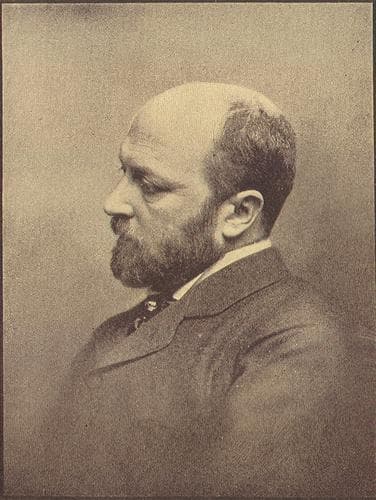
Henry James was an American-British author. He is regarded as a key transitional figure between literary realism and literary modernism, and is considered by many to be among the greatest novelists in the English language. He was the son of Henry James Sr. and the brother of philosopher and psychologist William James and diarist Alice James.







