“We are all subject to the fates. But we must all act as if we are not.”
— Lord Asriel speaking about free will and destiny.

Philip Pullman (2000)
Genre
Fantasy / Children's / Science Fiction / Young Adult
Reading Time
1200 min
Key Themes
See below
Sign in to track this book
Guided by angels and haunted by prophecy, Will, the Knife Bearer, must journey to the Underworld and beyond to reunite with Lyra and deliver a cosmic weapon that will decide the fate of infinite worlds.
After 'The Subtle Knife,' Will Parry, bearer of the æsahættr, searches for Lyra Belacqua, who her mother, Mrs. Coulter, has taken. Two rebel angels, Balthamos and Baruch, approach him. They tell him Lyra is important to Lord Asriel's war against the Authority. They explain that Will must deliver the Subtle Knife to Asriel, but first, they must rescue Lyra from Mrs. Coulter, who holds her captive in a remote cave. Will, still grieving his father's death and burdened by the knife's power, agrees to help, driven by his bond with Lyra. They journey to the Himalayas, where Mrs. Coulter is hiding, guarding her unconscious daughter.
Mrs. Coulter keeps Lyra in a deep, enchanted sleep within a cave in the Himalayas. She protects her from both the Magisterium and Lord Asriel. She believes Lyra is the new Eve and wants to prevent her from fulfilling the prophecy of the Fall, which she sees as a disaster. While unconscious, Lyra experiences a vivid dream world, encountering Roger Parslow, her deceased friend, and other ghosts. In this dream, Roger tells her that the dead are suffering and need help. This experience gives Lyra an idea: she must go to the land of the dead to help them, a mission that will later become central to her journey. Mrs. Coulter, despite her cruel nature, shows a complex, possessive love for Lyra, keeping her safe from external threats.
Will, with Balthamos's help (Baruch having been killed by the Magisterium), finds Lyra. He infiltrates Mrs. Coulter's cave and, after a tense confrontation where Mrs. Coulter briefly considers killing Lyra but cannot, Will uses the Subtle Knife to free her. Lyra awakens, confused but determined. She tells Will about her dream and her conviction that she must go to the land of the dead to free Roger and the other ghosts. Despite Will's initial reluctance and the angels' warnings, he agrees to accompany her, recognizing the importance of her mission. They decide to seek out witches who might know how to access the world of the dead, understanding the risks involved.
Dr. Mary Malone, having passed through the window Will created earlier, finds herself in a strange, alien world. This world is home to the Mulefa, intelligent creatures with diamond-shaped skeletons and wheels for feet, who communicate through scent and sign language. Mary discovers that their world suffers from a decline in Dust, and their 'seed-pods,' which are important for their movement and connection to the world, are failing. She learns about their unique sensory abilities and their understanding of the connection between consciousness and Dust. Mary becomes an important figure in their society, learning their ways and beginning to understand the nature of Dust and its flow between worlds. She is drawn into their ecological crisis, which mirrors the larger cosmic war.
Lyra and Will travel to a witch settlement in another world, where they meet Serafina Pekkala. Serafina confirms the existence of the land of the dead and explains the price of entry: one must leave their dæmon behind. This is a devastating prospect for Lyra, as her dæmon, Pantalaimon, is her soul. Heartbroken but determined, Lyra agrees. Before they go, they reunite with Iorek Byrnison, the armored bear king, who has been searching for Lyra. Iorek, despite not fully understanding their mission, pledges his loyalty and help, creating new rules for the Subtle Knife after Will breaks the old ones. Iorek's presence provides a protective force as they prepare for the perilous journey.
Lyra and Will find the entrance to the land of the dead, a desolate and terrifying place guarded by the Harpies, ancient creatures who feed on the despair of the dead and prevent them from escaping. As foretold, Lyra is forced to separate from Pantalaimon, a moment of agony and loss for them both. Will, too, experiences a deep emotional wound from the separation. Inside, they encounter countless miserable ghosts, trapped in a dreary existence. The Harpies torment them with their past sins. Lyra, using her storytelling abilities, begins to offer the ghosts comfort and hope, promising them a way out. This act of compassion enrages the Harpies, who initially see her as another source of misery.
Lyra, with Will's support, plans to free the ghosts. She makes a deal with the Harpies: if the ghosts tell true stories of their lives, the Harpies will guide them to an exit. The ghosts, empowered by Lyra's hope and the prospect of freedom, begin to tell their stories, which are beautiful and painful. The Harpies, initially cynical, are moved by these truths. Will uses the Subtle Knife to create a window out of the land of the dead, allowing the ghosts to dissipate into the wider universe and become part of the living world, a process that brings them peace and joy. This act changes the nature of death, transforming it from eternal suffering to a return to the cosmos.
Lord Asriel's forces gather for the final assault on the Authority's citadel. The Authority, an ancient, feeble angel, has been replaced by Metatron, a tyrannical regent. Asriel launches a massive attack, using his vast army of diverse beings from multiple worlds. Mrs. Coulter, having tracked Lyra, arrives at the battle. Witnessing Metatron's cruelty and realizing his true intentions, she makes a selfless decision to protect Lyra. In a confrontation, Mrs. Coulter tackles Metatron into an abyss, pulling Lord Asriel with them. All three perish, destroying both Metatron and the Authority's most powerful adversary, leaving the way clear for a new future without their oppressive influence.
After the battle, Lyra and Will discover the true Authority, an ancient, frail angel trapped within a crystal prison. They free him, and he soon dissipates into nothingness, revealing that he was not the creator but the first angel to emerge from Dust. Meanwhile, Mary Malone, having returned from the Mulefa world, meets Lyra and Will. She explains the nature of Dust: not original sin, but consciousness, self-awareness, and the joy of life. She clarifies that Dust is drawn to sentient beings who make choices and experience love. This revelation is important for Lyra, as it recontextualizes her destiny and the concept of the Fall, transforming it from a curse into a beautiful, necessary part of existence.
Lyra and Will confess their love for each other. This act of mutual affection and conscious choice causes a torrent of Dust to flow, demonstrating its connection to love and self-awareness. The angels explain that the many windows created by the Subtle Knife have caused a dangerous leakage of Dust from all worlds, threatening to drain them of consciousness. To prevent this, all windows between worlds must be closed, except for one, which will serve as a permanent exit for ghosts. This means Lyra and Will, being from different worlds, can never be together, as closing the windows will permanently separate them. The weight of this decision affects them greatly.
Faced with the truth that they cannot remain together without jeopardizing all worlds, Lyra and Will make the decision to close all the windows between worlds, except for the one in the land of the dead. This means they must return to their worlds and never see each other again. They share a tender, heartbreaking farewell at the bench in their original Oxford, promising to think of each other every year on Midsummer's Day. This act of selfless love and sacrifice ensures the continued flow of Dust and the health of the multiverse, but at an immense personal cost. They understand their love is too powerful to be contained by a single world.
Lyra returns to Jordan College, Oxford, now committed to her studies and to encouraging the flow of Dust in her world. She decides to study at St. Sophia's College, embracing intellectual curiosity and the pursuit of knowledge. Pantalaimon, having returned to her, can now take on any form, symbolizing her newfound maturity and understanding of her soul. Will returns to his Oxford, where he continues his education and cares for his mentally ill mother. Both Lyra and Will dedicate their lives to building the Republic of Heaven in their own worlds, understanding that true progress comes from individual freedom, knowledge, and love, rather than divine decree. They live out their lives, forever bound by their shared experience and their love, even across the chasm of worlds.
The Protagonist
From an unthinking, adventurous child, Lyra matures into a wise, empathetic young woman who understands the true nature of Dust and embraces her role in shaping the future of consciousness, even at great personal cost.
The Protagonist
Will evolves from a solitary, burdened individual into a brave, loving partner who learns to wield immense power responsibly and makes the ultimate sacrifice for the greater good.
The Antagonist/Supporting
Mrs. Coulter, initially an antagonist, undergoes a profound transformation, ultimately sacrificing herself to save Lyra and defeat Metatron, demonstrating a complex redemption.
The Antagonist/Supporting
Asriel remains steadfast in his mission to overthrow the Authority, culminating in his self-sacrificing act to destroy Metatron, fulfilling his grand ambition.
The Supporting
Mary's journey takes her from scientific inquiry to a deep spiritual understanding of Dust and the interconnectedness of all life, ultimately leading her to guide Lyra toward self-knowledge.
The Supporting
Iorek remains a steadfast and loyal ally, consistently providing strength and protection to Lyra and Will, reinforcing the power of loyalty.
The Antagonist
Metatron's reign of tyranny is ultimately brought to an end by the combined sacrifice of Mrs. Coulter and Lord Asriel.
The Supporting
Balthamos aids Will and Lyra, fulfilling his duty to the rebellion and his love for Baruch, before ultimately dissipating after completing his mission.
The Mentioned/Supporting
The Authority is revealed to be a powerless, ancient angel who eventually dissolves into nothingness, symbolizing the collapse of false dogma.
The Supporting
Pantalaimon's journey mirrors Lyra's, culminating in his settling into a permanent form, signifying Lyra's maturity and the deepening of her soul.
A central theme is the redefinition of Dust, initially presented as 'original sin,' into a positive force representing consciousness, self-awareness, and the joy of life. The book argues that Dust is attracted to beings who make free choices, experience love, and pursue knowledge. This is clear when Lyra and Will's declaration of love causes Dust to flow abundantly, and when Mary Malone explains Dust to the Mulefa, stating it is what makes them 'alive.' The entire war against the Authority is about freeing beings to embrace their own Dust, rather than suppressing it, as seen in the Magisterium's fear of Lyra as the new Eve.
“Dust is what makes things alive. It makes them conscious, it makes them aware. It makes them choose.”
The conflict between free will and oppressive dogma is a foundational theme. Lord Asriel's war against the Authority is a fight for the freedom of all sentient beings to think and choose for themselves, rather than being dictated to by a divine power. The Magisterium and Metatron represent forces of control, seeking to suppress knowledge and individual thought. Lyra's role as the new Eve shows that true 'salvation' comes not from obedience but from conscious, loving choices, as seen in her and Will's decision to close the windows, sacrificing their happiness for the good of all worlds. The journey to the land of the dead also shows this, as the ghosts are freed by telling their true stories, asserting their individuality.
“The Authority has been overthrown, not by violence, but by understanding. By the love of Lyra and Will.”
Love, in its various forms (romantic, parental, friendship), and the sacrifices made for it, is a driving force. The deep, selfless love between Lyra and Will moves them through immense dangers, and their ultimate decision to separate for the good of all worlds is the most profound act of sacrifice. Mrs. Coulter's complex, twisted love for Lyra ultimately leads her to a redemptive sacrifice, pulling Metatron into the abyss. Even the separation of Lyra and Pantalaimon to enter the land of the dead demonstrates the painful sacrifices required by love and duty. These acts of selflessness highlight the book's argument that love, when freely chosen, is the most powerful force for good.
“We'll be alive, Lyra, we'll be alive. We'll be making the Republic of Heaven, and we'll be doing it together.”
Both Lyra and Will go through significant journeys of self-discovery and maturation. Lyra, initially a wild and impulsive child, learns empathy, responsibility, and the true meaning of love. Her separation from Pantalaimon and her subsequent reunion, where Pan takes a settled form, symbolizes her coming of age. Will, burdened by adult responsibilities from a young age, learns to trust, to love, and to use immense power with wisdom. Their experiences in the land of the dead, their confrontation with the Authority, and their ultimate sacrifice for the multiverse mark their transition from childhood to responsible adulthood, embracing their roles in shaping the future.
“You will change the world, Lyra. Not just your world, but all the worlds.”
The book redefines death and the afterlife. Instead of a heaven or hell dictated by an Authority, the land of the dead is a desolate, sorrowful prison created by the fear and control of the Magisterium. Lyra and Will's mission to free the ghosts transforms death into a return to the cosmos, where individual consciousness disperses back into the universe to enrich the living world. This provides a hopeful and naturalistic view of what happens after life, emphasizing the interconnectedness of all existence and the importance of a life well-lived. The Harpies, initially tormentors, become guides when fed true stories, showing the power of truth even in death.
“All the lives they had lived, with all their joy and sorrow and love and grief, they were all dissolving into the air, into the grass, into the water, into the light.”
A magical knife capable of cutting windows between worlds and severing anything.
The Subtle Knife is a powerful and dangerous weapon, central to the narrative. It allows its bearer, Will Parry, to cut windows between different parallel worlds, providing a means of travel and escape. It can also sever any material, making it a formidable weapon in combat. Its immense power comes with a great cost: misuse causes it to break, and the proliferation of windows it creates leads to Dust leakage, threatening the stability of the multiverse. It serves as a symbol of both immense power and the responsibility that comes with it, ultimately requiring its destruction to save the worlds.
The external manifestation of a human's soul, taking animal form.
Dæmons are a unique and integral element of Lyra's world, representing the physical embodiment of a person's soul and inner self. They are always of the opposite sex to their human and can change form in childhood, settling into a permanent form in adulthood, symbolizing the crystallization of one's personality. The bond between a human and their dæmon is absolute; separation is excruciating, symbolizing a tearing of the soul. The requirement for Lyra to separate from Pantalaimon to enter the land of the dead is a profound act of sacrifice, highlighting the deep spiritual connection dæmons represent and the cost of the mission.
A golden compass-like device that tells the truth.
The alethiometer is a truth-telling device that Lyra can instinctively read without formal training. It functions by interpreting the flow of Dust, providing answers to any question posed to it. It acts as a guide for Lyra throughout her journey, revealing hidden truths, future events, and the motivations of others. It represents the pursuit of knowledge and truth against the lies and dogma of the Magisterium. Its reliability is paramount, making it a crucial tool for navigation and decision-making in a world filled with deception and uncertainty, and a symbol of innate wisdom.
A desolate afterlife where ghosts are trapped in suffering.
The Land of the Dead is a crucial setting and plot device, representing a distorted, oppressive version of the afterlife. It is a bleak, grey realm where ghosts are eternally tormented by Harpies, feeding on their despair. This depiction challenges traditional religious views of heaven and hell, portraying an afterlife created by fear and control rather than divine justice. Lyra and Will's mission to free the dead from this prison serves as a powerful metaphor for liberation from dogma and the natural cycle of life and death, culminating in the ghosts' reintegration into the cosmos.
Lord Asriel's vision of a world free from the Authority's control.
The Republic of Heaven is Lord Asriel's philosophical and political goal: a multiverse free from the tyranny and control of the Authority and the Magisterium. It is a world where sentient beings can exercise free will, pursue knowledge, and experience love without oppression. While Asriel's methods are ruthless, his ultimate aim is the liberation of consciousness. After the Authority's defeat, the concept evolves to represent not a grand, singular state, but a continuous, individual effort to build a better world through personal responsibility, kindness, and the cultivation of Dust in one's own life, as Lyra and Will commit to doing.
“We are all subject to the fates. But we must all act as if we are not.”
— Lord Asriel speaking about free will and destiny.
“Every single atom of my body is a part of the universe. I am a part of the universe, and I am the universe.”
— Lyra's realization about her connection to all things.
“The only way to find out what you really mean is to say it.”
— Will's pragmatic approach to understanding.
“We have to build the Republic of Heaven, not the Kingdom of Heaven.”
— Lord Asriel's declaration of war against the Authority.
“Without the daemons, we are only half ourselves.”
— The importance of daemons to human identity in Lyra's world.
“There are some things you can't undo, no matter how much you want to.”
— Will contemplating the irreversible consequences of actions.
“The greatest good is to be free, and to help others to be free.”
— A core tenet of the rebellion against the Authority.
“You cannot change what you are, only what you do.”
— A subtle distinction about nature versus action.
“To be alive is to be in danger, and to be in danger is to be free.”
— A philosophical outlook on the nature of existence and freedom.
“That's the duty of the living: to remember.”
— Lyra reflecting on the importance of memory for the dead.
“Love is a physical thing, like light or gravity. It has a power.”
— Lyra and Will's understanding of their bond.
“There is no such thing as 'safe.' There is only 'less unsafe.'”
— A pragmatic view of security in a dangerous world.
“Every truth is a truth for a time, and a place, and a people.”
— Mary Malone's understanding of the subjective nature of truth.
“We are not our bodies, we are our stories.”
— A deep reflection on the essence of identity beyond the physical.
Ready to see how well you understood this book? Take our interactive quiz with 10 questions.
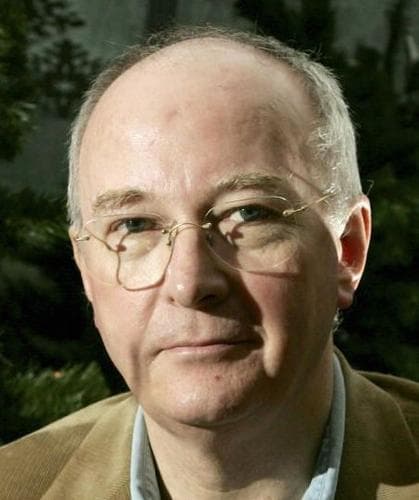
Sir Philip Nicholas Outram Pullman is an English writer. His books include the fantasy trilogy His Dark Materials and The Good Man Jesus and the Scoundrel Christ, a fictionalised biography of Jesus. In 2008, The Times named Pullman one of the "50 greatest British writers since 1945". In a 2004 BBC poll, he was named the eleventh most influential person in British culture. He was knighted in the 2019 New Year Honours for services to literature.







