“Live all you can; it's a mistake not to. It doesn't matter what you do in particular, so long as you have your life. If you haven't had that, what have you had?”
— Chad Newsome's advice to Strether on living life to the fullest.


Henry James (2017)
Genre
Literary Fiction / Historical Fiction
Reading Time
10-15 hours
Key Themes
See below
Sign in to track this book
A middle-aged American sent to rescue a young man from the supposed corruptions of Parisian life instead finds himself captivated by the city's sophisticated charm, forcing him to question his own rigid New England values.
Lambert Strether, a middle-aged man from Woollett, Massachusetts, arrives in Chester, England. His purpose is to find Chad Newsome, the son of his wealthy fiancee, Mrs. Newsome. Strether is sent to rescue Chad from what Mrs. Newsome believes is a morally wrong relationship in Paris with an older woman. Strether feels the weight of his mission and Woollett's expectations. He is at first struck by Europe's beauty and age, which is very different from his American life. He meets Waymarsh, an old friend who is less open to Europe's charms.
In Paris, Strether is immediately charmed by the city's beauty and social life, a sharp contrast to Woollett's stern world. He expects to find Chad Newsome corrupt and lost, but instead meets a refined, polished, and self-assured young man. Chad has changed greatly: he has lost his former roughness and gained impressive social grace and intelligence. Strether is both relieved and puzzled, as Chad's clear improvement complicates his mission to bring him back to America.
Strether finally meets Madame de Vionnet, the woman Mrs. Newsome suspects of corrupting Chad. Instead of a vulgar temptress, Madame de Vionnet is elegant, smart, and charming. She is a sophisticated woman of the world. Strether is captivated by her and finds it harder to see her as Mrs. Newsome described. He also meets her young daughter, Jeanne, which further challenges his ideas about the family's situation. Strether begins to question his mission.
As Strether spends more time in Paris, he becomes more involved in the European way of life. He develops a deep appreciation for its culture, art, and social details, which he sees as richer than Woollett's narrow limits. His initial judgment of Chad and Madame de Vionnet softens, and he begins to see value in their relationship and life. He starts to feel his mission to reclaim Chad is not only wrong but could harm Chad's new refinement. This shift causes an inner conflict and a feeling of distance from his American roots and Mrs. Newsome's expectations.
Strether meets Miss Barrace, an American journalist in Paris, and Little Bilham, a young American artist. Both are part of Chad's social circle and offer Strether different views of Paris. Miss Barrace is witty and observant, commenting on social dynamics, while Little Bilham, though somewhat naive, offers a more direct, perhaps idealized, view of Chad's relationship with Madame de Vionnet. They subtly reinforce that Chad's change is real and that Madame de Vionnet is charming, further challenging Strether's original orders.
In a key moment, Strether gives his 'Live all you can' speech to Little Bilham. He passionately advises the younger man to embrace life, to experience everything possible, and to avoid the regret of unlived years that Strether now feels. This speech shows Strether's own inner change and his growing realization that he may have wasted his own life pursuing duty and convention in Woollett. It marks a clear break from his former self and highlights his new appreciation for European life's richness and complexity.
Throughout his time in Paris, Strether relies on the company and observations of Maria Gostrey, an American expatriate he met on his journey. Maria, with her understanding of European society and psychological insight, is Strether's confidante and guide. She helps him understand Paris's subtleties and the complexities of Chad's and Madame de Vionnet's relationship. Her support and gentle questions encourage Strether to trust his changing perceptions, further separating him from Mrs. Newsome's rigid viewpoint.
Mrs. Newsome, growing impatient and suspicious of Strether's long stay and lack of progress, sends a second, stronger person: her daughter and Chad's sister, Sarah Pocock, with her husband Jim and their daughter Mamie. Sarah represents Woollett's unyielding will, embodying its moral judgments and practical demands. Her arrival creates tension, as she is determined to carry out Mrs. Newsome's wishes and bring Chad home, directly challenging Strether's now-sympathetic stance towards Chad and Madame de Vionnet.
Strether faces a direct confrontation with Sarah Pocock, who scolds him for failing his mission and for being influenced by Paris. Strether, however, stands firm, defending Chad's improved character and expressing his admiration for Madame de Vionnet. He makes it clear that he no longer shares Woollett's narrow view and that he believes Chad's life in Paris is more fulfilling. This confrontation solidifies Strether's break from Mrs. Newsome and the values he once held, accepting the personal cost of his change.
During an outing in the French countryside, Strether unexpectedly finds Chad and Madame de Vionnet in a private, intimate moment on a boat. This accidental discovery shatters the carefully built idea of their platonic or merely 'charming' relationship, showing its true nature as a passionate affair. The scene confirms Strether's earlier suspicions and the reality of their illicit relationship, forcing him to face the full implications, which he had largely romanticized or downplayed. The revelation is a poignant moment of disillusionment for Strether.
After his discovery, Strether has final, meaningful conversations with Chad, Madame de Vionnet, and Maria Gostrey. He recognizes Madame de Vionnet's sacrifices for Chad and the fragility of her position. He understands that Chad, though changed, may not fully appreciate her deep commitment. Strether reaffirms his moral stance to Maria, choosing to return to America alone, without personal gain, having completed his new, self-chosen mission of seeing things clearly. He declines Maria's offer of marriage, stating his need to remain free of further ties.
The Protagonist
Strether transforms from a rigid, duty-bound provincial into an enlightened, morally independent individual who values experience and authenticity over convention, even at personal cost.
The Supporting
Chad evolves from a raw American youth into a refined man of the world, though his newfound sophistication may mask a lingering shallowness or self-interest.
The Supporting
Madame de Vionnet struggles to maintain her dignity and her relationship with Chad amidst external pressures, revealing her resilience and her ultimate vulnerability.
The Supporting
Maria remains a steady, perceptive presence, offering Strether unwavering support and insight, ultimately accepting his choice for moral independence over personal happiness with her.
The Mentioned
Mrs. Newsome remains an unchanging force of American convention, her will ultimately thwarted by Strether's transformation.
The Supporting
Sarah remains steadfast in her American values, serving as an antagonist to Strether's transformation and an enforcer of Mrs. Newsome's will.
The Supporting
Waymarsh remains largely unchanged by his European experience, serving as a static representation of American provincialism.
The Supporting
Little Bilham remains a relatively minor character, primarily serving to reflect Strether's evolving understanding of life and relationships.
This theme is central to the novel, shown through Strether's journey. Woollett, Massachusetts, represents the rigid, moralistic, and often naive American worldview, prioritizing duty and common morality. Paris, in contrast, shows a rich, complex, and morally unclear European experience, valuing beauty, social grace, and personal freedom. Strether's change involves shedding American innocence for a deeper understanding of life gained through European exposure. His first mission is to rescue Chad from 'corruption,' but he finds Chad's 'corruption' is actually a profound refinement, making Strether re-evaluate his own values. Sarah Pocock's arrival further highlights this clash, as she represents unyielding American judgment against the fluid European reality.
“''Live all you can; it's a mistake not to. It doesn't matter what you do in particular, so long as you have your life. If you haven't had that, what have you had?'”
Strether's journey is a quest for personal freedom and fulfillment, which he realizes he largely ignored in Woollett. His 'Live all you can' speech is a strong statement of this theme, urging the embrace of experience over regret. He observes Chad's newfound freedom and refinement in Paris and, despite the illicit nature of Chad's relationship, recognizes the richness it has brought to Chad's life. Strether himself, by breaking free from Mrs. Newsome's expectations and declining Maria Gostrey's offer, chooses a different kind of freedom—that of moral independence and integrity, even if it means returning to a solitary life. The novel suggests that true fulfillment comes not from following external expectations, but from the courage to pursue one's own true understanding of life.
“'He had taken the great plunge; he had not been afraid of the wet; he had let himself go. He had not, in short, been afraid of life.'”
The novel questions how reliable one's perceptions and judgments are. Strether arrives in Paris with ideas about Chad's corruption and Madame de Vionnet's questionable character, mostly based on Mrs. Newsome's biased reports. His gradual awakening involves breaking down these initial judgments as he faces a much more complex reality. Chad is refined, not ruined; Madame de Vionnet is charming, not vulgar. The accidental discovery of Chad and Madame de Vionnet, however, then forces Strether to confront a different reality, proving that even his 'enlightened' perceptions had been somewhat idealized. The novel shows how personal biases, cultural frameworks, and even well-meaning interpretations can hide the truth, emphasizing how hard it is to truly 'see' others and situations.
“'It was as if he had been present at the exposure of a great picture. He had been looking at a work of art, and it had been a question of how much more of it he should see.'”
Women play important, though often limited, roles in the novel. Mrs. Newsome, though unseen, holds great power through her wealth and expectations, representing a controlling female force in American society. Madame de Vionnet, despite her charm and sophistication, is limited by her social position as a separated woman in an illicit affair. Her future and dignity depend on Chad's loyalty, showing the vulnerability of women in European high society. Maria Gostrey, as an independent American expatriate, offers a contrast, having found some freedom through her self-sufficiency and knowledge. The novel subtly explores how societal expectations, whether American or European, place different but significant limits on women's lives and choices.
“'She was a woman of the world, which meant, for Strether, a woman with a past, a woman who had lived, and lived in a way that had left its mark.'”
A literal and metaphorical journey of representation and discovery.
The 'ambassadorial mission' serves as the primary structural device, initially defining Strether's purpose. He is literally Mrs. Newsome's envoy, tasked with bringing Chad home. Metaphorically, however, the mission transforms into Strether's own journey of self-discovery and enlightenment. As he becomes 'converted' to the European way of life, he effectively betrays his original ambassadorship, becoming an ambassador for a new set of values. The arrival of subsequent 'ambassadors' (Sarah Pocock) further highlights the conflict between the old world's expectations and Strether's new understanding, driving the narrative towards its ultimate conclusion of Strether's moral independence.
A powerful, off-stage presence that shapes the entire narrative.
Mrs. Newsome, Strether's fiancée and the instigator of his mission, never appears directly in the novel. Her presence is entirely conveyed through Strether's thoughts, letters, and the actions of her representatives (Strether, then Sarah Pocock). This device heightens her formidable and almost mythical power, making her an abstract force of American provincialism and will. Her absence allows the reader to experience Strether's internal struggle and evolving perceptions without direct interference, emphasizing the psychological nature of his transformation. She functions as the immovable object against which Strether's changing perspective is measured.
A character who highlights the protagonist's changes through contrast.
Waymarsh, Strether's old American friend, acts as a significant foil. While Strether gradually succumbs to the charms and complexities of Europe, Waymarsh remains steadfastly American, often expressing suspicion and discomfort with Parisian life. His unchanging, pragmatic, and somewhat rigid perspective serves to underscore the profound transformation Strether undergoes. By having Waymarsh consistently represent the 'Woollett' viewpoint, James effectively highlights Strether's growing intellectual and emotional distance from his origins, making Strether's internal journey more pronounced and believable.
A pivotal monologue encapsulating the novel's central theme.
Strether's impromptu speech to Little Bilham is a powerful moment of direct thematic exposition. It serves as a concise articulation of Strether's profound internal shift and the novel's central message about embracing life and avoiding regret. This monologue acts as a turning point, not only for Strether's self-awareness but also for the reader's understanding of his transformation. It crystallizes the novel's exploration of personal fulfillment and the consequences of unlived experience, making explicit what has previously been implied through Strether's observations and reflections.
“Live all you can; it's a mistake not to. It doesn't matter what you do in particular, so long as you have your life. If you haven't had that, what have you had?”
— Chad Newsome's advice to Strether on living life to the fullest.
“The right thing is to be content with as little as possible. It is a sign of being on the right path.”
— Strether reflecting on his own past and future.
“He was to remember later on how little this had been to his taste.”
— Strether's initial impression of Paris.
“It was as if he had been some young man who had come to Paris for the first time.”
— Strether's feeling of youthful rediscovery in Paris.
“The only way to be really right was to be right in the French way.”
— Strether observing the French aesthetic and way of life.
“He was seeing it all now, seeing it, and feeling it, in a way that he had not done for years.”
— Strether's awakening to new sensations and perceptions.
“The sense of Paris came over him like a warm wave.”
— Strether's growing appreciation for the city.
“It hung before him, this vision of the past, like a great tapestry, rich and dim.”
— Strether reflecting on his own history and lost opportunities.
“The world was a great place, and he had lived in a small corner of it.”
— Strether's realization of the vastness of life beyond his previous experience.
“He had been too long in the shadows, and the light was now too strong for him.”
— Strether feeling overwhelmed by the newness and vibrancy of Europe.
“It was the perfect type of the 'European' life, so far as he could make it out.”
— Strether's attempt to define and understand European culture.
“He had a sense of having been born again, but with all his past still clinging to him.”
— Strether experiencing a personal rebirth while still burdened by his former self.
“The beauty of the day was in itself a kind of argument.”
— Strether finding solace and justification in the simple beauty of his surroundings.
“He would never have had the courage to tell her that he was not in love with her.”
— Strether's internal struggle with honesty and romantic feelings.
Ready to see how well you understood this book? Take our interactive quiz with 10 questions.
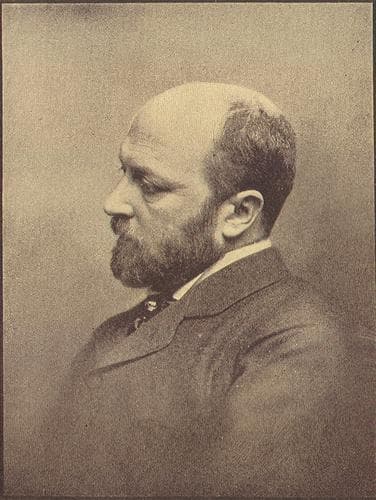
Henry James was an American-British author. He is regarded as a key transitional figure between literary realism and literary modernism, and is considered by many to be among the greatest novelists in the English language. He was the son of Henry James Sr. and the brother of philosopher and psychologist William James and diarist Alice James.







