“Cats are like a religion, Maurice thought. They have their own rituals, their own gods, and if you don't believe, you're toast.”
— Maurice, a talking cat, reflects on the nature of cats.

Terry Pratchett (2001)
Genre
Fantasy / Children's / Young Adult
Reading Time
250 min
Key Themes
See below
Sign in to track this book
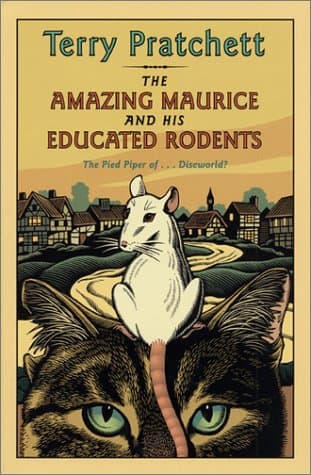
A street-smart talking cat, his intelligent rat companions, and a human boy con their way through towns with a Pied Piper scam, until they find a sinister secret in Bad Blintz. This forces them to face real danger and the dark truths of their own existence.
The story begins with Maurice, a streetwise talking cat, and Keith, a young human piper, arriving in a new town with a large group of intelligent, talking rats. This unusual group has a well-rehearsed scam: the rats infest a town, causing chaos and demanding food. Then Keith, as the 'Pied Piper,' is hired to 'charm' them away, with Maurice collecting the payment. The rats, led by figures like Dangerous Beans and Peaches, are not mindless animals. They are a society of thinking beings who gained sentience after eating magical waste. They want to find a place where they can live in peace, away from humans, and see the scam as a necessary means to that end. Their current target is the seemingly ordinary town of Bad Blintz.
Upon entering Bad Blintz, Maurice and the rats quickly realize something is wrong. The town already has a rat problem, but it is not the usual kind. There are no actual rats to be seen, yet the townspeople are convinced they are being plagued, with two shady rat-catchers, Hamnpork and Spider, supposedly keeping the situation under control. The group's usual scam is foiled because the perceived rat problem is a deliberate lie. The rats, especially Dangerous Beans, feel a strange, unsettling presence beneath the town. Maurice is more concerned with the lack of easy money, while Keith is simply confused by the absence of actual rats to pipe away.
Keith and Maurice soon meet Malicia Grim, the Mayor's granddaughter. She is a bright, imaginative girl who loves stories, especially those with dramatic plots and villains. Malicia immediately connects with Keith, convinced he is a hero destined for an epic adventure. She quickly realizes the town's 'rat problem' is fake. With her story-driven mind, she starts to piece together clues, suspecting a much larger and more sinister conspiracy than even Maurice can imagine. Her enthusiasm for a 'real story' both helps and hinders the group, as she pushes them deeper into the town's hidden secrets, believing they are all characters in a grand tale.
The educated rats, led by Peaches and Dangerous Beans, decide to investigate Bad Blintz's underground. They discover a horrifying maze of deadly, purpose-built rat traps and poisons, far beyond what any normal town would have. This is not just about catching rats; it is about systematically killing them. They realize the rat-catchers, Hamnpork and Spider, are not simply bad at their job but are actively maintaining this deadly environment. During their exploration, the rats suffer losses, and the sheer scale of the danger makes them understand that Bad Blintz is unlike any place they have encountered before. They also sense a larger, more evil presence in the deepest parts of the tunnels.
Deep beneath Bad Blintz, the educated rats discover the horrifying truth: a monstrous, multi-headed 'Rat King'—a tangled mass of rats fused together by magic and circumstance—is telepathically controlling the town's remaining, wild rats. This Rat King, also known as the 'Boss,' is the true source of the town's fear and the reason for the extreme rat-catching measures. It has been manipulating the wild rats, sending them to their deaths in the traps, and even 'eating' the memories of other rats. Dangerous Beans, with his unique spiritual insight, recognizes the Rat King as a being of immense suffering and power, a twisted reflection of the rats' own potential.
Maurice, Keith, and Malicia confront the rat-catchers, Hamnpork and Spider, and piece together their role. The rat-catchers are not just taking money for a non-existent problem; they are actively feeding the Rat King. They have been capturing wild rats from outside town and delivering them to the Rat King, who then uses them to 'replenish' its power and control. They are involved in the suffering and the continuation of the town's fear, driven by greed and a desire to maintain their lucrative, if twisted, business. Malicia's storytelling instincts help connect the pieces of this dark puzzle.
Faced with the terrifying reality of the Rat King and the dangers of Bad Blintz, the educated rats hold a council. Some rats, like Peaches, argue for retreat, prioritizing their colony's survival. Others, notably Dangerous Beans, feel a deep responsibility to confront the Rat King, seeing it as a perversion of what rats could be and a threat to all ratkind. They discuss the moral implications of fighting their own kind, even a monstrous one, and the risk it poses to their dream of a peaceful future. Dangerous Beans' spiritual leadership guides them towards confrontation, believing it is the only way to be truly free.
With Keith's piping and Malicia's strategic thinking, the educated rats, led by Dangerous Beans, prepare to confront the Rat King. Maurice, at first hesitant, also commits to the fight, recognizing the danger. The plan involves luring the Rat King out, using Keith's music to disrupt its control over the wild rats, and the educated rats' intelligence to outmaneuver it. The atmosphere is tense, as the rats understand the immense risk involved. This confrontation is not just a physical battle but a clash of ideas: the freedom and intelligence of the educated rats against the raw, ancient, and suffering power of the Rat King.
In the main confrontation, Dangerous Beans, using his unique spiritual connection and understanding of the Rat King's suffering, makes the ultimate sacrifice. He confronts the Rat King directly, not with violence, but with empathy and an act of self-giving. He allows the Rat King to absorb him, freeing the Rat King from its torment and allowing its consciousness to dissipate. This act breaks the Rat King's hold over the wild rats and the town. The other educated rats, though heartbroken by the loss of their spiritual leader, escape the sewers, having achieved a victory for their species and their future.
With the Rat King gone and the rat-catchers exposed, Bad Blintz is freed from its hidden terror. Maurice, Keith, and Malicia ensure the truth is revealed, and the town begins to heal. The educated rats, though mourning Dangerous Beans, are now free to pursue their dream. They decide to leave Bad Blintz, understanding that their 'promised land' is not a physical place but a state of being, a community built on intelligence, empathy, and self-determination. They continue their journey, led by Peaches and the memory of Dangerous Beans, seeking a place where they can build a true society, having learned lessons about good, evil, and sacrifice.
The Protagonist
Maurice evolves from a purely self-interested con artist into a more compassionate and responsible leader, willing to risk his life for his companions.
The Protagonist
Keith grows in confidence and courage, finding his voice and purpose beyond just being a component of the scam.
The Supporting
Malicia learns to distinguish between fictional narratives and real-world complexities, while still retaining her imaginative spirit.
The Protagonist
Dangerous Beans fulfills his spiritual destiny by sacrificing himself to free the Rat King, becoming a martyr for his people.
The Supporting
Peaches grows into a more prominent leadership role, balancing pragmatism with the ideals of Dangerous Beans.
The Antagonist
Hamnpork's villainy is exposed, leading to his downfall.
The Antagonist
Spider's deceptive nature is revealed, leading to his downfall alongside Hamnpork.
The Antagonist
The Rat King is ultimately freed from its suffering and ceases to exist, a victim of circumstance and a catalyst for the rats' spiritual growth.
The novel explores what it means to be intelligent and self-aware, especially through the educated rats. They deal with questions of their own identity, their place in the world, and whether their intelligence makes them more than just animals. Dangerous Beans constantly thinks about what it means to be a 'rat' and what their 'promised land' truly is. Maurice, as a talking cat, also navigates his dual nature as a predatory animal and a thinking being. This theme is central to their quest for a peaceful, self-determined existence, separate from human definitions.
“A rat is a rat is a rat. But not us. We are... more.”
The story explores the complexities of good and evil, showing they are not always clear-cut. Maurice's initial scam is morally ambiguous, while the rat-catchers show clear human greed and cruelty. The Rat King, though monstrous, is presented as a creature of suffering rather than pure malice, forcing the educated rats to confront a different kind of 'evil.' Dangerous Beans' ultimate sacrifice highlights that true good can involve selflessness and empathy, even towards an antagonist. The rats constantly debate their moral obligations, especially regarding the wild rats and the Rat King, showing the weight of their new intelligence.
“It is not enough to be clever. You must also be good.”
Malicia Grim embodies this theme, constantly trying to fit the events around her into familiar story types. The novel itself plays with and subverts traditional fairy tale tropes, particularly the Pied Piper legend. Stories are shown to have power—to shape perception, create meaning, and even influence reality. While Malicia's obsession with narratives can be a hindrance, it also helps her (and the reader) to piece together the complex conspiracy in Bad Blintz. The rats' own history and their dream of a 'promised land' are also forms of collective storytelling, guiding their actions.
“Stories are important. They can tell you what you need to know, even if you don't know what it is yet.”
The theme of sacrifice is most explored through Dangerous Beans. His willingness to give up his life to free the Rat King from its torment is an act of selflessness, leading to the redemption not only of the Rat King but also, in a way, of the rats' own collective past. This act elevates the rats' quest beyond mere survival, giving it spiritual significance. Maurice also changes, moving from pure self-interest to actively protecting his companions, showing that even a cynical individual can find purpose in sacrifice for others.
“Sometimes, to be truly free, you have to give up everything.”
The educated rats are constantly searching for their 'promised land,' a place where they can belong and build a true community free from human persecution. Their journey is one of forging a collective identity and establishing rules for their society. The challenges they face in Bad Blintz test their unity and their commitment to one another. Maurice, Keith, and Malicia also form an unlikely community, bound by their shared adventure. The novel highlights the importance of mutual support, trust, and shared purpose in creating a sense of belonging, whether for a group of rats or a group of different individuals.
“The promised land is not a place. It is us. It is what we are.”
The story takes classic fairy tale elements and twists them into something new and complex.
Pratchett masterfully subverts the classic 'Pied Piper' tale, turning the piper into a naive boy and the rats into sentient, philosophical beings. The 'damsel in distress' is a sharp-witted girl who is more of a detective, and the 'wise old animal' is a cynical cat. This device allows the author to explore deeper themes of morality, sentience, and the nature of stories themselves, while still engaging with the familiar framework, making the reader constantly question expectations and assumptions about traditional narratives.
An omniscient, often humorous, narrator provides insight and meta-commentary on the story.
The novel employs a distinctive omniscient narrator who frequently interjects with witty, philosophical, and sometimes sarcastic commentary directly to the reader. This device serves multiple functions: it breaks the fourth wall, provides background information on Discworld concepts, offers humorous asides, and deepens the thematic exploration of storytelling and reality. The narrator's voice often highlights the absurdity and the profound aspects of the events, guiding the reader's interpretation and adding a layer of meta-fiction to the narrative.
Animals are given human-like intelligence, speech, and social structures.
The core of the story relies on the anthropomorphism of the rats and Maurice. They not only speak but also develop complex societies, ethical frameworks, and philosophical debates. This device allows the author to explore human nature, morality, and societal structures from an outside perspective. By giving animals sentience, the novel challenges readers to reconsider their own relationships with the natural world and the definitions of intelligence, personhood, and the right to exist peacefully.
The rats' search for a utopian home drives their journey and philosophical debates.
The concept of a 'promised land' serves as a central motivating factor for the educated rats throughout the narrative. It represents their hope for a peaceful, self-governing society free from human persecution. This motif is not just a geographical destination but also a philosophical ideal, prompting the rats to define what their utopia would truly entail. The journey towards this land forces them to confront their own values, sacrifices, and the challenges of building a new civilization, ultimately revealing that the promised land is a state of being rather than a physical location.
“Cats are like a religion, Maurice thought. They have their own rituals, their own gods, and if you don't believe, you're toast.”
— Maurice, a talking cat, reflects on the nature of cats.
“Rats don't *have* a leader. They have a spokesman. There's a difference. A spokesman is someone who says what everyone else is thinking. A leader is someone who tells everyone else what to think.”
— Dangerous Beans explains the structure of the rat community to Maurice.
“He'd discovered that the world was a much more interesting place if you just looked at it properly.”
— Maurice observes the world with new understanding.
“Stories are important. They're what we are. They're all we are.”
— Dangerous Beans reflects on the significance of stories.
“The truth isn't a program. It's not something you can just upload. It's something you have to find out for yourself, and keep finding out.”
— The rats discuss the nature of truth and knowledge.
“It was amazing what you could get away with if you looked like you knew what you were doing.”
— Maurice reflects on the art of deception.
“When you're a thinking rat, you don't just eat the cheese. You wonder why it's there.”
— One of the educated rats explains their new way of thinking.
“People who didn't want to hear the truth could always find a reason not to.”
— Maurice observes human nature regarding uncomfortable truths.
“There was a lot of difference between being alive and just staying alive.”
— The rats ponder their existence beyond mere survival.
“He didn't want to be a hero. He just wanted to go home and lie down.”
— Maurice, despite his cleverness, often prefers comfort over heroism.
“Evil isn't a thing. It's a choice. And sometimes it's a lot easier to make than good.”
— Dangerous Beans contemplates the nature of evil.
“The world was full of stories, and some of them were even true.”
— A general observation on the blend of reality and fiction.
“You can't just be *told* things. You have to *understand* them.”
— The rats discuss the difference between information and understanding.
“Even a rat can learn to think. And if a rat can learn to think, then anything's possible.”
— A hopeful reflection on the potential for intelligence and change.
Ready to see how well you understood this book? Take our interactive quiz with 10 questions.
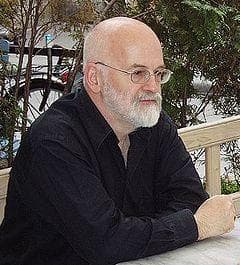
Sir Terence David John Pratchett was an English humorist, satirist, and author of fantasy novels, especially comical works. He is best known for his Discworld series of 41 novels.







