“We are the children of our landscape; it has moulded us in its image.”
— Reflecting on the influence of Alexandria's environment on its inhabitants.

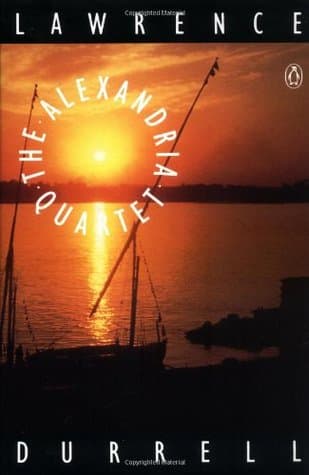
Lawrence Durrell (1960)
Genre
Literary Fiction / Historical Fiction
Reading Time
1500 min
Key Themes
See below
Sign in to track this book
In pre-war Alexandria, a writer deals with the lingering effects of a passionate affair, only to have his memories reshaped by new views on love, politics, and the city's slow decline.
The first novel, 'Justine,' begins with Darley, a writer, living alone on a remote Greek island with his daughter, Hannah. He is trying to write about his difficult time in Alexandria, particularly his intense and destructive love affair with Justine Hosnani. Darley describes their first meeting, his strong attraction to her, and the complex, often contradictory nature of their relationship. He details Justine's marriage to the wealthy and mysterious Nessim Hosnani, her Jewish background, her past traumas, and her involvement in Alexandria's intellectual and artistic circles. Darley's account is very personal, colored by his own feelings, insecurities, and an almost obsessive need to understand Justine, who remains elusive even in his memory. He struggles to make sense of her different sides and her impact on his life.
Darley's story in 'Justine' immerses the reader in the lively, decadent, and often morally gray world of Alexandria in the late 1930s. He describes the city as a character itself, a maze of cultures, desires, and hidden motives. Through Darley's eyes, we meet various characters: the flamboyant transvestite artist Scobie, the cynical novelist Pursewarden, the kind doctor Balthazar, and the innocent prostitute Clea. Darley's affair with Justine happens against this background, mixed with his observations of the city's political undercurrents, its sensual atmosphere, and the intricate, often intertwined relationships in his social circle. He becomes increasingly caught up in Justine's world, including her mysterious past and her deep sadness, while also dealing with his own artistic goals and emotional weaknesses.
The second novel, 'Balthazar,' revisits the events from 'Justine,' but this time through Balthazar's 'interlinear' notes, which Darley receives on his island. These notes, written by the doctor and cabalist Balthazar, offer a completely different view of the past. Balthazar reveals that many of Darley's ideas and assumptions about Justine, Nessim, and their relationships were wrong. Importantly, Balthazar exposes Justine's secret affair with Pursewarden, not Darley, as the main love of her life. He also hints at a deeper, more dangerous political conspiracy involving Nessim and Justine, suggesting that their personal dramas often hid more significant, secret activities. This new interpretation shatters Darley's romantic illusions and forces him to face how unreliable his own memory and personal experience are.
Balthazar's notes expand on the political aspects of the story, revealing that Nessim Hosnani is deeply involved in a Coptic nationalist movement. He works to arm Jewish and Coptic communities in Palestine against potential British and Arab threats. Justine, far from just being a femme fatale, actively participates in this conspiracy, using her social connections and mysterious persona to advance their cause. Her affair with Pursewarden is shown to be more complex than simple passion, possibly linked to the political schemes. Darley also learns the truth about Justine's past trauma, specifically her daughter's disappearance and presumed death, which adds to her deep sadness and detachment. The novel challenges the reader, along with Darley, to question the nature of truth and the multi-layered reality of human experience, showing how personal relationships often connect with larger historical and political forces.
The third novel, 'Mountolive,' changes the narrative perspective significantly. Leaving Darley's first-person view, the story is told in a more detached, third-person voice, focusing mainly on David Mountolive, a British diplomat who eventually becomes the Ambassador to Egypt. Mountolive's story reveals the full extent of the Coptic nationalist conspiracy involving Nessim and Justine, and their efforts to smuggle arms. Mountolive, who has a long-standing, unrequited love for Nessim's mother, Leila, finds himself torn between his personal feelings and his professional duties. The novel details the political maneuvering, the espionage, and the dangerous stakes involved, showing how the characters' personal lives are deeply connected to the geopolitical tensions leading up to World War II. The events Darley saw as purely romantic or personal are now revealed as part of a larger, more dangerous political game.
In 'Mountolive,' the true nature of Nessim and Justine's actions is revealed. Nessim, driven by strong loyalty to his community and a desire for Coptic independence, organizes the arms smuggling operation with Justine's help. Their marriage, first shown as a union of convenience and passion, is revealed as a strategic partnership in their political efforts. The novel also explores the lives of other characters, such as the tragic Leila Hosnani, whose beauty and past affair with Mountolive add another layer of complexity. Pursewarden's role in the conspiracy is clarified, showing his cynical yet ultimately principled actions. The change in perspective provides a clearer, more objective account of the events, stripping away the romantic illusions and emotional biases that marked Darley's earlier stories. Mountolive's story ends with the exposure of the conspiracy and the tragic results for some participants, especially Pursewarden, who dies by suicide.
The final novel, 'Clea,' returns to Darley's first-person perspective, but with new maturity and self-awareness. He returns to Alexandria during World War II, a city changed by conflict and the presence of Allied troops. The war provides a background for Darley's personal healing and artistic growth. He reconnects with old friends, including Balthazar and Clea, and faces his past. The political tensions of the previous novels give way to the broader anxieties of global conflict. Darley, having processed the revelations from Balthazar and Mountolive, now sees his past relationships, especially with Justine, with greater clarity and less romantic idealization. He begins to lose his youthful self-absorption and gains a more empathetic understanding of others.
The main focus of 'Clea' is Darley's growing relationship with Clea, the young artist who was a minor character in earlier books. Their love story develops with a tenderness and mutual understanding that contrasts sharply with the turbulent passion of his affair with Justine. Clea, who has matured and developed her artistic voice, experiences a traumatic accident that leaves her with a disfigured hand. This, however, leads to a breakthrough in her art and a renewed sense of purpose. Darley, inspired by Clea and his own growth, finds his artistic voice and begins to write with more confidence and originality. The novel ends with Darley's departure from Alexandria, leaving behind the city that shaped him. He is now equipped with a deeper understanding of love, art, and the complexities of human existence. He has finally found some peace and fulfillment.
As Darley's story ends in 'Clea,' the fates of the other characters are also revealed. Nessim and Justine's political activities have had lasting effects, leading to their eventual separation and a life of quiet acceptance for Justine, who stays in Alexandria. Nessim continues his business dealings, forever changed by his past. Balthazar continues his work as a doctor and cabalist, a steady, guiding presence. Scobie, the flamboyant transvestite, dies tragically under mysterious circumstances, a victim of the city's darker side. Clea, despite her injury, finds her artistic voice and a deep connection with Darley. The novel provides a sense of closure for many characters, showing how their lives were shaped by the city, their passions, and the historical events around them. Darley's final departure signifies his freedom from the past and his readiness to embrace the future as a mature artist.
The 'Alexandria Quartet' concludes with Darley leaving Alexandria, a city that helped shape his personal and artistic growth. He leaves behind the intoxicating, confusing, and often painful experiences of his early adulthood. His understanding of love, truth, and identity has been greatly changed by his relationships with Justine, Nessim, Balthazar, and Clea, and by the many perspectives offered throughout the quartet. He has moved from romantic illusion and self-pity to mature self-awareness and artistic purpose. The city itself, with its layers of history, culture, and intrigue, remains a powerful presence. But Darley has finally gained the distance and clarity needed to truly appreciate its influence and to forge his own path as a writer, ready to start a new life with Clea.
The Protagonist
Darley evolves from a naive, romantically deluded observer to a mature, self-aware artist who understands the complexities of truth and love.
The Central Figure/Antagonist
Justine's character is revealed in layers, moving from a romanticized femme fatale to a complex figure driven by political ideals and personal tragedy.
The Supporting/Antagonist
Nessim transforms from a seemingly benign husband to a powerful and ruthless political operative, revealing his true depth and motivations.
The Supporting
Balthazar remains a consistent source of wisdom and insight, providing crucial corrective perspectives that shape Darley's understanding.
The Supporting/Love Interest
Clea develops from a peripheral, innocent artist into a strong, resilient woman and a profound artistic and romantic partner for Darley.
The Supporting
Pursewarden's character is initially presented as a cynical intellectual, but is later revealed as a deeply committed lover and a principled, albeit tragic, political operative.
The Supporting
Mountolive's arc focuses on his professional rise and the conflict between his personal affections and his diplomatic duties.
The Supporting
Scobie remains a consistent, vibrant character, providing comic relief and warmth, until his tragic, accidental death.
The Quartet explores the elusive nature of truth. Through the changing perspectives of Darley, Balthazar, and Mountolive, the reader is constantly reminded that any single account is subjective and incomplete. Darley's initial romantic view of his affair with Justine in the first novel is systematically undone by Balthazar's 'interlinear' notes, which reveal hidden affairs and political motives. Later, Mountolive's detached diplomatic perspective offers a more objective political reality, yet still cannot fully capture the characters' inner lives. This theme challenges the reader to question how reliable a story is and the impossibility of finding one definitive truth, much like the complex nature of Alexandria itself.
“We are the children of our landscape, it creates us, it defines us, it tells us how we shall behave.”
Love and desire are central to the Quartet, often appearing in their most obsessive and destructive forms. Darley's consuming passion for Justine is a key example, blinding him to her true nature and motives. The various affairs and relationships—Justine and Pursewarden, Nessim and Justine, Mountolive and Leila—are rarely simple, intertwined with power, politics, and unfulfilled longing. The series contrasts this passionate, often painful love with the more gentle, understanding, and ultimately healing love Darley finds with Clea. This theme explores how love can change people, both its capacity for deep joy and its potential for devastating illusion and heartbreak, especially in a city as sensual and deceptive as Alexandria.
“For the truth of the matter is that no one quite knows what is happening. The city is a world of its own.”
Alexandria is not just a setting but a living character in the Quartet, greatly affecting its inhabitants. Durrell portrays the city as a center of cultures, religions, and desires, a place of intoxicating beauty, decay, and deep mystery. Its winding streets, diverse populations, and sensual atmosphere shape the characters' identities, relationships, and destinies. The city's pre-war decadence and wartime changes reflect the characters' own journeys of self-discovery and change. Alexandria's historical layers, its mix of East and West, and its political undercurrents contribute to the pervasive sense of mystery and the multi-layered reality that defines the story. The characters are closely tied to its magic and its sadness.
“Five races, five languages, a dozen creeds: five sexes, perhaps, for though the outward forms of sex are only two, no one could have counted the varieties of love which flourished in that city.”
Artistic creation and the limits of memory are interwoven themes. Darley, as a writer, constantly struggles with how to capture and interpret his experiences. The entire Quartet can be seen as his attempt to build a coherent story from fragmented memories and conflicting accounts. The different novels represent various attempts to understand the 'truth,' showing how art itself is a subjective creation. Pursewarden's cynical insights on writing, and Clea's journey as a painter, further explore the challenges and rewards of artistic expression. The theme suggests that art does not just reflect reality but actively shapes and understands it, often through re-examining memory and combining multiple viewpoints.
“We live our lives out in the open, and yet we are always alone.”
The same events are recounted from different characters' viewpoints, altering their meaning.
This is the core structural device of the Quartet. The first three novels ('Justine,' 'Balthazar,' 'Mountolive') each present the same set of events from a different character's perspective, or with a different narrative focus. Darley's subjective, romanticized account in 'Justine' is reinterpreted by Balthazar's 'interlinear' notes, revealing hidden truths and political conspiracies. 'Mountolive' then offers a more detached, 'objective' diplomatic perspective. This constantly challenges the reader's understanding of events and characters, emphasizing the subjective nature of truth and memory, and showing how a single 'reality' can be drastically altered by the observer.
Balthazar's notes that revise Darley's initial narrative.
The 'interlinear' refers specifically to the extensive notes and corrections that Balthazar sends to Darley in the second novel. This device functions as a direct refutation and expansion of Darley's first-person account in 'Justine.' It not only corrects factual errors but also reveals deeper, previously unknown motivations and connections, particularly regarding Justine's affair with Pursewarden and the political conspiracy. The interlinear serves as a powerful meta-narrative tool, forcing both Darley and the reader to re-evaluate everything they thought they knew, highlighting the unreliability of a single narrator's perception.
Alexandria is personified and actively shapes the narrative and characters.
Alexandria is more than just a backdrop; it is a dynamic, living entity that influences the lives and destinies of the characters. Durrell frequently describes the city with human qualities, emphasizing its sensuality, mystery, and complex layers. The city's atmosphere, its blend of cultures, its historical weight, and its hidden corners directly impact the characters' moods, decisions, and relationships. This device creates a pervasive sense of place and imbues the narrative with a unique, almost mythical quality, making Alexandria an integral, active participant in the unfolding drama rather than a mere setting.
Letters and notes used to convey information and shift perspective.
While not purely an epistolary novel, the Quartet heavily utilizes letters and notes as a key plot device. Balthazar's 'interlinear' notes are the most prominent example, serving to correct and expand Darley's narrative. Pursewarden's letters and posthumous writings also contribute significantly to the unfolding of the story, revealing his thoughts, philosophies, and the true nature of his relationships. These epistolary elements are crucial for introducing new perspectives, revealing secrets, and demonstrating the fragmented, often indirect ways in which truth is conveyed and discovered within the narrative.
“We are the children of our landscape; it has moulded us in its image.”
— Reflecting on the influence of Alexandria's environment on its inhabitants.
“The city, in fact, was a sort of spiritual hothouse, where human passions, like orchids, flowered in a more intense and bizarre profusion.”
— Describing Alexandria's unique atmosphere and its effect on people.
“We live our lives over and over again, in different guises, but the pattern is always the same.”
— A philosophical observation on recurring patterns in human experience and fate.
“Love is not a thing, it is a process. It is not a destination, it is a journey.”
— A character's evolving understanding of love and relationships.
“The only reality is what you remember. The rest is just scenery.”
— Exploring the subjective nature of memory and its role in constructing reality.
“We are all of us, in some way, prisoners of the past.”
— Reflecting on how past events and experiences shape present lives.
“To be alive is to be in danger, to be free is to live in the midst of it.”
— A statement on the inherent risks and freedoms of existence.
“Each man is a cosmos, and the city a constellation of such.”
— Comparing individuals to cosmic entities within the larger structure of the city.
“The real business of life is to enjoy it.”
— A seemingly simple yet profound statement on the purpose of living.
“Perhaps what we call the truth is only the first of many truths.”
— Questioning the singularity of truth and suggesting multiple perspectives.
“The world is a great mirror, and reflects to each man his own face.”
— Emphasizing the subjective experience of the world and self-reflection.
“Silence is not empty. It is full of answers.”
— Highlighting the value of quiet contemplation and introspection.
“Books are the only things worth stealing.”
— A character's passionate declaration about the value of literature.
“Every city is a world, and every man a universe.”
— Expanding on the idea of the interconnectedness of place and individual identity.
“We are not made for happiness, but for a certain kind of suffering, which is our beauty.”
— A poignant reflection on the human condition, suffering, and aesthetic appreciation.
Ready to see how well you understood this book? Take our interactive quiz with 10 questions.
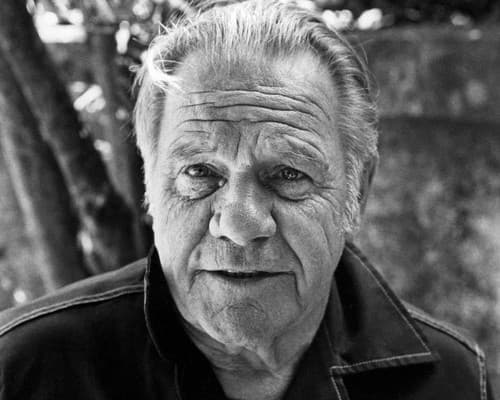
Lawrence George Durrell was an expatriate British novelist, poet, dramatist, and travel writer. He was the eldest brother of naturalist and writer Gerald Durrell.







