“It was the custom for betrothed couples to be seen as little as possible in public, to each other.”
— Describing the social etiquette around engagement in New York society.


Edith Wharton (2008)
Genre
Historical Fiction / Romance
Reading Time
6-8 hours
Key Themes
See below
Sign in to track this book
In Gilded Age New York, a man of society is torn between his love for an unconventional woman and his family's expectations, fearing social ruin.
The story begins at the Academy of Music in New York during a performance of Gounod's 'Faust.' Newland Archer, a prominent lawyer from an old New York family, watches his fiancée, May Welland, with a sense of satisfaction. His world is one of strict social rules. However, this balance is broken by the arrival of Countess Ellen Olenska, May's cousin, who has returned to New York after a scandalous separation from her dissolute Polish husband, Count Olenski. Ellen's unconventional behavior and European style immediately cause a stir among the conservative New York elite, threatening the respected Welland family and, by extension, May's upcoming marriage to Newland.
The Mingott and Welland families, led by the strong Mrs. Manson Mingott, meet to discuss the social problem Ellen's return creates. They want to avoid scandal and protect May's reputation. At first, the family considers isolating Ellen, but Newland, despite his adherence to convention, is drawn to Ellen's independent spirit and argues for her acceptance. He sees the unfairness in her treatment and persuades the families to publicly embrace her by attending a dinner party Mrs. Mingott hosts in Ellen's honor. This act, while seeming like family support, quietly positions Newland as Ellen's protector and begins his fascination with her.
As Newland prepares for his engagement ball with May, he thinks more and more about Ellen. He finds her intelligence, worldliness, and disregard for stifling social norms refreshing, a stark contrast to May's innocent and conventional beauty. He begins to question the very society he once supported. During the elaborate engagement ball, Newland observes Ellen, noting how she easily commands attention despite — or perhaps because of — her controversial past. He feels a growing conflict between his duty to May and his developing feelings for Ellen, recognizing that Ellen offers a freedom and intellectual companionship he never knew he wanted.
Ellen expresses her plan to divorce Count Olenski, a move that would be an unprecedented social disaster in New York society. The family, particularly Mrs. Welland, is horrified, fearing irreparable damage to their reputation. Newland, acting as the family lawyer, is tasked with convincing Ellen not to divorce. Despite his personal feelings, he argues that a divorce would completely ostracize her and destroy any chance of social acceptance, even suggesting it would harm May's standing. He convinces her to drop the divorce proceedings. This decision leaves Ellen feeling trapped but also deepens her reliance on Newland, further entangling their lives.
Newland's internal struggle grows, and he eventually follows Ellen to St. Augustine, Florida, where she is visiting her aunt, Mrs. Mingott. In a key moment, he confesses his deep love for her, saying he is willing to break off his engagement to May and defy social conventions for a life with her. Ellen, deeply moved but also keenly aware of society's destructive power, returns his feelings but firmly refuses to let him ruin his life or May's. She insists that he keep his commitment to May, believing that their love, if pursued, would only bring scandal and unhappiness to everyone involved, especially May.
Following Ellen's firm refusal, Newland returns to New York and marries May Welland. Their wedding is a grand event, celebrated by society, but for Newland, it has a deep sense of loss and resignation. He is a devoted husband, fulfilling all social expectations, yet his intellectual and emotional connection to Ellen remains. Their early married life is outwardly perfect, filled with the routines and pleasures of their class, but Newland often feels a quiet desperation and a longing for the vibrant, unconventional world Ellen offered. He sees May as innocent and pure, but also somewhat limited and conventional, unable to fully understand his unspoken desires.
The social pressure on Ellen to conform, along with her own desire to protect Newland and May, eventually leads her to decide to return to Europe. Before her departure, there is a final, emotional meeting between Ellen and Newland. They meet in secret, and their conversation is filled with unspoken words and the weight of their unfulfilled love. Ellen repeats her belief that they cannot be together without causing immense pain, urging Newland to be a good husband to May. Newland is devastated but understands her reasoning, recognizing the unchangeable barriers society has placed between them. This farewell confirms the end of their potential romance, though not the end of Newland's feelings.
Years pass. Newland and May build a family, having three children, and live a life perfectly aligned with New York society's expectations. Newland becomes a successful lawyer, a respected member of his community, and a seemingly content father. He and May maintain a front of a happy marriage, attending social functions, raising their children according to strict rules, and never openly discussing the unspoken tensions beneath the surface. Newland often feels a sense of quiet despair, realizing that he has traded true passion and intellectual companionship for social stability and the approval of his peers. He occasionally sees Ellen's name in newspapers, a brief reminder of the path not taken.
Just before May's death, she reveals to Newland that she was not as naive or unaware as he had always believed. She confesses that she knew about his feelings for Ellen and had deliberately made certain decisions, such as announcing her pregnancy early, to secure her claim on Newland and subtly pressure Ellen to leave. This revelation shatters Newland's view of his wife as a simple, innocent creature. He realizes May's quiet strength and strategic intelligence, and how much she had protected her marriage and family within their society's unspoken rules. Her confession is a poignant moment, highlighting the hidden complexities of their seemingly conventional marriage.
Many years after May's death, Newland, now an elderly widower, travels to Paris with his son, Dallas. Dallas, who has a more modern sensibility and knows of his father's past feelings, arranges for them to visit Ellen's apartment. Dallas, who admires Ellen, encourages his father to go up and see her. Newland stands across the street, looking up at Ellen's window, filled with a lifetime of longing and regret. However, despite the opportunity finally presenting itself, Newland ultimately decides not to go up. He sends Dallas alone, choosing to preserve the idealized memory of Ellen and their unfulfilled love, rather than confront the reality of what they might have become.
The Protagonist
Newland begins as a conventional gentleman, but his love for Ellen makes him question society; ultimately, he chooses convention, living a life of quiet regret and unfulfilled desires.
The Love Interest/Catalyst
Ellen arrives as a scandalous outsider, seeks acceptance, but ultimately sacrifices her own desires for the sake of others, choosing exile over disruption.
The Wife/Symbol of Convention
May appears as a simple, innocent debutante, but is later revealed to be a perceptive and strategic guardian of her marriage and social standing.
The Supporting
Remains a consistent force, a powerful figure who, despite her own eccentricities, upholds family honor and influences social acceptance.
The Supporting
Remains a steadfast guardian of convention throughout, never wavering from her adherence to social rules.
The Supporting
Remains a static character, consistently representing the judgmental and hypocritical aspects of society.
The Supporting
His character arc demonstrates the ultimate downfall that awaits those who defy society's financial and moral codes, even if only in appearance.
The Supporting
Introduced as a fully formed adult, he serves as a symbol of generational change and a catalyst for Newland's final reflections.
The novel carefully shows the stifling power of New York society's unwritten rules and expectations. Characters like Newland Archer are constantly limited by the need to maintain appearances and follow strict etiquette, even at the cost of personal happiness. The fear of 'scandal' and 'bad form' dictates every social interaction, from who is invited to dinner to the very possibility of divorce. Ellen Olenska's struggle for acceptance shows how society punishes individuality and deviation, forcing her into exile to preserve the collective illusion of propriety. Newland's ultimate decision not to pursue Ellen is a direct result of this overwhelming social pressure, showing how deeply ingrained these conventions are.
“It was the standard of behavior, the code of manners, that New York exacted from all its children, and particularly from its women.”
At the story's heart is the tragic, unfulfilled love between Newland Archer and Ellen Olenska. Their connection is intellectual, passionate, and deeply meaningful, offering each a glimpse of a more authentic life. However, their love is doomed by the social structures they inhabit. Ellen, understanding the destructive potential of their affair, makes the deliberate sacrifice to leave New York, protecting Newland and May from scandal. Newland, though initially willing to defy society, ultimately gives in to the pressure, sacrificing his deepest desires for duty and conformity. Their love remains a beautiful, painful 'might-have-been,' showing the cost of following convention.
“Her eyes had that look of profound understanding, of an almost maternal pity, which he had so often seen in them.”
The idea of innocence, especially female innocence, is central and often misleading. May Welland embodies the ideal of purity and naiveté, a quality Newland first admires but later finds limiting. However, the novel gradually reveals that May's innocence is a carefully built facade. Her quiet intelligence and strategic actions, such as her early announcement of her pregnancy, show a shrewd understanding of social manipulation and a fierce determination to protect her marriage. This challenges Newland's perception and highlights how women of the era, though seemingly powerless, influenced through subtle means, often hiding their knowledge behind a veil of conventional innocence.
“But she was not an innocent, as he had imagined. She had known... she had always known.”
Newland Archer's internal struggle is a main part of this theme. He is constantly torn between his personal yearning for freedom, intellectual companionship, and passionate love with Ellen, and his ingrained sense of duty to his family, his fiancée (and later wife) May, and his social class's expectations. Every decision he makes is weighed against these two opposing forces. The novel suggests that in this society, individual desire is almost always overcome by social duty, leading to lives of quiet desperation and resignation. Newland's ultimate choice to remain within convention shows duty's powerful hold over personal fulfillment.
“He saw that they were all in fact, as he was himself, in the toils of an invisible social web, and he knew that it was strong enough to hold them all.”
While mainly focused on the established aristocracy, the novel subtly hints at the changing New York society in the 1870s. The 'old money' families, like the Archers and Wellands, cling fiercely to their traditions, but new influences are emerging. Characters like Julius Beaufort, a self-made man, represent the rise of wealth not tied to lineage. Ellen Olenska, with her European sophistication, symbolizes a broader world entering the insulated community. The younger generation, shown by Dallas Archer, has a more open-minded perspective, suggesting that the rigid conventions so limiting to Newland's generation will eventually give way to new values. The novel captures a moment of transition, where the old guard is still dominant but its foundations are starting to crack.
“New York was a metropolis, and a metropolis must be open to new ideas, new influences.”
Wharton uses subtle humor and ironic juxtaposition to critique the hypocrisy and rigidity of New York society.
Wharton employs social satire and irony throughout the novel to expose the absurdities and double standards of the upper class. For example, characters like Lawrence Lefferts, who is a self-appointed moral guardian, are subtly revealed to be hypocrites with their own illicit affairs. The elaborate rituals and unspoken rules of society are depicted with a keen, often sardonic, eye, highlighting their superficiality and the emotional cost they exact. This device allows Wharton to critique society's flaws without overt condemnation, letting the ironic situations speak for themselves, such as the elaborate lengths taken to avoid a scandal that everyone secretly knows about.
Architectural spaces reflect characters' social standing, personalities, and emotional states.
Houses and their interiors serve as powerful symbols in the novel. The old, conservative brownstones of the Archers and Wellands represent tradition, conformity, and emotional restraint. In contrast, Mrs. Manson Mingott's more opulent, slightly ostentatious house, with its 'French' drawing-room, symbolizes her greater freedom and disregard for some conventions. Ellen Olenska's small, unconventional house, filled with exotic objects and a more relaxed atmosphere, reflects her independent spirit and European sensibilities, standing in stark contrast to the stifling formality of her family's homes. These settings visually underscore the characters' internal and external conflicts.
Hints of future events and Newland's later reflections deepen the sense of tragic inevitability.
Wharton masterfully uses foreshadowing to build a sense of tragic inevitability. Early in the novel, Newland's musings about the limitations of his world and his engagement to May hint at the dissatisfaction that will consume him. The narrative also employs a retrospective element, with an older Newland Archer looking back on his life, which adds layers of irony and poignancy to his past decisions. This technique allows the reader to understand the weight of his choices and the enduring impact of his unfulfilled desires, emphasizing the theme of lost opportunities and the enduring power of memory.
Much of the novel's drama unfolds through unspoken thoughts, glances, and subtle social cues.
A significant plot device is the emphasis on what is left unsaid. In New York society, direct confrontation or honest emotional expression is often considered 'bad form.' Characters communicate through subtle glances, veiled remarks, and adherence to intricate social rituals. Newland and Ellen's love, for example, is largely expressed through unspoken understanding and shared glances across crowded rooms. May Welland's knowledge of Newland's feelings is revealed not through direct accusation, but through subtle actions and a late-life confession. This device highlights the repressive nature of the society and the profound emotional depth hidden beneath a veneer of polite conversation.
“It was the custom for betrothed couples to be seen as little as possible in public, to each other.”
— Describing the social etiquette around engagement in New York society.
“Archer had been brought up to believe that a gentleman chose a wife rather for the sake of her house than for her house of cards.”
— Reflecting on Newland Archer's traditional upbringing regarding marriage.
“The feeling of a man for a woman and of a woman for a man, and the feeling of two friends for each other, were things that were not meant to be analyzed.”
— Newland Archer's internal thoughts on the unexamined nature of relationships.
“It was the old New York way of taking life 'without effusion of blood': the way of people who dreaded scandal more than disease, who placed decency above courage, and who considered that nothing was more ill-bred than 'a scene.'”
— Narrator's commentary on the conservative nature of old New York society.
“Each time he looked at May, he thought that he was looking at a stranger.”
— Newland Archer's growing realization of his wife's unfamiliarity to him.
“The real loneliness is living among all these dear people who don't know you.”
— Ellen Olenska expressing her sense of isolation despite being surrounded by family.
“What was the use of rebelling against it? It was the fate of all women.”
— Newland Archer's cynical thought about the limitations placed on women.
“He saw that he was in the presence of a woman who had a past, and that past was the most interesting thing about her.”
— Newland Archer's fascination with Ellen Olenska's unconventional history.
“It was Beaufort, the man who was not allowed to be ill, because he was always well.”
— Describing Julius Beaufort's public persona of invincibility.
“He had not wanted to commit himself; and now he was committed for life.”
— Newland Archer's reflection on his marriage to May and his lost opportunities.
“But the world she was in was a world where 'personal independence' was a phrase without a meaning.”
— Narrator's description of Ellen Olenska's struggle for autonomy within society.
“He had never known May to be so eloquent, so direct. It was as if she had suddenly grown up.”
— Newland Archer's surprise at May's unexpected assertiveness and maturity.
“He understood that he was expected to say 'Good-bye' to the past, and to live in the present.”
— Newland Archer's realization of the societal expectation to move on from Ellen Olenska.
“It was the custom, in old New York, for a gentleman to go to the club every evening.”
— Describing a common social routine for men in old New York.
Ready to see how well you understood this book? Take our interactive quiz with 10 questions.
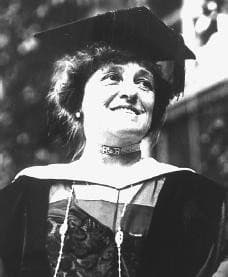
Edith Wharton was an American writer and designer. Wharton drew upon her insider's knowledge of the upper-class New York "aristocracy" to portray realistically the lives and morals of the Gilded Age. In 1921, she became the first woman to win the Pulitzer Prize in Fiction, for her novel The Age of Innocence. She was inducted into the National Women's Hall of Fame in 1996. Among her other well known works are The House of Mirth, the novella Ethan Frome, and several notable ghost stories.







