BookBrief
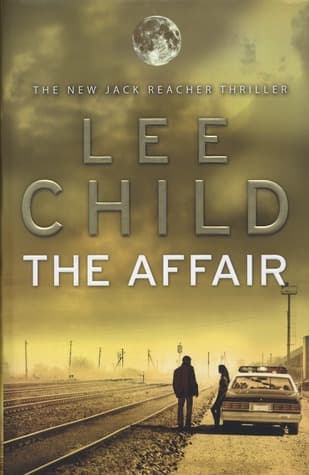
The Affair cover
Archivist's Choice

The Affair

Lee Child (2011)

Genre

Thriller / Mystery

Reading Time

420 min

Key Themes

See below

Track Your Reading

Sign in to track this book

Before becoming a drifter, Major Jack Reacher goes undercover in a small Mississippi town. He gets caught in a murder case that pits military secrets against a beautiful, mysterious sheriff, making him choose between his uniform and his conscience.

Synopsis

In March 1997, Major Jack Reacher of the military police goes undercover in Carter Crossing, Mississippi, after a woman is found murdered behind a local bar. The suspects include both residents and soldiers from a nearby army base. Reacher's mission is to investigate quietly, but he soon finds a complex network of military secrets and a possible cover-up. He works with county sheriff Elizabeth Devereaux, a former US Marine, whose investigation seems stuck. This makes Reacher wonder about her motives or the Pentagon's involvement. A second murder increases the tension. Reacher uncovers evidence pointing to a high-ranking military officer's son, Garber Jr., and a deeper conspiracy involving the base commander. Reacher confronts Garber Jr., exposing the truth behind the murders and the military's attempts to hide it. This case forces Reacher to a moral choice: follow army orders and compromise his integrity, or pursue justice alone, risking his military career. Reacher chooses the latter, exposing the cover-up and deciding to leave the army, which sets up his future as a drifter.
Reading time
420 min
Difficulty
Medium
Pacing
Fast
Mood
Suspenseful, Gritty, Intense, Morally complex
✓ Read this if...
You enjoy military thrillers, a strong sense of justice, and seeing a beloved character's origin story unfold.
✗ Skip this if...
You prefer fantasy or romance over gritty crime thrillers with military themes.

Plot Summary

The Murder in Carter Crossing

In March 1997, Janet Salter is found murdered behind a bar in Carter Crossing, Mississippi. Sheriff Elizabeth Devereaux starts an investigation, but the nearby U.S. Army base, Fort Kelham, complicates things. Major Jack Reacher, still in the military police, is sent undercover by Colonel Reed and General Garber to investigate. His specific task is to find out if a soldier is involved and, if so, to keep it quiet to protect the Army's reputation. He is told to work discreetly and report to his superiors, which immediately raises questions about the military's real intentions.

Undercover and First Impressions

Reacher arrives in Carter Crossing, pretending to be a civilian drifter. He quickly assesses the town and its residents, noticing the tension between locals and soldiers from Fort Kelham. He meets Sheriff Elizabeth Devereaux, an intelligent and capable former Marine. They are suspicious of each other at first, but also show growing respect. Reacher begins his own quiet investigation, observing the crime scene and local dynamics, while Devereaux continues her official inquiries, which seem to be blocked, possibly by military interference.

The Second Murder and Escalation

Soon after Reacher arrives, another local woman, Maria Perez, is found murdered in a similar way to Janet Salter. This second killing makes the investigation more urgent and puts more pressure on both Reacher and Devereaux. The murder pattern suggests a serial killer, and the focus remains on whether the killer is a soldier or a local. Reacher and Devereaux start sharing information more openly, their professional relationship growing as they realize they might be working against a common, powerful enemy.

Uncovering Military Secrets

As Reacher investigates further, he uncovers a troubling secret at Fort Kelham. He learns that Lieutenant Colonel John Garber Jr., the son of a high-ranking general, has been involved in a series of sexual assaults and murders of local women. The military, led by General Garber Sr. and Colonel Reed, has been actively covering up his crimes to protect the general's career and the Army's reputation. This discovery puts Reacher in a moral dilemma; his orders were to contain the situation, but his sense of justice demands exposure.

Devereaux's Own Investigation

Sheriff Devereaux, despite a lack of cooperation from Fort Kelham and subtle stalling, continues her careful investigation. She notices inconsistencies and attempts by military personnel to block her inquiries. Through her own leads and observations, she starts to suspect a military connection to the murders and senses a coordinated effort to hide information. Her independent work brings her closer to the truth Reacher is uncovering, creating a parallel path to the same conclusion.

The Confrontation with Garber Jr.

Reacher, after confirming John Garber Jr.'s guilt, confronts him. Garber Jr. is revealed as a sadistic and arrogant individual, sure he is untouchable due to his father's influence. The confrontation turns into a violent fight. Reacher, using his combat skills and experience, subdues Garber Jr. This direct action starts the final, irreversible steps of Reacher's military career and the dismantling of the cover-up.

The Cover-Up Exposed

With Garber Jr. caught, Reacher and Devereaux work together to expose the full extent of the military's cover-up. They gather evidence implicating General Garber Sr. and Colonel Reed in obstructing justice and protecting a murderer. The truth reveals corruption within a part of the military command, prioritizing institutional image over justice for the victims. This collaboration strengthens their trust and respect for each other, despite their different loyalties.

Reacher's Moral Dilemma and Decision

Faced with the choice of following his orders to maintain the cover-up or exposing the truth and facing the consequences, Reacher makes a clear moral stand. He decides that protecting a murderer and a corrupt system is wrong. His actions directly go against his superiors' wishes, sealing his fate within the military. This decision is a key moment, marking his shift from a dedicated military police officer to the independent, justice-seeking drifter he becomes.

The Aftermath and Consequences

The evidence gathered by Reacher and Devereaux leads to the arrests of General Garber Sr. and Colonel Reed for their roles in the cover-up. John Garber Jr. faces justice for the murders. As a direct result of his insubordination and exposure of military corruption, Jack Reacher is honorably discharged from the Army. This ends his long and distinguished military career, setting the stage for his life as a civilian wanderer, guided by his own moral code.

A New Beginning

With his military career over, Reacher packs his few belongings and leaves Carter Crossing. The experience strengthens his belief in personal justice and his distrust of institutional power structures that compromise integrity. He acknowledges the deep connection he formed with Sheriff Devereaux, but ultimately chooses the solitary path of a drifter, free from the demands of command. This ending directly precedes the beginning of 'Killing Floor' and his iconic status as a lone wolf.

Principal Figures

Jack Reacher

The Protagonist

Reacher transitions from a loyal military officer torn by conflicting orders to a man who chooses his own moral code over his career, ultimately leading to his discharge and the beginning of his iconic drifter lifestyle.

Elizabeth Devereaux

The Supporting

Devereaux initially struggles against military obstruction but ultimately collaborates with Reacher to uncover the truth, proving her strength and commitment to justice.

John Garber Jr.

The Antagonist

Garber Jr.'s reign of terror and perceived immunity is shattered as Reacher and Devereaux expose his crimes and bring him to justice.

General Garber Sr.

The Antagonist

General Garber Sr.'s elaborate cover-up unravels due to Reacher's integrity, leading to his downfall and the exposure of his corruption.

Colonel Reed

The Supporting

Reed's complicity in the cover-up is exposed, leading to his professional ruin alongside General Garber Sr.

Janet Salter

The Mentioned

N/A

Maria Perez

The Mentioned

N/A

Themes & Insights

Justice vs. Institutional Loyalty

This theme explores the conflict between an individual's moral duty to seek justice and the demands of loyalty to an institution, especially the military. Reacher is initially sent to protect the Army's image. But as he uncovers the truth of John Garber Jr.'s crimes and the cover-up by General Garber Sr., he faces a deep moral problem. His decision to expose the truth, knowing it will end his career, shows this struggle. The theme highlights how institutions can become corrupt when self-preservation is more important than ethics.

“I had orders. But I had a conscience too.”

Jack Reacher

The Abuse of Power and Privilege

The novel clearly shows how power and privilege can be misused to commit crimes and avoid justice. John Garber Jr.'s serial murders are possible because of his father's high rank and influence in the military, allowing him to act without punishment. General Garber Sr. and Colonel Reed actively manipulate the investigation and obstruct justice, showing how those in authority can corrupt the system for personal gain or protection. This theme emphasizes the dangerous results when accountability is bypassed by status.

“Some men think the rules don't apply to them, especially when their fathers are generals.”

Elizabeth Devereaux

The Nature of Undercover Work and Deception

Reacher's undercover assignment forces him into a world of deception, where his true identity and intentions must be hidden. This theme explores the psychological cost and moral uncertainties in such work. Reacher must constantly decide whom to trust and how much information to reveal, balancing his mission with his personal code. His initial deception of Sheriff Devereaux, while necessary for his cover, creates tension and highlights the blurred lines between ally and enemy in a complex investigation.

“Undercover means you're a lie, walking and talking.”

Jack Reacher

The Birth of a Lone Wolf

This prequel is an origin story for Reacher's 'lone wolf' persona. The events in Carter Crossing are the clear reason for his decision to leave the military and live free from institutional limits. His disappointment with the Army's corruption and his strong commitment to his own moral code solidify his future path as an independent drifter who delivers justice on his own terms. The novel explains why Reacher chose a life of solitary wandering instead of continuing a distinguished military career.

“My life in the Army was over. My life as Reacher was just beginning.”

Narrator

Masculinity and Violence

The novel examines different aspects of masculinity, especially in relation to violence. John Garber Jr. shows a toxic masculinity, using violence to control and satisfy himself, enabled by his privileged position. In contrast, Reacher's masculinity is defined by his disciplined combat skills and his use of violence only as a last resort for justice. The military setting itself highlights a culture where certain forms of violence are allowed, but the story draws a clear line between honorable service and criminal depravity.

“There's a line, even for soldiers, between fighting and being a monster.”

Jack Reacher

Plot Devices & Literary Techniques

Undercover Investigation

Reacher's secret mission to investigate military involvement in the murders.

This device is central to the narrative, allowing Reacher to operate outside traditional military channels and gather information without immediately alerting the conspirators. It creates suspense as Reacher navigates a dual role, balancing his official orders (to contain the situation) with his personal drive for justice. The undercover aspect also facilitates his initial, cautious interactions with Sheriff Devereaux, building a slow-burn alliance while maintaining secrecy from his superiors.

Moral Dilemma

Reacher's internal conflict between following orders and upholding justice.

The moral dilemma is the core engine of Reacher's character arc in this novel. He is ordered to protect the Army's reputation, even if it means covering up a murder. As he uncovers the truth about Garber Jr. and the extent of the cover-up, Reacher is forced to choose between his career and his conscience. This internal conflict drives his actions and ultimately leads to his pivotal decision to leave the military, defining the character's future trajectory.

Red Herring

Initial misdirection pointing towards a generic soldier or local.

The plot initially suggests that the murderer could be any soldier from Fort Kelham or a local resident, creating a broad field of suspects. This misdirection serves to heighten the mystery and allows the military to initially control the narrative by deflecting specific accusations. It also allows Reacher to conduct his initial investigation broadly before narrowing down on the true culprit and the specific, high-level cover-up, making the eventual reveal of Garber Jr.'s identity more impactful.

Institutional Corruption

The systemic cover-up orchestrated by high-ranking military officials.

This device creates a powerful antagonist beyond just the killer. The corruption within the military, particularly General Garber Sr.'s active involvement in shielding his son, provides a formidable obstacle for Reacher and Devereaux. It highlights the dangers of unchecked power and how institutions can prioritize self-preservation over justice, turning the military itself into an adversary for Reacher, forcing him to choose between his loyalty and his moral code.

Critical analysis

Notable Quotes

The army taught him a thing or two about the way the world worked, and one of them was that you didn't always get to choose your battles. Sometimes they chose you.

Reflecting on Reacher's past and the circumstances that often pull him into conflict.

He had a rule of thumb: if it looked like trouble, it probably was. And if it felt like trouble, it definitely was.

Reacher's initial assessment of the situation in Carter Crossing.

There was no such thing as a perfect crime. Just imperfect investigations.

Reacher's professional cynicism regarding criminal justice.

He didn't like surprises. Not when they involved guns.

Reacher's reaction to an unexpected armed confrontation.

Silence was a weapon, too. Sometimes the most effective one.

Reacher observing and waiting, using quiet as a tactical advantage.

The truth was a messy business. Especially when people tried to bury it.

Reacher uncovering layers of deception and conspiracy.

He was a big man, but he moved like a shadow. Which was why he was so good at what he did.

A description of Reacher's physical prowess and tactical movement.

Some secrets were meant to stay buried. Others had a way of clawing their way to the surface.

Reflecting on the nature of hidden truths in the small town.

He preferred simple. Simple was usually honest. Complicated was usually a lie.

Reacher's approach to dissecting complex situations and motives.

The world was full of bad people. And sometimes, good people had to do bad things to stop them.

Reacher's moral philosophy when dealing with severe threats.

He didn't carry a watch. Or a phone. Or any of the things that tied people down. He was free.

Highlighting Reacher's nomadic and unburdened lifestyle.

A man's word was his bond. Or it should be. In the army, it was everything.

Reacher reflecting on the importance of integrity and promises.

He knew the difference between a threat and a promise. And he knew which one was more dangerous.

Reacher assessing the intentions of his adversaries.

Sometimes the only way to find out what was going on was to stir things up.

Reacher's proactive approach to uncovering the truth in a stagnant investigation.

Quiz

Test Your Knowledge

Ready to see how well you understood this book? Take our interactive quiz with 10 questions.

10
Questions
~5
Minutes
?
Best Score

Key Questions (FAQ)

Reacher is dispatched undercover to Carter Crossing, Mississippi, to investigate the throat-slitting murder of a woman behind a local bar. The primary concern is whether the killer is a local civilian or a soldier from the nearby army base, and the Pentagon is keen to control the narrative.

About the author