“I sing of arms and the man, he who first came from the shores of Troy to Italy, exiled by fate, to the Lavinian shores.”
— The opening lines of the epic, stating its subject.


Sign in to track this book
Haunted by a goddess's wrath and driven by destiny, Aeneas braves stormy seas, tragic love, and the underworld to forge a new empire from Troy's ashes.
After seven years of wandering since Troy fell, Aeneas and his fleet sail toward Italy. The goddess Juno, still angry at the Trojans and fearing Rome's rise, incites Aeolus, god of winds, to unleash a storm. The tempest scatters the Trojan ships, sinking some and driving the survivors to the coast of Libya. Aeneas, a good leader, gathers his men and, guided by his divine mother Venus, reaches Carthage, a growing city ruled by Queen Dido. Venus, to ensure Aeneas's safety and a warm welcome, sends Cupid disguised as Aeneas's son Ascanius to make Dido fall in love with the Trojan hero.
At a feast hosted by Queen Dido, the queen, captivated by Aeneas, asks him to tell his experiences. Aeneas begins his story with the Trojan Horse, describing how the Greeks, pretending to retreat, left the wooden effigy as an offering to Athena. Despite Laocoön's warnings, the Trojans bring the horse inside their walls, leading to the city's destruction. He describes the night the city was sacked, King Priam's slaughter by Pyrrhus, and his own desperate attempts to fight before the ghost of Hector and then his mother Venus tell him to flee with his family. He escapes with his father Anchises, his son Ascanius, and his household gods, though his wife Creusa is lost.
Aeneas continues his tale, detailing the Trojans' long and dangerous journey across the Mediterranean. They face challenges and receive prophecies about their destiny to found a new city in Italy. These prophecies come from the oracle at Delos, the Harpies on the Strophades islands, and Helenus, son of Priam, now king of a Greek city. They visit Crete, where a plague forces them to move on, and Sicily, where Anchises dies. Throughout these travels, Aeneas struggles with his destiny and the loss of his homeland, always seeking signs and guidance to reach Italy.
Dido, made to love by Cupid's arrow and Aeneas's stories, falls deeply in love with him. They live together in Carthage, and Dido believes they are married. However, Jupiter, seeing Aeneas's delay in fulfilling his destiny, sends Mercury to remind the hero of his mission to found Rome. Torn between his love for Dido and his duty, Aeneas reluctantly prepares to leave. Dido, heartbroken and feeling betrayed, confronts Aeneas with pleas and accusations. When he remains firm, she falls into despair, building a pyre and, after cursing Aeneas and his descendants, stabs herself with Aeneas's sword as his ships sail away.
Aeneas and his fleet return to Sicily for a second time, where they hold funeral games to mark the one-year anniversary of Anchises's death. These games include ship races, footraces, boxing, archery, and a mock cavalry battle by Ascanius and other Trojan youths. During their stay, Juno, still hateful, incites the Trojan women to burn the ships, but Jupiter intervenes to save most of the fleet. Following Anchises's instructions from a dream, Aeneas seeks the Cumaean Sibyl, a prophetess, who guides him to the Underworld. There, he meets his father, Anchises, who reveals Rome's future glory and its long line of descendants, including Augustus Caesar, which strengthens Aeneas's resolve.
Aeneas finally lands in Latium, the promised land, near the Tiber River's mouth. King Latinus, the Latins' ruler, welcomes Aeneas, recognizing him as the fated foreign suitor for his daughter Lavinia, whose hand has been prophesied to go to a stranger. Latinus offers Lavinia to Aeneas, much to the dismay of Queen Amata, Lavinia's mother, who favors Turnus, the brave Rutulian prince. Juno, seeing her efforts to prevent Aeneas's destiny fail, sends the Fury Allecto to incite Amata and Turnus against the Trojans, planting seeds of war and resentment.
Allecto successfully incites Queen Amata to frenzy and Turnus to violent rage. A small incident then escalates into full conflict: Ascanius, while hunting, accidentally shoots a prized stag belonging to Silvia, daughter of Latinus's chief herdsman. This act, fueled by Allecto's actions, provokes the local farmers into an armed riot against the Trojans. Despite Latinus's attempts to keep peace, the war party, led by Turnus, gains popular support, and the gates of war are opened. Both sides begin to gather forces, preparing for a struggle over the land and Lavinia's hand.
Facing a strong coalition of Italian tribes led by Turnus, Aeneas seeks allies. Guided by a dream and the river god Tiberinus, he sails up the Tiber to Pallanteum, where he forms an alliance with King Evander and his son Pallas, who leads a small Arcadian settlement that will one day become Rome. Evander advises Aeneas to seek aid from the Etruscans, who are rebelling against their tyrannical king, Mezentius, an ally of Turnus. Meanwhile, Venus asks Vulcan to forge new armor for Aeneas. Aeneas's shield is decorated with scenes from future Roman history, ending with the Battle of Actium and Augustus Caesar's triumph, further reinforcing Aeneas's destiny.
The war rages. In a major battle, Pallas, fighting bravely by Aeneas's side, fights Turnus. Despite Pallas's courage, Turnus, a more experienced warrior, defeats and kills him, taking Pallas's sword-belt as a trophy. This devastates Aeneas, who had promised Evander to protect his son. Enraged by Pallas's death and fueled by grief and vengeance, Aeneas unleashes his fury on the Latin forces, killing many and taking prisoners for ritual sacrifice in honor of Pallas. His brutal rampage marks a turning point in the war, showing his transformation into a ruthless warrior.
The war continues with fierce fighting and losses on both sides. Among the warriors is Camilla, a fierce Amazonian queen allied with Turnus, who shows great bravery and skill. She causes havoc among the Trojan ranks but is killed by Arruns, a Trojan ally, with the help of the goddess Diana. The Latins suffer more defeats, and their morale drops. King Latinus proposes a truce and a single combat between Aeneas and Turnus to decide the war, a proposal Turnus's sister, Juturna, a nymph incited by Juno to prolong the conflict, resists.
After more skirmishes and a broken truce, Aeneas and Turnus finally meet in single combat. Aeneas, wounded but divinely healed, pursues Turnus around the city walls. Turnus's sword, mistaken for his own, shatters, and he is briefly disarmed. Jupiter, at Juno's reluctant request, sends a Dira (a Fury) to torment Turnus, draining his strength and courage. Aeneas wounds Turnus in the thigh. As Turnus lies defeated and pleads for his life, Aeneas hesitates, almost showing mercy. However, he spots Pallas's sword-belt, which Turnus is wearing as a trophy. Enraged by this reminder of Pallas's death, Aeneas plunges his sword into Turnus, killing him and ending the war. With Turnus dead, Aeneas's path to founding Rome is clear.
The Protagonist
Aeneas transforms from a grieving refugee into a determined leader and a ruthless warrior, fully embracing his destiny as the founder of the Roman race.
The Supporting/Antagonist
Dido transforms from a resilient, independent queen into a heartbroken, vengeful lover, ultimately sacrificing herself to escape her despair.
The Antagonist
Turnus's initial confidence and strength are gradually eroded by divine intervention and Aeneas's power, leading to his eventual defeat and death.
The Antagonist
Juno gradually accepts the inevitability of Aeneas's destiny, though she never fully relinquishes her animosity towards the Trojans.
The Supporting
Venus remains a steadfast protector of Aeneas throughout his journey, ensuring his success.
The Supporting/Mentioned
Anchises's influence guides Aeneas even after his death, serving as a spiritual and prophetic anchor.
The Supporting
Ascanius grows in maturity and courage throughout the epic, embodying the hope for Rome's future.
The Supporting
Latinus tries to maintain peace but is ultimately swept aside by the tide of war and divine interference.
The Supporting
Lavinia's fate is decided by the outcome of the war, as she is destined to marry Aeneas.
The Supporting
Pallas's brief but heroic arc culminates in his sacrificial death, which serves as a major catalyst for Aeneas's vengeance.
A main theme is the conflict between Aeneas's personal desires and his duty (pietas) to found Rome. This is clearest in his tragic affair with Dido. Aeneas loves Dido, and his departure causes him great pain, yet he chooses his destiny over personal happiness, driven by the gods' will and the promise of a glorious future. This theme shows the Roman ideal of putting the state and divine will above individual desires, even at great personal cost.
“But the Fates forbid, and the gods' command / Drives me to other lands.”
The Aeneid explores the human cost and sacrifice needed to build a great empire. Rome's founding is not a glorious, bloodless effort but a process with suffering, loss, and violence. Aeneas loses his home, wife, father, and lover, and must fight a brutal war against the native Italians. The epic acknowledges the pain caused to those who stand in destiny's way, such as Dido and Turnus, making it a nuanced portrayal of imperial ambition rather than a simple celebration.
“So great a task it was to found the Roman race.”
The interplay between predetermined fate and individual choice is a recurring idea. While the gods intervene and Aeneas's destiny to found Rome is set, characters still make choices that affect the journey and suffering involved. Juno tries to thwart fate, and Dido chooses suicide. Aeneas himself makes decisions, such as his initial hesitation with Dido, or his final decision to kill Turnus, which are not entirely preordained. This suggests that while the outcome is fixed, the journey and the moral choices within it remain important.
“The Fates will find a way.”
Prophecies and divine interventions are key to the story, shaping the plot and reinforcing Aeneas's destiny. From Hector's ghost to the oracle at Delos, the Harpies, Helenus, Anchises in the Underworld, and the Sibyl, Aeneas constantly receives divine guidance. Gods like Venus and Juno actively participate in mortal affairs, either helping or hindering Aeneas. This shows the belief in a universe governed by higher powers and a predetermined cosmic order, where human actions are often guided or influenced by divine will.
“Seek your ancient mother; there the Dardan house / Shall rise again.”
Underlying the entire epic is the glorification of Rome and its future greatness. Virgil subtly includes references to Roman history, ending with the detailed depiction of future Roman heroes and events on Aeneas's shield. Aeneas's journey is presented as the founding myth for the Roman Empire, establishing its divine origins, its founders' virtues, and its destined supremacy. The epic is a patriotic story, legitimizing Augustus's reign and celebrating Roman identity.
“Remember, Roman, these are your arts: to rule / Earth's peoples with an empire's might.”
Extended, elaborate comparisons used to heighten description.
Virgil frequently employs epic similes, long, detailed comparisons that liken heroic actions or grand events to more mundane, relatable phenomena. These similes not only provide vivid imagery but also expand the narrative's scope, drawing connections between the heroic and the ordinary. For example, Aeneas's steadfastness in the face of Dido's pleas is compared to an oak tree weathering a storm, emphasizing his unyielding resolve while also evoking a sense of powerful, natural force. They enrich the poetic quality and emotional depth of the text.
Beginning the story in the middle of the action, then recounting past events.
The Aeneid begins 'in media res' (in the middle of things), with Aeneas and his fleet caught in a storm. The narrative then uses a lengthy flashback, Aeneas's recounting of the fall of Troy and his subsequent wanderings to Dido, to provide essential backstory. This technique immediately plunges the reader into the action, creating suspense, and allows Virgil to present the Trojan War from a unique, survivor's perspective, shaping the audience's understanding of Aeneas's motivations and sufferings before the main journey to Italy begins.
Gods and goddesses directly influencing mortal events and outcomes.
Divine intervention is a pervasive plot device. The gods are not distant observers but active participants in the narrative. Juno repeatedly tries to thwart Aeneas, while Venus consistently protects him. Jupiter ultimately ensures fate is upheld. These interventions explain key plot turns (e.g., the storm, Dido's love, the outbreak of war) and underscore the belief that human destiny is intertwined with the will of the gods. This device adds a layer of cosmic grandeur and predetermined inevitability to Aeneas's journey and the founding of Rome.
Foreshadowing future events through divine pronouncements or signs.
Throughout the epic, prophecies and omens guide Aeneas and his followers, revealing their destiny and the future glory of Rome. These include oracles, dreams, the Harpies' curse, Helenus's counsel, and Anchises's revelations in the Underworld. The shield of Aeneas, depicting future Roman history, is another powerful form of prophecy. This device not only builds suspense and reinforces the idea of a divinely ordained mission but also connects the mythical past directly to Virgil's contemporary Rome, validating its imperial power and Augustan rule.
“I sing of arms and the man, he who first came from the shores of Troy to Italy, exiled by fate, to the Lavinian shores.”
— The opening lines of the epic, stating its subject.
“The descent into Avernus is easy; the gates of black Dis stand open night and day. But to retrace your steps and escape to the upper air, that is the toil, that is the task.”
— The Sibyl of Cumae warns Aeneas about the difficulty of returning from the Underworld.
“Do not yield to misfortunes, but advance more boldly against them as your fate allows you.”
— The Sibyl encourages Aeneas to face his challenges with courage.
“Love conquers all; let us too surrender to Love.”
— A common misattribution, but the sentiment of love's power is present in the tragic story of Dido and Aeneas.
“For the renown of their name, the gods made the Trojan city great.”
— Aeneas reflects on the past glory of Troy.
“From this day forth, I shall be known as Dido, and I will be queen of this land.”
— Dido establishing her rule in Carthage before Aeneas's arrival.
“Are you so ready to cast aside your own land, your own people, your own destiny?”
— Mercury, sent by Jupiter, chastises Aeneas for lingering with Dido in Carthage.
“There are tears for things, and mortal matters touch the heart.”
— Aeneas, seeing murals of the Trojan War in Carthage, is moved by the shared human experience of suffering.
“Remember, Roman, these are your arts: To rule the peoples with power, to impose the ways of peace, to spare the humbled and to conquer the proud.”
— Anchises, in the Underworld, reveals to Aeneas the future destiny and mission of Rome.
“The mind is its own place, and in itself can make a heaven of hell, a hell of heaven.”
— While more famously from Milton, the struggle of internal will versus external fate is a core theme for Aeneas.
“Fame, that swift evil, grows as she goes.”
— Virgil describes the destructive power of Rumor (Fama) spreading news of Dido and Aeneas.
“Happy is he who has been able to learn the causes of things.”
— While often attributed to Virgil, this specific phrasing isn't directly in the Aeneid, but the pursuit of understanding fate and divine will is central to Aeneas's journey.
“Fortune favors the bold.”
— Turnus utters a similar sentiment when preparing for battle against Aeneas.
“Such was the burden, such the toil, to found the Roman race.”
— A summary of the immense effort and suffering required for Aeneas to fulfill his destiny.
Ready to see how well you understood this book? Take our interactive quiz with 10 questions.
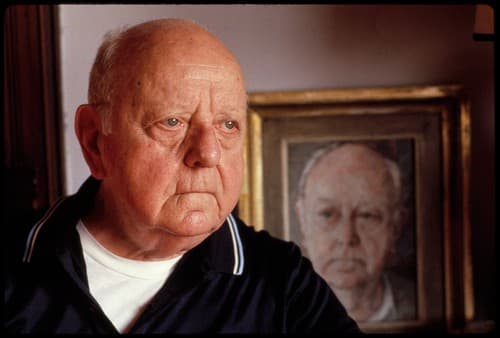
Publius Vergilius Maro, usually called Virgil or Vergil in English, was an ancient Roman poet of the Augustan period. He composed three of the most famous poems in Latin literature: the Eclogues, the Georgics, and the epic Aeneid. A number of minor poems, collected in the Appendix Vergiliana, were attributed to him in ancient times, but modern scholars consider his authorship of these poems to be dubious.







