“Rubbish! you don't know anything about it. Oh, please, auntie, I'll be good!”
— Tom trying to avoid whitewashing the fence.

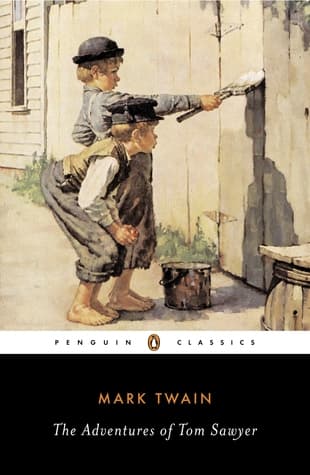
Mark Twain (1976)
Genre
Children's / Historical Fiction / Young Adult
Reading Time
360 min
Key Themes
See below
Sign in to track this book
A boy on the Mississippi River turns a chore into a game, finds adventure in childhood romance and graveyard secrets, and outwits adults with his cleverness.
Tom Sawyer, a mischievous boy living with his Aunt Polly and half-brother Sid in St. Petersburg, Missouri, must whitewash a long fence as punishment for skipping school. Instead of doing the work himself, Tom makes a clever plan. He pretends the chore is an artistic privilege, making it seem desirable and exclusive. As other boys, like Ben Rogers, pass by, Tom acts uninterested in their offers to help, making them more curious. The boys then eagerly trade their prized possessions — an apple, a kite, a dead rat and a string, marbles, and other trinkets — for a chance to paint a section of the fence. By the end of the day, the fence is perfectly whitewashed, and Tom has many treasures, without having lifted a brush.
After successfully tricking his friends into whitewashing the fence, Tom attends Sunday school. He tries to impress Judge Thatcher and the new girl, Becky Thatcher, by falsely winning a Bible. He then goes to school, where he is immediately taken with Becky, who has just arrived in St. Petersburg. Tom, known for his romantic flair, tries to win her over by drawing pictures and writing notes. He eventually persuades her to get 'engaged' to him, a common childhood game, sealed with a kiss. However, their new romance quickly ends when Becky discovers Tom was previously 'engaged' to Amy Lawrence. Feeling betrayed and jealous, Becky rejects Tom, leaving him heartbroken and alone.
Upset by Becky Thatcher's rejection, Tom seeks adventure with Huckleberry Finn, the town outcast. They go to the graveyard at midnight, a superstitious time, to perform a charm they believe will cure warts using a dead cat. Hidden among the tombstones, they witness a shocking crime: Dr. Robinson is murdered during a grave-robbing attempt by Injun Joe and Muff Potter. Injun Joe, holding a grudge against Dr. Robinson, stabs him with Muff Potter's knife, then frames the unconscious, drunken Muff Potter for the crime. Terrified and bound by an oath, Tom and Huck swear never to tell what they saw, fearing Injun Joe.
Haunted by the murder and feeling misunderstood, Tom decides to run away from home. He convinces Huckleberry Finn and his friend, Joe Harper, to join him in becoming pirates on Jackson's Island, a deserted island in the Mississippi River. The boys steal food and supplies, enjoying their new freedom and living outside rules. They swim, fish, and explore the island, imagining themselves as buccaneers. Meanwhile, in St. Petersburg, the town believes the boys have drowned. Search parties are organized, causing great sadness among their families and friends.
While on Jackson's Island, Tom, Huck, and Joe discover the town is holding a funeral service for them, believing them dead. Tom, always a showman, plans a dramatic return. The boys secretly go back to St. Petersburg and hide in the church gallery during their own funeral. At the end of the service, to the shock and joy of the grieving people, the three boys step out from their hiding place. Their return is met with tears of relief and celebration, turning the sad event into a joyful reunion, though Aunt Polly gives Tom a deserved 'licking' for his trick.
Despite his fear of Injun Joe, Tom's conscience is bothered by Muff Potter being wrongly accused of Dr. Robinson's murder. As the trial goes on and evidence against Muff Potter seems strong, Tom struggles with his oath of silence. Finally, during the trial, Tom can no longer bear the guilt. He bravely takes the stand and tells the true events of that night in the graveyard, pointing directly at Injun Joe as the real murderer. Injun Joe, shocked and exposed, escapes the courtroom, leaving the town terrified but relieved for Muff Potter.
After the trial, Tom and Huck, convinced Injun Joe is still a threat, decide to hunt for buried treasure, inspired by pirate stories. They explore haunted houses and find a large sum of gold hidden in an old, abandoned house. To their horror, they also find Injun Joe and his accomplice planning to hide their own loot there. Tom and Huck barely escape being seen, realizing the treasure they seek is connected to the dangerous murderer. They continue their search with new purpose and caution, knowing Injun Joe is still at large.
During a picnic with Becky Thatcher and other townspeople, Tom and Becky explore the large, winding McDougal's Cave. They go deeper than anyone before, getting lost in the darkness. Their candles eventually burn out, leaving them stranded and scared. They spend days trapped, eating a single piece of cake, while the town frantically searches for them. During this time, Tom, despite his own fear, tries to keep Becky's spirits up, showing new maturity.
While lost in McDougal's Cave with Becky, Tom sees Injun Joe in another part of the cave, showing the murderer is also hiding there. After what feels like a long time, Tom finds a small opening and leads a weakened Becky to safety, returning to the town's great relief. A few weeks later, Judge Thatcher orders the cave sealed with an iron door to prevent more accidents. Tom, hearing this, is horrified, realizing Injun Joe was still inside. They rush back to the cave and find Injun Joe dead just inside the sealed entrance, having starved to death trying to escape.
With Injun Joe dead, Tom and Huck return to McDougal's Cave, specifically to the spot where Tom had last seen Injun Joe. They discover the hidden treasure chest Injun Joe had been guarding, filled with thousands of dollars in gold coins. The boys are thrilled by their find, becoming instantly rich. Their discovery is a big event in St. Petersburg, and their new wealth raises their social standing. Tom's adventures have brought him fame and fortune, confirming his reputation as a hero and a very lucky boy.
After finding Injun Joe's treasure, Huckleberry Finn, now wealthy, is adopted by the Widow Douglas and her sister, Miss Watson. They try to civilize him by giving him a proper home, education, and religious teaching. However, Huck finds the rules of polite society unbearable. He dislikes wearing clean clothes, attending school, and following strict manners. He repeatedly runs away, preferring his old, free life of wandering and sleeping outdoors. Tom, seeing Huck's unhappiness, convinces him he must endure these changes to truly be part of their 'gang' of respectable boys, appealing to Huck's desire for adventure and belonging.
The Protagonist
Tom matures from a purely self-serving prankster to a more responsible and courageous individual, driven by conscience and loyalty.
The Supporting
Huck experiences a transition from complete freedom to a reluctant acceptance of some societal norms, while still valuing his independence.
The Supporting
Becky learns to forgive and trust Tom, developing a deeper bond with him through shared peril.
The Supporting
Aunt Polly's love for Tom deepens as she witnesses his growth and bravery, despite his continued mischief.
The Antagonist
Injun Joe remains a purely evil figure, ultimately meeting a grim end as a result of his own malevolence and the natural consequences of his actions.
The Supporting
Muff Potter is freed from wrongful accusation, representing the triumph of justice.
The Supporting
Sid remains a static character, serving primarily as a contrast to Tom's personality.
The Supporting
Joe experiences a brief period of rebellious adventure before returning to his conventional life.
The novel explores the contrast between the free, imaginative world of children and the strict, often fake, demands of adult society. Tom and Huck often try to escape school, church, and chores, preferring the freedom of the river, islands, and caves. This is clear when Tom tricks his friends into whitewashing the fence, turning a chore into a game. Huck's struggle with being 'civilized' by the Widow Douglas further shows this conflict, as he wants his old, wild life, showing how hard it is to fit into expectations that limit natural impulses.
“Work consists of whatever a body is OBLIGED to do, and that Play consists of whatever a body is not obliged to do.”
Tom's moral growth, especially his struggle with conscience, is a main theme. At first, Tom acts out of self-interest and a wish for attention, but seeing Dr. Robinson's murder forces him to face a deep moral problem. His internal fight over testifying against Injun Joe, despite the danger, is a key moment. This theme also applies to Huck, who struggles with loyalty to Tom versus fear of Injun Joe, and later, his discomfort with the 'civilized' world. The boys' actions against injustice and their choice to do what is right show their growing moral sense.
“The truth was, that Tom's conscience had been upbraiding him night and day.”
Superstition is a big part of Tom and Huck's lives, reflecting the folk beliefs in their Missouri setting. They see meaning in signs, omens, and rituals, from using a dead cat to cure warts to hearing strange sounds as ghosts. Their fear of Injun Joe grows because of their belief in curses and the supernatural. This theme adds cultural realism and often brings both humor and real fear, shaping their choices and how they understand events, such as their initial hesitation to enter the haunted house.
“Then they talked about dead cats, and all the properties of dead cats, and the lucky signs and unlucky.”
The novel celebrates childhood imagination and the excitement of adventure. Tom constantly turns everyday life into exciting escapades, whether whitewashing a fence, playing pirates on Jackson's Island, or hunting for buried treasure. His imagination lets him and his friends escape boring daily life and create their own heroic stories. This theme highlights the importance of play and fantasy in childhood, sharply contrasting with the often hard realities of the adult world, and ultimately leading to real discoveries and successes.
“He was not for this world; he was for the world of fancy, the world of dreams.”
The audience knows more than the characters.
Dramatic irony is frequently used, particularly when the town believes Tom, Huck, and Joe are dead. The readers are aware that the boys are alive and hiding on Jackson's Island, observing the town's grief and funeral preparations. This creates a sense of anticipation and a humorous tension as the boys secretly witness their own memorial service, leading to their dramatic reappearance. It also highlights Tom's theatrical nature and his desire for attention, knowing the impact their 'resurrection' will have.
Hints of future events or dangers.
Foreshadowing is used to build suspense, especially concerning Injun Joe. When Tom and Huck first witness the murder in the graveyard, their blood oath of silence and deep fear of Injun Joe immediately hint at future confrontations and dangers. Later, their repeated encounters with Injun Joe, even when he's just a shadowy figure, foreshadow the eventual discovery of his hidden treasure and his ultimate demise in McDougal's Cave, creating a sense of impending doom and adventure.
A journey to find something, often treasure.
The quest motif drives much of the later plot, beginning with Tom and Huck's decision to hunt for buried treasure. This quest transforms their childish games into a serious, dangerous pursuit, leading them to various locations like the haunted house and McDougal's Cave. The treasure represents not only wealth but also the ultimate validation of their adventurous spirit and the culmination of their bravery. It provides a clear objective that propels the narrative forward and intertwines with their conflict against Injun Joe.
A character who mirrors another, often with contrasting traits.
Sid Sawyer functions as a doppelgänger for Tom. While not a literal double, Sid embodies the 'good' and obedient child that Tom is expected to be, serving as a constant contrast to Tom's mischievous and rebellious nature. Sid's tendency to tattle on Tom highlights Tom's defiance and often gets him into trouble, thereby emphasizing Tom's unique personality and his struggle against conformity. Sid's presence underscores the societal expectations that Tom constantly subverts.
“Rubbish! you don't know anything about it. Oh, please, auntie, I'll be good!”
— Tom trying to avoid whitewashing the fence.
“It was a truly magnificent spectacle. The white-washed fence was a picture of perfect art.”
— Tom conning other boys into whitewashing the fence for him.
“The less he was required to do, the more he was admired.”
— Narrator's commentary on Tom's success with the fence.
“He had discovered a great law of human action, without knowing it -- namely, that in order to make a man or a boy covet a thing, it is only necessary to make the thing difficult to attain.”
— Narrator reflecting on Tom's success in getting the fence whitewashed.
“She went to her work, sighing, and Tom went to his play, singing.”
— Aunt Polly and Tom after Tom successfully avoids chores.
“He was not the Model Boy of the village. He knew too much.”
— Narrator describing Tom's character and mischievous nature.
“The glorious soul of Tom Sawyer was for the moment in the ascendant. He was going to be an Indian, and a pirate, and a robber, and a hero.”
— Tom's imaginative play with his friends.
“The dead silence that followed was awful. Tom knew his doom was sealed.”
— Tom and Huck in the graveyard witnessing Injun Joe's crime.
“Aunt Polly was one of those people who are always doing their duty, and are always regretting it.”
— Narrator describing Aunt Polly's character and her struggles with Tom.
“It was a wonderful life, a wild, free, lawless life, and Tom was perfectly happy.”
— Tom, Huck, and Joe living as pirates on Jackson's Island.
“He was a boy of spirit and ambition, and he was not going to be outdone by any girl.”
— Tom's determination to impress Becky Thatcher.
“Huck Finn was the only really independent person in the community.”
— Narrator introducing Huckleberry Finn's unique social status.
“He had a great mind to go home and get a book, but he knew he couldn't enjoy it.”
— Tom feeling guilty after Becky takes the blame for tearing the teacher's book.
“The average boy is a terror; he is a nuisance; he is a joy.”
— General observation by the narrator about boys.
“It was a long, dreary night, and the children were glad to see the dawn.”
— Tom and Becky lost in the cave.
Ready to see how well you understood this book? Take our interactive quiz with 10 questions.
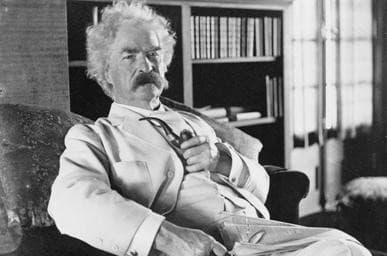
Samuel Langhorne Clemens, best known by his pen name Mark Twain, was an American writer, humorist, entrepreneur, publisher, and lecturer. He was praised as the "greatest humorist the United States has produced", and William Faulkner called him "the father of American literature". His novels include The Adventures of Tom Sawyer (1876) and its sequel, Adventures of Huckleberry Finn (1884), the latter of which has often been called the "Great American Novel". Twain also wrote A Connecticut Yankee in King Arthur's Court (1889) and Pudd'nhead Wilson (1894), and co-wrote The Gilded Age: A Tale of Today (1873) with Charles Dudley Warner.
Dan Gemeinhart
4.5
Kate O'Hearn
4.4

Jeanne Birdsall
4.4

Jen Wang
4.4

Wendelin Van Draanen
4.3

John Marsden
4.3

Chris Van Allsburg
4.3
Jennifer A. Nielsen
4.2