“He that takes from the rich to give to the poor commits no sin, but rather a good deed.”
— Robin Hood explaining his philosophy to his Merry Men in Sherwood Forest.

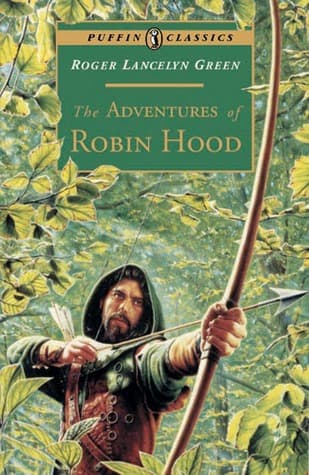
Roger Lancelyn Green (1956)
Genre
Fantasy / Children's / Historical Fiction
Reading Time
240 min
Key Themes
See below
Sign in to track this book
Robin Hood and his Merrie Men emerge from Sherwood Forest to outwit Prince John and the Sheriff of Nottingham, bringing justice to the poor with skill and wit.
The story starts with Robin Hood, originally Robert Fitzooth, Earl of Huntingdon, on his way to an archery contest. He meets some of the Sheriff of Nottingham's foresters who mock his skill. Robin makes a wager and wins. When one forester insults him, Robin shoots the man with an arrow. This act, though in self-defense, makes him an outlaw. Fleeing into Sherwood Forest, Robin begins to gather others who have also suffered under unfair authority, forming his legendary group of 'Merrie Men' dedicated to justice and resistance against Prince John and the Sheriff of Nottingham.
As Robin settles in Sherwood Forest, he meets and recruits several well-known figures. He first meets Little John, a giant, during a memorable duel on a narrow bridge, where Robin is thrown into the stream. Impressed by his strength, Robin invites him to join. Next, he meets Much, the Miller's Son, a simple but loyal man, and Will Scarlet, his nephew, a skilled swordsman. Later, Robin outwits the Friar Tuck, who eventually joins the group, providing spiritual guidance and humor. These early meetings show Robin's charm and his ability to draw different talents to his cause, forming the core of his loyal followers.
The Sheriff of Nottingham, angered by Robin Hood's defiance and constant raids on wealthy travelers, plans many ways to capture him. He often sets traps, like archery contests with tempting prizes, knowing Robin's pride in his skill. At one such event, Robin, disguised as a common yeoman, wins the golden arrow but is recognized and must make a quick escape with his men. The Sheriff's men also try to ambush Robin in the forest, but Robin's superior knowledge of Sherwood, his informants, and his Merrie Men's loyalty consistently allow him to turn the situation around, often embarrassing the Sheriff and giving his stolen goods to the poor.
Maid Marian, Robin Hood's childhood sweetheart, joins his personal life. Marian, disguised as a knight or shepherdess, goes into Sherwood Forest to find Robin. Their reunion is tender and happy, confirming their deep love. Marian, a brave woman, chooses to leave her noble life to stay with Robin, becoming a part of the Merrie Men. She often gives advice, disguises herself to gather information, and sometimes joins their adventures, proving to be a valuable and loved member of the outlaw group. This adds a romantic side to Robin's fight for justice.
One notable adventure involves Allan-a-Dale, a young minstrel, who asks Robin Hood for help. Allan is sad because his true love, Ellen, is being forced into an unwanted marriage with an old, wealthy knight by her family. Robin, always a champion of true love and justice, plans. Disguised as a minstrel, Robin enters the wedding ceremony. At the right moment, the Merrie Men burst in, stopping the wedding. Ellen is reunited with Allan-a-Dale, and Friar Tuck, after a brief talk, performs a proper marriage ceremony for the young lovers. This shows Robin's commitment to fixing wrongs beyond just robbing the rich.
After years of Prince John's rule and the Sheriff's oppression, news reaches Sherwood Forest that King Richard the Lionheart has returned from the Crusades. Richard, disguised as a pilgrim or monk, goes into Sherwood to see the famous outlaw himself. He is impressed by Robin Hood's generosity, his loyalty to the true king, and his commitment to justice for the poor. Revealing his true identity, King Richard pardons Robin Hood and all his Merrie Men, restoring their lands and titles. This moment is a turning point, as Robin's years as an outlaw end, and he is welcomed back into society as a loyal subject of the rightful king.
After King Richard's pardon, Robin Hood, now Earl of Huntingdon, and his Merrie Men try to rejoin normal society. Many of his men go back to their old jobs or positions. Robin himself tries to live as a nobleman, but the structured, often false world of the court feels stifling after the freedom and friendship of Sherwood Forest. The change is hard, as the call of the greenwood and the simple justice they gave as outlaws stays with them. This period shows the difficulties of adjusting to peace after a long time of rebellion and adventure.
The short time of peace and stability ends with the death of King Richard the Lionheart. With Richard gone, his brother, Prince John, takes the throne as King John. This immediately brings back the oppressive conditions that had made Robin an outlaw years earlier. The Sheriff of Nottingham, who had been held back by Richard, gets his power back and renews his persecution of the common people and his hunt for Robin Hood. This turn of events casts a shadow over the land, making Robin and his companions consider their future and the renewed need for their unique justice.
Facing King John's renewed rule and increasing injustices, Robin Hood cannot stand by. The call of Sherwood Forest, the desire to protect the innocent and punish the corrupt, is too strong. He gathers his most loyal companions, including Little John, Will Scarlet, and Friar Tuck, who are also unhappy with the new reign. Together, they make the hard but necessary decision to return to their former life as outlaws in Sherwood Forest, again becoming the champions of the oppressed. This return shows their strong commitment to justice, even if it means giving up their own peace and safety.
Years pass, and Robin Hood, now old but still strong, falls ill. Looking for a cure, he goes to Kirklees Priory, where his aunt, the Prioress, lives. However, in a tragic betrayal, the Prioress, influenced by the Sheriff of Nottingham or perhaps out of fear, bleeds Robin to death under the guise of medical treatment. With his last strength, Robin asks Little John for his bow and an arrow. He shoots the arrow from the window, asking to be buried where it falls. He dies peacefully, surrounded by his loyal friends, in the forest he loved. His death marks the end of an era, but his legend, as a symbol of freedom and justice, lives on.
The Protagonist
Robin transforms from a nobleman into a revered outlaw, fighting for justice, and ultimately returns to nobility before tragically dying, his legend cemented.
The Supporting
From a powerful individual, he becomes Robin's steadfast right-hand man, remaining loyal until the very end.
The Supporting
She transitions from a noblewoman to an active participant in the outlaw life, demonstrating loyalty and courage.
The Supporting
From a solitary friar, he becomes an integral, jovial, and spiritual member of the outlaw band.
The Supporting
He joins his uncle's cause and remains a loyal and skilled warrior throughout the adventures.
The Antagonist
He consistently tries and fails to capture Robin Hood, remaining a symbol of corrupt authority.
The Supporting
His absence causes conflict, and his return brings resolution and pardon, though his later death reignites the conflict.
The Antagonist
He rules tyrannically in his brother's absence, is briefly overthrown, but returns to power to continue his oppression.
The Supporting
He joins Robin as a common man and remains a loyal, if less prominent, member of the Merrie Men.
The main theme is the conflict between Robin Hood's pursuit of justice for common people and the rule of Prince John and the Sheriff of Nottingham. Robin and his Merrie Men correct corrupt power, representing a natural law that favors fairness and kindness over strict, unfair legalism. This appears in their 'robbing from the rich and giving to the poor,' directly challenging the rulers' unfair taxes and exploitation. The story consistently argues that true justice protects the vulnerable, even if it means breaking unjust laws.
“For as long as Prince John rules, there will be no justice in England save that which we ourselves can win.”
Sherwood Forest is not just a place but a character, symbolizing freedom, refuge, and a return to natural order. For Robin Hood and his Merrie Men, the forest offers safety from unfair laws and a place where they can live by their own rules. This theme contrasts the wild freedom of the forest with the stifling, corrupt world of castles and courts. The ability to live off the land, move freely, and rely on friendship rather than strict rules shows the appeal of a life outside typical society, where justice is quick and fair.
“The greenwood is our king's forest, and here we shall live freely, taking only what we need and giving to those who have nothing.”
The bond between Robin Hood and his Merrie Men is a strong theme, showing loyalty, friendship, and mutual support. Despite their different backgrounds, the men are united by shared experiences of injustice and their strong devotion to Robin and his cause. This brotherhood appears in their willingness to risk their lives for each other, their shared meals and laughter, and their group resistance against the Sheriff. This theme highlights the strength found in unity and the importance of personal loyalty against widespread corruption, creating a strong sense of community within the outlaw group.
“We are brothers of the greenwood, and no man shall stand alone while he has a comrade by his side.”
Robin Hood's intelligence and his skill with disguises are important to his success, showing that cleverness can be more powerful than brute force. Robin often outwits his enemies by taking on different appearances—a potter, a butcher, a minstrel, or a monk—allowing him to enter enemy strongholds, gather information, or escape capture. This theme shows that cleverness and planning are as powerful as, if not more powerful than, physical strength, especially against a larger enemy. It also adds a fun, dramatic element to the adventures, as readers look forward to how Robin will trick his enemies next.
“A quick wit and a clever disguise are often better weapons than a sword or an arrow, Master Sheriff.”
A recurring trap and showcase of skill.
The archery contest serves as a recurring plot device, often initiated by the Sheriff of Nottingham as a trap to lure Robin Hood out of hiding, knowing his pride in his skill. It consistently provides a dramatic setting for Robin to demonstrate his unparalleled archery prowess, often winning the golden arrow. Despite the danger, Robin's ability to appear in disguise, win the prize, and then make a daring escape with the help of his Merrie Men, highlights his cunning and the loyalty of his followers, while further humiliating the Sheriff. It's a classic setup for suspense and a display of the hero's defining talent.
Robin Hood's primary method for outwitting his enemies.
Disguise and deception are fundamental plot devices employed by Robin Hood throughout his adventures. Robin frequently adopts various personas—a potter, a butcher, a minstrel, a monk, or a simple yeoman—to infiltrate enemy territory, gather intelligence, or escape capture. This device allows for comedic interactions, builds suspense, and showcases Robin's intelligence and adaptability. It underscores the theme that wit and cunning can overcome brute force and corrupt authority, often leading to the humiliation of the Sheriff and his men, while reinforcing Robin's legendary trickster persona.
Sherwood Forest as a safe haven and symbol of freedom.
Sherwood Forest acts as a powerful plot device, serving as the primary setting and a symbolic sanctuary for Robin Hood and his Merrie Men. It is their refuge from the law, a place where they can live freely according to their own code of justice. The forest's vastness, natural resources, and the outlaws' intimate knowledge of its paths and hiding places provide a strategic advantage against the Sheriff's forces. This device emphasizes the contrast between the corrupt world outside and the relatively pure, free existence within the greenwood, strengthening the themes of freedom and resistance against tyranny.
A political catalyst for conflict and moral justification.
The prolonged absence of King Richard on the Crusades is a crucial political plot device. It creates a power vacuum that allows his treacherous brother, Prince John, and his corrupt officials, like the Sheriff of Nottingham, to oppress the common people. This absence provides the moral justification for Robin Hood's outlawry, as he acts not against the rightful king, but against the usurping tyranny. Richard's eventual return serves as a dramatic turning point, bringing a temporary resolution to the conflict and a pardon for Robin, before his subsequent death reignites the struggle.
“He that takes from the rich to give to the poor commits no sin, but rather a good deed.”
— Robin Hood explaining his philosophy to his Merry Men in Sherwood Forest.
“I am Robin Hood, and I fear no man in all England.”
— Robin boldly introducing himself to the Sheriff of Nottingham.
“For every arrow that flies, a tyrant's power dies.”
— Robin Hood rallying his men before a skirmish with the Sheriff's forces.
“The forest is our home, and in its shadows we find our freedom.”
— Little John reflecting on life in Sherwood Forest with the outlaws.
“A true king serves his people, not his own greed.”
— Robin Hood criticizing Prince John's rule while expressing loyalty to King Richard.
“Merry men we are, for in laughter we find strength against sorrow.”
— Friar Tuck cheering the group during a difficult time in the forest.
“An arrow may pierce a heart, but kindness can heal a kingdom.”
— Maid Marian advising Robin on balancing rebellion with compassion.
“The Sheriff's gold weighs heavy with the tears of the poor.”
— Robin Hood justifying robbing a tax collector to redistribute wealth.
“In Sherwood, every man is judged by his deeds, not his birth.”
— Robin Hood welcoming a peasant into the Merry Men, emphasizing equality.
“A forest without outlaws is like a crown without a king—empty.”
— Will Scarlet musing on the purpose and spirit of their rebellion.
“Our bows are strung with the hope of a better England.”
— Robin Hood inspiring his men before a pivotal battle.
“To rob the rich is easy, but to give wisely is the true challenge.”
— Friar Tuck discussing the responsibilities that come with their actions.
“The greenwood hears no lies, only the truth of a man's character.”
— Little John explaining how life in the forest reveals true nature.
“We fight not for glory, but for the right to live free.”
— Robin Hood clarifying their motives to a captured knight.
Ready to see how well you understood this book? Take our interactive quiz with 10 questions.

Biography coming soon.







