“All right, then, I'll go to hell.”
— Huck decides to help Jim escape slavery, rejecting societal norms.

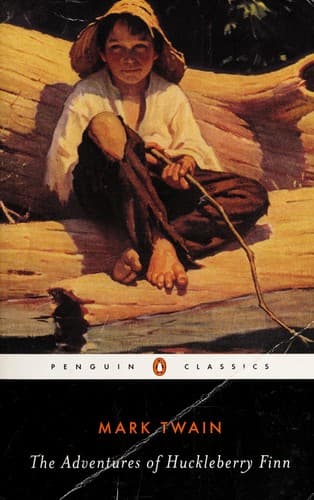
Mark Twain (1984)
Genre
Historical Fiction / Young Adult
Reading Time
450 min
Key Themes
See below
Sign in to track this book
A boy and a runaway slave travel the Mississippi River, outsmarting feuding families, con artists, and prejudice in a search for freedom.
Huckleberry Finn, having recently found treasure with Tom Sawyer, lives with the kind but strict Widow Douglas and her sister, Miss Watson. They try to 'civilize' him with school, religion, and manners, which Huck dislikes. His abusive, alcoholic father, Pap Finn, who dislikes Huck's education and money, returns and kidnaps Huck. Pap takes him to a cabin in the Illinois woods, where he often beats Huck and locks him inside. Huck, fearing for his life, begins to plan his escape from his father.
After enduring Pap's abuse, Huck carefully fakes his own murder in the cabin. He uses a pig's blood and an axe to make it look like robbers killed him. He then escapes by canoe to Jackson's Island, a large, empty island in the Mississippi River, where he plans to hide. While exploring, Huck finds a campfire. He investigates and finds Miss Watson's slave, Jim, who has run away after hearing Miss Watson talk about selling him downriver to New Orleans. Jim is afraid of being caught, and Huck agrees to help him, forming an alliance.
Huck and Jim find a strong raft and decide to travel down the Mississippi River, heading for Cairo, Illinois, a free state where Jim can truly be free. They travel mostly at night to avoid being seen, hiding the raft during the day. Their journey has many dangers and adventures. They find a wrecked steamboat, the 'Walter Scott,' where they hear robbers planning a murder and barely escape. They learn to live off the land, fishing and gathering food, and become good friends. Huck feels bad about helping a runaway slave, but his loyalty to Jim always wins.
During a thick fog, Huck and Jim accidentally miss Cairo. Later, a steamboat hits their raft, separating them. Huck washes ashore and is taken in by the wealthy Grangerford family. He quickly befriends Buck Grangerford, a boy his age, and learns about the long, violent feud between the Grangerfords and the Shepherdson family, which started from an old, forgotten insult. The feud turns into a bloody gunfight after Buck's sister, Sophia, runs away with Harney Shepherdson. Huck sees several Grangerford men, including Buck, die brutally. This deeply affects him and makes him dislike human cruelty.
After the horrors of the Grangerford-Shepherdson feud, Huck is happy to find Jim, who had fixed the raft. They continue downriver. Soon after, they rescue two men running from an angry crowd. These men are con artists: an older man claims to be the Dauphin (the true King of France), and the younger one claims to be the Duke of Bridgewater. Huck quickly sees through their lies but pretends to believe them to avoid trouble. The 'Duke' and 'King' immediately start making plans to trick money from people along the river, interrupting Huck and Jim's peaceful trip.
The Duke and King perform several short cons, including a temperance revival that soon fails. Their most successful scam is the 'Royal Nonesuch,' a crude play advertised for adults only, which they perform for three nights in a small Arkansas town, tricking the locals. During their stay, Huck sees Colonel Sherburn murder a harmless drunk named Boggs. When a mob forms to get revenge, Sherburn bravely confronts them from his porch, giving a speech about mob behavior and cowardice, shaming them into leaving. This event further shows Huck the darker side of people.
The Duke and King learn about the death of Peter Wilks, a rich local man, and a letter saying his two English brothers, Harvey and William, will arrive soon as heirs. The King and Duke pretend to be the two brothers, with the King as Harvey (the deaf one) and the Duke as William. They trick the kind Wilks sisters—Mary Jane, Susan, and Joanna—with fake sadness and stories, convincing the town they are real. They begin to claim Peter Wilks's large inheritance, including money and property, which disgusts Huck.
Huck becomes more upset by the Duke and King's cruel use of the innocent Wilks sisters, especially Mary Jane, who is kind to him. He cannot stand to watch their evil anymore. He decides to steal the gold the con artists took from the Wilks' inheritance and hide it to stop them. After several tries, he manages to slip the bag of gold into Peter Wilks's coffin just before the funeral. However, he has to run before he can tell Mary Jane the truth, leaving the gold's discovery to chance.
Just as the Duke and King are about to finish their trick and sell the remaining property, the real Harvey and William Wilks arrive, causing confusion. The townspeople are unsure who the real brothers are. To find the true heirs, they propose tests, including handwriting analysis and describing a tattoo on Peter Wilks. The King fails to describe the tattoo correctly, and the gold is found in the coffin, proving the con artists' fraud. In the confusion, Huck escapes and reunites with Jim and the raft.
After escaping the Wilks problem, Huck and Jim think they are free of the Duke and King. However, the con artists reappear and try to control Huck and Jim again. Eventually, a farmer named Silas Phelps captures Jim, mistaking him for a runaway slave from a nearby farm. The Duke, in a final act of betrayal, sells Jim for forty dollars, saying he is a runaway from New Orleans. Jim's capture devastates Huck. He faces a hard moral choice, torn between society's rules against helping a slave and his deep friendship with Jim. After much thought, he famously says, 'All right, then, I'll go to hell!' and decides to rescue Jim.
Huck arrives at the Phelps farm to find Jim, but he is immediately mistaken for Tom Sawyer, who is expected to visit. Silas and Sally Phelps, Tom's aunt and uncle, welcome him. Huck plays along, hoping to free Jim. Soon after, the real Tom Sawyer arrives, and Huck stops him, explaining the situation. Tom, instead of just freeing Jim, creates a complicated, dramatic, and impractical plan to 'rescue' Jim, based on adventure books. He wants to make the escape as hard and exciting as possible, which frustrates Huck and tests Jim's patience.
Tom's difficult plan to free Jim involves digging tunnels, writing secret messages, making Jim tame a rat, and other unnecessary acts. The long 'escape' causes stress for Jim and the Phelps family. During the chaotic escape attempt, Tom is shot in the leg. Jim, even though his own freedom is at risk, refuses to leave Tom and stays to help the doctor. This selfless act earns Jim respect. When they return to the farm, Aunt Polly arrives and reveals Huck and Tom's true identities. Tom then says that Miss Watson had died two months earlier, freeing Jim in her will. This made the whole elaborate escape unnecessary. Jim had been free all along.
With Aunt Polly's confirmation and Tom's news, Jim is officially a free man. He also tells Huck that Pap Finn was the dead man they found earlier in the floating house, meaning Huck is no longer threatened by his father. Jim's journey to freedom is complete, and he can now try to reunite with his family. Huck, tired of society's rules, school, and constant attempts to 'civilize' him, says he cannot stand being 'sivilized' anymore. He decides to 'light out for the Territory ahead of the rest,' looking for new adventures and freedom from society's expectations, ending his story.
The Protagonist
Huck evolves from a mischievous, unthinking boy into a morally conscious individual who chooses humanity and friendship over societal expectations.
The Supporting/Co-Protagonist
Jim's arc is one of perseverance and hope, culminating in his hard-won freedom and reunion with his family.
The Supporting
Tom remains largely static, adhering to his romanticized view of adventure, ultimately revealing a lack of growth compared to Huck.
The Antagonist
Pap's arc is short and tragic, ending in his death, which frees Huck from his physical abuse.
The Antagonist/Supporting
The Duke's arc leads to his downfall and punishment for his deceit.
The Antagonist/Supporting
The King's arc culminates in his brutal punishment by the public for his scams.
The Supporting
Mary Jane experiences betrayal and then relief, symbolizing the triumph of truth over deceit.
The Mentioned/Symbolic
Sherburn's brief appearance serves as a static character, a symbol of individual power against mob mentality.
The Supporting
Silas's arc is one of unwitting involvement in injustice, resolved by the truth of Jim's freedom.
The Supporting
Sally's arc involves a period of confusion and concern, ending with relief and the truth of her nephews' identities.
The novel directly addresses the racism and moral failings of slavery in pre-Civil War America. Through Huck's growing friendship with Jim, the book questions the idea that slaves are not human. Jim is shown as intelligent, caring, and brave, directly going against the racist ideas of the time. Huck's inner conflict about helping a runaway slave, ending in his decision to 'go to hell' rather than betray Jim, shows a deep moral change that goes beyond social prejudice. The way different characters treat Jim, from Miss Watson wanting to sell him to the King's betrayal, shows the widespread cruelty and unfairness slaves faced.
“''All right, then, I'll go to hell!''”
Huck's journey is a moral one. He constantly struggles with his conscience, torn between society's teachings that call helping a runaway slave a sin and his own growing empathy and loyalty to Jim. His inner debates show the hypocrisy of a society that talks about Christian values but allows slavery. Huck's final choice to follow his heart, even if it means going against social rules and risking damnation, shows his growth into a person with a strong, independent moral sense. This theme explores the difference between common morality and true human kindness.
“''I was a-trembling, because I'd got to decide, forever, betwixt two things, and I knowed it. I studied a minute, sort of holding my breath, and then says to myself: 'All right, then, I'll go to hell!' – and tore it up.''”
The struggle between freedom and the rules of 'civilized' society is a main idea in the novel. Huck consistently rejects the strict rules, manners, and religious lessons given by the Widow Douglas and Miss Watson. His escape from Pap and his trip down the river with Jim are a search for true freedom, both physical and spiritual. However, the river also shows him the darker parts of human society, from the violence of the Grangerford-Shepherdson feud to the tricks of the Duke and King. In the end, Huck chooses the wild 'Territory' over the hypocrisy and limits of settled life, seeking a place where he can stay truly free and un-'sivilized.'
“''I can't stand it. I been there before.''”
The novel has many examples of hypocrisy and deception, showing society's moral flaws. The 'Duke' and 'King' are master con artists who trick people with their schemes, like the 'Royal Nonesuch' and the Wilks inheritance scam. Organized religion is often shown as hypocritical, with characters claiming to be religious while doing immoral things or supporting slavery. Even respected figures like Colonel Sherburn show the hidden savagery beneath a calm appearance. Huck, though he often has to lie himself, becomes aware of these deceptions, comparing his simple honesty with the complex lies of the adult world.
“''It was enough to make a body ashamed of the human race.''”
The Mississippi River is a strong symbol of freedom, escape, and nature, standing in contrast to the corrupt towns along its banks. For Huck and Jim, the raft on the river is a safe place, where they can be free from society's judgment and prejudice. The river provides food, anonymity, and a continuous path. It is a source of both danger and comfort, showing how unpredictable life is. The river allows Huck and Jim to form a real bond, untouched by the 'civilized' world's prejudices, and represents a place where true human connection can grow.
“''We said there warn't no home like a raft, after all. Other places do seem so cramped up and smothery, but a raft don't. You feel mighty free and easy and comfortable on a raft.''”
The entire story is told through the unrefined, authentic voice of Huckleberry Finn.
Mark Twain employs first-person narration through Huck Finn, whose colloquial, ungrammatical, yet vivid dialect is central to the novel's charm and authenticity. Huck's naive perspective allows Twain to subtly critique society's absurdities and hypocrisies without explicit authorial intrusion. His voice provides a direct, unfiltered account of events and his evolving moral thoughts, making the reader privy to his internal struggles and growth. This narrative choice immerses the reader in Huck's world and fosters empathy for his unique moral journey, making the social commentary more impactful.
The river represents freedom, escape, and a natural, uncorrupted space.
The Mississippi River is more than just a setting; it functions as a dynamic character and a powerful symbol. It represents freedom and escape from the constraints and corruption of settled society. On the raft, Huck and Jim find a sanctuary where their friendship can develop free from societal prejudices. The river's constant flow mirrors their journey toward an uncertain but hopeful future. It also symbolizes the vastness and unpredictability of nature, contrasting with the 'sivilized' world and offering both dangers and opportunities for self-discovery.
Tom Sawyer serves as a direct contrast to Huck Finn's pragmatic and moral character.
Tom Sawyer acts as a significant foil to Huckleberry Finn. While Huck is practical, realistic, and driven by genuine moral dilemmas, Tom is romantic, imaginative, and obsessed with fictional adventures. Tom's elaborate and unnecessary plan to free Jim (even after knowing Jim is already free) highlights his immaturity and the superficiality of his 'adventure' compared to Huck's profound moral quest. This contrast emphasizes Huck's growth and independent moral compass, showing how Huck chooses human compassion over the childish games and societal conventions that Tom still adheres to.
Twain uses humor and exaggeration to critique societal norms, particularly slavery and religious hypocrisy.
Mark Twain employs extensive satire and irony to expose the flaws and hypocrisies of 19th-century American society. Through Huck's innocent perspective, Twain satirizes religious fanaticism, the senseless violence of feuds (Grangerfords and Shepherdsons), and the gullibility of the public exploited by the Duke and King. The most profound irony lies in Huck's internal conflict: he believes he is doing wrong by helping Jim, yet his actions are consistently more moral and humane than those of the 'civilized' characters who uphold slavery. Twain uses these devices to highlight the absurdity of prejudice and the disconnect between professed values and actual behavior.
The novel charts Huck's moral and personal development from boyhood to maturity.
The Adventures of Huckleberry Finn is a classic example of a Bildungsroman, a novel that focuses on the psychological and moral growth of its protagonist. The story follows Huck's journey from a mischievous, unthinking boy to a morally conscious young man capable of independent thought and profound empathy. His experiences on the river, his encounters with various facets of humanity (good and evil), and particularly his relationship with Jim, force him to confront complex moral questions and develop his own ethical framework, culminating in his rejection of 'sivilization' and his decision to 'light out for the Territory.'
“All right, then, I'll go to hell.”
— Huck decides to help Jim escape slavery, rejecting societal norms.
“Human beings can be awful cruel to one another.”
— Huck reflects on the violence and hypocrisy he witnesses.
“It's lovely to live on a raft.”
— Huck describes the freedom and peace of life on the Mississippi River.
“You can't pray a lie—I found that out.”
— Huck realizes he cannot pray to return Jim to slavery while planning to help him.
“I reckon I got to light out for the Territory ahead of the rest, because Aunt Sally she's going to adopt me and sivilize me, and I can't stand it.”
— Huck's final decision to avoid being 'civilized' by society.
“We said there warn't no home like a raft, after all. Other places do seem so cramped up and smothery, but a raft don't.”
— Huck and Jim appreciate the simplicity and liberty of raft life.
“It was enough to make a body ashamed of the human race.”
— Huck's reaction to the Grangerford-Shepherdson feud's senseless violence.
“I do believe he cared just as much for his people as white folks does for their'n.”
— Huck observes Jim's deep love for his family, challenging racial stereotypes.
“The pitifulest thing out is a mob; that's what an army is—a mob; they don't fight with courage that's born in them, but with courage that's borrowed from their mass, and from their officers.”
— Huck critiques the cowardice and herd mentality of mobs and armies.
“It was a close place. I took it up, and held it in my hand. I was a-trembling, because I'd got to decide, forever, betwixt two things, and I knowed it.”
— Huck's internal struggle over whether to turn Jim in or protect him.
“We catched fish and talked, and we took a swim now and then to keep off sleepiness. It was kind of solemn, drifting down the big, still river, laying on our backs looking up at the stars.”
— Huck describes the serene moments of friendship and reflection on the river.
“But I reckon I got to light out for the Territory ahead of the rest.”
— Huck's repeated desire to escape societal constraints at the novel's end.
“It don't make no difference whether you do right or wrong, a person's conscience ain't got no sense, and just goes for him anyway.”
— Huck muses on the confusing nature of conscience in a corrupt society.
“Jim said it made him all over trembly and feverish to be so close to freedom.”
— Jim's emotional reaction as they near free states, highlighting his humanity.
Ready to see how well you understood this book? Take our interactive quiz with 10 questions.
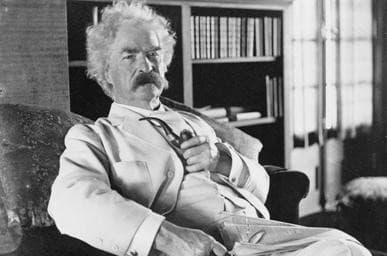
Samuel Langhorne Clemens, best known by his pen name Mark Twain, was an American writer, humorist, entrepreneur, publisher, and lecturer. He was praised as the "greatest humorist the United States has produced", and William Faulkner called him "the father of American literature". His novels include The Adventures of Tom Sawyer (1876) and its sequel, Adventures of Huckleberry Finn (1884), the latter of which has often been called the "Great American Novel". Twain also wrote A Connecticut Yankee in King Arthur's Court (1889) and Pudd'nhead Wilson (1894), and co-wrote The Gilded Age: A Tale of Today (1873) with Charles Dudley Warner.