
“For a man to achieve all that is in him, he must be able to like himself. And if he is to like himself, he must be able to like himself in all his manifestations, not only in his good.”
Archivist's Choice
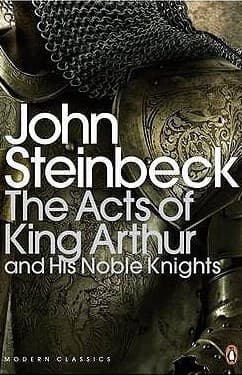
The Acts of King Arthur and His Noble Knights
John Steinbeck (1611)
Genre
Fantasy / Historical Fiction
Reading Time
600 min
Key Themes
See below
Track Your Reading
Sign in to track this book
John Steinbeck re-imagines Malory's Morte d'Arthur, bringing the world of Camelot to life with prose that sounds medieval but is clear to modern readers.
Synopsis
The story starts with Merlin's prophecy about Arthur's birth and his secret upbringing. Arthur's identity becomes known when he pulls the sword from the stone, making him king. He establishes Camelot and the Round Table, gathering knights. The book then follows individual knights, like Sir Launcelot, known for his skill, and Sir Gareth, who rises from the kitchen to prove himself. A prophecy about the Holy Grail sends knights on a spiritual journey. However, Launcelot's affair with Queen Guinevere is discovered, destroying Camelot's unity. This betrayal starts a war between Arthur and Launcelot. While Arthur is busy with this fight, his son, Mordred, takes the throne. Arthur returns to fight Mordred in a final battle where both die. Arthur, badly hurt, is taken to Avalon, leaving a legacy of a great age that ended because of human faults.
Reading time
600 min
Difficulty
Medium
Pacing
Moderate
Mood
Epic, Chivalrous, Melancholy, Grand
✓ Read this if...
You want a classic tale of knights and chivalry retold with modern accessibility, while retaining the gravitas and rhythm of the original legends.
✗ Skip this if...
You prefer fast-paced, action-driven fantasy or a completely fresh take on Arthurian legends, as this is a faithful reinterpretation rather than a reinvention.
Plot Summary
Merlin's Prophecy and Arthur's Concealed Birth
The story starts with King Uther Pendragon wanting Igraine, the Duchess of Tintagil, who is married to Duke Gorlois. Merlin uses magic to make Uther look like Gorlois. Uther then sleeps with Igraine, and Arthur is conceived. Duke Gorlois dies in battle that night. Merlin, in return for his help, asks for the child at birth. Arthur is then raised by Sir Ector, unaware of his royal family. Merlin makes sure Arthur has a simple upbringing, preparing him for a future he does not yet know. After Uther's death, the kingdom has no clear heir, leading to problems.
The Sword in the Stone and Arthur's Revelation
After King Uther's death, England is in disorder. Merlin arranges for a magical sword to appear, stuck in a stone, with words saying only the true king can pull it out. At a tournament in London, young Arthur, looking for a sword for his foster brother Kay, pulls the sword from the stone without knowing its meaning. At first, the nobles do not believe him and try to pull the sword themselves, but fail. With Merlin's help and the clear proof of the sword, Arthur's right to the throne is slowly accepted, though many lords still resent him.
The Establishment of Camelot and the Round Table
Arthur, now king, faces many challenges from rebellious lords and foreign attackers. He defeats them all with help from Merlin and loyal knights. He strengthens his power and sets up his court at Camelot. Merlin advises him to marry Guinevere, King Leodegrance's daughter, who brings the Round Table and one hundred knights as a gift. This table has no head, showing that all knights are equal. It creates a group committed to justice and supporting Arthur's rule. The Round Table becomes the main part of Arthur's great age.
The Adventures of Sir Launcelot
Sir Launcelot, the greatest knight of the Round Table, goes on many quests. He shows his strength, skill, and honor. He saves women, defeats strong enemies, and always lives up to the ideals of knighthood, bringing fame to Camelot. His loyalty to Arthur is clear in his actions. However, a deep liking starts to grow between Launcelot and Queen Guinevere. Their relationship, which begins as innocent admiration, slowly becomes a deep and dangerous love. This hints at future sadness and tests the very foundations of Arthur's court.
The Tale of Sir Gareth, the Kitchen Knight
A young man arrives at Camelot, asking for only food and lodging for a year, then a favor. Sir Kay makes fun of him and calls him 'Beaumains,' forcing him to work in the kitchens. When a woman, Lynet, comes asking for a knight to save her sister from the Red Knight of the Red Lands, Beaumains asks for this quest as his favor. Arthur grants it, despite Kay's objections. Beaumains, with Lynet, defeats a series of strong knights, each one harder than the last, proving his courage and skill. His real identity as Sir Gareth, son of King Lot and Gawain's brother, is eventually revealed. He earns his knighthood and Lynet's respect and love.
The Prophecy of the Holy Grail
As the Round Table thrives, Merlin, seeing the future, suggests a spiritual quest that will go beyond earthly knighthood. He speaks of the Holy Grail, a sacred object that will appear and require the purest knights to seek it. This prophecy adds a new dimension to the knights' purpose, moving from physical skill and courtly love to spiritual purity and divine grace. The Grail quest is the ultimate test. Many knights will try it, but few will succeed. This marks a turning point in Camelot's glory days and hints at its future decline.
The Quest for the Holy Grail
The Holy Grail appears at Camelot. Most cannot see it clearly, but it inspires many knights to promise to find it. This quest is not for everyone. Many brave knights, including Launcelot, fail because of their worldly sins. Only the purest, like Sir Galahad (Launcelot's son), Sir Percival, and Sir Bors, truly see the Grail. Their journey involves spiritual tests and discoveries, showing the limits of earthly knighthood when faced with divine purpose. The quest breaks up the Round Table, weakening Arthur's court as many knights die or are lost.
The Exposure of Launcelot and Guinevere's Affair
The long-standing, forbidden affair between Sir Launcelot and Queen Guinevere, though known to some, is finally revealed. Mordred, Arthur's son, and his brother Agravaine, plan to catch Launcelot and Guinevere together. They ambush Launcelot in Guinevere's room. Launcelot fights his way out, killing several knights, including Agravaine, but must run away. Guinevere is sentenced to be burned for treason. This event permanently destroys the trust and unity of the Round Table, turning former friends into enemies and setting the stage for Camelot's fall.
The Siege of Joyous Gard and the War with Launcelot
Arthur, bound by honor and law, attacks Launcelot's castle, Joyous Gard. Launcelot took Guinevere there for safety after saving her from the fire. Sir Gawain, driven by the deaths of his brothers at Launcelot's hand during the rescue, pushes Arthur to pursue Launcelot. Despite Launcelot's attempts to avoid fighting his former king, war starts. The Pope eventually steps in, forcing Launcelot to return Guinevere to Arthur. However, Launcelot refuses to return to court, retreating to his lands in France. This conflict further divides the kingdom and uses up Arthur's resources.
Mordred's Treachery and Arthur's Final Battle
While Arthur is fighting Launcelot in France, Mordred, left in charge of the kingdom, betrays his father. He falsely says Arthur is dead and tries to take the throne, even attempting to marry Guinevere. Arthur returns to England to face Mordred. The two armies fight in the Battle of Camlann. Almost all the knights of the Round Table are killed. Arthur confronts Mordred and, in a final, deadly fight, kills his son but is himself mortally wounded. Camelot's glory ends in this bloody war between family.
Arthur's Departure to Avalon
After the Battle of Camlann, the dying King Arthur tells Sir Bedivere, the last loyal knight, to throw his sword Excalibur back into the lake. After hesitating, Bedivere obeys and sees a mysterious hand catch it. Arthur is then placed on a boat with three crying queens, who promise to take him to the island of Avalon to heal his wounds. England's future is unclear, but there is hope that Arthur will return. His departure marks the end of an era, leaving England without its legendary king and the dream of Camelot broken.
Principal Figures
King Arthur
The Protagonist
From unknown orphan to mighty king, establishing a golden age, only to see his kingdom crumble due to internal strife and betrayal.
Merlin
The Supporting
Guides Arthur from birth to kingship, providing wisdom and magic, before withdrawing or being removed from the narrative, signifying the end of the magical age.
Queen Guinevere
The Supporting
From noble queen to a figure of tragic love and betrayal, her actions inadvertently lead to the collapse of the kingdom.
Sir Launcelot
The Supporting
Rises as the greatest knight, falls due to forbidden love, and ultimately seeks redemption through religious penance.
Sir Gawain
The Supporting
A loyal and brave knight who becomes consumed by vengeance, ultimately contributing to the destruction of Camelot.
Mordred
The Antagonist
From a hidden, illegitimate son to the ultimate betrayer, his actions directly lead to Arthur's death and the end of Camelot.
Sir Gareth (Beaumains)
The Supporting
From an unknown 'kitchen knight' to a recognized and respected member of the Round Table through his valiant deeds.
Sir Percival
The Supporting
A naive but pure knight who, through spiritual trials, achieves a vision of the Holy Grail.
Sir Galahad
The Supporting
Born for a singular purpose, he achieves the Holy Grail, representing the pinnacle of spiritual knighthood, and then ascends to heaven.
Themes & Insights
The Ideal vs. Reality of Chivalry
Steinbeck shows the high ideals of chivalry—honor, courage, justice, courtesy—that Arthur tries to teach his knights and establish in Camelot. But he often contrasts these ideals with human nature: jealousy, ambition, lust, and revenge. The Round Table's perfection is always weakened by the human flaws of its members, especially in Launcelot and Guinevere's affair, and Gawain's desire for revenge. This theme looks at the tension between a society's noble goals and the imperfect people in it.
“For good things, when they are not well kept, turn to ill.”
Fate vs. Free Will
The story often discusses fate, especially through Merlin's predictions and Arthur becoming king. Events like Arthur pulling the sword from the stone are shown as being meant to happen. Yet, characters often make choices that go against or speed up their fated outcomes. Launcelot and Guinevere's affair, Mordred's betrayal, and Gawain's revenge are all results of free will that lead to the tragic downfall, even if Merlin saw them coming. This theme explores whether characters are just part of destiny or if they actively cause their own destruction.
“And it was the will of God that brought him to the sword. But it was the will of men that destroyed the kingdom.”
Love and Betrayal
Love, in its various forms—romantic, friendly, and family—is a strong force in the book. It often leads to both good things and great sadness. The deep, forbidden love between Launcelot and Guinevere, despite their loyalty to Arthur, causes betrayal and breaks up the Round Table. Family love, like Gawain's for his brothers, turns into a destructive search for revenge. Mordred's betrayal of his father, Arthur, is the clearest example of this theme, showing how the bonds meant to strengthen the kingdom become its ruin.
“Here began the sorrow and the ruin of the Round Table.”
The Search for Spiritual Purity
The Holy Grail quest marks a change from earthly knighthood to spiritual search. The Grail requires a level of purity and devotion that most knights, caught up in worldly achievements and sins, cannot reach. Characters like Launcelot, despite his greatness, fail because of his forbidden love, while Galahad, Percival, and Bors succeed because of their spiritual innocence. This theme explores the limits of physical skill and worldly honor when faced with divine grace. It also highlights a desire for something beyond, and humanity's spiritual destiny beyond earthly kingdoms.
“For this quest is not of earthly things, but of heavenly.”
The Cycle of Rise and Fall
Arthur's entire reign is a cycle of creation and destruction. From the chaos after Uther's death, Arthur establishes a great age of unity and justice, symbolized by Camelot and the Round Table. However, this peak naturally leads to decline, caused by internal conflicts, moral failures, and outside threats. The story ends with the tragic breakup of the Round Table and Arthur's final battle, meaning the end of an era. This theme suggests that even the greatest achievements do not last forever, as human efforts are always temporary.
“Thus was the glory of the world brought to an end.”
Plot Devices & Literary Techniques
The Sword in the Stone / Excalibur
Symbol of divine right and Arthur's legitimate authority.
The sword in the stone is the primary symbol of Arthur's rightful kingship, acting as a magical test that only the true heir can pass. It legitimizes Arthur's claim to the throne, which is initially questioned by the nobility. Excalibur, later given to Arthur by the Lady of the Lake, represents his power and the divine blessing on his reign. Its return to the lake at the end of the story signifies the end of Arthur's era and the passing of his authority, closing the cycle of his rule and hinting at his eventual return.
The Round Table
Symbol of equality, fellowship, and Arthur's ideal kingdom.
The Round Table is a central symbol of Arthur's vision for a just and unified kingdom. Its circular shape signifies equality among the knights, with no one holding a superior position. It represents the fellowship, honor, and shared purpose of Arthur's court, dedicated to upholding justice and protecting the weak. The breaking of the Round Table, both literally through the dispersal of knights and metaphorically through internal strife and betrayal, directly mirrors the disintegration of Arthur's kingdom and the collapse of his ideals.
Merlin's Prophecies
Foreshadowing future events and emphasizing the role of fate.
Merlin's prophecies serve as a crucial narrative device, often foreshadowing major plot points and the ultimate tragic downfall of Camelot. They establish a sense of destiny and inevitability, highlighting that many of the kingdom's woes are foreseen, even if individual choices contribute to their unfolding. His warnings, often unheeded by Arthur or his knights, underscore the tragic irony of their situation and add a layer of dramatic tension, reminding the reader that the golden age is ultimately fragile and predetermined to end.
The Holy Grail
A spiritual quest representing ultimate purity and divine grace.
The Holy Grail is a powerful symbolic object that introduces a spiritual dimension to the narrative. It represents the ultimate test of purity and faith, shifting the focus of chivalry from earthly deeds to divine salvation. The quest for the Grail distinguishes between knights driven by worldly ambition and those capable of true spiritual devotion. Its achievement by the purest knights (Galahad, Percival, Bors) highlights the moral failings of others and signifies a move beyond the earthly glory of Camelot, ultimately contributing to the fragmentation of the Round Table.
The Love Triangle (Arthur-Guinevere-Launcelot)
A central conflict driving the plot towards tragedy.
The love triangle between King Arthur, Queen Guinevere, and Sir Launcelot is a pivotal plot device that drives much of the conflict and tragedy in the latter half of the book. It creates an insoluble moral dilemma, pitting loyalty, honor, and duty against forbidden passion. This personal betrayal within Arthur's most trusted circle directly leads to the exposure of the affair, the division of the Round Table, civil war, and ultimately, the destruction of Camelot. It is the human flaw that brings down the greatest of kingdoms.
Critical analysis
Notable Quotes
“The good king and the bad king are equally good in their intentions, but the bad king is bad because he is a bad judge of men.”
“It is a strange thing to be a king. To have all power and yet to be powerless in the face of destiny.”
“There are no whole truths, there are only partial truths. To say that something is true is to say that it is true for a given purpose, in a given context.”
“The greatest good you can do for another is not just to share your riches but to reveal to him his own.”
“A man is a king in his own house, and a king in his own heart.”
“It is not the strength of the body that counts, but the strength of the spirit.”
“The world is full of magic things, patiently waiting for our senses to grow sharper.”
“No man really knows what he can do until he tries.”
“The true knight is one who fights for justice, not for glory.”
“The most dangerous animal in the world is a man who is afraid.”
“And it is a true thing that no man may tell what will be after his days.”
“The test of a first-rate intelligence is the ability to hold two opposed ideas in mind at the same time and still retain the ability to function.”
“And so it was that Arthur, who had been a boy of no account, became a king of great renown.”
Quiz
Test Your Knowledge
Ready to see how well you understood this book? Take our interactive quiz with 10 questions.
10
Questions
~5
Minutes
?
Best Score
Key Questions (FAQ)
John Steinbeck's 'The Acts of King Arthur and His Noble Knights' is a reinterpretation of Sir Thomas Malory's 'Le Morte d'Arthur', translating the classic tales of King Arthur, Lancelot, Guinevere, Merlin, and the Knights of the Round Table into modern English. Steinbeck aimed to make these foundational stories of chivalry, betrayal, and destiny accessible to contemporary readers while preserving the original's essence and tone. It covers key events from Arthur's rise to power through the tragic unraveling of his court.
About the author
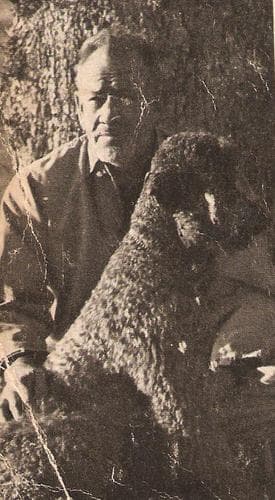
John Ernst Steinbeck was an American writer. He won the 1962 Nobel Prize in Literature "for his realistic and imaginative writings, combining as they do sympathetic humor and keen social perception". He has been called "a giant of American letters."







