“The truth was a weapon, and sometimes it was best to keep it sheathed.”
— Reflecting on the legal strategy and the potential impact of full disclosure.

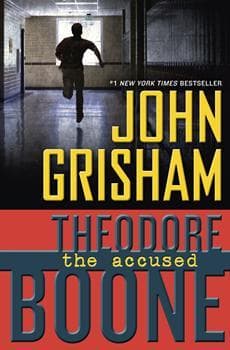
John Grisham (2012)
Genre
Thriller / Children's / Mystery / Young Adult
Reading Time
288 min
Key Themes
See below
Sign in to track this book
Thirteen-year-old Theodore Boone faces his toughest challenge yet, navigating Strattenburg's justice system to find the truth in a case that tests his intelligence and bravery.
Theodore 'Theo' Boone begins eighth grade at Strattenburg Middle School, still known as the 'kid lawyer' because of his role in Pete Duffy's high-profile murder trial. His parents, both lawyers, are busy with their own work. Theo's uncle, Ike Boone, a disbarred lawyer and mentor, continues to advise and support Theo. Early in the school year, Theo learns from his parents that Pete Duffy, accused of murdering his wife, Myra, has been granted a retrial because of a technicality with evidence. This news worries Strattenburg, as many thought Duffy was guilty and now fear he might go free.
Pete Duffy's retrial starts, attracting significant media and public attention. Theo's parents, especially his mother, Marcella Boone, are deeply involved, as her law firm represents the prosecution. Theo, with his strong interest in law and past experience with the case, follows the proceedings closely. He attends court sessions when he can, watching the lawyers, the judge, and Duffy. The prosecution, led by Theo's mother and the district attorney, continues to build its case, presenting evidence and witness statements, while the defense tries to find flaws in their arguments and create doubt about Duffy's guilt.
One evening, Theo finds that his small, makeshift law office in his parents' basement has been broken into. At first, he thinks it is just vandalism, but he quickly sees that a specific file about the Pete Duffy case is gone. This file contained a critical piece of evidence: a detailed timeline Theo had carefully made, which showed Duffy's movements on the night of the murder. The theft immediately makes Theo suspect that someone connected to Duffy's defense, or perhaps Duffy himself, is trying to weaken the prosecution's case by removing key information he had gathered.
Alarmed by the break-in and the specific theft, Theo decides to investigate on his own, with quiet help from his Uncle Ike. Theo believes the theft is directly linked to the Duffy retrial and is determined to get his missing timeline back. He and Ike revisit the crime scene, looking for clues the police might have missed. Theo talks to his friends and contacts, asking for any information about suspicious activity around his house or anyone showing unusual interest in the Duffy case. He uses his sharp observation skills and legal sense to figure out possible reasons and suspects for the burglary, focusing on those who would benefit from the timeline's disappearance.
As Theo investigates further, several possible suspects appear. He considers Pete Duffy, thinking Duffy might be desperate enough to try to sabotage the prosecution. Theo also looks into Duffy's known associates and members of his new defense team, wondering if any of them would use such tactics. He discusses these possibilities with Ike, who offers insights into criminal minds and legal strategies. Theo starts to watch individuals connected to the case more closely, subtly observing their behavior in and out of court, trying to figure out who might have had a reason and a chance to break into his office and steal the important timeline.
Theo's investigation leads him to an uncomfortable meeting with one of his main suspects, a person loosely connected to Pete Duffy's past. During their tense talk, Theo quietly asks for information about the break-in. The suspect, however, becomes defensive and makes a veiled threat, warning Theo to stop interfering with the Duffy case. This meeting confirms Theo's suspicion that he is on the right track and that the theft of his timeline is indeed connected to efforts to help Duffy's defense. Despite the danger, Theo's determination to find the truth only grows.
The Pete Duffy retrial becomes more intense, with the prosecution and defense giving their closing arguments. Theo's mother and the District Attorney work hard to convince the jury of Duffy's guilt, while Duffy's defense team uses every legal move to create reasonable doubt. Theo attends these sessions, observing the jury's reactions and the lawyers' strategies. He feels the pressure building, especially knowing that his stolen timeline could have been a powerful tool for the prosecution. The courtroom is full of tension as everyone waits for the jury's decision, which will determine Duffy's fate.
Through his persistent investigation, a chance encounter, and a key tip from an unexpected source, Theo finally uncovers the truth behind the break-in. He learns that the person responsible was not directly connected to Duffy's defense team but an opportunistic individual who thought the timeline could be sold for a high price to Duffy's supporters. Theo manages to track down the burglar and get his stolen timeline back, confirming its importance. This discovery is a significant breakthrough, not just for Theo but potentially for the ongoing retrial, as it restores a vital piece of evidence.
With the timeline recovered, Theo immediately takes it to his mother, Marcella Boone. She is surprised but quickly sees the importance of the recovered evidence. During a critical moment in the retrial, Marcella cleverly introduces Theo's carefully made timeline, which directly contradicts parts of the defense's story and strengthens the prosecution's case. The timeline, presented as evidence, helps clarify Duffy's movements and further implicates him in his wife's murder, shifting the trial's momentum back to the prosecution and surprising many in the courtroom.
After much thought, the jury in the Pete Duffy retrial delivers its verdict. Helped by Theo's timeline and the prosecution's strong case, the jury finds Pete Duffy guilty of his wife's murder. The verdict brings relief and a sense of justice to Strattenburg, especially for those who believed Duffy was guilty from the start. Theo feels a deep sense of accomplishment and justification, knowing his persistence and legal skill played a crucial role in ensuring justice was served. The case further strengthens his reputation as a capable young legal mind.
After the Pete Duffy case ends, Theo thinks about his experiences and his growing love for the law. His involvement in the retrial, the break-in, and finding crucial evidence has only made him more determined to pursue a career in law. He continues to learn from his parents and Uncle Ike, absorbing every piece of legal knowledge he can. The challenges he faced and overcame in 'The Accused' reinforce his belief in the importance of justice and his ability to contribute to it, setting the stage for his continued growth as a young legal talent in Strattenburg.
The Protagonist
Theo's arc deepens his commitment to justice, demonstrating his courage and resourcefulness in the face of personal threats and reinforcing his path toward a legal career.
The Supporting
Marcella's arc showcases her professional resilience as she navigates the complexities of the Duffy retrial and learns to trust Theo's instincts more deeply.
The Supporting
Woods consistently provides a steady, supportive presence for Theo, reinforcing the importance of caution while still encouraging his son's intellectual pursuits.
The Supporting
Ike continues to be Theo's wise, albeit unconventional, guide, offering crucial advice and discreet assistance that proves vital to Theo's investigation.
The Antagonist
Duffy's arc is one of sustained desperation to avoid conviction, ultimately culminating in his re-conviction thanks to Theo's efforts.
The Supporting
Judge Gantry upholds the legal process throughout the retrial, representing the formal justice system.
The Supporting
April remains a constant and supportive friend to Theo, offering emotional stability amidst his legal adventures.
The Supporting
Woody serves as a consistent, friendly presence in Theo's everyday life, offering a glimpse into typical adolescent concerns.
This theme looks at the conflict between what is morally right and what is legally allowed. Pete Duffy's retrial, given due to a legal detail despite many believing he was guilty, shows how legal procedures, while meant to protect rights, can sometimes hinder justice. Theo's frustration with the system, combined with his resolve to make Duffy accountable, shows this conflict. The theft of his timeline further highlights how far people will go to use or bypass the law.
““The law, Theo had learned, was often a slow, messy business, full of loopholes and technicalities that could frustrate justice.””
The novel shows that age does not stop someone from having wisdom or insight, especially in legal matters. Theo, at just thirteen, repeatedly shows a sharp understanding of legal strategy, human nature, and investigation methods that often match or exceed those of adults. His ability to connect different pieces of information, his careful attention to detail (seen in his timeline), and his courage to act on his instincts are central to solving the mystery of the stolen evidence and helping convict Duffy. This theme celebrates the fresh perspective and pure idealism of youth.
““Sometimes, the freshest eyes see the clearest truth.””
Theo's extensive legal knowledge and involvement in serious cases come with significant risks. The break-in at his office and the veiled threat he receives come directly from his legal skill and the important evidence he has. This highlights the dangers of uncovering uncomfortable truths, especially for someone so young. The theme explores the responsibility that comes with such knowledge and the courage needed to act on it, even when personal safety is at risk. Theo learns that seeking justice can be a dangerous path.
““With great knowledge, Theo, comes great responsibility. And sometimes, great danger.””
Theo's family is very important to his development and safety. His parents, Marcella and Woods, provide both a legal base and emotional support, though with different levels of concern for his involvement in dangerous cases. More importantly, his Uncle Ike acts as a key mentor, offering practical advice, street smarts, and a unique view of the legal world. This theme shows how a strong network of supportive, knowledgeable people can guide a young prodigy, helping him handle complex challenges and grow personally and professionally. Their combined wisdom helps Theo succeed where he might otherwise fail.
““You can learn a lot from books, Theo, but the real lessons are found in the streets and in the courtroom, if you know how to look and listen.””
A crucial piece of evidence created by Theo that goes missing.
Theo's meticulously crafted timeline of Pete Duffy's movements on the night of the murder serves as the central MacGuffin and plot driver. Its creation establishes Theo's legal prowess, and its theft ignites his personal investigation, adding a layer of mystery and urgency beyond the retrial itself. The timeline's absence creates tension for the prosecution, and its eventual recovery by Theo is a pivotal moment that directly impacts the trial's outcome, showcasing Theo's invaluable contribution to justice.
Misleading clues and suspects to distract from the true culprit.
As Theo investigates the break-in, the narrative introduces several red herrings, leading Theo and the reader to suspect various individuals connected to Pete Duffy's defense or his past. These diversions create suspense and complicate Theo's investigation, making him question motives and allegiances. They serve to deepen the mystery surrounding the theft and highlight Theo's deductive reasoning as he sifts through false leads to uncover the actual perpetrator, who turns out to be an unexpected figure.
An experienced, albeit unconventional, guide for the protagonist.
Ike Boone functions as a classic mentor figure for Theo. Despite being disbarred, Ike possesses a wealth of legal knowledge, street smarts, and a network of contacts that prove invaluable to Theo's investigations. He offers advice, challenges Theo's assumptions, and provides discreet assistance without directly involving himself in the formal legal process. Ike's role allows Theo to explore avenues beyond conventional legal channels, offering a more nuanced and often cynical perspective on the justice system, which balances Theo's youthful idealism.
A second chance at justice, fraught with new challenges.
The Pete Duffy retrial itself serves as a significant plot device. It provides the overarching framework for the story, bringing back a known antagonist and raising the stakes for Theo. The retrial highlights the imperfections and complexities of the legal system, where technicalities can overturn previous verdicts. It allows for a fresh examination of evidence and motives, creating opportunities for Theo's involvement and demonstrating how a previous injustice can be rectified, albeit through a challenging and often dangerous process.
“The truth was a weapon, and sometimes it was best to keep it sheathed.”
— Reflecting on the legal strategy and the potential impact of full disclosure.
“Justice, in their world, was a commodity, bought and sold like anything else.”
— Observing the corruption and influence within the local legal system.
“Fear was a powerful motivator, capable of making good people do terrible things.”
— Considering the actions of various characters under duress and threat.
“Every secret had a shelf life, and eventually, the dust would settle.”
— Anticipating the inevitable unraveling of hidden truths.
“Sometimes, the loudest voices were the ones with the least to say.”
— Observing the public outcry and media circus surrounding the case.
“In the shadow of a lie, the truth often found a way to glow brighter.”
— A hopeful thought amidst the deceit and cover-ups.
“The law was a labyrinth, easy to get lost in, impossible to escape once trapped.”
— Describing the complexity and overwhelming nature of the legal process.
“Innocence was a fragile thing, easily shattered by suspicion and rumor.”
— Reflecting on how quickly reputations can be destroyed.
“The greatest battles were often fought not in courtrooms, but in the quiet corners of the mind.”
— Exploring the internal struggles and doubts of the protagonist.
“Silence could be as damning as any confession.”
— Considering the implications of remaining quiet during interrogation or accusations.
“Kids, he thought, they always saw things adults tried to ignore.”
— Noticing the perceptive observations of the younger characters.
“The system wasn't designed for justice; it was designed for conviction.”
— A cynical view of the legal system's priorities.
“Hope was a dangerous thing, especially when built on shaky ground.”
— Acknowledging the risks of holding onto optimism in dire circumstances.
“Every lie woven into the fabric of a story eventually unravelled, thread by painful thread.”
— A metaphor for the inevitable exposure of deceit.
Ready to see how well you understood this book? Take our interactive quiz with 10 questions.

Biography coming soon.







