“Perhaps that was the trick to life. To find the things that make you happy, and then to make them happen.”
— Elisabeth reflects on her desire for freedom and happiness, contrasting it with the expectations placed upon her.

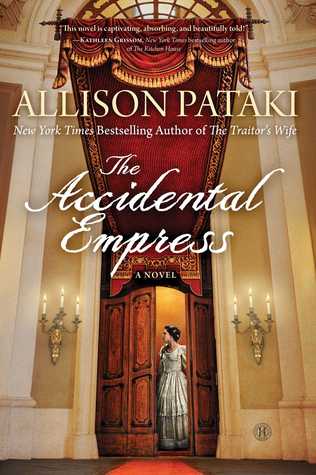
Allison Pataki (2015)
Genre
Historical Fiction / Romance
Reading Time
10-12 hours
Key Themes
See below
Sign in to track this book
In a dazzling imperial court, a spirited Bavarian duchess inadvertently steals her sister's fiancé, becoming an accidental empress who must navigate treacherous Hapsburg politics and win the love of an empire she never sought.
In the summer of 1853, Duchess Ludovika of Bavaria brings her two eldest daughters, Helene, known as Néné, and Elisabeth, to the imperial summer residence in Bad Ischl. The main reason for this visit is for Néné to meet and become engaged to her cousin, Emperor Franz Joseph of Austria. This match was arranged by Archduchess Sophie, Franz Joseph's formidable mother. Sisi, a free-spirited and unconventional girl, feels out of place and burdened by the strict court etiquette and the expectations placed upon her sister. She prefers riding and poetry to the stifling social scene. During a walk, Sisi meets Franz Joseph by chance, unaware of who he is, and they share a brief, charming interaction, sparking an unexpected connection.
During the formal ball meant to solidify Franz Joseph's engagement to Helene, a key moment unfolds. Franz Joseph, already drawn to Sisi through their earlier encounters and her genuine nature, makes a stunning announcement. Instead of proposing to Helene, he publicly declares his love and intention to marry Sisi. This decision shocks the Habsburg court, devastating Helene and infuriating Archduchess Sophie, who had carefully planned the match with Helene. Sisi, overwhelmed and unprepared for such a drastic change, is thrust into the role of future Empress, a position she never wanted and one that immediately brings her into conflict with the powerful Archduchess Sophie.
Following the surprising proposal, Sisi and Franz Joseph's engagement is officially announced, creating a whirlwind of preparations and public attention. Sisi is immediately subjected to intense scrutiny and rigorous training in imperial etiquette, history, and languages, all under the watchful eye of Archduchess Sophie. Sophie views Sisi as unsuitable for the throne and tries to mold her into a more acceptable Empress, often through critical remarks. Sisi finds herself increasingly isolated, missing her freedom and her Bavarian home. Her natural dislike for court protocol and her independent spirit clash constantly with Sophie's strict expectations, setting the stage for a long and difficult relationship between the two women.
Sisi and Franz Joseph's wedding is a grand spectacle, held in Vienna with immense pomp and circumstance, as befits the Emperor of Austria. Despite the lavishness and the apparent joy of the occasion, Sisi feels a sense of unease. The ceremony marks her official entry into the suffocating world of the Habsburg court, a world she still struggles to understand or embrace. Franz Joseph, deeply in love, tries to reassure her, but his duties often pull him away, leaving Sisi vulnerable to the criticisms of Archduchess Sophie and the other courtiers. The wedding, meant to be a joyous union, instead highlights Sisi's growing isolation and the immense pressure she now faces as Empress.
Soon after her marriage, Sisi becomes pregnant and gives birth to her first daughter, Sophie, followed shortly by another daughter, Gisela. However, her joy in motherhood is overshadowed by Archduchess Sophie's constant interference. Believing Sisi to be too young and inexperienced, the Archduchess takes complete control of the children's upbringing, effectively excluding Sisi from their lives. This creates deep resentment in Sisi and strains her relationship with Franz Joseph, who often sides with his mother or remains unaware of Sisi's suffering. A tragic turning point occurs when Sisi insists on taking her daughters on a trip to Hungary, against Archduchess Sophie's advice. Both children fall ill, and the elder, Sophie, dies. This devastating loss deeply scars Sisi and fuels her bitterness towards the court and her mother-in-law.
Following the death of her first daughter and feeling increasingly alienated from the Viennese court, Sisi develops a strong connection with Hungary. She finds the Hungarian people and their culture more authentic and less stifling than the Austrian aristocracy. She dedicates herself to learning the Hungarian language and customs, becoming an advocate for their cause within the Empire. This passion leads her to form a close, platonic bond with Count Gyula Andrássy, a charismatic and influential Hungarian statesman. Andrássy recognizes Sisi's intelligence and influence, and they work together to promote Hungarian interests, much to the chagrin of Archduchess Sophie and the conservative elements of the Austrian court. This connection provides Sisi with a much-needed sense of purpose and belonging.
After years of pressure and a desire to secure the succession, Sisi gives birth to a son, Rudolf, the long-awaited heir to the Habsburg throne. While this brings a temporary break from some of the court's criticisms, Archduchess Sophie immediately takes charge of Rudolf's upbringing, mirroring her treatment of Sisi's daughters. Sisi, still deeply wounded by the loss of her first child and her continued exclusion from her children's lives, grows increasingly detached from her imperial duties and from Franz Joseph. Though he still loves her, Franz Joseph's inability to fully support Sisi against his mother, coupled with his demanding imperial responsibilities, creates a significant emotional distance between them. Sisi begins to focus more on her personal interests and her desire for freedom.
Sisi's tireless advocacy for Hungary, coupled with Franz Joseph's political skill and the empire's internal pressures, culminates in the Austro-Hungarian Compromise of 1867. This monumental agreement establishes the Dual Monarchy, granting Hungary greater autonomy. As a symbol of this new era and her role in its creation, Sisi is crowned Queen of Hungary alongside Franz Joseph. This coronation is a triumphant moment for Sisi, a recognition of her influence and her connection to the Hungarian people. She feels genuinely loved and appreciated in Hungary, a stark contrast to her experiences in Vienna. This event solidifies her unique position within the empire, admired by many but still misunderstood by others.
As Sisi matures, her desire for personal freedom intensifies. She becomes known for her beauty, maintaining a rigorous regimen of exercise, diet, and hair care, seeing her physical perfection as a form of control in a life where she felt she had little. She frequently escapes the confines of the Viennese court, embarking on extensive travels across Europe, often without Franz Joseph. These journeys, to places like Corfu, England, and Ireland, are driven by her need for independence, her love of riding, and her desire to avoid the suffocating expectations of imperial life. While these absences deepen her mystique, they also contribute to the growing distance between her and Franz Joseph and fuel gossip and criticism at court.
Even with her beauty, influence, and periods of freedom, Sisi remains a melancholic figure. The early losses, the constant scrutiny, and the unyielding pressures of her role have taken a significant toll. She often feels misunderstood and trapped, finding solace in poetry, riding, and her travels, but never truly finding lasting happiness or peace. Her relationship with Franz Joseph, though still rooted in affection, becomes one of mutual understanding rather than passionate romance, marked by long separations. She is a paradox: an empress who yearns for the life of an ordinary woman, a powerful figure who often feels powerless, forever searching for a freedom that remains just out of reach.
The Protagonist
Sisi transforms from an innocent, reluctant bride into a complex, melancholic Empress who finds her own form of power and freedom amidst intense personal and political pressures.
The Supporting
He matures from a young, somewhat naive emperor into a seasoned, often lonely ruler, whose love for Sisi is constant but often overshadowed by his imperial responsibilities.
The Antagonist
She remains a consistent force of tradition and control, her unyielding nature clashing with Sisi's desire for freedom, never truly accepting Sisi as a worthy Empress.
The Supporting
She begins as the favored and prepared bride-to-be, then faces public humiliation, and ultimately finds her own path and happiness away from the imperial spotlight.
The Supporting
He begins as a passionate Hungarian nationalist and becomes a key figure in the Austro-Hungarian Compromise, deeply influencing Sisi and finding a powerful ally in her.
The Supporting
She remains a loving but often helpless figure, witnessing Sisi's struggles without being able to truly intervene or protect her effectively.
The Supporting
She serves as a constant, unwavering enforcer of court rules, embodying the restrictive environment Sisi finds herself in.
The novel explores Sisi's lifelong struggle for personal freedom against the confinement of her imperial role. From her early days in Bavaria, she cherishes her independence and love for nature, which are immediately stifled upon her entry into the Habsburg court. The rigid etiquette, constant public scrutiny, and the controlling hand of Archduchess Sophie become a gilded cage. Sisi's extensive travels, her obsession with riding, and her rigorous beauty regimen are all ways she searches for autonomy and a life beyond the throne. Even as Empress, she remains a prisoner of her title, constantly yearning for a freedom she can never fully attain. This theme is particularly evident in her escapes to Hungary and her long voyages away from Vienna, showing her internal conflict.
“What good was a crown, a throne, if one could not be oneself?”
Sisi's journey is an exploration of identity. Thrust into a role she never desired, she grapples with who she is versus who the empire expects her to be. Initially, she is an innocent, unconventional girl. As Empress, she is forced to change parts of her true self to survive. Her embrace of Hungarian culture, her devotion to poetry, and her relentless pursuit of physical perfection are all attempts to forge an identity that is authentically her own, separate from 'Empress Elisabeth.' The novel shows her constantly questioning her purpose and place, trying to reconcile her spirited nature with the demands of her station, ultimately finding a unique, if often melancholic, sense of self.
“She was an Empress, yes, but first and foremost, she was Elisabeth, a woman with a heart that beat for freedom.”
The theme of motherhood and loss is central to Sisi's emotional arc, particularly through her strained relationship with her children and the tragic death of her first daughter, Sophie. Archduchess Sophie's insistence on raising Sisi's children alienates Sisi from her own offspring, fostering deep resentment and a sense of powerlessness. The death of young Sophie, which Sisi blames herself for, leaves a lasting scar on her soul, contributing to her melancholic nature and her further withdrawal from court life. This theme highlights the immense personal sacrifices Sisi makes and the emotional toll her imperial life exacts, showing how her maternal instincts are repeatedly thwarted and her grief is deeply personal yet publicly scrutinized.
“A mother's love, she learned, was a fragile thing in the gilded cage of the Habsburg court.”
The conflict between personal desire and imperial duty is a pervasive theme, felt most acutely by Sisi but also by Franz Joseph. Sisi desires freedom, love, and a simple life, but is bound by her duty as Empress. Franz Joseph, though deeply in love with Sisi, is constantly torn between his affection for her and his paramount duty to his empire and his mother's expectations. This conflict shows in their strained relationship, his inability to fully protect Sisi from his mother, and Sisi's frequent escapes from court. The novel illustrates how duty often triumphs over personal happiness in the lives of monarchs, leading to emotional sacrifices and a sense of unfulfilled longing for both characters.
“Duty was a heavy crown, heavier than any gold or jewels.”
Characters who highlight Sisi's traits by contrast.
Helene and Archduchess Sophie serve as significant foil characters to Sisi. Helene, Sisi's older sister, embodies the ideal royal bride: poised, dutiful, and trained for court life. Her initial suitability for Franz Joseph highlights Sisi's own unruliness and aversion to etiquette. Archduchess Sophie, with her rigid adherence to tradition and her domineering personality, directly contrasts Sisi's free spirit and desire for authenticity. These foils emphasize Sisi's unique character, her struggles against conformity, and the profound challenges she faces in adapting to imperial life, making her journey and internal conflicts more vivid.
Representations of freedom and Sisi's true self.
Nature, particularly forests and open fields, and animals, especially horses, symbolize Sisi's innate desire for freedom, authenticity, and escape from the suffocating court. In Bavaria, she finds solace and joy in riding and being outdoors. Once at court, her passion for riding becomes one of her few outlets for self-expression and physical liberty. The contrast between the stifling palaces and the boundless natural world underscores her internal conflict and her longing for a life unburdened by imperial expectations. Her horses are her trusted companions, representing loyalty and the untamed spirit she strives to maintain.
Metaphor for the luxurious but restrictive imperial life.
The 'gilded cage' is a pervasive metaphor throughout the novel, representing the luxurious yet utterly confining nature of Sisi's life as Empress. The Habsburg palaces are magnificent, filled with riches and grandeur, yet they are also places of constant surveillance, rigid etiquette, and emotional isolation. Sisi has everything material, but she lacks the most fundamental human desires: freedom, privacy, and control over her own life. This metaphor emphasizes the paradox of her position – outwardly enviable, but inwardly a prison, highlighting the immense personal cost of her royal status and the profound unhappiness it brings her.
The audience knows Sisi's future unhappiness despite her initial romantic triumph.
Dramatic irony is employed from the outset, particularly for readers familiar with Sisi's historical fate. When Franz Joseph chooses Sisi, it appears to be a romantic triumph, but the narrative subtly, and sometimes overtly, hints at the difficulties to come. The reader knows that Sisi's life will be far from a fairy tale, filled with personal tragedies and a lifelong struggle against her imperial role. This creates a sense of foreboding and pathos, as the reader watches Sisi's initial joy and innocence give way to the profound melancholy and restlessness that define her later life, making her struggles all the more poignant.
“Perhaps that was the trick to life. To find the things that make you happy, and then to make them happen.”
— Elisabeth reflects on her desire for freedom and happiness, contrasting it with the expectations placed upon her.
“The world was a cage, no matter how gilded the bars.”
— Elisabeth, after marrying Franz Joseph, feels the restrictive nature of her new life as Empress despite its opulence.
“Duty was a heavy crown, heavier than any made of gold and jewels.”
— Elisabeth contemplates the immense responsibilities and pressures that come with her imperial role.
“Love, she was learning, was not always a gentle thing. Sometimes it was a storm, and sometimes it was a quiet, persistent rain.”
— Elisabeth's understanding of love evolves through her complex relationship with Franz Joseph.
“A woman's beauty was her most potent weapon, but also her most fragile shield.”
— Elisabeth considers the double-edged sword of her physical beauty in the Vienna court.
“She was an empress, yes, but first and foremost, she was herself. And herself was a wild, untamed thing.”
— Elisabeth struggles to reconcile her free spirit with the rigid protocols of the Habsburg court.
“History was not just dates and names; it was the whispered secrets, the hidden desires, the untold stories.”
— The narrator or Elisabeth muses on the true nature of history beyond official records.
“The greatest prison was not made of stone and iron, but of expectation.”
— Elisabeth feels trapped by the societal and imperial expectations placed upon her.
“To be truly free, one had to be willing to lose everything.”
— Elisabeth contemplates the sacrifices required to achieve genuine freedom.
“Even an emperor, for all his power, was bound by the chains of his own making.”
— Elisabeth observes Franz Joseph's own struggles and limitations despite his absolute power.
“Sorrow was a companion that never truly left, merely changed its disguise.”
— Elisabeth grapples with personal tragedies and the enduring presence of grief in her life.
“A horse understood her better than any human ever could.”
— Elisabeth finds solace and understanding in her connection with horses, a common theme in her life.
“The quiet moments, those were the ones that truly mattered, when the world faded and only two souls remained.”
— Elisabeth values the rare, intimate moments of genuine connection amidst her public life.
“She was a bird meant for the sky, forced to live in a golden cage.”
— A recurring metaphor for Elisabeth's spirit trapped within the confines of her imperial role.
Ready to see how well you understood this book? Take our interactive quiz with 10 questions.







