“I am a coward. I am a liar. I am a traitor. I am a murderer. I am an absolutist.”
— Tristan Sadler reflects on his actions and identity after World War I.

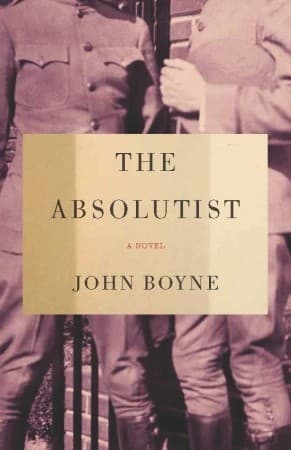
John Boyne (2011)
Genre
Historical Fiction / Romance
Reading Time
360 min
Key Themes
See below
Sign in to track this book
A young man, shaped by WWI and a forbidden love, travels to deliver letters. He really wants to share a secret about passion, betrayal, and war's senselessness.
In September 1919, twenty-one-year-old Tristan Sadler travels from London to Norwich. He says he is delivering letters to Marian Bancroft, the sister of his dead friend, Will Bancroft. But Tristan has a heavy secret about Will and their time in World War I, and he feels he must finally tell it. He arrives at the Bancroft home, a small house in Norwich. Marian is careful at first but eventually welcomes him. As Tristan starts to speak, he remembers the terrible trenches and the strong bond he shared with Will. This sets up a series of flashbacks that will show the truth of their relationship and Will's death.
Tristan's story moves to 1916, describing his arrival at the Aldershot training camp where he first meets Will Bancroft. Will is charming, confident, and expressive, quite different from the quieter Tristan. Even with their differences, they connect right away. They are put in the same platoon, the 17th Northumberland Fusiliers, and quickly become very close. They spend their free time together, talking about everything from books to their hopes and fears about the coming war. This early time shows an innocent, yet deeply felt, friendship that hints at a growing emotional closeness. This lays the groundwork for the complicated relationship that will define Tristan's time in the war.
During their hard training at Aldershot, Tristan and Will's friendship grows stronger. They share a bunk, tell each other secrets, and find comfort in each other's company amidst the tough military training. Tristan starts to have romantic feelings for Will, feelings he knows are forbidden and dangerous in the society of that time. Will seems to return some affection, but he stays more private, perhaps because he is engaged to Marian. The unspoken tension and understanding between them increase, creating an emotional undercurrent that shapes their interactions and hints at future problems as they get ready to go to the Western Front.
Tristan and Will are sent to the trenches of northern France. There, they immediately face the terrible realities of World War I. The pleasant camp life is replaced by constant fear, mud, sickness, and the smell of death. They see awful things and many comrades die quickly. This makes them rely on each other even more for emotional support. In this brutal place, their bond becomes a lifeline, a source of comfort and humanity in the dehumanizing chaos. Tristan's feelings for Will get stronger, becoming a fragile hope in the face of despair. Will's reactions to the war's violence begin to change, hinting at a growing loss of belief.
As the war goes on, Will Bancroft changes a lot. The patriotism and excitement he once had are broken by the constant violence and pointless deaths. He starts to speak out against the war, expressing pacifist views and questioning why they continue to fight. This change in Will's beliefs creates tension between him and some of their fellow soldiers. Tristan worries about the consequences of such open views in the military. Tristan understands Will's pain but struggles to accept his friend's changing beliefs with the harsh reality of their situation and the possibility of being called a coward or deserter.
Will's pacifist beliefs lead him to declare himself an 'absolutist' — someone who refuses to take part in war at all. He openly disobeys orders, refusing to carry a rifle or fight. This act of conscientious objection, seen as disobedience and cowardice by the military, leads to his quick arrest and court-martial. Tristan is crushed and can't help, forced to watch his friend's trial. Despite Will's strong pleas and arguments, the military court finds him guilty of desertion in the face of the enemy, a crime with the worst punishment. The mood is tense, and the outcome seems set, sealing Will's sad fate.
Will Bancroft is sentenced to death by firing squad. In a terrible twist of fate and military rule, Tristan, along with other members of their company, must be part of the firing squad. The scene is described in detail, showing Tristan's deep despair and the trauma of having to take part in the execution of the man he loved. The moment of Will's death is a shattering experience for Tristan, leaving him with a lasting scar of guilt, sorrow, and complicity. This event becomes the main, painful secret he carries, shaping his life after the war and making him need to confess to Marian.
Back in 1919, Tristan finally finds the courage to tell Marian the whole, terrible truth. He admits that Will was not killed by the enemy, but was executed by his own side for being an absolutist, and that Tristan himself was part of the firing squad. The confession is agonizing for Tristan, filled with tears and strong emotion, as he finally tells the secret that has tortured him for years. Marian is shocked and at first doesn't believe him, struggling to understand how important Tristan's revelation is and the real way her brother died. The weight of the truth hangs heavily, changing their understanding of Will's sacrifice forever.
Marian's reaction to Tristan's confession is a mix of heartbreak, anger, and feeling let down by the military and, to some extent, by Tristan. She struggles with the idea of her brother as a condemned pacifist, not a war hero. But as Tristan's confession sinks in, Marian reveals her own secret: she had known about Will's pacifist beliefs and his plan to refuse to fight. She had even exchanged letters with him about his absolutist stance, though she never expected such extreme results. This revelation adds another layer of sad irony to the story, showing that Will's beliefs were not a sudden change but something he deeply held.
As Marian processes Tristan's confession, she shares parts of Will's letters. These show a deeper side to Will's character and his relationship with Tristan. The letters, though not openly stating romantic love, strongly suggest Will's feelings were returned and his deep emotional reliance on Tristan. Will wrote about Tristan constantly, calling him his closest friend, his anchor in the war's chaos, and the person who understood him best. This confirms Tristan's long-held hope that his feelings were returned, adding a bittersweet understanding and validation to his grief. Marian sharing these private details helps Tristan see the true depth of the bond he and Will had.
After their confessions, Tristan and Marian find a fragile, shared understanding. The truth, though painful, is out. This lets them grieve Will not just as a dead soldier, but as a complex person who died for his beliefs. They bond over their shared love for Will and the burden of his secret. While neither can fully heal the other's pain, telling and hearing the truth brings some relief. Tristan feels a lightness he hasn't known in years, having finally cleared his conscience. Marian gets a truer, though sadder, picture of her beloved brother's last days.
The Protagonist
Tristan begins as a tormented individual burdened by a secret, and through confession, achieves a fragile sense of peace and understanding.
The Central Figure (deceased)
Will transforms from an enthusiastic soldier to a resolute pacifist, ultimately sacrificing his life for his convictions.
The Supporting
Marian moves from grieving a war hero to understanding her brother's true sacrifice as an absolutist, finding a shared burden with Tristan.
The Supporting/Antagonist
Remains largely static, representing the unyielding military establishment.
The Supporting
Remains a consistent, supportive figure throughout the wartime narrative.
The Supporting
Remains a static character, representing the broader perspective of the common soldier.
The Mentioned
Her arc is not detailed, but she represents the broader civilian grief.
The novel explores forbidden love through the strong emotional bond between Tristan Sadler and Will Bancroft. In a time when homosexuality was illegal and condemned, their unspoken and later understood affection creates a dangerous, touching closeness. Their relationship offers comfort during the war but also brings great pain and secrecy. Tristan's love for Will drives his post-war guilt and his need to confess, showing how much their connection affected him despite what society said.
“And I knew, even then, that I would have done anything for him. Anything at all.”
A main theme is conscientious objection, seen in Will Bancroft's change into an 'absolutist.' The novel looks at the moral choice of fighting in a war that seems pointless versus sticking to personal beliefs, even if it means execution. Will's firm stand challenges military authority and society's expectation of patriotic duty. This makes readers think about what courage and betrayal mean. His decision and its sad results show the conflict between individual conscience and state demands during war.
“I can no longer fight in a war that I believe to be unjust, and I ask for no leniency.”
Tristan Sadler's journey looks at guilt and trauma. His part in Will's execution, a secret he keeps for years, causes deep psychological suffering. The story's structure, framed by Tristan's confession, shows how he seeks forgiveness. Telling the truth, no matter how painful, helps him heal and find some peace. The novel shows how unspoken trauma can consume a person and how confession, even years later, can free them from that burden.
“I had carried it with me for so long, the weight of that truth, and now it was out, a living, breathing thing between us.”
The Absolutist shows the terrible realities of World War I, highlighting its brutality and perceived pointlessness. Descriptions of trench warfare, senseless deaths, sickness, and dehumanizing conditions show the great suffering soldiers faced. Will's loss of belief and eventual pacifism are direct responses to this pointlessness, questioning the glorified stories of war. The novel removes any romantic ideas, showing war as a destructive force that ruins lives, minds, and moral compasses, leaving only trauma and unanswered questions.
“The mud. The rats. The screams. It was not a war, it was an abattoir.”
Tristan's confession to Marian frames the entire story, unfolding through extensive flashbacks.
The novel employs a powerful framing device where Tristan Sadler's visit to Marian Bancroft in 1919 and his subsequent confession serve as the present-day narrative. The bulk of the story is then told through Tristan's detailed flashbacks to his time with Will Bancroft during World War I. This structure builds suspense, as the reader knows a significant secret is being revealed, and allows for a gradual unveiling of the complex relationship and tragic events, culminating in the shocking truth of Will's death. It also highlights the enduring impact of the past on the present.
Tristan's perspective, colored by guilt and love, shapes the reader's understanding of events.
While Tristan is not overtly unreliable in terms of factual events, his narration is deeply colored by his emotional state, his love for Will, and his profound guilt. His perspective shapes how Will's actions are interpreted and how the intensity of their bond is portrayed. The reader experiences the story through Tristan's subjective lens, particularly his internal struggle and his agony over Will's execution. This makes the reader question not the 'what' but the 'how' and 'why' of events, emphasizing the emotional weight rather than a purely objective account.
The letters from Will and the package Tristan carries act as catalysts for the plot and reveal deeper truths.
The package of letters Tristan delivers to Marian serves as the initial catalyst for his journey and confession. More significantly, Marian later shares excerpts from Will's letters to her, which contain implicit revelations about Will's pacifism and, crucially, his deep affection for Tristan. These letters provide an 'objective' (from Will's perspective) confirmation of the bond Tristan felt, validating his love and adding another layer of tragic understanding to the story. They act as a physical manifestation of the secrets and emotions shared between the characters.
The irony of Will's 'absolutist' stance leading to his execution by his own side.
The novel is steeped in irony, particularly situational and dramatic. The most prominent example is Will Bancroft, an 'absolutist' who refuses to kill, ultimately being killed by his own comrades, including the man he loves. This stark contrast between his pacifist ideals and his violent end at the hands of those he was meant to fight alongside creates a profound sense of tragedy and injustice. The irony extends to Tristan's role, forced to participate in the execution of the man he loved, highlighting the dehumanizing and morally corrupting nature of war.
“I am a coward. I am a liar. I am a traitor. I am a murderer. I am an absolutist.”
— Tristan Sadler reflects on his actions and identity after World War I.
“There are no heroes in war, only survivors.”
— Tristan discusses the brutal reality of war with another character.
“Love is not a choice, it is a sentence.”
— Tristan contemplates his forbidden love for Will Bancroft.
“The truth is a weapon, and it can destroy you as easily as it can set you free.”
— Tristan grapples with whether to reveal his secrets.
“We are all prisoners of our own decisions, Tristan. Some of us just have longer sentences.”
— A character reflects on the lasting impact of wartime choices.
“In war, you learn that the line between right and wrong is drawn in shifting sand.”
— Tristan describes the moral ambiguity of combat.
“Sometimes the bravest thing you can do is to walk away.”
— Tristan considers Will Bancroft's pacifism and refusal to fight.
“Memory is a cruel editor, cutting out the parts we wish to forget and highlighting those we cannot.”
— Tristan reflects on how he remembers the war and his past.
“You cannot un-love someone, no matter how much you might want to.”
— Tristan speaks about his enduring feelings for Will.
“The world does not forgive easily, especially those who defy its expectations.”
— Tristan considers the societal backlash against Will's absolutist stance.
“War turns boys into ghosts long before it turns them into men.”
— Tristan describes the loss of innocence among soldiers.
“To be an absolutist is to be alone in a world that demands compromise.”
— Tristan explains the isolation of holding unwavering principles.
“The heart is a battlefield too, and its scars are the deepest.”
— Tristan compares emotional pain to physical wounds of war.
“We wear our secrets like armor, but they are the very things that pierce us through.”
— Tristan reflects on how hiding the truth affects him.
Ready to see how well you understood this book? Take our interactive quiz with 10 questions.

John Boyne is an Irish novelist. He is the author of fourteen novels for adults, six novels for younger readers, two novellas and one collection of short stories. His novels are published in over 50 languages. His 2006 novel The Boy in the Striped Pyjamas was adapted into a 2008 film of the same name.







