“The thing about being eleven, almost twelve, is that you’re not a kid anymore, but you’re not a teenager either. You’re kind of in the middle, like a bridge.”
— Mike reflecting on his age and transitional stage.

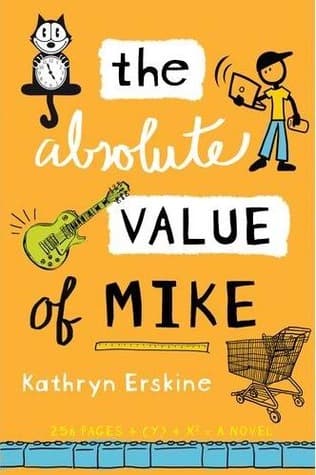
Kathryn Erskine (2011)
Genre
Children's / Young Adult
Reading Time
240 min
Key Themes
See below
Sign in to track this book
Sent to a rural Pennsylvania farm to prove his worth through engineering, a math-challenged boy named Mike instead finds his true value helping an eccentric aunt, a homeless man, and a punk rock girl adopt a Romanian orphan.
Twelve-year-old Mike constantly tries to earn his father's approval. His dad, an engineer, values academic excellence, especially in math. Mike has dyscalculia, a learning disability that makes math difficult for him, leading to poor grades and feelings of inadequacy. His father, frustrated with Mike's math performance, sends him away for the summer to live with distant relatives, Aunt Poppy and Cousin Mindy, in the small, rural town of Coddleton, Pennsylvania. Mike is told he will work on a 'engineering project' there, which he believes is his chance to prove his worth and intelligence to his dad, despite his math challenges. He packs his bags, ready to tackle whatever complex engineering tasks await him in the countryside.
When he arrives in Coddleton, Mike quickly realizes that nothing is as he expected. His Aunt Poppy is an eighty-something-year-old woman with a personality and a penchant for odd sayings and unconventional methods. His cousin Mindy is a punk-rock girl who initially seems distant. The 'engineering project' Mike prepared for is a community-wide effort to build a house for a young boy named Bogdan, who is being adopted from an orphanage in Romania. Mike is bewildered and disappointed, as this project seems to have no connection to the engineering his father values, leaving him feeling lost and unsure how to impress his dad from afar.
Mike, initially resistant and confused by the house-building project, is drawn into the community's efforts. He meets a diverse group of people involved, including a kind homeless man named Mr. Z, who has wisdom and practical skills, and an artistic woman named Lucy. Despite his initial discomfort, Mike starts to learn hands-on skills like hammering, sawing, and painting. He observes the dedication and teamwork of the Coddleton residents, who work together out of generosity and a shared desire to provide a home for Bogdan. Mike slowly begins to appreciate the progress they are making, though he still struggles to reconcile this manual labor with his father's expectations of 'engineering.'
As the house construction progresses, Mike learns more about Bogdan's past in a Romanian orphanage, which helps him understand the project's meaning. He also starts to bond with Mindy, who, beneath her punk-rock exterior, is compassionate. Mindy shares that she was adopted from an orphanage in the U.S. This helps Mike understand Mindy's initial distance and her commitment to the project, as she relates to Bogdan's situation. Their shared purpose in building the house starts to create a friendship between them, and Mike begins to see beyond appearances.
Mike, despite his math difficulties, has an intuitive, visual approach to problem-solving. He starts to apply this to challenges during the house construction. When a structural issue arises, or when measurements seem complicated, Mike's non-traditional thinking often leads to practical solutions that others had not considered. For example, he might visualize how pieces fit together or find a creative way to stabilize a beam. These contributions, though not calculus-based, are valued by the community, boosting Mike's self-esteem and showing him that there are many different forms of intelligence and ways to contribute.
Mr. Z, the homeless man, becomes a mentor for Mike. He shares stories and wisdom, teaching Mike about the importance of integrity, hard work, and the satisfaction that comes from doing 'good work' – work that benefits others and is done with care. Mr. Z helps Mike understand that true value is not always measurable by grades or traditional success. He emphasizes the worth of contributing to something larger than oneself and the joy found in community. Through Mr. Z's guidance, Mike begins to re-evaluate his own self-worth, connecting it instead to his character and actions.
Mike's father visits Coddleton to check on the 'engineering project.' When he arrives and sees Mike doing manual labor, building a house for an adopted boy, he is disappointed and confused. He expresses his frustration that Mike is not working on a project that would advance his scientific or mathematical knowledge, saying Mike is wasting his summer. This crushes Mike, as he had hoped his father would recognize the value in his contributions and the meaning of the house-building. His dad's reaction confirms Mike's fear that he can never truly meet his father's expectations.
Seeing Mike's father's dismissive attitude, Aunt Poppy and Mindy defend Mike and the Coddleton community's project. They explain the value of what Mike has been doing – his hard work, his problem-solving, and his contribution to a humanitarian cause. Aunt Poppy explains that 'engineering' is not just about formulas but about building solutions for people. This public defense of his efforts impacts Mike. He realizes that he does not need his father's validation to know his own worth; the appreciation of his new friends and the results of his labor are enough. He begins to stand a little taller, finding his own voice.
The house is completed, a result of the community's dedication and Mike's growing confidence. The day Bogdan arrives from Romania is a joyous occasion. Mike watches as the young boy, shy and overwhelmed, steps into his new home, built with love and care by the people of Coddleton. Seeing Bogdan's reaction, the hope in his eyes, and the warmth of the community embracing him, fills Mike with a sense of accomplishment and pride. He understands, more deeply than ever, the true 'absolute value' of their work – not in mathematical terms, but in human impact and compassion.
After seeing Bogdan's arrival and the happiness from the Coddleton community, Mike's father starts to see the project, and Mike's contributions, in a new light. He observes Mike's confidence, his practical skills, and the connections he has made. Though he may not fully grasp dyscalculia, he begins to appreciate Mike's different kind of intelligence and his capacity for empathy and leadership. Their relationship starts to mend as Mike's dad acknowledges that there are many ways to be smart and successful. Mike, no longer only seeking his father's approval, embraces his talents and finds his own definition of 'absolute value,' one rooted in kindness, community, and making a difference.
The Protagonist
Mike transforms from an insecure boy desperate for his father's approval to a self-assured individual who understands his own unique value and capabilities, independent of academic metrics.
The Supporting
Initially rigid and misunderstanding, he slowly starts to recognize and appreciate Mike's non-academic strengths and the value of humanitarian work.
The Supporting
Remains a constant source of wisdom and support, facilitating Mike's growth and challenging traditional notions of success.
The Supporting
Develops from a somewhat aloof and teasing cousin to a supportive and understanding friend, revealing her own vulnerabilities.
The Supporting
Remains a consistent source of wisdom and practical guidance for Mike, symbolizing the value of unassuming kindness.
The Mentioned
His arrival symbolizes the successful completion of the community's efforts and the tangible outcome of Mike's personal growth.
The Supporting
Remains a consistent, positive, and creative presence in the community project.
The Supporting
Remains a consistent, albeit sometimes comically intrusive, member of the supportive community.
The novel explores Mike's struggle to define his identity and self-worth beyond his academic performance, especially his difficulties with math. He initially bases his value on his father's approval and his ability to excel in traditional subjects. Through his experiences in Coddleton, Mike learns that his worth is tied to his character, his problem-solving skills, and his ability to contribute to a community. The theme shows that intelligence and value come in many forms, challenging narrow societal definitions of success.
“Maybe the absolute value of Mike wasn't in numbers after all.”
A central theme is the redefinition of 'engineering.' Mike's father views engineering as purely mathematical and scientific. The house-building project in Coddleton shows a different kind of engineering: practical, community-driven problem-solving that involves creativity, teamwork, and manual skills. The book argues that true engineering is about building solutions for people and that compassion and human connection are as vital as formulas. Mike's intuitive approach to construction challenges shows this broader understanding.
“Engineering isn't just about formulas, Michael. It's about building solutions. For people.”
The theme of family extends beyond blood relatives to encompass chosen family and community acceptance. Mike's relationship with his father is initially strained by a lack of understanding, but his time with Aunt Poppy, Mindy, and Mr. Z gives him a new kind of family that offers unconditional acceptance. The Coddleton community itself acts as a supportive family, uniting to provide a home for Bogdan. This theme highlights the importance of belonging and finding people who appreciate you for who you are, rather than for what you can achieve.
“Sometimes the best family is the one you make for yourself.”
The Coddleton community's effort to build a house for an adopted orphan from Romania is the heart of the novel. This theme shows the power of compassion, generosity, and community spirit. The residents, despite their quirks, come together selflessly, showing that a group united by a common, benevolent goal can achieve things. Mike sees how acts of kindness and collective action can impact an individual's life, showing him the 'absolute value' of human connection and empathy.
“It takes a whole village to build a house, especially one built from love.”
The book addresses the challenges of living with a learning disability, specifically dyscalculia. Mike's struggles with math are central to his self-perception and his relationship with his father. The story portrays the frustration and feelings of inadequacy that can come with such a disability. However, it also emphasizes that having a learning disability does not mean a lack of intelligence. Instead, it encourages recognizing and nurturing alternative strengths and problem-solving approaches, showing that success can be found outside of traditional academic metrics.
“Just because numbers don't make sense to you, doesn't mean you don't make sense.”
A narrative setup that creates initial conflict and redefines expectations for Mike and the reader.
The initial premise that Mike is being sent to Coddleton for an 'engineering project' is a deliberate misdirection. This device sets up Mike's expectations for a traditional, academic challenge, aligning with his father's values. When he discovers the project is actually building a house for an adopted boy, it immediately creates internal and external conflict. This contrast highlights Mike's initial disappointment and then allows for a powerful redefinition of what 'engineering' and 'value' truly mean, driving his character arc and the central themes of the book.
Mike's learning disability serves as the primary driver for his internal conflict and external journey.
Mike's dyscalculia is not just a character trait but a central plot device. It is the reason for his strained relationship with his father, his feelings of inadequacy, and ultimately, the catalyst for his summer in Coddleton. By focusing on this specific learning disability, the author highlights the challenges faced by children who don't fit traditional academic molds. It forces Mike to find alternative ways to prove his worth, leading to his discovery of his unique problem-solving abilities and a broader understanding of intelligence.
The physical structure of the house symbolizes community, acceptance, and Mike's personal growth.
The house being built for Bogdan is more than just a dwelling; it's a powerful symbol. It represents the collective love and compassion of the Coddleton community, a safe haven built from generosity. For Mike, working on the house symbolizes his own journey of construction – building confidence, friendships, and a new understanding of his self-worth. Each nail hammered and board cut contributes not only to a physical structure but also to Mike's emotional and psychological development, making the completed house a tangible representation of his transformation and the community's heart.
A collective character that represents unconditional acceptance and the power of unity.
The entire town of Coddleton functions almost as a collective character. Its eccentric, diverse, and uniformly kind residents provide a stark contrast to Mike's previous environment. The community's unwavering support for the house project and their acceptance of Mike, flaws and all, is a crucial plot device. They offer Mike a 'found family' and a space where his non-traditional skills are valued. This collective character demonstrates the power of unity, compassion, and the idea that true belonging comes from contributing to something larger than oneself.
“The thing about being eleven, almost twelve, is that you’re not a kid anymore, but you’re not a teenager either. You’re kind of in the middle, like a bridge.”
— Mike reflecting on his age and transitional stage.
“Math isn't just numbers. It's a way of seeing the world. A way of understanding it.”
— Mike's internal thoughts about the importance of mathematics.
“Sometimes you have to do things you don't want to do, because they're the right things to do.”
— Mike grappling with a difficult decision or task.
“The absolute value of something is always positive, no matter what it is. It's like, even if something's bad, there's still a good part in it somewhere.”
— Mike explaining the concept of absolute value and its metaphorical meaning.
“You can't solve a problem if you don't know what the problem is.”
— Mike's dad giving him advice about problem-solving.
“Sometimes the answers aren't in books or on the internet. Sometimes they're just in your heart.”
— A character offering emotional wisdom to Mike.
“Being different isn't always a bad thing. Sometimes it's the best thing.”
— Mike or another character discussing individuality.
“Fear can make you do crazy things, but it can also make you brave.”
— Mike reflecting on his own fears and actions.
“Life isn't always neat and tidy. Sometimes it's messy, and that's okay.”
— A realization Mike has about the unpredictable nature of life.
“You can't always control what happens to you, but you can control how you react to it.”
— A piece of advice given to Mike during a challenging time.
“Every person has their own story, and every story matters.”
— Mike learning about the lives and experiences of others.
“It's not about being perfect. It's about trying your best, even when it's hard.”
— Mike's internal monologue about effort and perseverance.
“The greatest discoveries are often made when you're looking for something else entirely.”
— Mike reflecting on unexpected outcomes and discoveries.
“Sometimes you have to trust your gut, even if it doesn't make logical sense.”
— Mike making a decision based on intuition rather than pure logic.
Ready to see how well you understood this book? Take our interactive quiz with 10 questions.

Biography coming soon.

Dan Gemeinhart
4.5

Kate O'Hearn
4.4

Jeanne Birdsall
4.4

Jen Wang
4.4
Wendelin Van Draanen
4.3

John Marsden
4.3

Chris Van Allsburg
4.3
Jennifer A. Nielsen
4.2