“Bartholomew Cubbins lived in a plain little house on the edge of a plain little town on a plain little hill.”
— Opening lines, introducing Bartholomew and his humble surroundings.

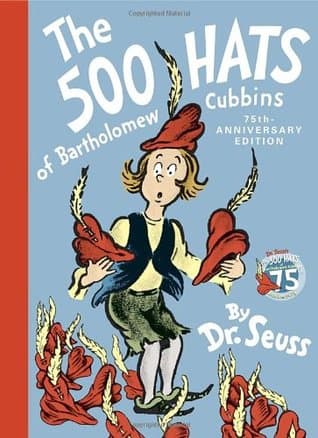
Dr. Seuss (1938)
Genre
Fantasy / Children's / Young Adult
Reading Time
15 min
Key Themes
See below
Sign in to track this book
In a kingdom where royal decree dictates absurd fashion, a boy named Bartholomew discovers his hat collection is endlessly multiplying, leading to a hilariously defiant stand against a tyrannical king and the very laws of nature.
One morning, while walking through the Kingdom of Didd, young Bartholomew Cubbins hears a royal decree. King Derwin of Didd is passing, and everyone must remove their hats to show respect. Bartholomew, a simple peasant boy, removes his plain, red-feathered hat. To his surprise, another identical hat immediately appears. He tries again and again, each time a new hat materializing. The King, seeing this unusual behavior, is first amused but quickly grows impatient when Bartholomew explains his problem. The King's guards are called, and Bartholomew is brought before the monarch for questioning, to his confusion and the King's growing frustration.
King Derwin, finding Bartholomew's story unbelievable, orders him to remove his hat. Bartholomew demonstrates, removing one hat only for another to instantly replace it. The King's Royal Hat-Remover is called, a man whose only job is to remove hats, but even he is confused. He pulls off hat after hat, but they just keep appearing. The King's temper begins to fray as the pile of discarded hats grows. He tries to understand the magical event, but his patience wears thin with each new hat, convinced Bartholomew is somehow playing a trick on him rather than genuinely being unable to stop the hats from appearing.
Frustrated, King Derwin calls his Royal Counsel, a group of wise men, to solve the mystery of Bartholomew's hats. The First Wise Man suggests Bartholomew is a magician and should be banished. The Second Wise Man thinks Bartholomew is a jester and should be put in the dungeon. The Third Wise Man, older and supposedly wiser, simply falls asleep. None of their advice is helpful, and the hats continue to appear on Bartholomew's head, further irritating the King. The King feels increasingly foolish and powerless against such a simple, yet persistent, problem.
Desperate, King Derwin calls for the Royal Executioner, Sir Alaric. Sir Alaric, a burly man, is ordered to chop off Bartholomew's head, believing this extreme measure will solve the hat problem. However, as Bartholomew is led to the chopping block, he continues to remove hats, and new ones replace them just as quickly. Sir Alaric hesitates, realizing that even if he were to chop off Bartholomew's head, a hat might simply appear on the severed head or even on the block itself. The absurdity of the situation becomes clear even to the executioner, and he refuses to proceed, leaving the King in an even greater state of confusion and anger.
Still determined, King Derwin then calls upon the Royal Bowman, a skilled archer. The King orders the Bowman to shoot the hats off Bartholomew's head, one by one. The Bowman aims and shoots, and a hat is knocked off. But, as before, another hat instantly takes its place. The Bowman shoots again and again, and the hats continue to appear. The air fills with flying hats, and the ground around Bartholomew becomes littered with discarded headwear. The King watches in disbelief as his attempts to physically remove the hats only seem to make them appear faster, making the situation even more uncontrollable.
In a final effort to solve the problem through mystical means, King Derwin summons his Royal Magicians. These magicians, known for their spells and enchantments, try various incantations and magical gestures to stop the hats. They chant ancient words and wave their wands, but nothing works. Each spell is met with the appearance of yet another hat on Bartholomew's head. The magicians, frustrated and embarrassed, admit their defeat. They have never encountered such a persistent and baffling magical event, confirming to the King that this is no ordinary trick, but a true enigma, deepening his humiliation.
King Derwin, having used all his royal resources and advisors, slumps onto his throne in despair. The pile of hats around Bartholomew is now enormous, almost reaching the ceiling. The King feels defeated and foolish, unable to solve such a simple problem. He considers giving up and letting Bartholomew live with his hats, or perhaps even banishing him. He's on the verge of tears, feeling utterly powerless and ridiculous. At this point, seeing the sheer number and variety of hats, a subtle shift in his perspective begins, though he doesn't realize it yet.
As the situation continues, a remarkable change begins with the hats. They are no longer simple red-feathered hats. Instead, each new hat that appears is more elaborate and fantastical than the last. Some are adorned with jewels, others with exotic feathers, some are shaped like castles, and one even has a live fish swimming in a bowl on top. Bartholomew, though still confused, continues to remove them patiently. The King, first too frustrated to notice, slowly starts to observe the increasing artistry and complexity of the hats, his anger subtly giving way to a strange fascination.
The hats continue to appear, each more astonishing than the last, until Bartholomew removes what he believes is the 499th hat. Then, the 500th hat appears on his head. This hat is unlike any of the others. It is a breathtaking masterpiece, adorned with a rainbow of jewels, shimmering silks, and a magnificent plume of rare feathers, sparkling in the light. It is exquisitely beautiful and unique. Both Bartholomew and King Derwin are captivated by its splendor. The artistry and uniqueness of this final hat command their full attention, marking a turning point in the absurd ordeal.
Struck by the beauty of the 500th hat, King Derwin's frustration completely vanishes. He is no longer angry or confused, but filled with admiration. He offers Bartholomew Cubbins 500 pieces of gold for the magnificent hat. Bartholomew, a humble boy, readily agrees. As he carefully removes the 500th hat and hands it to the King, something remarkable happens: no new hat appears. The magic is broken. Bartholomew's head is finally bare. The King, delighted with his new hat, and Bartholomew, rich beyond his wildest dreams, both walk away content, the strange ordeal finally over.
The Protagonist
Bartholomew starts as an ordinary boy caught in an extraordinary situation and ends up inadvertently wealthy and free, having endured an unjust ordeal with grace.
The Antagonist
King Derwin begins as a tyrannical and easily frustrated ruler but ends up appreciating beauty and acknowledging his own powerlessness in the face of the unexplainable.
The Supporting
Remains static, failing to perform his duty.
The Supporting
Remain static, offering unhelpful advice.
The Supporting
Starts as an obedient executioner but shows a moment of independent judgment.
The Supporting
Remains static, unable to solve the problem.
The Supporting
Remain static, unable to perform their duties.
King Derwin's treatment of Bartholomew shows the abuse of power. The King, simply because he is King, feels entitled to demand that Bartholomew stop wearing hats, even when it's clear the boy has no control. He escalates his demands from simple requests to threats of banishment and execution, showing a complete disregard for Bartholomew's rights or the absurdity of his own actions. This theme is central to the entire story, with Bartholomew's calm endurance highlighting the King's petty tyranny, as seen when the King orders the executioner to chop off Bartholomew's head for a magical hat problem.
“"Take off your hat!" roared the King. "I command you to take off your hat!"”
Bartholomew Cubbins's patience and endurance are remarkable. Despite facing increasingly severe threats and the endless, frustrating appearance of hats, he remains calm and compliant. He never complains or fights back, simply doing his best to obey the King's commands. This quiet resilience in the face of overwhelming and unjust pressure is a core aspect of his character and a significant theme, contrasting sharply with the King's volatile temper. His continued hat-removing, even as the executioner stands by, shows this endurance.
“Bartholomew Cubbins was a boy who minded his own business.”
The story shows the absurdity that can arise when authority is used without reason or understanding. King Derwin's escalating attempts to solve the hat problem—from a Royal Hat-Remover to an executioner and magicians—become increasingly ridiculous, exposing the limits and foolishness of absolute power when faced with the unexplainable. The King's advisors, too, offer absurd or unhelpful solutions. This theme is shown by the image of the Royal Bowman shooting hats off, only for new ones to immediately appear, turning a serious command into a comical and useless exercise.
“The King's face grew redder and redder. He stamped his foot. "I can't stand it!" he shouted. "Fifty hats!"”
Initially, the King is blind to anything but his own frustration and Bartholomew's perceived insolence. However, as the hats become increasingly elaborate and beautiful, ending with the magnificent 500th hat, the King's perspective shifts. His anger gives way to admiration, and he is willing to pay a fortune for the final, most artistic hat. This change suggests that beauty and artistry can soften even the most rigid and tyrannical hearts, leading to a peaceful resolution. The King's decision to buy the 500th hat is the ultimate expression of this theme.
“The King's eyes popped out! He had never seen a hat like this before. It was the most beautiful hat that had ever been seen in the Kingdom of Didd.”
An ordinary boy experiences an extraordinary, unexplainable phenomenon.
The central plot device is the magical appearance of hats on Bartholomew's head. This phenomenon is presented matter-of-factly within an otherwise ordinary setting, creating a sense of magical realism. The magic is never explained, nor does it follow any logical rules, serving instead as an external force that challenges the established order and the King's authority. It's the catalyst for all the conflict and the ultimate resolution, pushing characters to their limits and forcing a change in perspective, particularly for King Derwin.
The recurring appearance of hats, each slightly different.
The plot heavily relies on the repetition of Bartholomew removing a hat, only for another to appear. This device not only builds suspense and comedic effect but also highlights the escalating futility of the King's efforts. The variation comes in the hats themselves, which gradually transform from simple to increasingly elaborate and fantastical designs. This progression is crucial for the King's eventual change of heart, as the sheer artistry of the later hats captures his attention and admiration, leading to the story's resolution.
The increasing severity of the King's attempts to solve the problem.
The King's methods for dealing with Bartholomew's hats continually escalate, from simple commands to calling specialists, then advisors, and finally resorting to threats of violence (execution, archery) and magic. This escalating series of increasingly absurd and severe measures underscores the King's growing frustration and the limitations of his power. It also serves to heighten the tension and highlight the injustice Bartholomew faces, making the eventual peaceful resolution more impactful.
The hats symbolize individuality, persistence, and the unexpected.
The hats themselves serve as a potent symbol. Initially, they represent an inexplicable challenge to authority and conformity, as Bartholomew cannot simply 'be normal' by removing his hat. As they become more elaborate, they symbolize the burgeoning creativity, individuality, and unexpected beauty that can emerge even from a frustrating situation. The final, most magnificent hat symbolizes ultimate uniqueness and worth, capable of changing the King's entire outlook and bringing about a peaceful, mutually beneficial conclusion.
“Bartholomew Cubbins lived in a plain little house on the edge of a plain little town on a plain little hill.”
— Opening lines, introducing Bartholomew and his humble surroundings.
“Every time Bartholomew took off his hat, another one was on his head!”
— The central magical predicament begins as Bartholomew tries to doff his hat for the King.
“He pulled off hat after hat after hat after hat, until there was a great pile of hats on the ground beside him.”
— Bartholomew's initial futile attempts to remove the hats.
“But the King was getting impatient. He was getting angrier and angrier.”
— The King's reaction to Bartholomew's inability to remove his hat.
“This is a plot! A plot to make me look ridiculous!”
— The King's accusation, believing Bartholomew is intentionally defying him.
“I'll give you one last chance. Take off your hat or off with your head!”
— The King's ultimate threat to Bartholomew.
“The hats were becoming fancier and fancier, more and more beautiful.”
— As the hats keep appearing, their design evolves from plain to elaborate.
“There were hats with feathers and hats with jewels, hats with ribbons and hats with bells.”
— Description of the increasingly ornate hats.
“The people of the town came running to see the amazing sight.”
— The public's reaction to the spectacle of Bartholomew's hats.
“Each hat was finer than the hat that had come before.”
— Highlighting the continuous improvement and increasing wonder of the hats.
“And then, with a gulp, Bartholomew Cubbins pulled off hat number 500.”
— The moment Bartholomew removes the final, most magnificent hat.
“It was the most beautiful hat that had ever been seen in the Kingdom of Didd.”
— Description of the final, magnificent hat.
“And it was gone. And the King's anger was gone. And Bartholomew Cubbins was free.”
— The immediate aftermath of the 500th hat being removed.
“The King bought the 500th hat from Bartholomew Cubbins for 500 pieces of gold.”
— The King's change of heart and the happy resolution.
“And Bartholomew Cubbins went home, no hats on his head, and 500 pieces of gold in his pocket.”
— The ending, showing Bartholomew's return to normalcy and newfound wealth.
Ready to see how well you understood this book? Take our interactive quiz with 10 questions.
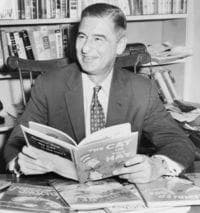
Dr. Seuss, born Theodor Seuss Geisel, was a beloved American children's author and illustrator. He is renowned for his imaginative tales and whimsical rhymes, including iconic works like 'The Cat in the Hat,' 'Green Eggs and Ham,' and 'Oh, the Places You'll Go!'. His unique style and memorable characters have made him a staple in children's literature for generations.







