“I had no very clear purpose in my head, but I knew that I meant to see the business through to the end.”
— Richard Hannay's resolve to uncover the spy plot.

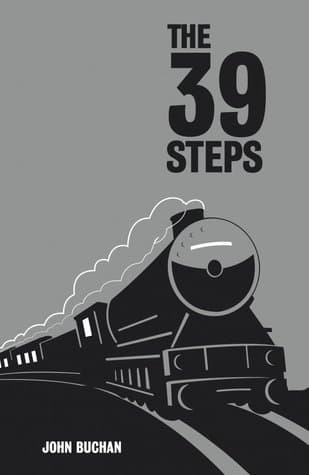
John Buchan (1919)
Genre
Thriller / Historical Fiction / Mystery
Reading Time
120 min
Key Themes
See below
Sign in to track this book
Framed for murder and pursued across the Scottish moors by a ruthless conspiracy, Richard Hannay must decipher the enigmatic 'thirty-nine steps' to unmask an assassination plot threatening to plunge Europe into war.
Richard Hannay, a wealthy Scotsman recently returned to London from South Africa, is bored with his life. One evening, his flat is unexpectedly entered by an American named Franklin P. Scudder, who claims to be a freelance spy. Scudder reveals an international conspiracy involving German agents, a plot to assassinate the Greek Premier, Karolides, and steal British naval secrets, all designed to destabilize Europe and start a war. He speaks of a group called 'The Black Stone' and a phrase, 'the thirty-nine steps.' Hannay, initially doubtful, allows Scudder to stay, hiding him for several days. However, upon returning to his flat one morning, Hannay discovers Scudder dead, stabbed in the heart, with a knife from Hannay's own kitchen.
Realizing he will be the main suspect in Scudder's murder, and with the conspirators surely aware of his connection to Scudder, Hannay decides to flee. He shaves his beard, disguises himself as a milkman, and manages to evade the police who are already watching his flat. He takes a train north towards Scotland, Scudder's last words about 'the thirty-nine steps' and a safe house in Galloway in his mind. During his journey, he narrowly escapes detection several times, for example by jumping from the moving train and hiding in a remote area, which confirms his status as a fugitive from both the law and the dangerous spies.
Hannay finds refuge in the rugged, sparsely populated moorlands of Galloway, Scotland. He spends several days living outdoors, using his South African experience to survive. He carefully examines Scudder's notebook, which contains cryptic entries, coded messages, and fragments of information about the conspiracy. He deciphers clues about the 'Black Stone' and their network, and the upcoming assassination of Karolides. He realizes the conspirators are likely pursuing him not just for Scudder's death, but because they believe he possesses Scudder's valuable information. He also begins to understand the scale and urgency of the threat to British security.
While hiding in a shepherd's hut, Hannay is surprised and captured by two of the German spies. They interrogate him, believing he has Scudder's complete notes. Hannay, though fearful, manages to pretend ignorance and stays alert. He observes their leader, a man with a peculiar 'light-coloured' or 'ivory' face, and learns more about their methodical nature. During the night, he makes an escape by tricking his captors, rolling down a hill, and fleeing into the darkness, further confirming the extreme danger he is in and the high stakes of the situation.
Hannay, needing help and realizing the police are still after him, decides to approach a prominent Member of Parliament, Sir Harry Lauder (later changed to Sir Harry Bullivant in some editions). He hopes to convince Sir Harry of the conspiracy's reality. However, the spies are close behind him. He manages to meet Sir Harry and begins to explain his story, but the spies, having followed him, arrive at Sir Harry's estate. Hannay, recognizing the danger, is forced to flee again, leaving Sir Harry confused and skeptical, but perhaps with a small doubt in his mind. This incident shows the difficulty Hannay faces in being believed.
Through Scudder's notes, his own observations, and a stroke of luck, Hannay finally deciphers the true meaning of 'the thirty-nine steps.' He realizes it refers to the number of steps leading down to a secluded cove on the Kent coast, from which the spies plan to escape after completing their mission. He also understands that the assassination of Karolides and the theft of British naval plans are set to occur soon. The information he needs to prevent these catastrophes is now clear to him, and he knows he must act immediately to warn the authorities.
With a full understanding of the plot, Hannay races towards London. He knows he must reach the authorities and convince them of the danger before the assassination of Karolides takes place. He manages to contact a man named Marmaduke Jopley, an official in the Foreign Office, who initially dismisses his wild tale. However, Hannay's persistence and the specific details he provides begin to lessen Jopley's skepticism. The clock is ticking, and Hannay feels the immense pressure of Europe's fate resting on his ability to be believed.
Despite Hannay's frantic efforts, the assassination of Karolides occurs as predicted. However, Hannay, now with the reluctant backing of Jopley and the British Secret Service, focuses on the second part of the plot: the theft of vital naval secrets. He and a team arrive at the house where the spies are attempting to steal the plans. A tense confrontation occurs. While Karolides' death could not be prevented, Hannay's timely intervention prevents the 'Black Stone' from acquiring the naval intelligence, thereby averting an even greater catastrophe for Britain.
With the naval secrets secured, Hannay, now working directly with the British Secret Service, leads the pursuit of the remaining members of 'The Black Stone' to the Kent coast. He knows their escape route involves 'the thirty-nine steps.' The chase is intense, as the spies are desperate to escape and cover their tracks. Hannay's knowledge of their plan and his outdoor skills prove important in tracking them. The final confrontation is coming, and Hannay feels a sense of grim determination to bring these dangerous individuals to justice.
Hannay and the British agents converge on the secluded cove on the Kent coast. They discover the thirty-nine steps leading down to the water, where a German yacht awaits to take the spies away. In a dramatic climax, Hannay confronts the leader of 'The Black Stone,' the man with the 'ivory' face, revealing him to be a high-ranking German official in disguise. A struggle occurs, and with the help of the Secret Service, the remaining spies are caught, including the mastermind. Hannay, no longer bored, has played a role in thwarting a major international conspiracy and securing Britain's safety.
The Protagonist
From a bored, jaded adventurer, Hannay becomes a decisive and patriotic hero who thwarts an international conspiracy.
The Supporting
Serves as the initial informant and victim, setting the plot in motion.
The Antagonist
Remains a consistent, dangerous threat until his capture at the end.
The Supporting
Moves from skepticism to a partial belief, paving the way for Hannay to be heard.
The Supporting
Transitions from skepticism to active collaboration with Hannay.
The Mentioned
His assassination occurs, marking a tragic success for the enemy but a failure for Hannay to prevent that specific part of the plot.
The Supporting
Provides temporary, unwitting aid to Hannay.
The Antagonist
They are consistently antagonists, pursuing Hannay until their capture at the end.
The novel opens with Richard Hannay suffering from boredom with his comfortable London life. The sudden intrusion of Scudder and the subsequent murder thrust him into an adventure. This change from boredom to urgent purpose is central to Hannay's character arc. His boredom is cured by the real threat to national security, giving his life meaning and direction he previously lacked. This theme explores how extraordinary circumstances can awaken hidden capabilities and a sense of duty in a person.
“I was in a most blessed relief from boredom. The prospect of being hunted like a partridge over the moors was exhilarating.”
A strong sense of patriotism and duty drives Hannay once he understands the seriousness of the conspiracy. Despite being a fugitive, he feels he must protect Britain from the foreign agents and their plot to destabilize Europe. He repeatedly risks his life, not for personal gain, but for the security of his country. This theme is especially relevant given the novel's publication during World War I, reflecting a prevailing sentiment of national loyalty and the necessity of individual sacrifice for the greater good.
“I didn't care a brass farthing for myself, but I felt I had a great responsibility on my shoulders.”
The novel constantly plays with the idea of appearance versus reality. Spies are disguised as ordinary citizens, high-ranking officials are secretly enemy agents, and Hannay himself must adopt multiple disguises to evade capture. The seemingly normal world of London hides a sinister international intrigue. Hannay's struggle to be believed by the authorities stems from the fact that the conspiracy's truth is so fantastic it challenges normal perception, showing how easily danger can lurk beneath a normal surface.
“I realized that the most dangerous men in the world might be the most innocent-looking.”
Richard Hannay is an outsider in London society, having recently returned from South Africa. This 'outsider' status allows him to observe society with fresh eyes and to act outside the conventional rules, which helps when established authorities are too slow or skeptical to believe him. His unconventional skills, honed in the wilderness, make him suited to survive and fight against the sophisticated, yet equally 'outsider,' network of spies. He operates effectively beyond the traditional structures of law and order, embodying the hero who must step up when the system fails.
“I was an out-of-work adventurer, and here was the biggest adventure I had ever dreamed of.”
The plot emphasizes how fragile societal order can be and how easily it can be undermined by a small, determined group. The assassination of a single leader, Karolides, and the theft of naval secrets are shown to have the potential to plunge Europe into war. This theme highlights the constant, hidden threats that can destabilize nations and the importance of vigilance, even when the danger is not immediately apparent. It suggests that peace and stability are not guaranteed but are constantly under threat from unseen forces.
“It was a big game, and the stakes were the peace of the world.”
A mysterious phrase that drives the entire plot.
The phrase 'the thirty-nine steps' acts as a classic MacGuffin, a plot device that is vitally important to the characters and drives the story forward, but whose specific nature is less important than its effect on the plot. Initially, its meaning is entirely unknown, creating suspense and mystery. Hannay's quest to understand and locate the 'thirty-nine steps' is what propels him through Scotland and eventually to the Kent coast, uniting the various disparate clues and events of the conspiracy. Its eventual revelation as a literal set of steps leading to a cove provides the climax.
Hannay's perspective shapes the initial understanding and suspense.
While Hannay is generally truthful, his initial skepticism and bewilderment about Scudder's claims, combined with his status as a fugitive, create a sense of uncertainty for the reader. We experience the events through his eyes, sharing his confusion and fear. This makes the unraveling of the conspiracy more engaging as Hannay himself is piecing it together. His struggle to convince others also reflects a form of narrative unreliability, as his story sounds too fantastical to be true, even though it is.
Hannay's use of disguises to evade capture and the spies' use of them to operate covertly.
Mistaken identity and disguise are central to Hannay's survival and the spies' operations. Hannay shaves his beard, pretends to be a milkman, a roadmender, and a politician to elude both the police and the enemy agents. Conversely, the spies themselves are masters of disguise, appearing as respectable citizens or ordinary workers while plotting nefarious deeds. This device highlights the theme of appearance versus reality and underscores the constant danger and deception inherent in the world of espionage.
The relentless pursuit of Hannay by both the police and the spies.
The entire novel is structured as a relentless chase. From the moment Scudder is murdered, Hannay is on the run, constantly pursued across the Scottish moors and then towards London. This continuous pursuit creates immense suspense and propels the plot forward at a breakneck pace. It forces Hannay to think quickly, improvise, and utilize his unique skills, making him an active participant in his own survival rather than a passive victim. The chase is not merely physical but also a mental one, as Hannay races to decipher clues before the conspirators achieve their goals.
Scudder's notebook provides a series of coded messages and fragments Hannay must decipher.
Scudder's notebook, filled with cryptic entries, coded messages, and seemingly random details, serves as a crucial plot device. Hannay must piece together these fragments of information to understand the full scope of the conspiracy, the identity of the 'Black Stone,' and the meaning of 'the thirty-nine steps.' This decoding process engages the reader in the mystery and allows for gradual revelations, building suspense as Hannay slowly uncovers the truth. It highlights Hannay's intelligence and analytical skills.
“I had no very clear purpose in my head, but I knew that I meant to see the business through to the end.”
— Richard Hannay's resolve to uncover the spy plot.
“The ordinary man is a passive creature, a sheep in the flock.”
— Hannay reflecting on human nature and his own situation.
“I realized that I was in for a long, hard game, and that I must play it alone.”
— Hannay after discovering the conspiracy and going on the run.
“There are some things that no fellow can understand.”
— Hannay's humorous take on the complexities of the spy world.
“The best way to baffle your enemies is to make them think you are doing something else.”
— Hannay's strategy for evading pursuers.
“I had a feeling that I was up against something too big for me.”
— Hannay's initial fear upon realizing the scale of the conspiracy.
“Adventure is the life of the soul.”
— Hannay reflecting on his experiences and the thrill of the chase.
“The world is full of people who have never found their proper job.”
— Hannay musing on fate and purpose during his journey.
“I have always had a fancy for the open road and the chance of something turning up.”
— Hannay describing his adventurous nature early in the story.
“It is a great thing to be able to think clearly in a tight place.”
— Hannay emphasizing the importance of quick thinking under pressure.
“The secret of success is to be ready when your opportunity comes.”
— Hannay's advice drawn from his espionage experiences.
“I have learned that in this world you must take your chances as they come.”
— Hannay reflecting on the unpredictable nature of his adventures.
“There is nothing so bad as a good man gone wrong.”
— Hannay's observation on betrayal and morality in the spy plot.
“The night has a thousand eyes, and the day but one.”
— Hannay feeling watched and paranoid while evading capture.
Ready to see how well you understood this book? Take our interactive quiz with 10 questions.
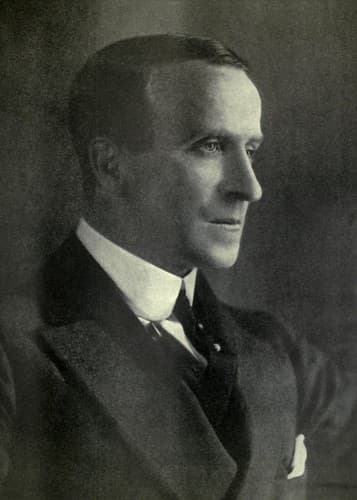
John Buchan, 1st Baron Tweedsmuir was a Scottish novelist, historian, and Unionist politician who served as Governor General of Canada, the 15th since Canadian Confederation.







