“Every problem has a solution, although it may not be the one you want.”
— Ishaan often reflects on life's challenges and the need to adapt expectations.

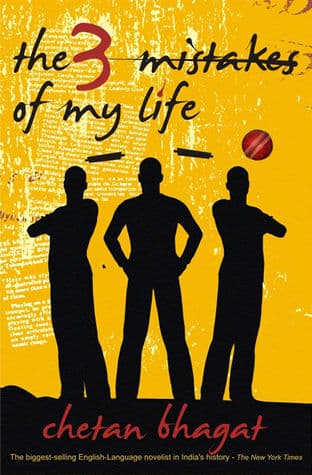
Chetan Bhagat (2007)
Genre
Young Adult / Romance
Reading Time
345 min
Key Themes
See below
Sign in to track this book
In Ahmedabad, three friends chase dreams of cricket, business, and belonging, but their bond and ambitions face challenges from seismic events, communal strife, and their own youthful errors.
In late 2000, Govind Patel, a young man from Ahmedabad, wants to be a successful businessman. He convinces his two best friends, Ishaan 'Ish' Bhatt and Omi, to combine their money and open a cricket equipment shop near the Astha Cricket Academy. Govind, practical and focused on money, handles the business. Ish, a passionate cricketer who did not play professionally, coaches young talent, especially a gifted Muslim boy named Ali. Omi, the son of a temple priest, is less ambitious but loyal to his friends, wanting to be part of their venture. They start their modest business with little money.
Ishaan quickly sees that Ali, a young boy from a low-income Muslim family, has a natural talent for batting. Ishaan believes Ali can become nationally famous. Ishaan becomes Ali's dedicated coach, spending hours training him at the academy, often neglecting the shop, which frustrates Govind. Ishaan sees Ali as his second chance at cricket success and puts all his unfulfilled dreams into the boy's development. This mentorship creates a strong bond between Ishaan and Ali, despite their religious differences, but it also strains Ishaan's relationship with Govind.
Wanting financial success, Govind suggests expanding their business by opening a math tutoring center in their shop. It would target students from the nearby Astha Cricket Academy. Ishaan, at first against it, eventually agrees, and the tutoring center succeeds, bringing in needed money. During this time, Govind tutors Ishaan's younger sister, Vidya. As they spend more time together, they develop feelings for each other. This relationship is tense, as Govind knows Ishaan would strongly disapprove, given their friendship and the societal taboo of a lower-caste boy pursuing an upper-caste girl.
On January 26, 2001, the Bhuj earthquake hits Gujarat, including Ahmedabad. The earthquake causes wide destruction and loss of life. Govind, Ishaan, and Omi survive, but their shop is damaged. Omi's family temple is also badly affected. In the chaos, Govind, always looking for opportunity, sees a chance to sell blankets and relief supplies. While Ishaan focuses on helping victims, Govind's business helps them recover financially, but it also shows their different priorities. The earthquake leaves a lasting mark on the city and its people, setting the stage for more social unrest.
Omi's uncle, Bittu Mama, a Hindu nationalist and local politician, starts to influence Omi, especially after the earthquake. Bittu Mama, seeing an opportunity in the post-earthquake chaos and rising communal tensions, involves Omi in his political activities, which are increasingly anti-Muslim. Omi, seeking purpose and belonging, and perhaps swayed by his uncle's words, becomes more involved in these divisive movements. This creates a growing divide between Omi and his friends, especially Ishaan, who coaches Ali, a Muslim boy, and Govind, who puts business before communal conflict.
In February 2002, the Godhra train incident occurs, where a train carrying Hindu pilgrims is set on fire, killing many. This event causes widespread communal riots across Gujarat, including Ahmedabad. The city becomes chaotic, with violence, arson, and a deep divide between Hindu and Muslim communities. The riots directly affect Govind, Ishaan, and Omi, forcing them to face the harsh realities of religious hatred. Their shop is threatened, and their lives are disrupted as they navigate dangerous streets and protect loved ones during the escalating violence.
During the Ahmedabad riots, Ishaan learns that Ali's family is in danger in their Muslim neighborhood, which Hindu mobs are targeting. Despite the extreme danger, Ishaan, driven by his care for Ali, rushes to rescue him. Govind reluctantly goes with him. They encounter Omi, who is now fully involved with Bittu Mama's group, participating in the violence. A confrontation happens, fueled by communal hatred and personal betrayals. Tragically, Bittu Mama fatally shoots Ishaan, mistaking him for a Muslim supporter or enemy, as Ishaan shields Ali. Omi is devastated, seeing his friend die by his uncle's hand.
Ishaan's death shatters Govind and Omi. The riots eventually end, leaving a scarred city and broken lives. Govind is consumed by guilt, both for failing to save Ishaan and for his secret relationship with Vidya. He knows his actions, especially his affair with Ishaan's sister, would have deeply hurt his friend. Omi, traumatized by his involvement and his uncle's role in Ishaan's death, withdraws, haunted by the tragedy. The cricket shop, a symbol of their shared dreams, now reminds them of their lost friendship and the devastating effects of their mistakes and the communal violence.
Despite his grief and guilt, Govind decides to honor Ishaan's memory by focusing on Ali's cricket career. He becomes Ali's mentor and manager, ensuring the boy gets the best training and opportunities. Govind uses his business skills to get sponsorships and manage Ali's professional cricket journey, putting his ambition into fulfilling Ishaan's dream. He sees this as his path to redemption, a way to make up for his perceived mistakes and keep part of Ishaan alive. Ali, also affected by Ishaan's death, continues to practice, driven by his coach's memory.
Years after Ishaan's death, Govind finally tells Vidya about their past relationship. He reveals their secret affair and the guilt he has carried. Vidya, having also grieved Ishaan's loss and matured, reacts with shock, anger, and understanding. The confession is a turning point for both, allowing them to face the truth and start healing. This honesty, though painful, opens the way for a possible future together, built on truth rather than secrecy and guilt. It shows Govind's final step toward emotional maturity and accepting his past.
After Ishaan's death and the riots, Omi struggles with guilt and trauma. He distances himself from his uncle and his past involvement in the communal violence. Over time, Omi finds comfort and a path to redemption through deep religious devotion. He dedicates himself to the temple and spiritual practices, seeking peace and forgiveness. His journey is one of introspection and penance, slowly healing from the emotional wounds of seeing his friend's murder and his own part in the divisive atmosphere. Omi eventually finds inner peace, though it is quiet and reflective.
Years pass, and Ali, with Govind's careful guidance and support, becomes a strong cricketer. He rises through the ranks, eventually joining the national team. His success is a result of Ishaan's initial belief and coaching, and Govind's later dedication and management. Govind watches Ali play with accomplishment and bittersweet pride, knowing he has honored his friend's legacy. Ali's cricket success shows how individual talent and perseverance can overcome societal divisions and personal tragedies, bringing closure and purpose to Govind's life.
As the story ends, Govind thinks about what he considers his three biggest mistakes. First, his early focus on money and business overshadowed his friendships, making him overlook Ishaan's passion and Omi's struggles. Second, his secret affair with Vidya, though a real connection, betrayed Ishaan's trust and caused great guilt. Third, his failure to anticipate or prevent the growing communal tensions and to protect his friends from the violence, especially Ishaan's death, weighs heavily on him. He realizes these mistakes, born from ambition, desire, and inaction, shaped his life and led to serious consequences.
In the end, Govind, Vidya, and Omi, though changed by their past, rebuild their lives. Govind and Vidya are together, having moved past the guilt and secrecy of their shared history. Omi, having found peace in his spiritual journey, remains a quiet but important part of their lives. The cricket shop, no longer the main focus, reminds them of their youth and shared dreams. The story suggests that while mistakes have serious consequences, it is possible to learn, adapt, and find a way forward, carrying the lessons and memories of those lost.
The Protagonist
From a purely profit-driven individual, Govind evolves into a person who prioritizes legacy and relationships, learning to live with his past mistakes and seeking redemption through his actions for Ali and Vidya.
The Protagonist/Supporting
Ishaan remains consistent in his passion and idealism, becoming a symbol of hope and unity, whose sacrifice ultimately inspires Govind.
The Supporting
From a directionless but loyal friend, Omi becomes entangled in communal politics, then retreats into guilt and eventually finds solace in religious devotion.
The Supporting
Vidya navigates a forbidden romance and the grief of losing her brother, eventually finding a path to forgiveness and a future with Govind.
The Supporting
From a talented child, Ali grows into a successful national cricketer, fulfilling Ishaan's dream and becoming a symbol of hope.
The Antagonist
Bittu Mama remains a static character, representing the destructive force of communal hatred and fanaticism.
The novel explores the conflict between personal ambition and friendship. Govind's pursuit of money often clashes with Ishaan's passion for cricket and Omi's desire for simple friendship. This appears when Govind prioritizes business expansion over Ishaan's coaching or Omi's emotional needs. The friends often argue over their shared venture, showing how different goals can strain even strong bonds. The story suggests that uncontrolled ambition, especially when it neglects relationships, can have devastating results, including the loss of a friend.
“My first mistake was that I always gave priority to money, not my friends. I forgot that money is just a means to an end, not the end itself.”
The novel shows the destructive effects of communal violence and religious extremism on individuals and society. The Godhra incident and the Ahmedabad riots form a harsh background, tearing apart the city and friendships. Omi's gradual indoctrination by Bittu Mama shows how easily impressionable people can be drawn into divisive ideas. Ishaan's sacrifice to save Ali, a Muslim boy, highlights the senseless tragedy of communal hatred. The theme emphasizes how political and religious divisions can destroy dreams, relationships, and lives, leaving lasting scars.
“The city burned. But it wasn't just buildings. It was hearts, dreams, everything.”
The secret romance between Govind and Vidya forms a main emotional part of the story, exploring forbidden love, betrayal, and lasting guilt. Their relationship, hidden from Ishaan, represents a betrayal of trust within their close group. Govind's constant struggle with guilt over this affair, especially after Ishaan's death, shows the psychological cost of secrecy and unconfessed actions. The theme examines the complexities of human relationships, where love can exist with deceit, and how these choices, even if well-intended, can lead to deep regret and a long journey toward redemption and forgiveness.
“Loving her was my second mistake. Not because she was Ishaan's sister, but because I kept it a secret.”
Despite the tragedies and mistakes, the novel offers a message of redemption and second chances. Govind, burdened by guilt over Ishaan's death and his past actions, finds a way to make amends by dedicating himself to Ali's cricket career, fulfilling Ishaan's dream. Omi, after being consumed by guilt and trauma, finds comfort and purpose in spiritual devotion. The characters' journeys show that while mistakes have serious consequences, they also offer chances for growth, learning, and making amends. The story suggests that even after great loss, it is possible to rebuild lives and find meaning by honoring legacies and choosing a better path.
“Perhaps all our mistakes are just lessons, waiting to be learned.”
The story is told retrospectively through the eyes of Govind Patel.
Govind's first-person narration allows the reader direct access to his thoughts, motivations, and internal conflicts. This perspective is crucial for understanding his ambition, his guilt over the affair with Vidya, and his reflections on his 'three mistakes.' The retrospective nature of the narration (Govind telling the story years later) provides an emotional distance that allows for self-analysis and mature reflection on past events, shaping the reader's perception of the characters and the tragic events, and underscoring the themes of guilt and redemption.
A central setting and symbol of friendship, shared dreams, and later, loss.
The cricket shop serves as more than just a physical location; it is a powerful symbol of the trio's friendship, their collective dreams, and their individual aspirations. Initially, it represents their entrepreneurial spirit and shared passion. As the story progresses, it becomes a site of both collaboration and conflict. After Ishaan's death and the riots, the shop transforms into a poignant reminder of their lost innocence and the devastating impact of external forces on their lives. Its eventual transformation or continued existence symbolizes the lingering presence of their past and the attempt to rebuild.
A natural disaster that acts as a catalyst for societal and personal change.
The Bhuj earthquake is a significant turning point in the narrative. Beyond its immediate destructive impact, it serves as a powerful catalyst. For Govind, it presents an opportunity to expand his business acumen in the face of crisis. For Omi, it opens the door for Bittu Mama's influence as communal tensions rise in the aftermath of the disaster. The earthquake foreshadows the societal upheaval to come with the riots, demonstrating how external forces can disrupt lives, expose character, and accelerate changes in relationships and individual paths, setting the stage for the story's tragic climax.
A historical event that becomes the central conflict and driving force of the tragedy.
The Godhra train incident and the subsequent Ahmedabad riots are not merely background events but are integral to the plot. They act as the primary external antagonist, directly causing the communal strife that leads to Ishaan's death and profoundly impacting the lives of all characters. This real-world tragedy grounds the fictional narrative in a historical context, adding weight and gravitas to the personal struggles. The riots force the characters to confront their beliefs, loyalties, and fears, ultimately leading to the story's climax and the shattering of their friendship.
“Every problem has a solution, although it may not be the one you want.”
— Ishaan often reflects on life's challenges and the need to adapt expectations.
“Sometimes in life, you don't get what you want, you get what you deserve.”
— Govind contemplates the outcomes of his actions and the concept of karma.
“If you don't fight for what you want, don't cry for what you lose.”
— Omi's mantra, reflecting his proactive and sometimes aggressive approach to life and business.
“The past is a ghost, the future a dream, and all we ever have is now.”
— Govind's philosophical musings about living in the present moment.
“Cricket is not just a game; it's a religion in India.”
— A common sentiment expressed by the characters, particularly Ishaan, highlighting the cultural significance of cricket.
“Love is not about finding the perfect person, but about seeing an imperfect person perfectly.”
— Govind's evolving understanding of love and relationships.
“Mistakes are painful when they happen, but years later a collection of mistakes is called experience.”
— The overarching theme of the novel, as Govind narrates his life story.
“Sometimes, the biggest risks lead to the biggest rewards.”
— Reflecting on the entrepreneurial ventures of the three friends.
“Friendship is not about who you've known the longest, it's about who walked into your life, said 'I'm here for you,' and proved it.”
— The bond between Govind, Ishaan, and Omi, tested by various challenges.
“It's not about how hard you hit, it's about how hard you can get hit and keep moving forward.”
— A metaphorical lesson learned by the characters through their struggles.
“Dreams are not what you see in sleep, dreams are something that does not let you sleep.”
— Ishaan's dedication to his dream of opening a cricket academy.
“Sometimes, you have to lose yourself to find yourself.”
— Govind's journey of self-discovery amidst personal turmoil.
“The greatest glory in living lies not in never falling, but in rising every time we fall.”
— A reflection on the characters' ability to bounce back from adversity.
Ready to see how well you understood this book? Take our interactive quiz with 10 questions.

Chetan Bhagat is a prominent Indian author known for his accessible and relatable fiction that often explores the lives of young Indians. His bestselling novels, including 'One Night at the Call Center,' 'The 3 Mistakes of My Life,' and 'Half Girlfriend,' have resonated with millions of readers and have been adapted into successful Bollywood films. Bhagat's work is characterized by its simple language and focus on contemporary social issues, making him one of the country's most popular contemporary writers.