“The city was a tinderbox, and someone had just thrown a match.”
— Describing San Francisco on edge, early in the novel.

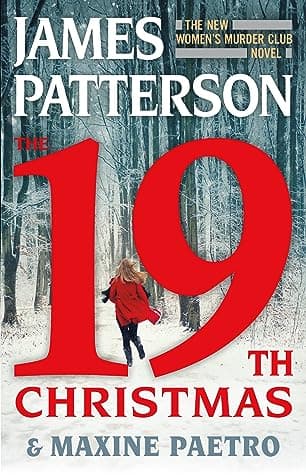
James Patterson (2019)
Genre
Thriller / Mystery
Reading Time
240 min
Key Themes
See below
Sign in to track this book
As Christmas nears, Detective Lindsay Boxer and the Women's Murder Club race to unmask "Loman," a criminal planning a deadly holiday surprise for San Francisco during a city-wide crime wave.
As December begins, San Francisco has little major crime, which pleases Detective Lindsay Boxer, Medical Examiner Claire Washburn, Assistant District Attorney Yuki Castellano, and journalist Cindy Thomas. The Women's Murder Club friends look forward to a peaceful Christmas. Cindy is even assigned a lighthearted story about the meaning of Christmas for the San Francisco Chronicle. Lindsay and her partner, Rich Conklin, handle minor cases, and the mood is calm. However, this calm soon breaks with the appearance of a criminal mastermind who calls himself 'Loman,' hinting at a dark plan for the holiday season.
Loman starts his plan by arranging a series of violent crimes across San Francisco. These include an art heist at the De Young Museum, a bank robbery, and smaller acts like vandalism and theft. The number and variety of these crimes stretch the SFPD thin, making it hard for Lindsay and her team to connect them. Loman uses many fake names and a network of minor criminals, making his true identity and goal hard to find. The city's peaceful holiday mood quickly falls apart under this growing crime wave.
Mayor Goodman holds a press conference, asking for calm and assuring the public that the SFPD is working to catch those behind the crime surge. Meanwhile, Cindy Thomas, initially assigned a feel-good Christmas story, now covers Loman's growing terror. She starts looking into the details of the crimes, interviewing witnesses and police, including Lindsay. Cindy's reporting helps inform the public, but also gives Loman the attention he wants, as his planned chaos continues across the city, keeping everyone uneasy.
As incidents increase, Lindsay Boxer and Rich Conklin begin to suspect that the crimes—from the art heist to the bank robbery and other problems—are not Loman's main goal. Instead, they seem to be a huge distraction, meant to overwhelm police and hide a much larger plan. Claire Washburn's autopsy reports and forensic evidence from the crime scenes offer some clues, but Loman's careful planning leaves little direct evidence of his ultimate target. The Women's Murder Club meets, sharing their thoughts, convinced that Loman is playing a bigger game than simple theft.
Loman increases his campaign by sending cryptic messages to the media, especially Cindy Thomas, and to the SFPD. These messages contain veiled threats, hinting at a disaster planned for Christmas morning. The urgency grows as the Women's Murder Club realizes they are racing against time. Lindsay and her team work constantly, trying to understand Loman's clues and guess his next move. The pressure on the SFPD is huge, as the city's holiday spirit is replaced by fear and uncertainty, with everyone wondering what horror Loman plans to unleash.
Amid the city-wide panic Loman creates, Yuki Castellano faces a challenging legal case. This case, unrelated to Loman's actions, demands her full attention and adds to the stress on the Women's Murder Club. The legal proceedings show the ongoing difficulties of the justice system, even as a major criminal threatens the city. Yuki's dedication to her work, despite the danger, shows her commitment to justice, even as her friends fight Loman's plan. Her thoughts on criminal psychology sometimes help the club's discussions.
Through careful analysis of the crime scenes and Loman's messages, Lindsay Boxer and the SFPD begin to see a pattern in his actions. They realize that some targeted locations in the diversions have symbolic meaning or are geographically linked, pointing to a specific, high-profile target. Rich Conklin's investigation helps find a common thread, suggesting Loman wants a grand statement, not just chaos. This discovery helps the police focus their resources better, narrowing down the many possibilities.
As Christmas Eve arrives, tension is highest. With Loman's deadline near, Lindsay, Claire, Yuki, and Cindy work tirelessly, putting together the final clues. The SFPD, helped by the Women's Murder Club's insights, focuses on several potential targets. The city is on high alert, with more police. The friends communicate constantly, sharing every bit of information, knowing that San Francisco's fate depends on their ability to guess Loman's final move and stop him before his deadly Christmas morning surprise can happen.
The Women's Murder Club finally understands Loman's plan: he intends to detonate a large explosive device at a major financial institution in downtown San Francisco on Christmas morning. His goal is not just to steal, but to cause widespread destruction, financial collapse, and gain fame. The diversions were designed to keep the police from finding the bomb's placement and the scale of his ambition. Lindsay and Rich lead a rapid response team, rushing to the location, knowing that minutes stand between the city and a huge disaster. The stakes have never been higher for the SFPD and the city.
Lindsay Boxer and Rich Conklin, with a bomb squad, arrive at the financial institution just in time. A tense confrontation happens with Loman, who tries to trigger the device remotely. With quick thinking and action, Lindsay manages to stop Loman and disable the bomb, preventing a devastating Christmas Day tragedy. The city breathes a sigh of relief. While the immediate threat is gone, the aftermath involves extensive investigations into Loman's network and reasons. The Women's Murder Club, though tired, celebrates a hard-won victory, thinking about their bond and their dedication to protecting San Francisco.
The Protagonist
Lindsay faces her toughest challenge yet, demonstrating resilience and leadership to prevent a city-wide catastrophe.
The Antagonist
Loman orchestrates a complex plan to achieve infamy and financial gain, ultimately being thwarted by Lindsay Boxer.
The Supporting
Cindy transitions from a human-interest reporter to a frontline journalist covering a major city-wide crisis, using her platform to aid the investigation.
The Supporting
Claire uses her forensic expertise to help unravel Loman's complex scheme, providing critical clues from the crime scenes.
The Supporting
Yuki navigates her own challenging legal case while contributing her legal and psychological insights to the Women's Murder Club's efforts against Loman.
The Supporting
Rich supports Lindsay in the investigation, providing crucial police work and personal stability during a city-wide crisis.
The Supporting
Mayor Goodman navigates the political and public relations challenges of a city under siege, working to reassure citizens while supporting law enforcement.
The Mentioned
Oversees the city's police response to Loman's threats.
The novel contrasts the festive Christmas spirit with the fear and chaos Loman creates. Initially, Cindy looks for 'the true meaning of Christmas' in San Francisco, which quickly changes from heartwarming stories to the resilience and community spirit shown against terror. The 'true meaning' becomes the dedication of the Women's Murder Club and the SFPD to protect their city, showing sacrifice and selfless service over material celebration. Facing evil together strengthens friendships and family, showing that the true holiday spirit is in unity and protection, not just peace.
“It's not sleigh bells that are ringing this Christmas.”
Loman's entire strategy relies on misdirection and lies. He arranges many seemingly random crimes—art heists, bank robberies, small disruptions—to overwhelm the SFPD and distract them from his true, devastating goal. This theme highlights the challenge of telling truth from illusion in a complex criminal plot. Lindsay and her team must sort through layers of fake evidence and false leads to find Loman's real target. The story constantly reminds the reader that what seems to be the main threat is often a carefully built facade.
“All that Lindsay and the SFPD can figure out is that Loman's greed -- for riches, for bloodshed, for attention -- is limitless.”
The Women's Murder Club, made of Lindsay, Cindy, Claire, and Yuki, shows the strength of female friendship and teamwork. Each woman brings her professional skills—policing, journalism, forensics, and law—to the Loman case, letting them approach it from many angles. Their regular meetings and shared ideas are important for putting together Loman's complex plan, showing that their combined intelligence and emotional support are more effective than individual efforts. This theme reinforces the series' core idea, highlighting the strength in their bond.
“Avoiding tragedy is the only holiday miracle they seek.”
The novel explores Loman's reasons, especially his strong desire for attention and fame. Loman is not just driven by money but by a deeper need to be seen as a powerful criminal mastermind. His detailed plan, timed for Christmas, is meant to maximize public impact and media coverage, turning his crimes into a show. This theme looks into the minds of criminals who want to leave a lasting, terrifying mark on society, and how their pursuit of fame can be as destructive as their violent acts.
“He is planning a deadly surprise for Christmas morning. And he has commissioned dozens of criminal colleagues to take actions that will mask his plans.”
A deliberate misleading clue or distraction.
Loman employs numerous red herrings by orchestrating a series of seemingly diverse and unrelated crimes—art heists, bank robberies, and minor disturbances—across San Francisco. These incidents are designed to overwhelm police resources and divert their attention from his true objective. The SFPD, particularly Lindsay Boxer, spends considerable time investigating these individual crimes, only to realize later that they are all part of a larger, more sinister misdirection intended to mask the placement of a massive bomb.
A narrative device creating urgency with a fixed deadline.
The entire plot of 'The 19th Christmas' is driven by a ticking clock. Loman explicitly states that his ultimate, devastating surprise will occur on Christmas morning. This creates immense pressure on Lindsay Boxer and the Women's Murder Club, forcing them to work tirelessly against a strict deadline. The countdown to Christmas Day amplifies the tension and urgency, making every clue and every decision critical as they race to prevent a city-wide catastrophe before time runs out.
The group functions as a multi-faceted investigative and support system.
This device highlights how the combined expertise and unique perspectives of Lindsay (police), Cindy (journalism), Claire (forensics), and Yuki (law) allow them to solve crimes more effectively than any single individual. Each member contributes vital information and insights from her respective field, enabling them to piece together Loman's complex plan. Their regular meetings serve as a crucial forum for brainstorming, sharing information, and providing emotional support, showcasing the power of collaborative intelligence.
Vague or coded communications used to taunt and mislead.
Loman frequently sends cryptic messages to the media and the SFPD, containing veiled threats and obscure clues about his plans. These messages are designed to simultaneously taunt the authorities, generate public fear, and provide just enough information to keep them guessing, without revealing his true intentions. Deciphering these coded communications becomes a significant challenge for Lindsay and her team, adding another layer of complexity to the investigation and forcing them to interpret subtle hints and symbolism.
“The city was a tinderbox, and someone had just thrown a match.”
— Describing San Francisco on edge, early in the novel.
“There’s a thin line between genius and madness, and he’d tap-danced on it his whole life.”
— Referring to the brilliant but unstable killer, The Christmas Killer.
“Every secret has a shelf life. And sometimes, that shelf life is very, very short.”
— Lindsay contemplating the nature of hidden truths in an investigation.
“Christmas in San Francisco. It should be magical, not deadly.”
— Lindsay Boxer reflecting on the contrast between the holiday and the violence.
“The past isn't just a story we tell ourselves. It's a living, breathing thing that can reach out and grab you.”
— Discussing how old cases and personal histories impact the present investigation.
“Sometimes the biggest monsters wear the most ordinary faces.”
— A realization about the killer's unassuming appearance.
“You can run from your problems, but you can't outrun the truth.”
— Said during an interrogation, emphasizing the inevitability of discovery.
“In a city like this, there’s always another shadow, another secret waiting to be found.”
— Reflecting on the endless complexities of San Francisco's criminal underworld.
“Fear is a powerful motivator. It can make people do terrible things, and it can make them confess.”
— Lindsay considering the psychological tactics in police work.
“Justice isn't always about what's legal. Sometimes it's about what's right.”
— A debate among the Women's Murder Club about bending rules for a greater good.
“The clock was ticking, not just for the victims, but for all of them.”
— Emphasizing the urgency of the investigation and the personal stakes.
“Even in the darkest night, there's always a flicker of hope. You just have to look for it.”
— A moment of optimism amidst the grim reality of the case.
“The city had a way of revealing its secrets, piece by agonizing piece.”
— Describing the slow, arduous process of uncovering clues in San Francisco.
“Some battles you win with a badge and a gun. Others, you win with your heart.”
— Lindsay reflecting on the different kinds of strength required in her job.
Ready to see how well you understood this book? Take our interactive quiz with 10 questions.

Biography coming soon.







