“There are some things in life you just can't outrun, and the past is definitely one of them.”
— Lindsay ponders the lingering effects of past cases and personal history.

James Patterson (2018)
Genre
Thriller / Mystery
Reading Time
240 min
Key Themes
See below
Sign in to track this book
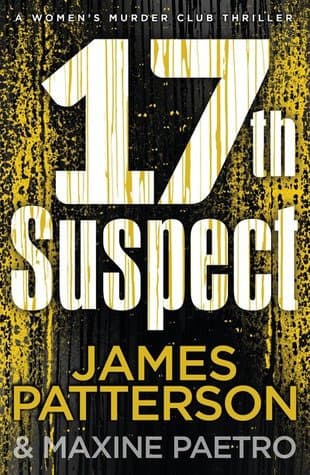
As a relentless killer targets San Francisco, Sergeant Lindsay Boxer races against time and an internal police conspiracy, all while battling a mysterious illness that threatens to unravel her own life.
Sergeant Lindsay Boxer is called to the scene of a shooting at the San Francisco Grand Hyatt. The victim, wealthy businessman Robert Van Dorn, was shot execution-style in his room. The immediate puzzle is the method of entry: no forced entry, no witnesses, and the hotel's security system shows no one suspicious entering or leaving. This suggests a professional killer or someone with inside access. Lindsay, working with her partner Rich Conklin, begins to piece together Van Dorn's life, looking for motives among his business dealings and personal relationships, but the initial leads are cold, setting a perplexing tone for the case.
Days later, another prominent figure, biotech CEO Dr. Janice Kinkaid, is found murdered in her apartment, also shot execution-style. The circumstances are similar to Van Dorn's murder: no forced entry, no witnesses, and a seemingly impossible entry/exit for the killer. The identical method confirms Lindsay's suspicion that they are dealing with a serial killer. The victims, Van Dorn and Kinkaid, appear to have no direct connection, making the killer's motive and selection criteria a mystery for Lindsay and the SFPD. Pressure mounts as the public demands answers and fears grow.
Lindsay receives a call from her trusted informant, an older woman named Martha, who is terrified but insists on a face-to-face meeting. Martha reveals a chilling piece of information: she believes the killer is a police officer, or at least someone with knowledge of police procedures and access. She mentions seeing a police car near one of the crime scenes at an unusual time. This revelation disturbs Lindsay, who initially struggles to accept the possibility of corruption within her own department. The information, however, is too specific to ignore, forcing Lindsay to consider the unthinkable.
Acting on Martha's tip, Lindsay and Rich begin to discreetly investigate their fellow officers. This is a sensitive and dangerous undertaking, as accusing a colleague without concrete evidence could ruin careers and lives. They start by reviewing patrol logs, internal security footage, and personnel files, looking for any anomalies or suspicious behavior. Their investigation is complicated by the need for secrecy, making it difficult to access certain information. Lindsay feels a growing sense of isolation, knowing she can't fully trust anyone within the department until the killer is caught.
A third victim, renowned architect David Sanchez, is murdered in the same fashion. This time, however, a neighbor briefly sees a shadowy figure fleeing the scene. The description is vague, but it confirms the killer is human. Meanwhile, Lindsay experiences concerning medical symptoms: severe headaches, blurred vision, and debilitating fatigue. She dismisses them as stress-related, but her friends in the Women's Murder Club, particularly Claire, urge her to see a doctor. The escalating case and her deteriorating health begin to take a toll on Lindsay.
Lindsay confides in her closest friends: Cindy Thomas, a journalist; Yuki Castellano, an assistant district attorney; and Claire Washburn, a medical examiner. The Women's Murder Club pools their unique expertise to help Lindsay. Cindy uses her journalistic contacts to dig into the victims' backgrounds for any hidden connections; Yuki scrutinizes legal documents and court records for discrepancies; and Claire, despite her concerns about Lindsay's health, analyzes autopsy reports for subtle clues missed by official channels. Their combined efforts provide new angles and insights, helping Lindsay navigate the complex web of deceit.
Through diligent work and cross-referencing Martha's information with patrol logs and internal reports, Lindsay and Rich narrow down their suspect list. They focus on Officer Brady, a seemingly unassuming and well-respected member of the force. Brady's shifts and patrol routes align suspiciously with the times and locations of the murders. Further investigation reveals inconsistencies in his alibis and a sudden, unexplained increase in his personal wealth. The realization that one of their own is a cold-blooded killer sends shockwaves through the small team, but they know they must act carefully to avoid alerting him.
As Lindsay and Rich look deeper into Officer Brady's background, they uncover a tragic history. Brady's family was destroyed years ago due to the negligence or corruption of powerful figures. Each of his victims – Van Dorn, Kinkaid, and Sanchez – were involved in the downfall of his family or benefited from their misfortune. Brady, driven by a sense of injustice and a desire for revenge, meticulously planned his kills, using his police access to bypass security and cover his tracks. His calm demeanor masked a deep rage and a thirst for retribution.
Lindsay's health deteriorates rapidly. She collapses during a crucial moment in the investigation, forcing her to be hospitalized. Diagnosed with a severe brain aneurysm, her life hangs in the balance. This medical crisis not only puts her life at risk but also threatens to derail the entire investigation, as she holds key pieces of information. Her husband, Joe, and her friends are terrified, fearing for her life. The killer, Brady, remains at large, and the clock is ticking, adding immense pressure to the Women's Murder Club to continue the hunt without their leader.
Against medical advice, Lindsay, weakened but determined, leaves the hospital to join the final pursuit of Brady. The Women's Murder Club, working together, manages to corner Brady. A tense standoff ensues, with Brady refusing to surrender. He attempts to escape, leading to a dangerous chase. Lindsay, despite her precarious health, uses her detective skills and courage to outmaneuver him. The confrontation is brutal and personal, as Lindsay battles not only a dangerous killer but also her own physical limitations.
After a fierce struggle, Officer Brady is finally apprehended, thanks to the combined efforts of Lindsay, Rich, and the Women's Murder Club. He is taken into custody, and the city breathes a sigh of relief. The case is closed, but the aftermath for Lindsay is significant. She faces a long and uncertain recovery from her aneurysm, and the psychological toll of investigating a fellow officer, combined with her near-fatal illness, is immense. While justice has been served, the experience leaves a lasting mark on Lindsay, her family, and her friends.
The Protagonist
Lindsay battles a serial killer within her own department while simultaneously fighting a life-threatening illness, forcing her to confront her own mortality and the limits of her dedication.
The Supporting
Rich supports Lindsay through her most challenging case and personal crisis, demonstrating his steadfast loyalty and becoming an even more trusted confidante.
The Supporting
Cindy leverages her journalistic skills to expose the killer's motives and assist the investigation, reinforcing her commitment to truth and justice.
The Supporting
Yuki uses her legal acumen to help navigate the complexities of prosecuting a police officer, highlighting her dedication to upholding the law.
The Supporting
Claire's medical expertise and emotional support are critical to both the investigation and Lindsay's survival, solidifying her role as a steadfast friend.
The Supporting
Joe's unwavering support for Lindsay is tested by her life-threatening illness, showcasing his deep love and commitment.
The Antagonist
Brady is revealed from a seemingly innocuous officer to a ruthless, calculating killer, driven by a personal quest for vengeance.
The Supporting
Martha's initial fear is overcome by her sense of civic duty, leading her to provide the crucial tip that kickstarts the internal investigation.
This theme explores the impact when those sworn to uphold the law become its violators. The revelation that Officer Brady, a member of the SFPD, is the serial killer shatters Lindsay's trust in her institution and colleagues. It forces her to operate in secrecy, questioning everyone around her. The betrayal is deep, as Brady uses his position and knowledge of police procedures to commit crimes, turning the system meant to protect into a tool for his personal vengeance. This theme is particularly strong when Lindsay realizes she cannot fully confide in her own department, relying instead on her trusted circle outside official channels.
“How could one of our own do this? It's like finding a snake in your own bed.”
The novel contrasts the pursuit of lawful justice with the destructive path of personal vengeance. Lindsay Boxer tirelessly works within the legal framework to bring criminals to justice, even when the system is flawed. In contrast, Officer Brady takes the law into his own hands, believing his victims deserved their fate for past wrongs against his family. His actions, while perhaps born from a desire for 'justice' in his eyes, are ultimately acts of murder. The narrative questions whether an individual's perceived righting of wrongs can ever justify such brutal actions, highlighting the moral and ethical lines that separate justice from mere retribution. This is evident in Brady's careful planning, driven by a twisted sense of moral superiority.
“He wasn't just killing them; he was making a statement. A statement he thought was justice.”
Lindsay Boxer's journey is one of personal sacrifice and unwavering resilience in the face of overwhelming odds. She confronts a dangerous killer who is an insider, and she also battles a life-threatening brain aneurysm. Despite her debilitating symptoms and the advice of her doctors and friends, Lindsay pushes herself to the brink, driven by her commitment to the victims and her duty. Her willingness to put her life on the line, both professionally and physically, shows her dedication. Her resilience is not just physical, but also mental, as she maintains her focus and integrity under immense pressure and fear for her own life.
“I can't stop. Not while he's out there. Not while there's a chance to stop him.”
The Women's Murder Club is a symbol of the strength found in female friendship and community. When Lindsay must investigate her own department and then faces a severe health crisis, it is her friends – Cindy, Yuki, and Claire – who step up. They pool their diverse professional skills (journalism, law, medicine) and provide emotional support, becoming her clandestine investigative team and her personal lifeline. This theme highlights how collective effort, trust, and deep personal bonds can overcome obstacles that would be too difficult for an individual, reinforcing the idea that true strength often lies in collaboration and mutual support, especially in times of extreme adversity.
“We're in this together, Lindsay. Always.”
The killer is an internal member of the police force, complicating the investigation.
The revelation that the serial killer is Officer Brady, a member of the SFPD, serves as a crucial plot device. This 'inside man' trope immediately raises the stakes and introduces immense dramatic tension. It forces Lindsay to conduct a highly sensitive, clandestine investigation, creating internal conflict and paranoia within the department. The killer's access to police resources, knowledge of procedures, and ability to blend in make him incredibly difficult to catch, while simultaneously challenging Lindsay's trust in her colleagues and the institution itself. This device subverts the typical detective narrative, where the police are unequivocally the heroes, by making one of their own the antagonist.
Initially unconnected victims mislead the investigation, obscuring the killer's true motive.
The initial victims – a wealthy businessman, a biotech CEO, and an architect – appear to have no direct connection, serving as a red herring. This device forces Lindsay and her team to cast a wide net, looking for conventional motives like business rivalries or personal feuds, which leads them down blind alleys. The apparent randomness of the victims for a significant portion of the investigation delays the discovery of the killer's true, deeply personal motive, which is rooted in a past injustice. This misdirection builds suspense and frustration, making the eventual revelation of Brady's motive more impactful as the seemingly disparate victims are finally linked.
Lindsay Boxer's severe brain aneurysm creates a ticking clock and personal vulnerability.
Lindsay's sudden and severe brain aneurysm serves as a powerful plot device, adding a critical layer of personal stakes and a ticking clock to the narrative. Her deteriorating health not only puts her life in jeopardy but also threatens to derail the entire investigation, as she is central to solving the case. This device heightens the emotional tension, making the pursuit of the killer a race against both external threats and Lindsay's own mortality. It forces her friends to step up and carry the investigation while simultaneously showcasing Lindsay's immense courage and determination to see justice served, even from her sickbed.
A network of female friends with diverse professional skills who aid the police investigation.
The Women's Murder Club – consisting of a journalist (Cindy), an Assistant DA (Yuki), and a medical examiner (Claire) – acts as a crucial plot device for problem-solving and emotional support. Their varied professional backgrounds provide complementary expertise that Lindsay, as a police detective, might not have access to or cannot utilize officially. This allows for unconventional investigative avenues, such as journalistic digging, legal analysis, and forensic insights, often operating outside the bureaucratic constraints of the police department. Beyond their professional contributions, their unwavering friendship provides Lindsay with a safe space for emotional processing and crucial personal support, particularly when she faces internal departmental corruption and her own health crisis.
“There are some things in life you just can't outrun, and the past is definitely one of them.”
— Lindsay ponders the lingering effects of past cases and personal history.
“Every secret has a shelf life. Eventually, it spoils.”
— Yuki thinks about the nature of hidden truths in legal cases.
“Sometimes the most obvious answer is the right one, and sometimes it's just the best disguise.”
— Lindsay considers the complexities of a seemingly straightforward clue.
“Fear can make people do terrible things, but it can also reveal who they truly are.”
— Claire discusses the motivations behind a suspect's actions.
“The city never sleeps, and neither do its dark corners.”
— A general observation about San Francisco's underbelly.
“Justice isn't always about what's fair; it's about what can be proven.”
— Yuki reflects on the practicalities and limitations of the legal system.
“You can't save everyone, no matter how hard you try. Sometimes, all you can do is try to understand why.”
— Lindsay struggles with the outcome of a tragic event.
“The truth is a stubborn thing. It has a way of coming out, eventually.”
— Cindy ponders the inevitability of revelations.
“Even the strongest walls can crumble if the foundation is weak.”
— Lindsay considers the fragility of a seemingly solid alibi.
“There's a fine line between loyalty and complicity.”
— Yuki questions a witness's allegiance to a suspect.
“Sometimes the loudest voices are trying to hide the quietest secrets.”
— Claire observes a suspect's defensive behavior.
“The past isn't just behind us; it's often walking right beside us.”
— Lindsay feels the pervasive influence of past events on current situations.
“In the end, everyone has a story. It's just a matter of who gets to tell it.”
— A general reflection on narratives and control.
“Hope is a dangerous thing when you're dealing with a killer. It can make you blind.”
— Lindsay warns against emotional attachment in a high-stakes investigation.
Ready to see how well you understood this book? Take our interactive quiz with 10 questions.
Biography coming soon.







