“Time is a drug. Too much of it kills you.”
— Spoken by the Duke to Princess Saralinda, explaining his aversion to time and his curse.

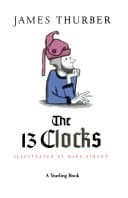
James Thurber (1992)
Genre
Fantasy / Children's / Young Adult
Reading Time
90 min
Key Themes
See below
Sign in to track this book
In a whimsical world where time is frozen, a dashing prince must outwit a wicked Duke with impossible tasks to win the hand of a silent princess, all while thirteen clocks remain stubbornly stopped.
The story opens in the bleak, silent land of Hagga, ruled by the cruel Duke of Coffin Castle. The Duke, a man of wealth and power, has frozen time in his castle, stopping all thirteen clocks at ten minutes to five. He enjoys misery and has outlawed happiness, laughter, and even birdsong. His beautiful niece, Princess Saralinda, lives under his oppressive rule, guarded by a monstrous Gurgle and the Duke's own sinister presence. The Duke has vowed that Saralinda will only marry a prince who can perform an impossible task, ensuring she remains his captive and his only heir, as he fears being succeeded.
One day, a young minstrel named Xingu arrives in Hagga, playing a lute and singing a joyous song, much to the Duke's displeasure. Xingu, however, is Prince Zorn of Zorna, disguised. He quickly befriends the castle's despairing servants, especially the invisible Golux, a small, bumbling but insightful man who acts as the Duke's jester and confidante. The Golux, seeing the Prince's courage and affection for Saralinda, decides to help him. Xingu observes Saralinda from afar, falling deeply in love with her beauty and her quiet strength amidst the castle's gloom.
Prince Zorn, revealing his true identity to the Duke, declares his intention to marry Princess Saralinda. The Duke, pleased by the prospect of another suitor to torment, presents Zorn with a seemingly impossible task: he must find ten thousand jewels in ninety-nine hours and bring them to the castle. Furthermore, these jewels must be gathered from the 'Thitherward,' a dangerous and distant land. The Duke believes this task is a death sentence, as the Thitherward is known for its dangers and the time limit is impossibly short, ensuring Zorn's failure.
The Golux, observing the Duke's malicious joy, secretly approaches Prince Zorn and offers his assistance. He warns Zorn about the Duke's cunning and the true nature of the challenge: the Duke will attempt to kill him upon his return, regardless of success. The Golux also reveals the existence of the Todal, a monstrous creature made of pure gloom and fear that stalks the Thitherward, drawn to the sound of clocks and the scent of human fear. The Todal is the Duke's ultimate weapon, ensuring no one who ventures into its domain returns alive. The Golux's knowledge proves helpful, as he knows the ways of the Thitherward.
Prince Zorn and the Golux set off for the Thitherward. Their journey is dangerous, as they encounter various strange and often menacing creatures and landscapes. The Golux, with his quirky wisdom and unexpected insights, guides Zorn through the treacherous paths. They face challenges that test Zorn's courage and resourcefulness, all while the ninety-nine-hour deadline looms. The Golux constantly reminds Zorn of the Duke's treachery, urging him to remain vigilant and to remember that the Duke's true intention is for him to fail.
As time runs short, Zorn and the Golux are still far from their goal. The Golux, in a moment of inspiration, reveals his plan: they will collect the tears of Princess Saralinda. He explains that Saralinda's tears, born of her deep sorrow and the Duke's cruelty, are the most precious jewels of all. They devise a way to make her weep, not out of further pain, but out of a surge of hope and longing. The Golux's plan is audacious and relies on the emotional power of Saralinda's plight, turning her despair into the means of her liberation.
Prince Zorn returns to Coffin Castle at the last possible moment, with the Golux by his side. They present the Duke with a sack containing the 'jewels' – ten thousand teardrops of Princess Saralinda, each shimmering like a precious gem. The Duke is initially furious, believing Zorn has failed. However, the brilliance of the tears is undeniable, and he is forced to acknowledge that Zorn has technically fulfilled the challenge. The Duke, ever the trickster, is already planning his next move, unwilling to let Saralinda go easily.
Enraged by Zorn's success, the Duke quickly devises a new, seemingly impossible task: Zorn must wind all thirteen stopped clocks in the castle, causing them to strike the hour. This is a task that no one has been able to accomplish since the Duke froze time, and the clocks are enchanted to resist any attempt to wind them by ordinary means. The Duke believes this will be Zorn's undoing, as the clocks are linked to the despair of the castle and the Duke's own dark magic. The Golux, however, has anticipated this and has a counter-plan.
Following the Golux's instructions, Prince Zorn uses a special golden key, imbued with the power of hope and love, to wind the clocks. As each clock begins to tick and chime, the Duke's spell over the castle weakens. The sounds of the clocks ringing out across Hagga, a land long silenced, begin to thaw the frozen gloom. This unexpected turn of events also summons the Todal, which, drawn by the sound of the clocks and the sudden influx of emotion, appears in the castle, a terrifying embodiment of the Duke's own despair.
The Todal, a creature of pure fear and gloom, is drawn to the most fearful and gloomy presence in the castle: the Duke himself. As the Duke panics, realizing his ultimate weapon has turned against him, the Todal pursues him relentlessly. The Duke, who had enjoyed the fear of others, now experiences it firsthand. The creature, a manifestation of his own wicked nature, consumes him, leaving behind only the Duke's cold heart, which shatters into a thousand pieces. With the Duke gone, the spell over Hagga is broken, and the land begins to heal.
With the Duke vanquished, the castle and the land of Hagga slowly come back to life. The thirteen clocks, now fully wound, chime in unison, marking the passage of time once more. Birds begin to sing, flowers bloom, and the gray, silent landscape transforms into one of color and sound. Princess Saralinda, no longer a prisoner of her uncle's gloom, experiences true happiness for the first time. The servants, freed from their oppression, rejoice, and the castle is filled with laughter and light, a stark contrast to its former despair.
Prince Zorn and Princess Saralinda are married in a joyous ceremony, ushering in an era of happiness and prosperity for Hagga. The Golux, having fulfilled his purpose, prepares to depart. He offers one last piece of cryptic advice, suggesting that while happy endings are real, life continues to present new riddles and adventures. He then vanishes, as mysteriously as he appeared, leaving the newly wedded couple to rule their revitalized kingdom. Their love and the restoration of joy signify the complete triumph over the Duke's tyranny.
The Antagonist
The Duke's arc is one of escalating villainy, culminating in his ironic and deserved demise by his own creation, the Todal.
The Protagonist
Saralinda transforms from a passive, sorrowful captive to a liberated princess, finding happiness and love.
The Protagonist
Zorn proves his worth through trials, transforming from a suitor into a true hero who brings light back to Hagga.
The Supporting
The Golux acts as a catalyst for others' change, remaining true to his enigmatic nature while facilitating the happy ending.
The Antagonist
The Todal serves as a destructive force, ultimately turning on and consuming its creator, the Duke.
The Supporting
The Gurgle remains a static figure, a symbol of Saralinda's captivity until the Duke's demise frees it from its duty.
This theme is central to the story, showing how love and hope can overcome even the darkest despair and most formidable evil. Prince Zorn's love for Saralinda drives his impossible quest, and Saralinda's enduring hope, despite her captivity, provides the 'jewels' for his task. The Golux, despite his cynicism, is ultimately driven by a desire for good to prevail. The thawing of Hagga and the restoration of joy after the Duke's defeat directly illustrate the transformative power of these positive emotions.
“For love is a thing of the heart, and not of the head, and it is the heart that will find its way.”
The Duke's stopped clocks symbolize his attempt to halt time, freeze life, and impose an unnatural, stagnant eternity of gloom. He fears change and the future, hence his desire to prevent Saralinda from marrying and having heirs. The winding of the thirteen clocks by Prince Zorn represents the restoration of natural order, the flow of time, and the inevitability of change. Time is not just a measurement but an active force, and its liberation brings life and joy back to Hagga, proving that true eternity lies in the continuous cycle of life, not in frozen stasis.
“Time is a trick, a game, a riddle. But the clocks are not. The clocks are real.”
The entire story is an allegory for the eternal struggle between good (represented by Prince Zorn, Saralinda, and the Golux) and evil (the Duke). The Duke embodies gloom, cynicism, and fear, actively suppressing joy and beauty. His castle is a monument to his dark nature. Conversely, Zorn brings music and light, Saralinda embodies innocent sorrow, and the Golux, despite his eccentricities, works for justice. The ultimate defeat of the Duke and the restoration of happiness to Hagga signify the triumph of joy, love, and life over their oppressive counterparts.
“There are some people who can't stand to see a clock run, or a flower bloom, or a bird sing.”
Brute force or conventional heroism alone would not have defeated the Duke. It is the Golux's unconventional wisdom, his mastery of riddles, and his ability to see beyond the obvious that truly guides Prince Zorn to success. The Golux devises a plan that turns Saralinda's sorrow into the 'jewels' and understands the true nature of the Duke's final challenge. This theme highlights that intelligence, cunning, and creative problem-solving are often more powerful than direct confrontation, especially when facing a deceitful and powerful adversary like the Duke.
“A man's wit is his best weapon, when he has no other.”
Symbolize the Duke's frozen tyranny and the stagnation of time in Hagga.
The thirteen stopped clocks in Coffin Castle are a central symbolic and narrative device. They represent the Duke's power to halt time and suppress life and joy in his domain. Their frozen state at 'ten minutes to five' signifies an unnatural stasis. The challenge to wind them becomes the ultimate test of Prince Zorn, and their eventual chiming marks the breaking of the Duke's spell, the restoration of natural order, and the return of life and happiness to Hagga. They literally tick the story towards its climax and resolution.
Provides humorous misdirection and hidden truths, guiding the hero through complex challenges.
The Golux's unique manner of speech, characterized by long, rambling sentences, apparent contradictions, and profound insights disguised as nonsense, serves as a crucial plot device. His riddles and seemingly illogical advice often contain the very truths or solutions that Prince Zorn needs to overcome the Duke's traps. This device emphasizes the theme of wit over conventional wisdom, forcing both the characters and the reader to look beyond the surface to find meaning and direction in a world of deceit.
Transforms sorrow into a valuable resource, fulfilling an impossible task.
Princess Saralinda's tears are a brilliant plot device that turns her greatest sorrow into the means of her liberation. The Duke's challenge of 'ten thousand jewels' is literally fulfilled by her tears, which shimmer like gems due to their purity and the depth of her suffering. This device highlights the theme that even in despair, there can be something precious and redemptive. It also underscores the Duke's cruelty, as her tears are a direct result of his oppression, making his eventual defeat by them all the more ironic and fitting.
Personifies the Duke's inherent evil and serves as an ironic instrument of his downfall.
The Todal functions as an externalized manifestation of the Duke's inner darkness and fear. It is a creature born of gloom and designed to spread terror, perfectly reflecting the Duke's own nature. As a plot device, its role is twofold: it represents a formidable threat to Prince Zorn in the Thitherward, and more significantly, it becomes the ironic instrument of the Duke's demise. By turning on its creator, the Todal ensures that the Duke is consumed by his own evil, a poetic justice that resolves the central conflict.
“Time is a drug. Too much of it kills you.”
— Spoken by the Duke to Princess Saralinda, explaining his aversion to time and his curse.
“Ten years it took to make a clock that ran. Then he smashed it.”
— Narrator describing the Duke's obsession and hatred for time, leading to the destruction of the clocks.
“The wind was a torrent of darkness among the trees. The moon was a ghostly galleon tossed upon cloudy seas.”
— Poetic description of the night and setting, setting a mysterious atmosphere.
“If you want to get along, you have to go along.”
— The Duke's pragmatic, if cynical, advice to Saralinda about accepting her fate.
“He was a Duke who was afraid of the dark, and also of the light.”
— Describing the Duke's pervasive fear and his general discontent.
“A good laugh is sunshine in the house.”
— The Hagatha's belief in the power of joy and laughter.
“Nothing is impossible, if you only believe.”
— The Hagatha's encouraging words, embodying a theme of hope.
“He was a man who had no heart, and so he had no pity.”
— Description of the Duke's cruel nature and lack of empathy.
“It is not so easy to tell a lie as it is to tell the truth, for the truth is always there, but a lie must be invented.”
— The wisdom of the Hagatha about the nature of truth and falsehood.
“The clock had to be stopped, of course, because the Duke hated clocks.”
— Explaining the Duke's curse on the clocks and his domain.
“Love is a thing that can be found in the most unlikely places.”
— A reflection on the unexpected nature of love, particularly in a desolate land.
“He wore a cloak of gold and silver, and his boots were of purple leather.”
— Description of Prince Zorn's (Xingu's) disguise, highlighting his regal appearance.
“The tears of a princess are a terrible thing, for they can melt the hardest heart.”
— A poetic observation on the power of Saralinda's sorrow.
“Only a fool would try to mend a broken clock without knowing what time it is.”
— Hagatha's practical wisdom, applicable to many situations beyond clocks.
“He was not afraid to die, for he had already lived a thousand lives.”
— A hyperbolic description of the Hagatha's cat, implying its ancient wisdom and resilience.
Ready to see how well you understood this book? Take our interactive quiz with 10 questions.
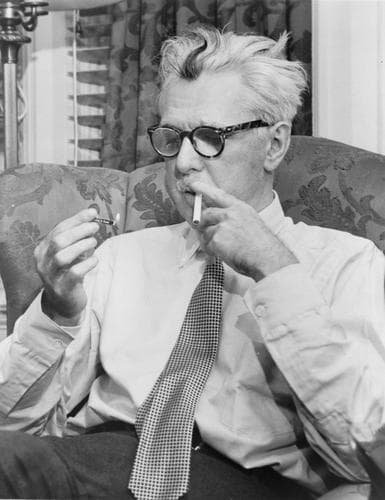
James Grover Thurber was an American cartoonist, writer, humorist, journalist and playwright. He was best known for his cartoons and short stories, published mainly in The New Yorker and collected in his numerous books.







