“He knew it, he just knew it: the world was full of people who were not thinking of him.”
— Bob Dollar's early realization about his place in the world.

Annie Proulx (2002)
Genre
Literary Fiction
Reading Time
540 min
Key Themes
See below
Sign in to track this book
In the desolate Texas Panhandle, a naive young man's quest to scout locations for an industrial hog farm forces him to confront the fiercely individualistic locals and question his own understanding of ambition and belonging.
Bob Dollar, a young man from Denver with a vague past, arrives in the Texas Panhandle, specifically the area around the fictional town of Woolybucket. He has been hired by the large agricultural corporation, Global Pork Rind, as a 'hog site scout' – his job is to identify suitable, isolated land parcels for the construction of immense industrial hog farms. Bob is initially optimistic, viewing this as a legitimate career opportunity. He drives his beat-up car through the desolate, wind-swept landscape, encountering the vast, empty plains and the occasional, often eccentric, local resident who eyes him with suspicion. His first task is to establish a base and begin his secretive reconnaissance.
Bob secures a room in a boarding house run by the formidable and opinionated LaVon Fronk, a central figure in Woolybucket. LaVon quickly becomes a source of local gossip, history, and a subtle monitor of Bob's activities. Through LaVon, Bob begins to meet other inhabitants: the taciturn rancher Ace Krider, the philosophical mechanic Fred Raab, and various other colorful characters who populate the small, tight-knit community. Bob struggles to keep his true purpose under wraps, inventing a cover story about being a 'range management specialist.' He quickly learns that newcomers, especially those asking too many questions, are met with deep-seated skepticism and a strong sense of territoriality by the locals.
Bob hears whispers and legends about the 'Ace in the Hole' ranch, a vast and historically significant property owned by Ace Krider's family. This ranch is not just land; it is a symbol of the Panhandle's past, its independence, and the rugged spirit of its inhabitants. The phrase 'Ace in the Hole' also refers to a specific, legendary maneuver or strategy used by old-time ranchers to outwit competitors or overcome adversity. Bob, initially focused on his corporate mission, begins to understand that this ranch, and the ethos it represents, is deeply ingrained in the local psyche. He realizes that any attempt to acquire or disrupt such a place would be met with fierce resistance.
Bob's job proves more difficult than anticipated. The land he's looking for – remote, cheap, with good water access, and large enough for a hog farm – is hard to come by without attracting undue attention. He spends his days driving dusty roads, examining maps, and making discreet inquiries. However, his presence and his unusual questions do not go unnoticed. The locals, particularly Ace Krider and Fred Raab, observe him closely. Rumors begin to circulate about his true intentions, fueled by the community's ingrained distrust of outsiders and large corporations. Bob feels increasingly isolated and under scrutiny, making his task of finding suitable sites nearly impossible.
Despite his corporate mission, Bob starts to immerse himself, albeit reluctantly, in the local culture. He attends community events, listens to the stories of the old-timers, and observes the social dynamics. He learns about the region's harsh history, the struggles of ranching, and the deep-seated pride of its people. Fred Raab, in particular, becomes a sort of reluctant mentor, sharing local lore, historical anecdotes, and philosophical musings. Bob begins to appreciate the resilience and resourcefulness of the Panhandle residents, even as he knows his job threatens their way of life. This exposure starts to chip away at his corporate loyalty.
Bob attends a cowboy poetry gathering, an important cultural event in the Panhandle. Here, he witnesses the power of storytelling and the deep connection the locals have to their land and heritage through verse. The poems often recount tales of hardship, humor, and the values of the cowboy life, implicitly contrasting it with modern industry. This experience, along with conversations with characters like Fred Raab and LaVon Fronk, deepens Bob's understanding of the region's past. He learns about the legendary figures, the land grabs, the droughts, and the continuous fight for survival that has shaped the Panhandle and its people.
As Bob learns more about the lives and histories of the Woolybucket community, his initial corporate zeal wanes. He sees the beauty and harshness of the land, the integrity of its people, and the impact a hog farm would have on their environment and way of life. He begins to question the ethics of Global Pork Rind's business model and his role in it. The financial incentives from his company start to feel hollow compared to the genuine connections he's forming, however tentative, with the locals. This internal conflict creates moral distress for Bob, making his work increasingly difficult and his conscience troubled.
Despite Bob's efforts at secrecy, the truth about his employment with Global Pork Rind eventually leaks out, or is pieced together by the astute locals. The community reacts with anger, fear, and determination. They understand the environmental devastation and social disruption that industrial hog farms bring. Ace Krider, Fred Raab, and LaVon Fronk become vocal proponents of resistance. The threat of Global Pork Rind galvanizes the community, uniting them against the common enemy. Bob finds himself in a precarious position, caught between his employer and the people he has come to know.
Through his interactions, particularly with Ace Krider and Fred Raab, Bob finally understands the full significance of the 'Ace in the Hole' strategy. It is not just about a specific ranch; it is a philosophy of resourcefulness, resilience, and knowing when and how to play one's hidden advantage. He learns that the old-timers developed intricate, often unconventional, methods to protect their land and way of life from external threats, be they cattle barons or corporations. This understanding provides Bob with a new perspective on the community's quiet strength and their potential for resistance, suggesting they have their own hidden 'ace' to play.
Faced with the stark choice between his corporate job and the integrity of the Woolybucket community, Bob makes a decision. He realizes he cannot continue to work for Global Pork Rind, knowing the harm it would inflict. He informs his superiors of his inability to find suitable sites, effectively resigning. While his departure is not a grand heroic stand, it is a quiet act of defiance and a sign of his changed loyalties. He leaves Woolybucket, no longer the naive scout, but a man affected by his experiences and with a newfound understanding of integrity and home. His future is uncertain, but he has chosen a path away from corporate exploitation.
Following Bob's departure and the heightened awareness of Global Pork Rind's intentions, the community of Woolybucket mobilizes. While the specific outcome of their fight against the corporation is left somewhat ambiguous, the narrative implies that their collective resilience and the 'Ace in the Hole' spirit will prevail. The town, with its idiosyncratic characters and deep-rooted traditions, continues to exist as a bastion against the homogenizing forces of industrial agriculture. The relationships Bob formed, however briefly, with characters like LaVon, Fred, and Ace, leave a lasting impression, suggesting that even a small, seemingly insignificant community can stand its ground.
The Protagonist
Bob transforms from a naive corporate scout into a man with a conscience, ultimately choosing integrity over corporate loyalty.
The Supporting
LaVon remains a steadfast guardian of Woolybucket's integrity, subtly influencing Bob's understanding of the community.
The Supporting
Fred consistently acts as a fount of wisdom, reinforcing the deep value of local heritage against external threats.
The Supporting
Ace remains a steadfast symbol of resistance against corporate encroachment, representing the unyielding spirit of the land.
The Antagonist
Global Pork Rind remains a constant, looming threat, symbolizing the destructive forces of unchecked capitalism.
The Supporting
The community collectively mobilizes to protect its heritage and land, solidifying its identity in the face of external threat.
The Mentioned
Old Man Poteet serves as a static, legendary figure whose past actions and philosophy inform the present narrative.
This theme is central to the novel, appearing as the conflict between Global Pork Rind's industrial agriculture and the traditional ranching/small-town life of Woolybucket. Bob Dollar is caught directly in this clash. The corporation represents efficiency, profit, and a disregard for local ecosystems and culture, while the community embodies resilience, deep connection to the land, and a rich oral history. The novel highlights the struggle to preserve unique regional identities against homogenizing corporate forces, showing how modern 'progress' often comes at the cost of heritage and environment, as seen when Bob tries to scout land for the invasive hog farms.
“That old ace in the hole, it wasn't just a place. It was a way of thinkin'.”
Bob Dollar, initially rootless and searching for a place to belong, questions his own definitions of home and loyalty. He arrives seeking a career to establish himself, a form of belonging to the corporate world. However, his immersion in Woolybucket, a community with a strong, almost tribal sense of home, challenges his preconceptions. He witnesses the deep-seated connection the locals have to their land, their history, and each other. This contrast forces Bob to re-evaluate what truly constitutes 'home' – is it a job, a place, or a community one chooses to protect? His eventual decision to leave Global Pork Rind signifies his shift in understanding.
“A man without a place, he ain't got no anchor.”
The novel explores themes of environmentalism and responsible land stewardship versus exploitation. The industrial hog farms proposed by Global Pork Rind represent a destructive force that would pollute the land and water, irrevocably altering the delicate ecosystem of the Panhandle. In contrast, the ranchers and locals, despite their own struggles, exhibit a deep, ancestral respect for the land. They understand its fragility and its power, viewing themselves as stewards rather than owners. This theme is evident in the community's collective resistance to the hog farms and their understanding of the long-term consequences of such developments.
“You mess with this land, son, it'll mess with you back. And it's got a long memory.”
Storytelling is a vital element of the Panhandle culture depicted in the novel. Characters like Fred Raab and LaVon Fronk constantly recount tales of the past, local legends, and personal anecdotes. These stories serve not only to entertain but also to preserve history, transmit values, and reinforce the community's identity. The 'Ace in the Hole' legend itself is a powerful oral tradition that guides the characters. Through these narratives, Bob learns about the region's resilience, its struggles, and the strategies its people have employed to survive and thrive. This oral tradition acts as a counter-narrative to the corporate, profit-driven logic.
“The past ain't never gone. It just gets told different ways.”
Bob Dollar's journey is one of moral awakening and choosing integrity. Initially, he is driven by a desire for a 'real job' and corporate success, seemingly blind to the ethical implications of his work. As he becomes more embedded in the Woolybucket community and understands the devastating impact of industrial hog farms, his conscience is pricked. He is forced to confront the conflict between his personal gain and the well-being of others. His ultimate decision to abandon his corporate mission, despite the uncertainty it brings, is a powerful statement about the importance of personal integrity and making choices aligned with one's values, even at a cost.
“Some things, a man just can't do, no matter what they pay him.”
A central metaphor representing hidden strength, resilience, and local wisdom.
The 'Ace in the Hole' functions both as a literal place (Ace Krider's ranch) and a powerful, multi-layered metaphor. It symbolizes the hidden advantages, resourcefulness, and deep-seated resilience of the Panhandle community. It refers to the historical strategies used by locals to outwit powerful external forces, implying that the community possesses an inherent strength and wisdom that outsiders underestimate. For Bob, understanding this metaphor is key to comprehending the region's spirit and his own complicity in a potentially destructive plan. It's a symbol of defiance and the enduring power of local knowledge.
A character from outside the community who provides an objective lens and undergoes personal transformation.
Bob Dollar serves as the classic outsider protagonist. His initial unfamiliarity with the Panhandle allows the reader to experience the region and its unique culture through fresh eyes. As an outsider, he can observe the community's eccentricities and strengths without inherent bias, making his eventual transformation more impactful. His role as a corporate scout places him directly in conflict with the community, forcing him to confront ethical dilemmas. His journey from detachment to empathy allows the narrative to explore themes of belonging, environmentalism, and the clash of cultures from a personal perspective.
The use of specific language, customs, and eccentric characters to define a strong sense of place.
Proulx masterfully employs local color and regional dialect to immerse the reader in the unique world of the Texas Panhandle. The distinct speech patterns, idioms, and colorful expressions of characters like LaVon Fronk and Fred Raab not only provide authenticity but also reveal their personalities and deep connection to the land. The descriptions of the harsh landscape, the idiosyncratic customs (like cowboy poetry gatherings), and the detailed portrayals of minor characters all contribute to a vivid sense of place. This device highlights the cultural richness that is threatened by the impersonal forces of corporate expansion.
The frequent recounting of past events and personal stories to establish context and theme.
The narrative is rich with oral histories and anecdotes, often shared by the older characters like Fred Raab and LaVon Fronk. These stories about legendary figures (like Old Man Poteet), past struggles, and historical events serve several functions. They provide crucial background about the Panhandle's resilience, its harsh past, and the origins of its unique culture. They also subtly foreshadow the community's potential resistance to Global Pork Rind, demonstrating that they have faced and overcome threats before. This device emphasizes the importance of tradition and collective memory in shaping identity and informing present actions.
“He knew it, he just knew it: the world was full of people who were not thinking of him.”
— Bob Dollar's early realization about his place in the world.
“The wind was a raw, red thing, scouring the landscape of anything that wasn't rooted deep.”
— Describing the harsh Texas Panhandle weather.
“There was a loneliness so profound it made the silence sing.”
— Reflecting on the vast, empty spaces of the Panhandle.
“History was not a thing of dates and kings, but of smells and dirt and the slow grind of the seasons.”
— Bob's evolving understanding of the past in rural Texas.
“Every man carried his own particular brand of foolishness, like a birthmark.”
— A general observation on human character.
“The past was not dead, it was not even past; it was a living, breathing thing that shaped the present moment.”
— Contemplating the enduring legacy of the past on the community.
“You can't eat a landscape, but it can eat you.”
— A stark reminder of the unforgiving nature of the land.
“He had come to understand that the truth was rarely a single, shining thing, but a collection of shadows and half-lights.”
— Bob's growing maturity and understanding of complex situations.
“The world was full of hard-won knowledge and easily lost dreams.”
— A reflection on the challenges and disappointments of life.
“There was a certain dignity in enduring, even when the enduring seemed to be for nothing.”
— Observing the resilience of the local people in the face of hardship.
“The future was a thing you built with your hands, not something that simply arrived.”
— A practical philosophy of life and work.
“He felt like a man who had stumbled into a story already half-told, and was trying to catch up.”
— Bob's feeling as an outsider in the established community.
“The land kept its secrets, but it also told its stories to those who knew how to listen.”
— Describing the subtle ways the environment communicates its history.
“Money was a kind of weather, changing the landscape of lives with its coming and going.”
— A metaphor for the powerful, unpredictable influence of money.
Ready to see how well you understood this book? Take our interactive quiz with 10 questions.
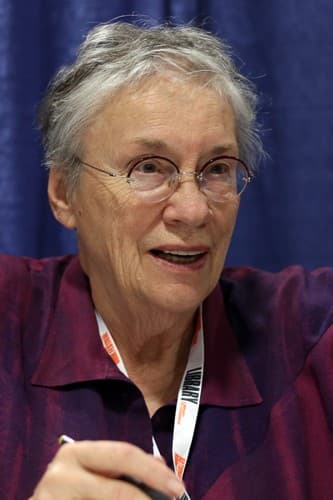
Edna Ann Proulx is an American novelist, short story writer, and journalist. She has written most frequently as Annie Proulx but has also used the names E. Annie Proulx and E.A. Proulx.







