“What you see and hear depends a good deal on where you are standing; it also depends on what sort of person you are.”
— Mark Studdock's initial observations about Bracton College.

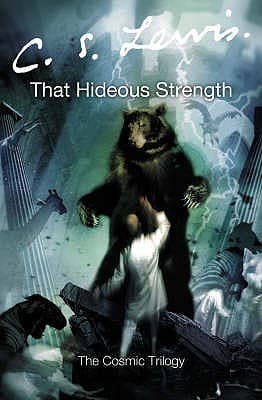
C.S. Lewis (1778)
Genre
Fantasy / Spirituality / Science Fiction
Reading Time
12-15 hours
Key Themes
See below
Sign in to track this book
A naive sociologist joins a sinister organization aiming to control all humanity. His wife's prophetic dreams and an ancient, reawakened magic become Earth's last hope against a disembodied scientific horror and the encroaching powers of Hell.
Mark Studdock, a young sociologist, wants to join the National Institute of Co-ordinated Experiments (N.I.C.E.), an ambitious scientific organization that promises prestige and influence. He sees it as his path to intellectual recognition, despite his wife Jane's concerns. Jane, a postgraduate student, is increasingly bothered by vivid, recurring dreams. These dreams show a decapitated head, ancient figures, and a feeling of coming disaster. She feels alone and misunderstood by Mark, who dismisses her dreams as indigestion or neurosis. Their new marriage at the modest university of Bracton is already stressed by their different ambitions and Mark's growing interest in N.I.C.E. The novel begins with N.I.C.E. trying to buy Bragdon Wood, a piece of university land, which causes initial conflict among the faculty.
Bothered by her dreams and feeling more separated from Mark, Jane Studdock seeks help. Her friend Camilla Denniston sends her to a community at St Anne's-on-the-Hill, where she meets Mrs. Dimble and later Dr. Ransom. Dr. Ransom, a former Cambridge academic and the main character of the previous two Space Trilogy novels, is the Pendragon, the rightful heir to Arthurian kingship, and has been to other planets. He recognizes Jane's dreams are prophetic and explains that she is a 'Seer' chosen by the benevolent celestial powers (the 'Oyarsa') to witness important events. He offers her protection and guidance, though Jane is at first doubtful and overwhelmed by the claims, especially the idea of ancient, pre-Christian powers working.
Mark Studdock, eager to advance his career, slowly becomes more involved with N.I.C.E. He is first assigned to write propaganda and public relations material, but his ambition and willingness to conform make him a good candidate for further training. He meets various high-ranking members, including the mysterious Frost, the chilling Wither, and the sadistic Fairy Hardcastle. Mark is manipulated, isolated, and his moral compass slowly wears down. He is encouraged to betray former colleagues and to adopt a new, detached, and 'objective' way of thinking, without traditional ethics. His initial excitement turns into a growing unease and confusion as he sees N.I.C.E.'s true, totalitarian aims.
Mark's involvement with N.I.C.E. becomes horrifying when he sees the 'Head' – the literally decapitated, yet living, head of the famous scientist Alcasan. This grotesque exhibit is kept alive through a complex system of machinery and regular blood transfusions, acting as a communication channel for the 'Macrobes' or 'Dark Eldils' – demonic, non-human intelligences that are the true controllers behind N.I.C.E. This discovery confirms the reality of Jane's dreams and shows N.I.C.E.'s ultimate goal: not just social control, but the removal of humanity's spiritual and natural essence, making way for a post-human, purely mechanical existence dictated by these infernal powers. Mark is appalled but too deeply involved to escape easily.
At St Anne's, Jane slowly accepts her prophetic gift and the cosmic struggle happening. Dr. Ransom, with help from his companions like the Dimbles and MacPhee, begins to train her, helping her interpret her dreams and understand her role. She learns about the 'Oyarsa' (angelic beings) and the 'Macrobes' (demonic forces) battling for Earth's fate. A key part of their plan involves awakening Merlin, the ancient wizard from Arthurian legend, believed to be sleeping under Bragdon Wood. Jane's dreams provide clues to Merlin's location and the urgency of finding him, as he is prophesied to be important in confronting N.I.C.E. and its dark masters.
Guided by Jane's dreams and historical research, the St Anne's community finds and awakens Merlin from his centuries-long sleep under Bragdon Wood. Merlin, at first confused by the modern world, quickly understands the spiritual battle. He pledges his loyalty to Dr. Ransom, recognizing him as the Pendragon, and prepares to use his ancient magic against N.I.C.E.'s technological and demonic forces. His presence means ancient, supernatural power directly enters the modern world, changing the balance of the conflict. N.I.C.E., unaware of Merlin's awakening, continues its plans, not knowing the strong opposition now against them.
As Mark becomes more disappointed with N.I.C.E., he tries to escape. He is increasingly isolated, questioned, and psychologically tortured by Frost and Hardcastle, who see him as a potential traitor. His attempts to flee fail, and he finds himself a prisoner within N.I.C.E.'s headquarters at Belbury. He is moved between various cells and questioned about his loyalty and his knowledge of the outside world, especially regarding Jane. Mark's initial ambition has disappeared, replaced by fear and a desperate desire for freedom, but his captors are determined to break his will and get information.
At St Anne's, Dr. Ransom prepares for the final confrontation by calling upon the 'Oyarsa' – the angelic intelligences associated with the planets. In a ceremony, the Oyarsa of Mars, Venus, Jupiter, Saturn, and Mercury descend, each bringing their unique celestial influence and power. Ransom is physically changed and given immense authority and spiritual strength. This 'Feast of the Planets' is an important moment, showing direct divine intervention into the human realm. The atmosphere at St Anne's becomes full of supernatural energy, as the forces of good gather their strength for the ultimate battle against the infernal powers controlling N.I.C.E. and their human followers.
Empowered by the Oyarsa and guided by Ransom, Merlin enters N.I.C.E. headquarters at Belbury. Using his ancient magical abilities, he creates confusion among the N.I.C.E. staff. He manipulates their minds, causing them to turn on each other, see illusions, and act on their darkest impulses. Animals are released, machinery breaks down, and Belbury's carefully built order falls into chaos. Merlin's actions are precise and devastating, using the inherent evil and selfishness of N.I.C.E. members. This internal collapse is a key part of the strategy to dismantle the organization from within, preparing for the final direct confrontation.
As Merlin's chaos spreads through Belbury, Dr. Ransom, now showing divine authority, appears before the N.I.C.E. leaders. He announces judgment upon them, speaking with the power of the Oyarsa. The 'Macrobes' controlling N.I.C.E. are directly confronted. The climax shows a re-enactment of the Tower of Babel, where N.I.C.E. members suddenly speak in different, incomprehensible tongues, leading to confusion, violence, and self-destruction. The building itself begins to crumble, and the sinister figures of N.I.C.E. meet gruesome, fitting ends – Frost, Wither, Hardcastle, and others are consumed by the very forces they tried to use. The 'Head' of Alcasan is finally destroyed, cutting the last direct link to the Macrobes.
Amidst Belbury's chaos and destruction, Mark Studdock, who had been imprisoned, escapes. He sees the collapse of N.I.C.E. and the divine judgment firsthand, which shatters his previous worldview and superficial ambitions. Members of the St Anne's community find him. He was spared due to his inherent, though hidden, decency and his lack of full involvement in N.I.C.E.'s ultimate evil. He is brought to St Anne's, where he is finally reunited with Jane. Their reunion is not immediately joyful but marked by relief, understanding, and the beginning of a difficult, yet hopeful, reconciliation as they both process the extraordinary events they have endured.
With N.I.C.E. destroyed and the Macrobes repelled, the immediate threat to humanity is gone. The community at St Anne's begins healing and rebuilding. Dr. Ransom, having fulfilled his role as Pendragon in this cosmic battle, prepares for his departure to Venus, his body now radiating light and his earthly mission complete. Merlin, having finished his task, returns to a state of peace, his role as an ancient protector reaffirmed. Mark and Jane, deeply changed by their experiences, commit to rebuilding their marriage on a foundation of truth and mutual understanding. The novel ends with a sense of restored order, though the world remains forever altered by the brief, terrifying glimpse into the battle between heaven and hell.
The Protagonist
Mark transforms from a self-absorbed academic seeking approval to a man humbled by terror, forced to confront the reality of evil and rediscover his moral compass.
The Protagonist
Jane evolves from a confused and isolated dreamer to a confident 'Seer' who embraces her spiritual gifts and finds her true purpose.
The Supporting (central figure)
Ransom fulfills his destiny as the Pendragon, leading the forces of good in a decisive victory and preparing for his final journey.
The Supporting
Merlin is reawakened to fulfill a final, crucial role in defending Earth, demonstrating the timeless struggle between good and evil.
The Antagonist
Frost remains steadfast in his commitment to the N.I.C.E.'s dehumanizing philosophy until his violent, self-inflicted end.
The Antagonist
Wither remains a figure of profound ambiguity, dissolving into nothingness during the final judgment, symbolizing the evaporation of meaning.
The Antagonist
Hardcastle remains a figure of unrepentant cruelty until her violent death during the judgment of Belbury.
The Supporting Antagonist
Feverstone rises within the N.I.C.E. through ruthless opportunism, only to be consumed by its ultimate downfall.
The Mentioned (Plot Device)
The Head of Alcasan is maintained as a tool of the N.I.C.E. until its final destruction during the judgment of Belbury.
The Supporting
Mrs. Dimble provides steadfast support and comfort to Jane and the St Anne's community throughout the crisis.
The novel critiques the dangerous idea of scientism, where scientific method and reason are placed above all other forms of knowledge, morality, and spirituality. N.I.C.E. shows this theme, trying to control and 'improve' humanity through purely scientific means, ignoring ethics and the natural order. Professor Frost's philosophy of 'Objectivity' and the grotesque experiment of keeping Alcasan's head alive show the dehumanizing results of science without wisdom and moral guidance. This theme warns against the arrogance of modern intellectualism that tries to re-engineer existence without acknowledging spiritual or natural limits.
“What they want to do is to eliminate the human race: or if not to eliminate it, at least to make it what they call 'conditioned'.”
At its core, 'That Hideous Strength' is a story about a cosmic battle between divine, benevolent forces (the Oyarsa/Eldils) and demonic, malevolent entities (the Macrobes/Dark Eldils). N.I.C.E. is the earthly tool of these dark powers, while St Anne's, led by Ransom, represents the forces aligned with heaven. This theme makes the conflict more than just a political or scientific struggle, framing it as a spiritual war for humanity's soul and the planet. Merlin's awakening and the Feast of the Planets show the direct involvement of supernatural powers in human affairs.
“The Enemy would not have needed to be a spirit, if it had not been for the spirits who helped us.”
The novel explores true, divinely given authority versus false, tyrannical power. Dr. Ransom, as the Pendragon, represents legitimate kingship, based on humility, service, and connection to benevolent celestial powers. His authority is spiritual and moral, not forced. In contrast, N.I.C.E. shows a corrupted authority, trying to impose control through manipulation, fear, and suppressing individual liberty. The contrast shows that true leadership is about stewardship and following natural and divine law, while false power leads to destruction and dehumanization.
“The true king is the man who has the deepest reverence for the law, not the man who is above it.”
Lewis emphasizes the importance of the natural world, traditional wisdom, and creation's inherent order. Bragdon Wood, with its ancient trees and sleeping Merlin, symbolizes this natural, spiritual heritage. N.I.C.E., conversely, tries to dismantle and re-engineer nature, from its plans for Bragdon Wood to its goal to control weather and human biology. This theme celebrates the wisdom in the past, in folklore, and in the natural environment, contrasting it with the destructive impulse of modern 'progress' that disrespects inherent forms and patterns.
“The N.I.C.E. wants to cut down Bragdon Wood. They want to cut down all woods. They want to make the whole world a machine.”
The strained relationship between Mark and Jane Studdock is an important subplot, showing the larger battle between conflicting values. Their initial marital problems come from Mark's ambition and Jane's prophetic gifts, which he dismisses. Their journey towards reconciliation reflects the larger theme of bringing different parts (reason and intuition, masculine and feminine, modern and ancient) into harmony. Their eventual understanding and commitment to each other, formed through shared trauma and spiritual awakening, suggest redemption and the restoration of natural human relationships even after deep separation.
“The thing that mattered was not to be a woman or a man, but to be a person, with a soul.”
Jane's dreams reveal the N.I.C.E.'s sinister plot and guide the forces of good.
Jane Studdock's recurring, vivid dreams serve as a crucial plot device. They are not merely symbolic but directly prophetic, revealing specific details about Alcasan's head, the sleeping Merlin, and the malevolent forces at play. These dreams provide the initial impetus for Jane to seek help at St Anne's and continue to guide Dr. Ransom and his allies in their strategy. They establish the supernatural element early on and underscore Jane's unique role as a 'Seer,' making her an indispensable, if initially unwilling, participant in the cosmic battle. They also highlight the validity of intuitive and spiritual knowledge against Mark's purely rationalist perspective.
The re-contextualization of Arthurian myth provides a framework for the cosmic battle.
The integration of Arthurian legend, particularly the figure of Merlin and the concept of the Pendragon (embodied by Dr. Ransom), serves as a powerful plot device. It grounds the fantastical elements in a recognizable cultural mythology, suggesting that the ancient legends are not mere stories but echoes of enduring spiritual truths. Merlin's awakening brings ancient magic into the modern conflict, while Ransom's role as Pendragon legitimizes his authority and frames the battle against the N.I.C.E. as a defense of traditional, sacred order against destructive modernism. This device connects the present struggle to a timeless, heroic past.
A grotesque symbol of the N.I.C.E.'s dehumanizing science and link to demonic forces.
The preserved, living head of Alcasan is a central and deeply disturbing plot device. It functions as tangible proof of the N.I.C.E.'s horrific experiments and their complete disregard for human life and dignity. More importantly, it acts as a direct communication channel for the 'Macrobes' or 'Dark Eldils,' the demonic intelligences controlling the N.I.C.E. This device makes the abstract concept of evil concrete and terrifying, validating Jane's dreams and shocking Mark into realizing the true nature of the organization. Its existence underscores the theme of scientism's ultimate corruption.
A linguistic curse that causes the N.I.C.E.'s self-destruction during the climax.
During the climax at Belbury, Merlin's magic, empowered by the Oyarsa, inflicts a 'Tower of Babel' curse upon the N.I.C.E. members. They suddenly begin speaking in various incomprehensible languages, leading to utter confusion, miscommunication, and violent internal strife. This device is a powerful biblical allusion, symbolizing divine judgment against human hubris and the attempt to usurp God's authority. It directly causes the N.I.C.E.'s downfall, demonstrating that their attempts to 'coordinate' and control humanity ultimately lead to chaos and self-destruction, particularly when divorced from a common moral or spiritual language.
A mystical ceremony where angelic beings empower Dr. Ransom and St Anne's.
The 'Feast of the Planets' is a pivotal ritual at St Anne's where the Oyarsa (angelic intelligences) associated with the planets descend and imbue Dr. Ransom and the community with their power. This device serves to visibly manifest the benevolent supernatural forces at work, providing a direct counterpoint to the demonic influences of the N.I.C.E. It transforms Ransom, granting him the authority and strength needed for the final confrontation, and signifies a direct, undeniable intervention of divine grace and power into the earthly battle. It elevates the conflict to a cosmic scale and prepares the reader for the ultimate triumph of good.
“What you see and hear depends a good deal on where you are standing; it also depends on what sort of person you are.”
— Mark Studdock's initial observations about Bracton College.
“The great thing about the N.I.C.E. is that it is going to be Scientific. You needn't bother about what anything IS. We shall be interested only in what it DOES.”
— Lord Feverstone explaining the philosophy of the N.I.C.E. to Mark.
“Is it not a terrible thing for a man to find out suddenly that all his life he has been a mere parrot, an echo, a shadow of something else?”
— Dr. Ransom speaking to Mark about his lack of true individuality.
“The poison was not in the wine, but in the man.”
— A reflection on the internal corruption of certain characters.
“Every fresh atrocity of the N.I.C.E. increased her sense of isolation from the human race, and her longing for a human race that should be different.”
— Jane Studdock's growing disillusionment with the N.I.C.E.
“The demon is a cold, dry, self-sufficient thing.”
— A description of the nature of evil and its agents.
“And the man who is not afraid of the devil is a fool.”
— Dr. Ransom cautioning against underestimating spiritual evil.
“You can't make men good by Act of Parliament.”
— Dr. Ransom discussing the limits of political and scientific solutions to moral problems.
“The gods are not a religion. They are a science. They are facts.”
— Lord Feverstone revealing the true nature of the N.I.C.E.'s 'gods'.
“He had wanted to be inside the magic circle, and now he was inside it.”
— Mark's initial ambition to join the N.I.C.E. and his eventual disillusionment.
“There are no neutral things. Every act, every thought, every feeling, is either for the light or for the darkness.”
— A fundamental spiritual principle explained by the good characters.
“When you are fed up with the world, and all the nonsense that goes on in it, you will find that there is a good deal to be said for simply doing your job.”
— A practical piece of advice given to Jane amidst her spiritual struggle.
“The thing itself is good; it is the perversion of the thing that is bad.”
— A general principle applied to scientific progress and other human endeavors.
“To be ignorant of the past is to remain a child.”
— A statement emphasizing the importance of historical knowledge and tradition.
Ready to see how well you understood this book? Take our interactive quiz with 10 questions.
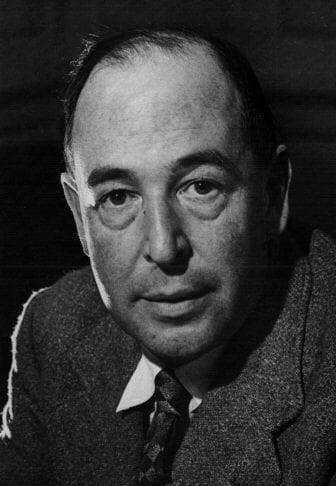
Clive Staples Lewis was a British writer, literary scholar, and Anglican lay theologian. He held academic positions in English literature at both Oxford University and Cambridge University. He is best known as the author of The Chronicles of Narnia, but he is also noted for his other works of fiction, such as The Screwtape Letters and The Space Trilogy, and for his non-fiction Christian apologetics, including Mere Christianity, Miracles, and The Problem of Pain.







