BookBrief
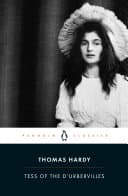
Tess of the D'Urbervilles cover
Archivist's Choice

Tess of the D'Urbervilles

Thomas Hardy (2003)

Genre

Historical Fiction / Romance

Reading Time

Given 'None pages', an estimate is not possible, but classic novels of this type typically range from 8-15 hours.

Key Themes

See below

Track Your Reading

Sign in to track this book

Poverty and social rules trap Tess Durbeyfield, a 'pure woman,' on a tragic path of seduction and betrayal, defined by impossible choices made for love and a peaceful future.

Synopsis

Tess Durbeyfield, a beautiful young woman from a poor family, is sent to seek help from the wealthy D'Urbervilles, not knowing they are not her true relatives. There, she meets Alec D'Urberville, who seduces her. She has a child who soon dies, marking Tess as 'fallen' in Victorian society's eyes. Seeking a new start, Tess works as a dairymaid and falls in love with Angel Clare, a kind man. They marry, but on their wedding night, Tess tells Angel about her past. Angel, despite his modern views, cannot accept it and abandons her, going to Brazil. Tess faces great hardship, poverty, and Alec D'Urberville's constant pursuit. Alec promises to support her family if she returns to him. Desperate and believing Angel will not return, Tess becomes Alec's mistress. When Angel finally returns, wanting Tess back, he finds her with Alec. In a moment of despair, Tess murders Alec and flees with Angel. They share a short time of happiness before she is caught at Stonehenge and executed. The novel criticizes the strict social rules and double standards that destroy Tess.
Reading time
Given 'None pages', an estimate is not possible, but classic novels of this type typically range from 8-15 hours.
Difficulty
Medium
Pacing
Moderate
Mood
Melancholy, Tragic, Poignant, Dark, Romantic
✓ Read this if...
You enjoy classic tragic romances with strong social commentary and detailed character studies.
✗ Skip this if...
You prefer lighthearted stories or are sensitive to themes of sexual assault, societal injustice, and a bleak ending.

Plot Summary

The Pedigree and the Promise

The story begins in Marlott. John Durbeyfield, a simple carter, learns from Parson Tringham that he is a direct descendant of the noble D'Urberville family. This news excites John and his wife, Joan. Despite their poverty, they imagine a better future for their seven children, especially their eldest daughter, Tess. Tess, a beautiful and innocent young woman, is unsure but agrees to her mother's plan to visit the wealthy Stoke-d'Urbervilles in Trantridge. They hope to get help or a job, believing them to be rich relatives.

The Encounter at Trantridge

Tess Durbeyfield feels guilty after an accident involving her family's horse, Prince. She decides to approach the Stoke-d'Urbervilles in Trantridge. She meets Alec d'Urberville, a handsome but immoral young man, who is immediately drawn to her. Alec knows his family only bought the D'Urberville name, but he pretends they are relatives. He offers Tess a job caring for his mother's chickens. Tess is hesitant and uneasy about Alec's intentions, but she accepts the job out of duty to her struggling family, hoping to send money home.

The Ruin of Tess

While working in Trantridge, Tess faces Alec's constant advances and manipulative charm. One night, after a village fair where Alec saves Tess from a fight, he drives her through a thick fog and gets lost. He leaves her to rest in the woods, then returns and takes advantage of her while she is asleep. Tess feels violated and deeply ashamed. She returns home to Marlott, heartbroken and pregnant. She gives birth to a sick child, whom she names Sorrow, and tries to baptize herself, but the baby dies soon after.

A New Beginning at Talbothays Dairy

Years pass. Tess wants to escape her past and find work where no one knows her. She leaves Marlott and takes a job as a milkmaid at Talbothays Dairy. Here, she finds some peace and happiness. She becomes friends with other milkmaids—Izz Huett, Marian, and Retty Priddle—and falls in love with Angel Clare. Angel is an educated, unconventional young man studying farming to go against his family's wish for him to become a clergyman. Angel is captivated by Tess's natural beauty and purity, believing her to be an innocent country maid.

Love and Confession

Angel Clare asks Tess to marry him. Despite her deep love for him, Tess is troubled by her past with Alec. She tries to confess her secret many times, even writing a letter that she slips under his door, but it slides under the carpet and remains unread. On their wedding day, Tess finally tells Angel about her history with Alec d'Urberville and the birth of her child. Angel, despite his modern views, is shocked and deeply disappointed; he cannot accept Tess's confession.

The Broken Vows

After Tess's confession, Angel's first reaction is cold rejection. He cannot overcome social prejudices and his own perfect ideas of purity, despite Tess's tearful pleas and explanation of how she was victimized. He tells her he needs time to think. After a short, tense period, he decides to leave England for Brazil to start a new farm. He advises Tess to return to her family and gives her money, but his departure leaves Tess heartbroken and feeling condemned.

Struggles and Hardship

After Angel leaves, Tess refuses money from his family and struggles to support herself. She travels to Flintcomb-Ash, a harsh farm, where she works as a field-hand alongside Marian and Izz Huett, who also love Angel unhappily. The work is hard, and Tess suffers extreme poverty, cold, and hunger. She tries to visit Angel's family for help but is turned away by his brothers, who dislike her. She only gets a small sum from his father, who does not know her full story.

The Return of Alec

While working at Flintcomb-Ash, Tess unexpectedly meets Alec d'Urberville. He has gone through a superficial religious change and become a traveling preacher. Seeing Tess, Alec is immediately drawn to her again and abandons his new faith, determined to win her back. He constantly pursues her, appearing at her workplace and even following her to Marlott when she returns to care for her sick mother. He promises to provide for her and her family, taking advantage of Tess's desperation and her family's growing poverty.

The Compromise

Tess's family faces eviction and extreme poverty, especially after her father, John Durbeyfield, dies. Alec d'Urberville, having bought the Durbeyfield cottage, offers Tess's family a place to live if Tess agrees to live with him. Completely desperate and feeling that Angel has abandoned her, Tess, believing she has no other choice to save her family from homelessness and starvation, finally gives in to Alec's demands and becomes his mistress. She moves with him to Sandbourne, living a life of luxury but deep unhappiness.

Angel's Return and Revelation

Angel Clare, having gotten sick in Brazil and thought about his harsh treatment of Tess, returns to England, ready to forgive her. He searches for her and eventually finds her living in a fancy boarding house in Sandbourne with Alec d'Urberville, whom she presents as her husband. Overwhelmed by shame and guilt, and realizing what she has done, Tess confronts Angel. She explains her forced situation and expresses her lasting love for him, but tells him it is too late.

The Murder

After Angel leaves, Tess is filled with despair, rage, and a strong sense of injustice. Feeling trapped and ruined by Alec, and believing he has destroyed her last chance for happiness with Angel, Tess confronts Alec in their rooms. In a moment of uncontrolled passion and desperation, she stabs him to death. The landlady finds Alec's body, and Tess flees, finding Angel again. She tells him she has killed Alec and is now truly free.

Brief Respite and Capture

Angel, despite the shocking news of Alec's murder, stays with Tess. They spend a few happy days together, hiding in an old, empty mansion and later at Stonehenge, where Tess falls asleep on an altar stone. This short time is the only period Tess truly feels happy and connected with Angel. However, their peace is brief. The authorities find them at Stonehenge, and Tess is arrested, accepting her fate calmly.

The Price of Purity

Tess Durbeyfield is tried, found guilty, and sentenced to death for Alec d'Urberville's murder. On the day of her execution, Angel Clare and Tess's younger sister, Liza-Lu, watch from a distance as a black flag is raised, signaling that the sentence has been carried out. Angel and Liza-Lu, as Tess wished, walk away hand-in-hand, symbolizing the continuation of Tess's spirit through her sister and the lasting tragedy of her life, which was sacrificed to strict social rules and cruel fate.

Principal Figures

Tess Durbeyfield

The Protagonist

Tess begins as an innocent country girl, endures profound trauma and social condemnation, and ultimately becomes a tragic figure who takes extreme action to reclaim her agency, culminating in her execution.

Alec d'Urberville

The Antagonist

Alec shifts from a hedonistic seducer to a temporarily converted preacher, then back to a possessive tormentor, ultimately meeting his end at Tess's hand.

Angel Clare

The Protagonist/Love Interest

Angel begins as an idealistic, seemingly progressive lover, but his inability to forgive Tess's past reveals his own societal conditioning, leading him to abandon her. He later returns, matured and remorseful, but too late.

John Durbeyfield

The Supporting

His character remains largely static, serving as the catalyst for the Durbeyfield family's initial hopes and subsequent misfortunes.

Joan Durbeyfield

The Supporting

Her character remains static, representing the well-intentioned but ultimately harmful pressures of a mother trying to improve her family's lot in a rigid society.

Liza-Lu Durbeyfield

The Supporting

Liza-Lu remains an innocent figure throughout, serving as a symbol of Tess's enduring purity and hope for a future unburdened by past wrongs.

Izz Huett

The Supporting

Izz remains a steadfast, unrequited lover, her loyalty and suffering reflecting the broader theme of female devotion and vulnerability.

Marian

The Supporting

Marian's journey from a cheerful milkmaid to a struggling, alcohol-dependent farmhand highlights the devastating impact of lost love and social hardship.

Themes & Insights

The Hypocrisy of Victorian Morality

Hardy strongly criticizes Victorian society's strict and often conflicting moral rules, especially about female chastity. Society, and even Angel Clare, judges Tess as 'impure,' even though she is a victim of circumstance. Her 'fall' with Alec is seen as an unforgivable stain, while men's wrongs are often ignored or easily forgiven. The subtitle 'A Pure Woman' directly challenges these social judgments, arguing that Tess's goodness and moral integrity remain despite her experiences. This theme is clear in Angel's inability to forgive Tess's past, contrasting with his own minor mistakes, and the social condemnation that pushes Tess to desperation.

''Why didn't you tell me there was danger in men-folk? Why didn't you warn me?''

Tess Durbeyfield

Fate vs. Free Will

The novel explores how much human lives are controlled by outside forces (fate, chance, social situations) versus individual choices. Tess is repeatedly a victim of bad coincidences (the horse's death, the unread letter) and others' manipulative actions (Alec). The Durbeyfield family's 'discovery' of their lineage itself seems fated, starting a chain of events. While Tess makes choices, they are often limited by her few options, poverty, and social expectations, suggesting her tragic end is less her fault and more a result of an uncaring world and an unforgiving society.

''Justice'' was done, and the President of the Immortals, in Aeschylean phrase, had ended his sport with Tess.

Narrator

Social Class and Poverty

The harsh realities of social class and poverty are central to Tess's struggles. The Durbeyfields' desperate financial state is the main reason Tess seeks help from the Stoke-d'Urbervilles, which directly leads to her ruin. Her later choices, such as working at Flintcomb-Ash and eventually returning to Alec, are largely forced by the need to survive and support her family. Hardy shows how poverty limits freedom and exposes people, especially women, to exploitation, highlighting the brutal economic realities behind Victorian social structures.

''What was to be done? She had no money, and she could not work.''

Narrator

The Corrupting Influence of Civilization and the Purity of Nature

Hardy often contrasts the corrupting effects of human society, especially city and upper-class environments, with the perceived purity and healing power of nature. Tess is most innocent and happy when working close to the land, such as at Talbothays Dairy, where she finds love and a sense of belonging. In contrast, places like Trantridge (Alec's home) and Sandbourne (where Tess lives with Alec at the end) are linked with moral decay and artificiality. Even Angel's 'enlightened' views are ultimately flawed by social conditioning, stopping him from truly accepting Tess's natural purity.

''She was a child of nature, not of the drawing-room.''

Narrator

Love and Betrayal

Love in the novel is closely tied to betrayal, both intentional and unintentional. Tess's love for Angel is deep and real, yet it is betrayed by his inability to overcome social prejudices and his abandonment. Alec's 'love' is a possessive, destructive force, based on manipulation and exploitation. Tess herself feels she betrays Angel by returning to Alec, even if it is out of desperation. The theme examines how fragile love is when faced with harsh realities and the devastating results of broken trust and unkept promises.

''O, you have torn my life all to pieces... made me a mere puppet!''

Tess Durbeyfield

Plot Devices & Literary Techniques

Foreshadowing

Hints and omens that suggest future tragic events.

Hardy frequently employs foreshadowing to build a sense of impending doom and inevitability. Examples include the initial meeting with Parson Tringham, which sets the Durbeyfield tragedy in motion; the accident with Prince, which directly leads to Tess's encounter with Alec; and the various omens and superstitions observed by the characters. This device reinforces the novel's themes of fate and the limited agency of individuals against powerful forces, making Tess's ultimate end feel tragically predestined.

Symbolism

Objects, settings, and events representing deeper meanings.

Symbolism is pervasive. The Durbeyfield family's horse, Prince, symbolizes Tess's innocence and its violent death foreshadows her own 'fall.' Talbothays Dairy represents pastoral innocence and natural purity, while Flintcomb-Ash symbolizes harsh labor and despair. Stonehenge, where Tess is finally captured, is a symbol of ancient, immutable forces and a sacrificial altar. The 'black flag' at the end is a stark symbol of Tess's execution and the ultimate triumph of societal judgment over individual purity. These symbols enrich the narrative, adding layers of meaning to Tess's journey.

Irony

Situational and dramatic irony highlighting the tragic contrast between appearance and reality.

The novel is replete with irony. The subtitle 'A Pure Woman' is the most prominent, ironically contrasting society's judgment of Tess with her inherent innocence and moral integrity. Angel Clare's name itself is ironic, as he acts anything but angelic in his abandonment of Tess. The Durbeyfields' 'noble' lineage brings not fortune but ruin. Dramatic irony is present in Tess's unread letter of confession, which could have saved her marriage, highlighting the cruel twists of fate and miscommunication that plague her life. This device underscores the tragic nature of Tess's story and the flawed perceptions of the characters.

The Unsent/Unread Letter

A letter containing a crucial confession that is never properly delivered or read.

This specific plot device is a powerful example of how miscommunication and chance can alter destinies. Tess writes a detailed confession of her past to Angel and slips it under his door. However, it slides under the carpet and remains unread until after their wedding, when it is too late. This single failure of communication prevents Angel from processing the truth beforehand and confronting his prejudices, leading to his shock and abandonment of Tess. It highlights the role of cruel fate and minor coincidences in shaping major life events.

Critical analysis

Notable Quotes

Once a woman's name is breathed on by calumny, she is no more to be a member of the social body but a ghost, to move about in the shadows and to be spoken of only in whispers.

Reflecting on Tess's ruined reputation after her past is revealed to Angel.

Justice was prepared; and at a later date, when Tess was no more, Angel Clare found it possible to marry Liza-Lu, Tess's younger sister.

The concluding lines of the novel, describing Angel's actions after Tess's execution.

The greater the sinner, the greater the saint.

Drawn from a sermon Tess overhears, which she ironically applies to her own situation.

Why it was that upon this beautiful feminine tissue, sensitive as gossamer, and practically blank as snow as yet, there should have been traced such a coarse pattern as it was doomed to receive!

Hardy's lament over Tess's innocence being corrupted by circumstance.

But the D'Urbervilles, though an ancient and knightly family, were not rich.

The initial exposition about Tess's family and their impoverished noble lineage.

A strong current of her nature ran in an opposite direction to the artificialities of her position.

Describing Tess's natural simplicity at Talbothays Dairy, contrasting with her later forced roles.

She was a mere vessel of emotion untinctured by experience.

A description of Tess's initial youthful innocence before her traumatic experiences.

Some women's love of being loved is insatiable; and Tess's was of the kind.

Reflecting on Tess's deep desire for affection, particularly from Angel.

The beauty or ugliness of a character lay not in its achievements, but in its aims and impulses.

Angel Clare's philosophical musings, which he struggles to apply to Tess's situation.

Where was Tess's guardian angel? Where was the providence of her simple faith?

Hardy's rhetorical question during one of Tess's moments of despair and abandonment.

The greatest misfortune of Tess's life was not her seduction, but that she could not make Angel Clare understand her.

An underappreciated insight into the core tragedy of Tess's relationship with Angel.

She was a child of nature, and her heart was open to the influences of the seasons.

Describing Tess's deep connection to the natural world at Talbothays Dairy.

He had been her lover in the guise of her husband.

Tess's bitter realization about Alec D'Urberville after their forced marriage.

The oblong white ceiling, with this black square in the middle, impressed Tess with a sense of terrible completeness.

Tess's chilling observation of the black flag signaling her execution at the end of the novel.

The ache of modernism was in his view.

Describing Angel Clare's intellectual yet ultimately rigid perspective, which contrasts with Tess's more traditional understanding.

Quiz

Test Your Knowledge

Ready to see how well you understood this book? Take our interactive quiz with 10 questions.

10
Questions
~5
Minutes
?
Best Score

Key Questions (FAQ)

Tess's central conflict stems from the clash between her inherent purity and the societal judgments and misfortunes that brand her as 'impure.' She struggles to reconcile her past trauma with her desire for love and acceptance, particularly when her secret threatens her relationship with Angel Clare.

About the author

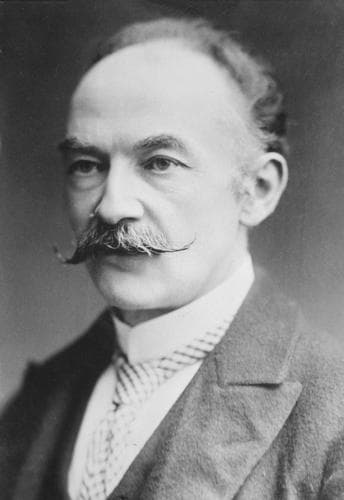
Thomas Hardy

Thomas Hardy was an English novelist and poet. A Victorian realist in the tradition of George Eliot, he was influenced both in his novels and in his poetry by Romanticism, including the poetry of William Wordsworth. He was highly critical of much in Victorian society, especially on the declining status of rural people in Britain, such as those from his native South West England.