“The only thing that separates us from the animals is our ability to accessorize.”
— Aurora Greenway's witty remark about human nature.


Larry McMurtry (1975)
Genre
Literary Fiction / Romance
Reading Time
560 min
Key Themes
See below
Sign in to track this book
In "Terms of Endearment," an indomitable mother and her spirited daughter navigate life's hilarious and heart-wrenching challenges, showing that their bond remains strong even through tragedy.
The story begins with Aurora Greenway, a wealthy, eccentric widow in Houston, Texas. Aurora is very particular and demanding, especially with her daughter, Emma. Emma, wanting to escape her mother's strong affection and control, decides to marry Flap Horton, an English professor. Aurora strongly disapproves of Flap, thinking he is not good enough for her daughter, and refuses to attend the wedding. Despite her mother's objections, Emma marries Flap, taking her first major step towards independence, which upsets Aurora. This initial conflict sets up the complex and often difficult dynamic between mother and daughter, a main theme throughout the novel.
After their marriage, Emma and Flap move to various college towns as Flap pursues his academic career. Emma, despite her independent spirit, quickly finds herself involved in marriage and motherhood. She has three children: Tommy, Teddy, and Melanie. While she loves her children, Emma often feels unfulfilled and bored by her life as a professor's wife. Flap, meanwhile, is self-absorbed and often a neglectful husband, more focused on his career and other women than on Emma or their family. Their marriage shows problems early on, marked by Flap's cheating and Emma's growing unhappiness, despite her efforts to build a life away from her mother's influence.
Back in Houston, Aurora Greenway, a widow for many years and in her late fifties, is wanted by several men. Her most persistent suitor is General Hector Scott, a retired astronaut and her next-door neighbor. Hector is crude, drinks a lot, and is often offensive, but he is also deeply in love with Aurora. She initially rejects him, finding him rough and below her standards, but slowly, their relationship becomes a passionate and turbulent affair. Aurora also has other, less serious suitors, showing her lasting charm and her desire for companionship and attention, even if she often pushes them away with her demanding nature.
As Flap's career takes them to different universities, his cheating becomes more obvious and hurtful. Emma, feeling neglected and unloved, eventually begins to have affairs of her own. Her first significant affair is with Sam Burns, a kind banker she meets in Nebraska. This relationship gives Emma an emotional connection and validation that she lacks with Flap. Later, after moving to Texas, she has an affair with a married man named Rudy. These affairs are a direct response to Flap's neglect and Emma's desire for real affection and a life beyond her disappointing marriage. Her choices show her growing need for happiness and self-worth.
The relationship between Aurora and General Hector Scott continues to be a main, often funny, part of Aurora's life. Their romance has constant arguments, dramatic breakups, and passionate reconciliations. Hector, despite his rude behavior, genuinely loves Aurora and is persistent in his pursuit. Aurora, while often annoyed by him, is also drawn to his masculinity and the excitement he brings into her otherwise controlled world. Their dynamic provides much of the novel's humor and shows Aurora's complex personality – a woman who wants love and companionship but struggles to fully commit or give up control, even to someone who clearly adores her.
Flap accepts a professorship in Kearney, Nebraska, and Emma moves their family there. Soon after settling in, Emma begins to feel severe pain. After medical tests, she receives the diagnosis of breast cancer. The news shocks her and her family, bringing a sudden reality to her previously unfocused life. This diagnosis is a turning point in the novel, shifting the story from Emma's marital unhappiness and search for identity to a desperate fight for her life and a re-evaluation of her relationships, especially with her mother.
When Aurora Greenway learns of Emma's illness, she immediately leaves her own life and romances in Houston to be with her daughter in Nebraska. Her overbearing nature becomes fierce devotion and practical care. She takes charge of Emma's medical care, advocating for her, and provides emotional support, though often in her characteristic blunt and demanding way. This period shows the deep, though complicated, love Aurora has for Emma, proving that beneath her critical exterior is a mother willing to do anything for her child. Her presence is a source of both comfort and irritation for Emma, but clearly a lifeline.
Despite Aurora's best efforts and Emma's own fight, the cancer gets worse. Emma endures painful treatments and surgeries, her body weakening. During this difficult time, she has moving moments with her children, trying to prepare them for a life without her. She also tries to reconcile with Flap, finding a fragile peace in their shared grief, though their marital issues remain mostly unresolved. Her affair with Sam Burns also continues to be a source of comfort. Emma's journey through illness forces her to face her own death and the true nature of her relationships, leading to a deep, if sad, understanding.
As Emma enters her final days, her family, including Flap and their children, and Aurora, are constantly by her side. General Scott also visits, showing his support for Aurora. The atmosphere is heavy with impending loss, yet also filled with quiet love and shared memories. Emma's death is a heartbreaking and inevitable event, leaving her children motherless and Aurora devastated. Aurora's deep grief shows the depth of her love for Emma, a love that went beyond their many disagreements and often difficult relationship. Her passing leaves a significant gap in the lives of all who knew her.
After Emma's death, Aurora Greenway deals with unimaginable grief. The loss of her only child is a blow from which she may never fully recover. She takes a more active role in her grandchildren's lives, trying to fill the void left by Emma, though she still struggles with her demanding nature. Her relationship with General Scott continues, becoming a deeper, more committed bond as they both face aging and death. The novel ends with Aurora, forever changed by her loss, learning to live with her grief, finding comfort in her grandchildren, and continuing her unique existence, forever changed by the profound love and loss of her daughter, Emma.
The Protagonist
Initially controlling and resistant to Emma's independence, Aurora transforms into a fiercely devoted caregiver, ultimately enduring profound grief and finding a deeper, more mature love.
The Protagonist
Emma evolves from a young woman seeking escape to a mother grappling with marital dissatisfaction, ultimately facing terminal illness with quiet strength and a desire for reconciliation.
The Supporting
Hector's relentless pursuit of Aurora eventually leads to a committed, albeit unconventional, relationship, showcasing his enduring loyalty and love.
The Supporting
Flap remains largely static in his self-absorption, but faces the profound impact of Emma's illness and death, revealing moments of vulnerability and regret.
The Supporting
Sam provides a brief but significant period of emotional fulfillment for Emma, his role remaining consistently supportive and loving.
The Supporting
Patsy remains a steadfast and loyal friend to Aurora throughout the novel, providing consistent support and occasional exasperation.
The Supporting
Tommy is forced to mature quickly as he grapples with his mother's illness and death, learning to cope with profound loss.
The Supporting
Teddy quietly internalizes the family's struggles and his mother's illness, representing the silent suffering of a child.
The Supporting
Melanie's arc is largely defined by her innocence and eventual reliance on Aurora as a maternal figure after Emma's death.
The main theme is the complex, often turbulent, but ultimately strong bond between Aurora and Emma. Their relationship has Aurora's strong love and Emma's fight for independence. Despite their frequent disagreements and Aurora's critical nature, their deep affection for each other is clear, becoming most obvious during Emma's illness when Aurora's devotion becomes fierce, selfless care. This theme explores how love can exist with frustration, and how shared experiences, especially hardship, can show the true depth of family ties.
““Emma, I love you very much. I just want you to be happy.””
Both Emma and Aurora, in their own ways, are looking for satisfaction. Emma seeks identity outside her mother's influence and through her marriage, only to find disappointment, leading her to affairs for emotional connection. Aurora, a widow, seeks companionship and excitement through her various suitors, showing her energy and independence despite her age. This theme explores the human desire for purpose, love, and a sense of self, and the often messy paths people take to achieve it, showing the expectations placed on women at different life stages.
““I'm not trying to be a good person, Mama. I'm just trying to be a person.””
The novel explores love and loss, especially through Emma's battle with cancer and her eventual death. This tragedy forces all characters, particularly Aurora, to face how fragile life is and the great pain of grief. Aurora's change from a demanding socialite to a heartbroken mother shows the devastating impact of losing a child. The story looks at how people cope with impending death and the aftermath of great loss, showing that love, even after death, continues to shape lives.
““It's not fair. It's not fair. It's not fair.””
Larry McMurtry shows love and relationships in all their messy, imperfect reality. Aurora's relationship with General Scott is a good example: full of arguments, crude humor, and real passion, it shows that love doesn't have to be perfect to be real. Emma's marriage to Flap has infidelity and neglect, yet they share children and moments of connection. Even the mother-daughter bond is complex, with frustration and control alongside deep affection. This theme suggests that true love often exists within flawed human connections, needing acceptance and resilience.
““Love, she thought, was like a great sea, and she was adrift in it, with no land in sight.””
Despite the tragic parts, the novel has much humor, especially through Aurora's eccentricities and her witty conversations with General Scott. This humor helps the characters and the reader cope, offering lightness amid life's hardships, including infidelity, illness, and death. It shows the human ability to find joy and laughter even in the darkest times, suggesting that humor is an essential part of resilience and dealing with life's absurdities and pains. The comedic elements make the deep emotional moments even more powerful.
““You're not as young as you used to be, Hector.” “Well, neither are you, Aurora.””
Alternates focus between Aurora and Emma's lives, often in separate locations.
The narrative frequently shifts its focus between the lives of Aurora in Houston and Emma in various college towns. This device allows McMurtry to develop both characters fully and independently, showcasing their distinct experiences and relationships before their lives tragically converge during Emma's illness. It emphasizes their individual struggles for identity and fulfillment, while also highlighting the emotional distance that often exists between them, making their eventual reunion and Aurora's devotion during Emma's illness more poignant and impactful. The alternating perspectives provide a comprehensive view of their intertwined destinies.
Communication between Aurora and Emma through letters and phone calls.
Given the physical distance between Aurora and Emma for much of the novel, their relationship is maintained through frequent, often humorous and sometimes fraught, letters and phone calls. These communications serve as a crucial plot device, revealing their individual lives, thoughts, and feelings to each other and to the reader. They underscore the challenges of maintaining a close relationship across distance and highlight Aurora's persistent, if sometimes overbearing, presence in Emma's life, even when they are physically apart. The tone of these exchanges often reflects the evolving nature of their bond.
Contrasting characters highlighting central figures' traits.
Various characters act as foils to Aurora and Emma. For Aurora, General Hector Scott's boorishness and directness contrast with her refined but equally demanding nature, highlighting her own complexities and desires. For Emma, the kind and attentive Sam Burns serves as a foil to her neglectful husband, Flap Horton, emphasizing Emma's yearning for genuine affection and the shortcomings of her marriage. These contrasting characters help to illuminate the protagonists' personalities, motivations, and the nature of their relationships, providing deeper insight into their struggles and growth.
Early hints of Emma's eventual illness and the fragility of life.
While not overtly stated, there are subtle elements of foreshadowing throughout the novel, particularly concerning the fragility of life and the potential for tragedy. The general sense of dissatisfaction in Emma's life, the fleeting nature of her happiness, and the often-melancholic undertones of her chapters, can be seen as preparing the reader for the eventual devastating news of her illness. This device creates a growing sense of unease that culminates in the stark reality of her cancer diagnosis, making the tragic turn of events feel both sudden and, in retrospect, subtly anticipated, deepening the emotional impact.
“The only thing that separates us from the animals is our ability to accessorize.”
— Aurora Greenway's witty remark about human nature.
“You are not special. You're not a beautiful and unique snowflake. You're the same decaying organic matter as everything else.”
— Aurora's blunt advice to her daughter Emma.
“I'm not a feminist, but I do believe in women.”
— Aurora expressing her complex views on gender.
“The heart is a resilient little muscle.”
— Reflection on emotional endurance after hardship.
“Love is a decision, not just a feeling.”
— Aurora discussing relationships with her daughter.
“Sometimes the best way to help someone is to leave them alone.”
— Aurora's advice on dealing with loved ones' struggles.
“We're all just trying to get through the day without too much damage.”
— Emma's reflection on daily life and its challenges.
“Happiness is overrated. Contentment is what we should aim for.”
— Aurora's philosophical take on life goals.
“Children are the anchors that hold a mother to life.”
— Aurora musing on motherhood and purpose.
“The past is a foreign country; they do things differently there.”
— Reflection on how time changes perspectives and memories.
“You can't protect people from themselves.”
— Aurora realizing limitations in helping others.
“Life is what happens while you're busy making other plans.”
— Emma's observation on unexpected turns in life.
“Sometimes love means letting go.”
— Aurora's difficult lesson in her relationship with Emma.
“We are all broken, that's how the light gets in.”
— A hopeful perspective on personal flaws and growth.
Ready to see how well you understood this book? Take our interactive quiz with 10 questions.
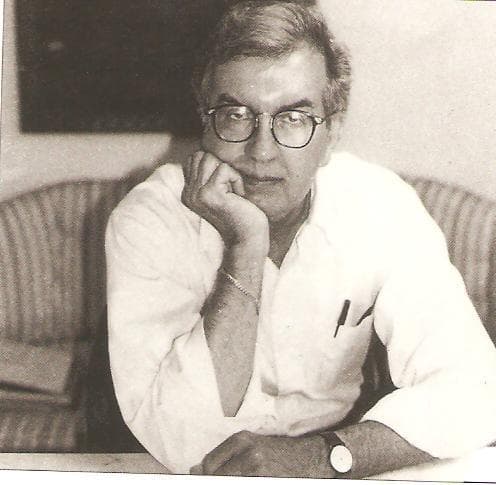
Larry Jeff McMurtry was an American novelist, essayist, prominent book collector, bookseller and screenwriter whose work was predominantly set in either the Old West or contemporary Texas. His novels included Horseman, Pass By (1962), The Last Picture Show (1966), and Terms of Endearment (1975), which were adapted into films. Films adapted from McMurtry's works earned 34 Oscar nominations.







