“The wolves were the first, and the last. They were the beginning and the end of my life as I knew it.”
— Lia reflects on the traumatic event that transformed her life.

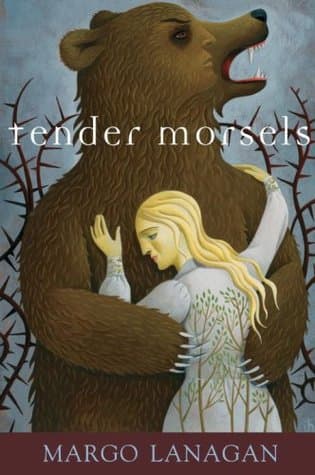
Margo Lanagan (1998)
Genre
Fantasy / Young Adult
Reading Time
9-10 hours
Key Themes
See below
Sign in to track this book
Two daughters, raised in a mother's fragile, personal heaven, must face the brutal magic and wildness of the real world when its borders inevitably collapse.
Liga lives a hard life in a poor village, often facing the predatory acts of local men. Her mother, practical and resigned, offers little protection. Liga's life involves forced labor, hunger, and sexual assault, ending in a brutal gang rape by several men, including her own father, on a Midwinter feast night. This event, combined with the constant violence she knew, leads to her death. Her spirit, however, remains, and she is offered a new existence.
After her death, Liga wakes in a beautiful, ideal forest, a personal heaven created just for her. This world is the opposite of her past life: food is plentiful and delicious, the climate is always pleasant, and she is completely safe and alone. She is no longer subject to men's desires or cruelties. This sanctuary is a gift, a magical escape from her trauma, letting her live in peaceful solitude, healing from past wounds and finding contentment in her new, perfect existence. She enjoys the simple pleasures of her new home.
Liga, in her perfect world, discovers she is pregnant, a miraculous and unexpected event given her solitary life. She gives birth to two daughters, Branca and Anja, who grow up in this protected environment. They know nothing of the 'old world's' harshness. Branca is fair and gentle; Anja is darker and wilder. Liga raises them with love, shielding them from any hint of the pain she once knew. Their childhood is one of freedom, good food, and their loving mother's constant presence, unaware of the dangers that once plagued Liga.
The peace of Liga's heaven is broken by a wild, wolf-like boy. He is feral, speaks no human language, and seems to live by instinct. Liga is wary, but her daughters, especially Anja, are fascinated. The boy is the first intrusion of something 'other' into their controlled reality, a subtle breach in their world's magical defenses. He challenges Liga's desire for absolute control and safety, making her consider that her sanctuary might not be as impenetrable as she believed.
The barriers between Liga's heaven and the 'old world' begin to weaken. Men, recognizable from her past, start to appear as distorted, shadowy figures, sometimes solid enough to interact with the girls. These encounters are unsettling, bringing back Liga's trauma and exposing her daughters to the dangers she desperately wanted to shield them from. The magical defenses are failing, and Liga struggles to maintain the illusion of safety, realizing her past is catching up, and her heaven is not an eternal refuge.
Anja, the wilder sister, increasingly resists her mother's protective watch. She develops a strong, almost supernatural connection with a large, ancient bear in their woods. This bear, a powerful and ambiguous figure, embodies both protection and primal danger. Anja's bond with the bear further separates her from her mother and sister. Her rebellious spirit, combined with the bear's presence, suggests the growing instability of their world and the coming confrontation with its true nature. The bear symbolizes the untamed forces encroaching on their safe haven.
The most damaging breach occurs when Branca, the gentler sister, is captured by men from the old world. This event shatters Liga's last illusion of safety. It forces her to face the horrifying reality that her daughters are now experiencing the same dangers she once did. The abduction is a direct result of the weakening boundaries and Liga's inability to fully protect her children. She must choose: stay in her deteriorating heaven or return to the world she fled to rescue her daughter.
Driven by desperation, Liga, with a determined Anja and the bear, fully enters the old world. This world is as harsh and unforgiving as Liga remembers, a place of poverty, superstition, and violence. They navigate dangerous forests and hostile villages, encountering the types of men who tormented Liga. The journey is dangerous, forcing Liga to relive her past traumas even as she tries to protect Anja and find Branca, who is held captive and abused by a group of men.
Liga and Anja eventually find Branca, held by cruel men, some of whom were responsible for Liga's past suffering. In a final confrontation, the powerful bear and the wolf-boy, who seems to have followed them, help. The bear acts as a force of raw, protective nature, brutally retaliating against the men. The wolf-boy also plays a role, showing unexpected loyalty and ferocity. Branca is rescued, but the violence and trauma of the old world leave a lasting mark on all of them.
With Branca rescued, the three women, along with the wolf-boy and the bear, must find a way to survive in the old world. Liga's heaven is gone, replaced by the grim reality she had escaped. They settle in a remote, abandoned dwelling, trying to create a new life. The experience has changed them; Liga is no longer a victim, but a fierce protector. Branca is deeply scarred, while Anja embraces her wildness. They learn to hunt, gather, and defend themselves, forming a fragile but resilient existence, forever carrying memories of both heaven and hell.
Even in the old world, the magic and influence of Liga's former heaven do not disappear entirely. The wolf-boy stays with them, a constant reminder of the bridge between worlds, and the bear continues as a protector and symbol of wild, untamed nature. Liga sometimes has brief, comforting visions or sensations from her past paradise, suggesting that the beauty she once knew is not completely lost. These remnants of magic offer fleeting comfort and reinforce that their lives are still connected to forces beyond the mundane, providing a glimmer of hope amid the harsh reality.
Branca, deeply traumatized by her abduction and abuse, struggles to recover. However, with the steady love and support of Liga and Anja, and the quiet presence of the wolf-boy, she slowly begins to heal. Her connection with the wolf-boy deepens, offering her a unique companionship and understanding. While her past scars will remain, Branca starts to find moments of peace and even joy. Her eventual relationship with the wolf-boy, a bridge between worlds, symbolizes potential for healing and a future that blends wildness with human connection, moving beyond trauma.
The Protagonist
From a traumatized victim who escapes reality, Liga transforms into a resilient and proactive protector who confronts the harshness of the world for her daughters.
The Supporting
Branca's innocence is shattered by violence, but she slowly begins to heal and forge a unique connection that offers hope for her future.
The Supporting
Anja grows from a free-spirited child into a courageous and powerful young woman, embracing her wild nature and becoming a protector.
The Supporting
The Bear remains a constant, powerful force, evolving from a symbol of wildness in heaven to a fierce protector in the old world.
The Supporting
From a feral, solitary figure, the Wolf-Boy becomes a loyal protector and a source of deep connection and healing for Branca.
The Mentioned
No arc, as she is only present in Liga's memories.
The Antagonist
No arc, they remain consistently cruel and predatory throughout the narrative.
The novel explores the lasting impact of trauma, especially sexual violence, and the journey of healing. Liga's initial escape to heaven is a coping mechanism, but true healing begins when she confronts her past and protects her daughters. Branca's experience mirrors her mother's, making the family navigate profound suffering. The book suggests healing is not about forgetting or escaping, but about confronting, enduring, and finding new connections and resilience, as seen in Branca's slow recovery and relationship with the Wolf-Boy.
“What had been done to her was a thing with teeth and claws, and it was still eating her from the inside out. But she had made a new outside, and it was beautiful.”
The story questions traditional ideas of heaven and hell, presenting them as states of being or perception rather than fixed places. Liga's 'heaven' is a personal paradise, but its isolation and artificiality become unsustainable as the 'real world' intrudes. The 'old world,' first shown as a hell of brutality, becomes where true courage, love, and resilience are forged. This blurring of boundaries suggests that peace and meaning are found not in escapism, but in embracing all of life, beauty alongside brutality.
“Heaven was just a place you made for yourself, and if you made it too well, it could be a prison.”
Liga's fierce love for her daughters drives the story. Her entire heaven is built to protect them from the horrors she experienced. When that protection fails, her willingness to return to the 'hell' of the old world to save Branca shows the extreme lengths a mother will go to. The theme also explores the complexities of protection – sometimes shielding, other times empowering children to face the world, as seen in Anja's growing independence and strength.
“There was no such thing as a safe place, not really, not if you loved something enough to keep it there.”
The tension between wild nature and human society is a recurring idea. Anja and the Bear embody raw, instinctual wildness, which proves to be a source of strength and protection against corrupt human society. The Wolf-Boy further blurs these lines, representing a natural innocence untouched by human cruelty. The 'old world' itself is a brutal, uncivilized place despite its human inhabitants. The book suggests that true power often lies in embracing wilder, more primal aspects of existence, rather than relying on flawed human constructs.
“The wildness was not a thing to be tamed, but a thing to be known, and honored.”
The narrative itself functions as a story, with Liga's heaven being a story she tells herself to survive. Memories, both comforting and traumatic, shape the characters' realities. Remembering and confronting the past is important for healing. The book implies that while stories can be a refuge, they must eventually connect with reality to be truly transformative. How Liga's past literally intrudes on her present shows the inescapable power of memory.
“She had built a world out of what she wanted to remember, and what she wanted to forget.”
The blending of a mundane, brutal world with a personal, magical heaven.
The primary plot device is the creation of Liga's personal heaven – a fully realized, idyllic world existing parallel to a harsh, 'real' world. This allows for a literal manifestation of escapism and trauma response. The gradual erosion of the boundaries between these worlds drives the plot, forcing the characters to confront reality. It creates a stark contrast between beauty and brutality, allowing the author to explore themes of trauma, healing, and the nature of paradise in a fantastical context.
Animals (bear, wolf) represent primal forces, protection, and wildness.
The Bear and the Wolf-Boy are significant symbolic figures. The Bear embodies raw, untamed nature, protection, and retribution, often acting as a deus ex machina. The Wolf-Boy represents a bridge between humanity and the wild, innocence, and healing, especially for Branca. These animals are not merely companions but embody powerful, instinctual forces that are crucial for survival and healing in a world where human society has failed. They highlight the strength found outside of conventional 'civilization.'
Gradual intrusions that signify the breaking down of Liga's magical sanctuary.
This device refers to the progressive weakening of the magical barriers protecting Liga's heaven. It begins with subtle signs like the appearance of the Wolf-Boy, then progresses to shadowy figures, and culminates in the physical intrusion and abduction of Branca. These 'cracks' serve as a constant source of rising tension, foreshadowing the inevitable collapse of Liga's fabricated reality and forcing her to confront the past she so desperately tried to escape. They are the engine of the plot's movement from idyllic fantasy to harsh reality.
Branca's experience directly reflects Liga's past suffering.
The plot device of mirroring trauma is crucial: Branca's abduction and abuse by men in the old world directly parallel Liga's own horrific experiences. This serves to amplify the emotional impact, forcing Liga to relive her past through her daughter's suffering. It highlights the cyclical nature of violence and the profound fear of a parent seeing their child endure similar pain. This mirroring is the ultimate catalyst for Liga to abandon her 'heaven' and actively fight against the forces that once destroyed her.
“The wolves were the first, and the last. They were the beginning and the end of my life as I knew it.”
— Lia reflects on the traumatic event that transformed her life.
“It's not a story if you don't tell it.”
— Lia considers the importance of sharing her experiences, however painful.
“The woods are full of things that want to eat you. And some of them walk on two legs.”
— A stark warning about the dangers lurking in both the natural and human world.
“You can't outrun what's inside you.”
— Lia grapples with her past and the internal struggles that continue to haunt her.
“The magic of the forest is not always kind. Sometimes it is just wild.”
— Description of the untamed and amoral nature of the magical forest.
“What does a girl do when her heart is broken and her body is not her own?”
— Lia's poignant question about agency and recovery after her assault.
“Some things are too big to be forgotten, even if you try to bury them.”
— Lia acknowledges the enduring impact of profound experiences.
“The world is a harsh place, but it has moments of beauty, if you look hard enough.”
— Despite her hardships, Lia finds glimmers of hope and wonder.
“A mother’s love is a fierce thing, even when it’s twisted.”
— Lia reflects on her complex and often difficult relationship with her mother.
“You can be strong, even when you feel like breaking.”
— An internal affirmation of strength in the face of despair.
“The truth has its own teeth.”
— Lia's understanding that reality, however painful, will always assert itself.
“Sometimes you have to make your own way, even if it's through the dark.”
— Lia's determination to forge her own path despite the obstacles.
“The forest remembers. And it doesn't forget.”
— The sentient and enduring nature of the magical forest, reflecting past events.
“To be safe is to be seen. To be loved is to be held.”
— Lia's yearning for acceptance and comfort after her isolation.
Ready to see how well you understood this book? Take our interactive quiz with 10 questions.

Biography coming soon.







