“Every time a guy puts a dime in my hand, I get to choose what happens to it. That’s power.”
— Ruby reflecting on her newfound independence as a dance hall girl.

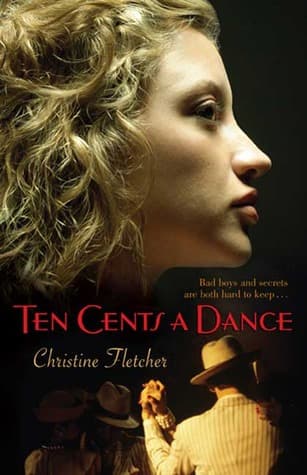
Christine Fletcher (2008)
Genre
Historical Fiction / Young Adult / Romance
Reading Time
450 min
Key Themes
See below
Sign in to track this book
In 1940s Chicago, a Polish-American teenager navigates the dangers of dance halls, the mob, and family secrets to survive and save her loved ones.
Fifteen-year-old Ruby Jacinski lives in Chicago's Yards neighborhood in 1940, a Polish-American community. Her father, a former meatpacker, is jobless due to an injury, and her mother is very ill with tuberculosis. Her older sister, Helen, recently married, and her younger siblings, Casimir and Anna, are too young. This means Ruby must provide for the family. She wants to avoid the dangerous work in meatpacking plants, the only jobs available for girls like her, so Ruby looks for any other way to earn money. The family's small savings are running out, and the threat of eviction adds pressure to Ruby's already heavy load.
While looking for work, Ruby meets Frank, a charming young man with ties to the local mob boss, Mr. Bell. Frank, impressed by Ruby's quick mind and desperate situation, offers her an unusual job: a taxi dancer at the Aragon Ballroom. Ruby is hesitant and wary of what the job might mean, but she is intrigued by the promise of better pay than the slaughterhouses. Frank says the job is about dancing and charm, not prostitution, though he hints at unspoken expectations. This meeting brings Ruby into a new, glamorous, and possibly dangerous world far from the grime of the Yards.
Ruby starts her new job at the Aragon Ballroom, a busy space with music and many different customers. She quickly learns the rules of taxi dancing from experienced dancers like Gloria and Mae. They teach her how to 'fish'—charming patrons into buying her drinks, meals, and gifts or cash, all while seeming innocent and available. Ruby learns the importance of looking good, mastering dance steps, and creating a captivating personality. Her initial awkwardness turns into growing confidence as she navigates the competitive environment, realizing that survival depends on her ability to connect with men and get their generosity without crossing certain lines.
As Ruby gets better at taxi dancing, she begins to enjoy the glamour and the money it brings. She can now afford better clothes, contributing more to her family's expenses, including her mother's medical care and rent. The money also lets her buy small luxuries for her siblings, easing some of their burdens. She enjoys the attention from men and the freedom of dancing, a stark contrast to her dull home life. The jazz music, the elegant dresses, and the constant flow of new faces create a thrilling environment that slowly pulls Ruby further from her old identity and deeper into the dance hall world.
Ruby's relationship with Frank, who first contacted her, becomes more complex. Frank, a charming and protective figure, often looks out for her at the ballroom, fending off overly eager patrons and offering advice. Ruby feels drawn to his charisma and the security he provides, even as she recognizes his dangerous connections to the mob. They share moments, and a flirtatious romance begins to grow, blurring the lines between their arrangement and genuine affection. This developing relationship gives Ruby a taste of romance and belonging but also pulls her deeper into Frank's shadowy world, raising questions about his true intentions and her safety.
Despite the initial excitement, Ruby starts to see the darker side of a taxi dancer's life. She observes the desperation of some older dancers, like Mae, who struggle to maintain appearances and attract patrons as they age. She sees the emotional toll of the job, the constant need to act happy and charming, and the subtle exploitation. Some patrons become possessive or aggressive, and Ruby learns to handle these dangers with more caution. She realizes that while she earns money, it often costs her a piece of her true self, and the line between flirtation and something more explicit is always tested, making her question the real nature of her work.
Ruby carefully hides her job from her family, making up stories about working in a department store. Her mother, weakened by illness, is too busy to question Ruby closely, though her father remains suspicious and distant. The secrecy creates an emotional distance between Ruby and her loved ones. She feels increasingly alone, unable to share the complexities and dangers of her new life with anyone at home. While her earnings provide vital support, the burden of her secret weighs heavily on her, creating guilt and alienation from the very people she is trying to save, as she lives in two separate worlds.
The balance Ruby keeps eventually breaks. Her father, increasingly suspicious of her late nights and new clothes, follows her and finds her working as a taxi dancer. The confrontation is devastating. Her father is angry and ashamed, seeing her job as immoral and a disgrace. Her mother is heartbroken and feels betrayed. Ruby tries to explain why she did it — the desperate need to provide for them — but her family's traditional values make it impossible for them to accept. This revelation forces Ruby to face the social stigma of her work and its impact on those she loves most, leaving her feeling alone and misunderstood.
As Ruby's relationship with Frank grows, she unintentionally becomes more involved with Mr. Bell's criminal organization. Frank, while seemingly caring, draws her into his illegal activities, asking her to deliver messages or watch certain people at the ballroom. Ruby begins to understand the full extent of Mr. Bell's power and ruthlessness, realizing that her connection to Frank comes with significant risks. The glamour of the dance hall now feels more like a gilded cage, and she senses danger beneath the surface. Her initial sense of control slowly gives way to feeling trapped, her choices increasingly limited by the mob's expectations and demands.
Feeling suffocated by the mob's influence and the emotional toll of her secret life, Ruby desperately seeks an escape. She realizes that Frank, despite his charm, is part of a system that exploits her, and his 'protection' comes at a high cost. The dream of a better life through taxi dancing has turned into a nightmare of dependency and danger. Ruby starts actively looking for legitimate work, even considering the meatpacking plants she once avoided, anything to regain her independence and break free from Mr. Bell's and Frank's control. She understands that her future, and her safety, depend on her ability to create a new path for herself, separate from the dance hall.
Facing an increasing threat from Mr. Bell's organization, and understanding Frank's manipulation, Ruby makes a brave and difficult decision. She decides to cut all ties with the dance hall, Frank, and the mob, knowing that staying would mean sacrificing her integrity and possibly her life. This choice has a high cost: she loses the financial security she had gained and the sense of belonging she found among the dancers. It also means facing her family's judgment and the harsh realities of poverty again. However, Ruby chooses freedom and self-respect over the gilded cage, showing her new strength and determination to find an honest path.
After leaving the dance hall, Ruby faces the hard task of rebuilding her life and repairing her family relationships. She finds legitimate, though less glamorous, work, proving her commitment to an honest living. Slowly, through her persistence and genuine regret, she begins to heal the rift with her parents, especially her father, who starts to see her strength and sacrifice. The family still struggles financially, but there is a renewed sense of unity and hope. Ruby, though changed by her experiences, emerges stronger and more resilient, having learned important lessons about self-reliance, the true cost of ambition, and the importance of integrity, as she steps into an uncertain but self-chosen future.
The Protagonist
Ruby transforms from a naive, desperate girl into a resilient, self-aware young woman who learns to value her integrity over fleeting glamour and dangerous connections.
The Antagonist/Supporting
Frank remains largely unchanged, serving as a catalyst for Ruby's growth and a representation of the dangers she must overcome.
The Supporting
Her health declines and then slowly stabilizes, her character representing the family's suffering and the eventual hope for recovery.
The Supporting
Initially rigid and disapproving, he slowly begins to understand and appreciate Ruby's sacrifices, leading to a partial reconciliation.
The Supporting
Gloria remains a consistent, experienced guide, her character serving as a benchmark for Ruby's journey and a representation of the taxi dancer's life.
The Antagonist
Mr. Bell remains a static, menacing force, embodying the systemic corruption and danger Ruby must escape.
The Supporting
Her character arc is largely static, serving as a cautionary example for Ruby.
The novel explores the lengths people will go to survive and protect loved ones, especially during economic hardship. Ruby becomes a taxi dancer, a job with social stigma and danger, driven by her desperate need to provide for her sick mother and poor family. Her sacrifices are huge, from her innocence and self-respect to her relationship with her traditional family. The theme highlights the difficult moral compromises made when basic needs are at stake and how these choices shape identity. For example, Ruby's internal struggle over 'fishing' for money versus her family's dwindling resources constantly shows this theme.
“What was a little white lie, a little flirtation, if it meant Mama could get her medicine?”
The Aragon Ballroom first appears as a glamorous escape from Ruby's grim reality. The jazz music, elegant dresses, and attention from men offer an illusion of freedom and excitement. However, the novel carefully removes this facade, revealing underlying exploitation, loneliness, and desperation. The 'glamour' is a performance, a tool for survival, not true happiness. Ruby's initial fascination with the beautiful clothes and lively atmosphere slowly gives way to an understanding of the superficiality and emotional cost of maintaining the illusion, as seen in her observations of Mae's struggles.
“The music could make you forget everything, but the ten cents a dance always brought you back to earth.”
Ruby's journey is a coming-of-age story marked by a loss of innocence and self-discovery. Thrust into an adult world of complex moral dilemmas and dangerous characters, she quickly loses her naiveté. She learns to navigate social complexities, manipulate situations, and protect herself. While the experiences are often painful, they force her to confront her values, limits, and desires. Her decision to leave the dance hall, despite the financial cost, shows her discovery of inner strength and a commitment to her true self, rather than the persona she created to survive.
“I was no longer just Ruby from the Yards. I was Ruby, the dancer, and she knew things the old Ruby never would.”
The novel explores the tension between traditional family values, especially those of Polish-American immigrants, and the changing realities of urban life in the 1940s. Ruby's family represents the old world, with a strong emphasis on honor, hard work, and traditional gender roles. Her job choice directly conflicts with these values, leading to conflict and alienation. The story highlights the generation gap and the struggle for immigrant families to adapt to new environments while holding onto their culture. Ruby's attempt to bridge this gap, by both supporting her family and seeking personal independence, is a central conflict, particularly in her relationship with her father.
“How could I explain to them that I was trying to save us, even if it meant doing something they couldn't understand?”
The story is told from Ruby's perspective, offering intimate access to her thoughts and feelings.
The use of first-person narration allows readers to experience Ruby's journey directly through her eyes. This provides an intimate and immediate understanding of her motivations, fears, and the complex moral dilemmas she faces. It fosters empathy for her difficult choices and highlights her internal growth as she navigates the dangerous world of taxi dancing. The reader is privy to her evolving perceptions of glamour, exploitation, and self-worth, making her transformation particularly impactful and personal.
The Aragon Ballroom symbolizes both escape and entrapment for Ruby.
The Aragon Ballroom serves as a potent symbol throughout the novel. Initially, it represents an escape from the grinding poverty and bleakness of the Yards, offering glamour, music, and financial opportunity. It is a place of possibility and a temporary reprieve from her responsibilities. However, as Ruby delves deeper, the dance hall transforms into a symbol of entrapment, where she is exploited, her innocence is compromised, and her freedom is subtly curtailed by the expectations of patrons and the mob's control. It becomes a gilded cage, beautiful on the surface but restrictive beneath.
The act of 'fishing' for gifts and money symbolizes the subtle exploitation inherent in taxi dancing.
The term 'fishing,' used by the taxi dancers to describe charming patrons into giving them money, meals, or gifts, is a central metaphor. It highlights the transactional nature of their relationships and the subtle art of manipulation required for survival. It also underscores the power dynamics at play, where the dancers must appear desirable and available without crossing explicit lines. The metaphor reveals the emotional labor involved and the constant performance required, symbolizing the way these women must 'bait' and 'reel in' their patrons for financial gain, often at the cost of their own authenticity.
The specific time and place shape the characters' opportunities and constraints.
The setting of 1940s Chicago, particularly the impoverished Yards neighborhood and the era's social norms, is more than just a backdrop; it is a crucial plot device. The limited opportunities for young women like Ruby, the prevalence of organized crime (the mob), the economic hardships of the Great Depression's lingering effects, and the social stigma associated with certain professions (like taxi dancing) all directly influence Ruby's choices and the challenges she faces. This historical context makes her desperate decisions understandable and her eventual triumph more significant, grounding the story in a specific, authentic reality.
“Every time a guy puts a dime in my hand, I get to choose what happens to it. That’s power.”
— Ruby reflecting on her newfound independence as a dance hall girl.
“The music was like a current, pulling us all along, making us forget the world outside.”
— Ruby describing the immersive atmosphere of the dance hall.
“Sometimes, the hardest thing is to keep dancing when your heart is breaking.”
— Ruby's internal struggle to maintain a cheerful facade while dealing with personal sorrow.
“You can pretend to be anyone on that dance floor. It's a stage, and we're all actors.”
— A fellow dancer offering Ruby advice on how to navigate her job.
“A smile could hide a multitude of sins, and a laugh could make you forget them, even for a moment.”
— Ruby observing the masks people wear, including herself, in the dance hall.
“The city was full of dreams, and just as many ways for them to shatter.”
— Ruby's initial awe and later disillusionment with Chicago.
“He looked at me like I was a song he wanted to learn, note by note.”
— Ruby's perception of a particular suitor's interest in her.
“Every dance was a story, a brief encounter, and then it was over, leaving just the echo of a memory.”
— Ruby reflecting on the fleeting nature of her interactions with dance partners.
“There’s a difference between being seen and being truly known.”
— Ruby's realization about the superficiality of her relationships at the dance hall.
“Poverty was a shadow that followed you, no matter how bright the lights were.”
— Ruby's constant awareness of her economic struggles despite her efforts to earn money.
“Sometimes, the bravest thing you can do is admit you need help.”
— Ruby's internal conflict about accepting assistance from others.
“The future was a blurry photograph, and I was just trying to bring it into focus.”
— Ruby's uncertainty and hopes for what lies ahead.
“Love, I learned, wasn't always a waltz. Sometimes it was a frantic two-step, and sometimes it was a clumsy stumble.”
— Ruby's evolving understanding of romance and relationships.
“You can't go back, but you can always find a new rhythm.”
— Ruby coming to terms with past choices and looking forward.
Ready to see how well you understood this book? Take our interactive quiz with 10 questions.

Christine Fletcher is a fiction author known for her evocative storytelling. Her novel, "Ten Cents a Dance," explores themes of resilience and ambition within a richly detailed historical setting. Fletcher's writing is praised for its compelling characters and immersive atmosphere.







