“They had lived in a double poverty. He with his dreams, she with her memories.”
— Reflecting on the couple's long and difficult life together.

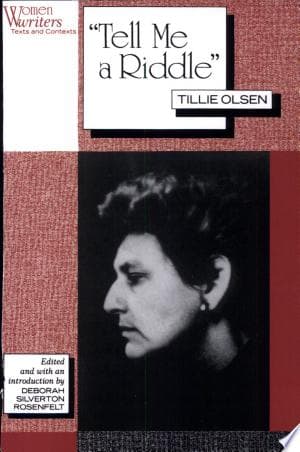
Tillie Olsen (1995)
Genre
Literary Fiction
Reading Time
324 min
Key Themes
See below
Sign in to track this book
An aging Russian-Jewish immigrant with terminal cancer embarks on a journey of self-discovery, clashing with her family as she reclaims the intellectual and artistic passions suppressed by decades of domesticity.
The story begins with Eva, an eighty-year-old woman, strongly resisting her husband David's attempts to sell their San Francisco house. David, practical, believes they can no longer care for themselves and that an old age home is the only sensible choice. Eva, however, sees the house and its objects as parts of her life, her history, and her identity. She feels a strong tie to her independence and her memories, especially those connected to her children's upbringing and her own unfulfilled intellectual goals. Their arguments are frequent and bitter, showing a lifetime of unresolved tensions and different views on life and aging. Eva's thoughts show a deep fear of losing her control and the last parts of a life she worked hard to build.
As the conflict over the house grows, Eva has clear flashbacks to her youth in Russia, her move to America, and her early marriage to David. She remembers her strong socialist beliefs, her love of learning, and her dream of a life for intellectual pursuits and social change. But the realities of poverty, raising seven children, and the constant struggle in a new country forced her to give up her personal ambitions. Her days were spent on labor—factory work, housework, and caring for her family—leaving little time for her own growth. These memories show the deep loss and resentment Eva carries, feeling her potential was sacrificed for her family, a sacrifice David never fully recognized or understood.
Concerned by their parents' growing arguments and declining health, the couple's adult children—Lennie, Vivi, Paul, and others—step in. They suggest a compromise: instead of an old age home, Eva and David could live with each of them in turns, spending a few months at a time in each child's house. While David agrees somewhat, Eva strongly resists. She sees it as another form of displacement, a loss of her own space and routine, and a confirmation of her lost independence. She fears becoming a burden and an outsider in her children's established lives. The children, though well-meaning, struggle to understand their mother's deep attachment to her home and her fear of becoming a rootless relic.
After much worry and a heated argument with David, Eva reluctantly agrees to the children's plan. The house is sold, and she prepares to leave the only home she has known for decades. Packing and sorting her belongings is emotionally painful, each object a holder of memories and unfulfilled dreams. She leaves with a deep grief and a quiet, internal protest against the unfairness of her situation. David, though relieved by the decision, largely remains unaware of Eva's internal struggle. Their departure marks the start of Eva's nomadic life, moving from one child's home to another, looking for a sense of belonging she struggles to find.
Eva first stays with her son Lennie and his family. She finds his suburban life isolating, full of unfamiliar routines and a superficiality that bothers her. She struggles with the language barrier with her grandchildren and feels like an outsider in their modern, consumer-driven world. She then moves to her daughter Vivi's home, where she has similar feelings of displacement. Vivi, a busy professional, tries to help her mother but is often busy. Eva finds herself with too much free time, her mind full of memories and a growing sense of her own death. She wants intellectual engagement and meaningful connection, but her children, though loving, cannot give her the specific companionship she desires.
During her stay with her children, Eva's physical and mental health visibly declines. She has moments of confusion, memory lapses, and increasing physical weakness. Her children notice these changes with concern, seeing them as part of old age and the stress of moving. Eva, however, is very aware of her fading abilities and the coming shadow of death. She fights against it with strong resolve, holding onto her memories and her inner life as a defense against forgetting. Her physical problems further isolate her, as her ability to engage with the world lessens, pushing her more into her own world of thought and memory.
Eva's journey takes her to her son Paul's home. Paul, a more thoughtful and intellectual child, seems to understand his mother's unspoken needs better than his siblings. He gives her books and a quiet space, recognizing her lifelong desire for knowledge. For a short time, Eva finds some comfort and intellectual stimulation, taking part in discussions and finding a shared understanding. This break is brief, as her illness continues to get worse. Paul's understanding, while comforting, cannot stop the unavoidable decline. This period highlights Eva's lasting intellectual spirit and the deep loneliness she has felt for a mindmate throughout her life.
During her stay with Paul, Eva forms a special bond with her granddaughter, Jeannie. Jeannie, a young woman with a sensitive and artistic spirit, understands Eva's inner world. She listens patiently to Eva's stories, watches her quiet struggles, and recognizes the depth of her grandmother's unspoken wisdom and pain. Jeannie's compassion and willingness to connect emotionally and intellectually give Eva a rare sense of being truly seen and understood. This relationship becomes a comfort for Eva, a brief light in her darkening world, showing the passing of wisdom and empathy across generations.
As Eva's health quickly worsens, her children decide to move her to her daughter Emily's home, which has better hospice care. Emily, practical and caring, takes on the main caregiver role. Eva is now mostly confined to bed, her awareness fading. She moves between clear and confused states, her memories becoming more vivid and fragmented. The physical pain is constant, but her mind continues to deal with the big questions of life, death, and meaning. This final move marks the last stage of her life, a time of deep self-reflection and a confrontation with her own death, surrounded by her family's love and concern, even if they cannot fully grasp her internal journey.
In her final days, Eva's mind focuses on a riddle she learned as a child: 'There was a woman, she had a child. He was not her child. He was the child of nobody. But he was her child.' This riddle, which has stayed with her throughout her life, becomes a metaphor for her own existence—a life lived for others, yet intensely her own, filled with both common experiences and unique struggles. She tries to explain its meaning, to find resolution in her broken thoughts. Her struggle with the riddle represents her lifelong search for understanding, her desire to make sense of her sacrifices, her joys, and the ultimate mystery of existence. It is her final intellectual challenge, showing her lasting spirit.
David, who has been largely separate from Eva's internal world throughout their marriage, starts to see the strong intensity of her final struggles. He sees her pain, her strength, and her mind's constant activity even as her body fails. He begins to understand, perhaps for the first time, the depth of her unfulfilled potential and the sacrifices she made. There are moments of tenderness and a quiet, unspoken reconciliation between them. He sits by her bedside, holding her hand, a gesture of late recognition and affection. This late-life understanding, though not complete, offers some peace and a validation of Eva's lifelong spirit, even if it comes at the very end.
Eva dies peacefully in her sleep at Emily's home. Her death is not a defeat but the end of a life lived with strong determination. She leaves behind her children and grandchildren, who carry parts of her story and her spirit. The riddle she thought about remains, a symbol of the deep and often unspoken experiences of women, especially immigrant women, who navigate lives of sacrifice and unfulfilled dreams. Her life, though marked by hardship, shows the enduring human spirit, the power of memory, and the complex family love and sacrifice that shapes generations.
The Protagonist
Eva struggles against the loss of her independence and home, only to find a new kind of freedom and understanding in her internal world and the quiet compassion of her granddaughter before her death.
The Antagonist/Supporting
David begins as a figure of opposition to Eva's desires, but through witnessing her decline, he gains a belated, quiet understanding and appreciation of her spirit.
The Supporting
Jeannie develops from a compassionate observer to a crucial source of understanding and comfort for Eva in her final days, embodying the bridge between generations.
The Supporting
Paul offers Eva a temporary haven of intellectual understanding, highlighting her enduring spirit even as her physical health declines.
The Supporting
Lennie attempts to care for Eva but ultimately fails to connect with her on a deeper level, highlighting the limitations of practical care without emotional understanding.
The Supporting
Vivi tries to integrate Eva into her life but ultimately highlights the generational disconnect and the challenges of balancing modern life with elder care.
The Supporting
Emily provides a final, nurturing space for Eva, embodying practical love and care in her mother's last moments.
This theme explores the sacrifices made by women, especially immigrant and working-class women, who must give up their personal goals for family survival. Eva's clear flashbacks to her youth show her intellectual hunger and socialist ideals, which were suppressed by the demands of motherhood, poverty, and housework. Her resentment and sense of loss are central to her character, showing a common societal issue where women's talents and dreams are often devalued or ignored. The 'riddle' itself can represent this problem: a life lived for others, yet intensely her own, with its unique, unspoken struggles. The story laments the 'silent' lives of many women whose potential remains unused.
“She had thought to open the world, but found herself locked in a kitchen, in a house, in a body that was not her own.”
The novel powerfully shows the deep isolation Eva feels as she ages, made worse by the age gap between her and her children. Her children, though kind, struggle to understand her deep ties to memory, her intellectual needs, and her historical context. Eva feels like an outsider in their modern, consumer-driven lives, unable to connect well. This isolation is not just physical but intellectual and emotional, as her children cannot fully grasp her rich inner world or her past sacrifices. The story highlights how elderly people, especially those from different cultures, can become invisible or misunderstood within their own families, leading to deep loneliness and feeling like a burden.
“To be seventy, to be eighty, is to be a stranger in a strange land.”
Memory is Eva's main link to her identity and a escape from the present. Her life is made of clear memories of her youth, her struggles, and her unfulfilled dreams. The house, its objects, and even the riddle itself hold these memories, making their loss feel like an erasure of herself. As her body and present abilities decline, her memories become more vivid and important, forming the core of her being. The novel shows how the past, lived and remembered, strongly shapes a person's identity, especially in old age, and how holding onto it can be a source of strength and resistance against the coming end from illness and death.
“In the end, what is there but memory? And the struggle to hold it.”
The story explores the complex and often painful dynamics of love and sacrifice within a family, especially between parents and children. Eva's life shows great sacrifice for her children, yet she often feels unappreciated and misunderstood. Her children, in turn, show love through their practical care, but sometimes lack the deeper understanding needed to truly connect with their mother's emotional and intellectual needs. David's late-life recognition of Eva's spirit shows the slow, often late, understanding that can appear in long relationships. The novel suggests that family love is not always perfect but is often a messy mix of duty, care, resentment, and a gradual, sometimes unspoken, appreciation.
“Always, always, the children, the children, the children. And what was left for herself?”
Reveals Eva's past and the origins of her internal conflicts.
Flashbacks are extensively used to provide depth to Eva's character, illustrating her rich inner life and the history that shaped her. They transport the reader to her youth in Russia, her immigrant experience, and the early, demanding years of her marriage and motherhood. These fragmented memories reveal her socialist ideals, her intellectual aspirations, and the profound sacrifices she made, explaining the intensity of her attachment to her independence and her resentment in old age. They are not linear but rather emerge organically from Eva's thoughts, mirroring the way memory works, and serving to underscore the theme of unfulfilled potential.
A central metaphor for Eva's life and the unarticulated experiences of women.
The riddle, 'There was a woman, she had a child. He was not her child. He was the child of nobody. But he was her child,' functions as a powerful, central metaphor. It represents Eva's lifelong quest for meaning and understanding, particularly concerning her own identity and the nature of her existence. It symbolizes the lives of women who dedicate themselves to others, often feeling that their 'child' (their life's work, their self) is both intimately theirs and yet not entirely their own, shaped by external circumstances and sacrifices. The riddle's ambiguity reflects the complex, often unarticulated experiences of women and the enduring mysteries of life and death, particularly as Eva grapples with it in her final days.
Provides direct access to Eva's complex inner world.
The narrative frequently employs stream of consciousness, especially when portraying Eva's thoughts and memories. This technique allows the reader direct and unfiltered access to Eva's internal monologue, her philosophical musings, her fragmented recollections, and her emotional struggles. It captures the fluidity and non-linearity of her mind, particularly as her health declines. This device is crucial for understanding Eva's character, as much of her 'action' is internal. It highlights her intelligence, her pain, and her resilience, making her internal world as significant as the external plot, and emphasizing the theme of memory and identity.
Represents Eva's identity, history, and independence.
The house and the objects within it are powerful symbols throughout the story. The house itself represents Eva's independence, her history, and the culmination of her life's work. Her fierce resistance to selling it stems from the understanding that losing the house means losing a tangible connection to her past and her sense of self. The objects – the books, the furniture, the accumulated clutter – are not mere possessions but repositories of memories, sacrifices, and unfulfilled dreams. They symbolize the richness of her inner life and the deep emotional attachment she has to her lived experience, making their dispersal feel like an erasure of her very being.
“They had lived in a double poverty. He with his dreams, she with her memories.”
— Reflecting on the couple's long and difficult life together.
“And the children, no longer children, had grown into their own separate lives, carrying parts of her, parts of him, into their own separate futures.”
— The children have grown and moved away, creating distance from their parents' lives.
“She was a woman of mourning, who had learned to live with the unsaid, the undone.”
— Describing Eva's internal world and her history of suppressed grief and unfulfilled desires.
“The past, which she had thought was a closed book, was opening, page by page, in the light of the present.”
— Eva's memories resurface as she confronts her illness and mortality.
“For a long time she had not thought of herself as a person, but as a function.”
— Eva reflects on her life, primarily defined by her roles as wife and mother.
“How many voices were in her, how many lives had she lived, how many had she suppressed?”
— As Eva contemplates her life, the richness and complexity of her inner world become apparent.
“She had wanted to live, to know, to be. Not just to be a conduit for others' lives.”
— Eva's yearning for personal fulfillment beyond her family roles.
“He wanted to talk, to argue, to convince. She wanted to be quiet, to remember, to understand.”
— The contrasting communication styles and desires between the old man and Eva.
“It was not just her life she was remembering, but a whole generation's life.”
— Eva's personal history intertwines with the broader experiences of her generation, especially immigrants and radicals.
“And in the silence, her thoughts rose like bubbles, iridescent, fragile, holding the light.”
— Eva's internal world becomes vivid and active as she withdraws from external demands.
“The riddles, the songs, the stories, they were the stuff of her being, the way she had made sense of the world.”
— Highlighting the importance of cultural heritage and storytelling to Eva's identity.
“She wanted to die in her own bed, in her own home, among her own things, with her own memories.”
— Eva's fierce desire for autonomy and dignity in her final days.
“And the riddle, which had seemed so simple, was now full of complexities, full of the unanswerable questions of life.”
— The central metaphor of the riddle deepens as the narrative progresses, reflecting life's ambiguities.
Ready to see how well you understood this book? Take our interactive quiz with 10 questions.
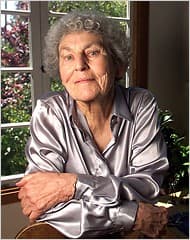
Tillie Lerner Olsen was an American writer who was associated with the political turmoil of the 1930s and the first generation of American feminists.







