“There are some things you can't outrun, no matter how fast you are.”
— Eel's internal thought about the inescapable nature of her past and destiny.

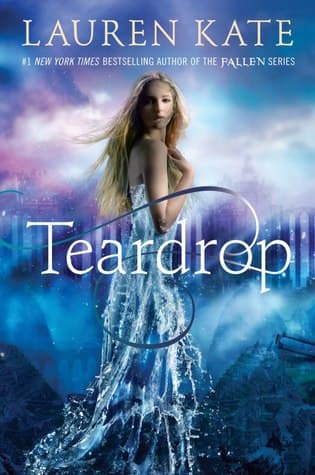
Lauren Kate (2013)
Genre
Fantasy / Young Adult / Romance
Reading Time
440 min
Key Themes
See below
Sign in to track this book
A teen, grieving her mother's death and drawn to a mysterious boy, learns she's part of an ancient myth where her tears can flood continents, forcing her to face a destiny that might drown everything she cares about.
Seventeen-year-old Eureka Boudreaux is haunted by her mother, Diana's, death six months ago. Diana drowned in a lake while Eureka watched, unable to help, and Eureka hasn't cried since. Her only comfort comes from her best friend, Cat, and her therapist, Dr. Bello. Her life becomes more complicated with the sudden, constant appearance of a mysterious boy with turquoise eyes named Ander. He seems to know things about her, follows her, and feels strangely familiar, though Eureka doesn't remember meeting him. His presence is both comforting and unsettling, hinting at a connection she can't understand.
While going through her mother's belongings, Eureka finds a strange, leather-bound book called 'The Book of L.' It is filled with an ancient, unreadable language and detailed drawings. Inside, she finds a hidden message from her mother, telling her to 'never, ever cry' and warning her about the danger of her tears. This cryptic message, along with the book's unusual contents, makes Eureka more uneasy and curious. The book seems very important, directly linking to her mother's death and the strange events happening around her, making her question everything she thought she knew about her family.
Ander finally talks to Eureka, telling her the truth about 'The Book of L.' and her heritage. He explains that the book tells the story of Atlantis, a continent submerged by the tears of a heartbroken girl named Lyra. Eureka, he says, is a descendant of Lyra, and her tears have the same destructive power. Her mother, Diana, knew this and spent her life protecting Eureka from this dangerous inheritance. Ander is an 'Atlantean,' part of a group tasked with guiding and protecting Lyra's descendants. He has been watching Eureka to ensure she doesn't cry and accidentally cause another disaster.
Overwhelmed by Ander's revelations and her ongoing grief, Eureka finally sheds a tear. To her horror and Ander's confirmation, the single tear causes an immediate local environmental disturbance: a small flood erupts, plants grow quickly, and the air becomes humid. This dramatic event proves Ander's incredible story and the immense power she unknowingly holds. The incident frightens Eureka, forcing her to face the reality of her dangerous gift and the great responsibility she now has, confirming her belief in the ancient legend.
Ander explains that another group, 'The Seekers,' also knows about Lyra's descendants and their power. Unlike the Atlanteans, The Seekers want to use this power for their own harmful goals, possibly to cause another flood and change the world. He warns Eureka that they will hunt her now that her power has awakened. This news adds danger and urgency to Eureka's situation, as she realizes she is not only powerful but also a target in a centuries-old conflict. She understands that her life, and possibly the world, is now in danger.
Ander begins to train Eureka, teaching her about her abilities and the history of the Atlanteans. He reveals that Lyra's descendants can not only cause floods with their tears but also have other water-related powers, such as sensing water and influencing plant growth. During these lessons, their connection grows, and Eureka feels drawn to Ander, despite their unusual circumstances. He teaches her to control her emotions, manage her grief, and understand the delicate balance she must maintain to prevent another catastrophe. This training is vital for her survival and the world's safety.
The Seekers, led by the mysterious and ruthless Atlas, find Eureka and attack. During the intense fight, Eureka must use her developing powers to defend herself and Ander. She instinctively controls water, creating barriers and deflecting attacks, showing raw but strong control over her abilities. This violent encounter confirms the threat from The Seekers and pulls Eureka deeper into the supernatural world she now lives in. It is a terrifying but empowering moment, as she realizes the extent of her capabilities and the urgent need to master them for survival.
Eureka's best friend, Cat, grows suspicious of Eureka's strange behavior and the mysterious boy always with her. After seeing a small display of Eureka's powers or hearing an important conversation, Cat confronts Eureka, demanding answers. Reluctantly, Eureka tells Cat the truth about her powers, Ander, and The Seekers. Cat, initially disbelieving, eventually accepts the fantastical reality, promising to help Eureka in any way she can. This strengthens their friendship but also puts Cat in danger, drawing her into Eureka's perilous new world.
Ander reveals an ancient Atlantean ritual that could sever Eureka's connection to Lyra's destructive power, allowing her to live a normal life without the constant threat of causing a flood. The ritual, however, is dangerous and requires a significant sacrifice. Eureka is torn; a normal life is appealing, but she fears the unknown results and the possible loss of her unique abilities, which have become part of her identity. The decision weighs heavily on her, as she considers the implications for her future and her relationship with Ander.
Through a strong emotional experience or a direct connection helped by Ander, Eureka has a vivid vision or memory of Lyra, the girl whose tears drowned Atlantis. She witnesses Lyra's deep grief, the heartbreak that caused the disaster, and the despair that led to the world-changing event. This vision gives Eureka a deeper understanding of her heritage and the immense emotional burden Lyra carried. It confirms the weight of her own power and the importance of controlling her emotions, highlighting the tragic beauty and terrifying potential of her lineage. The vision is both a warning and a source of empathy.
The final confrontation with Atlas and The Seekers happens. Atlas tries to force Eureka to cry, believing her tears will empower him or let him control the resulting disaster. Eureka, with Ander's help and her growing control of her powers, fights back fiercely. She uses her water manipulation abilities creatively, trying to protect her friends and prevent another global disaster. The battle is intense, testing her emotional control and physical limits. She must decide whether to embrace her power or try to suppress it completely, all while facing a strong enemy determined to exploit her.
After the confrontation with Atlas, Eureka faces a critical decision about the ritual and her powers. She considers severing her connection to Lyra, weighing the safety it might bring against the potential loss of her unique identity and her connection to Ander. She realizes that her powers, though dangerous, are also part of who she is. She must choose a path that will define her future, either accepting her heritage and its responsibilities or trying to escape it, a choice that will have major effects on herself and the world.
The Protagonist
From a grieving, emotionally numb girl, Eureka transforms into a powerful Atlantean descendant who learns to control her dangerous abilities and accept her destiny.
The Love Interest / Supporting
Ander's arc involves balancing his ancient duty with his growing personal feelings for Eureka, eventually prioritizing her well-being above strict adherence to Atlantean law.
The Supporting
Cat transforms from a typical high school friend into a brave and understanding ally, accepting the fantastical reality of Eureka's life.
The Mentioned / Catalyst
Diana's arc is revealed retrospectively, showing her journey from a loving mother to a protector who made the ultimate sacrifice to shield her daughter from a dangerous legacy.
The Antagonist
Atlas's arc remains largely consistent as a persistent antagonist, driven by his ambition to control the power of Lyra's tears.
The Supporting
Dr. Bello's arc is static, serving as a grounding force who remains largely outside the supernatural conflict.
The Mentioned / Ancestor
Lyra's arc is entirely historical, revealed through ancient texts and visions, showcasing her tragic role in the world's history.
At its heart, 'Teardrop' explores the destructive and changing power of human emotion, especially grief. Eureka's inability to cry after her mother's death is not just a psychological symptom but a literal suppression of a world-altering power. The legend of Lyra, who drowned a continent with her tears, directly links emotional pain to catastrophic physical outcomes. The novel suggests that while grief can be paralyzing, its unacknowledged or uncontrolled force can have devastating results, both inside and out. Eureka's journey is about learning to manage, rather than suppress, her emotions to prevent global catastrophe, as seen when her first tear causes a local flood.
“Never, ever cry.”
The novel deals with destiny versus free will. Eureka is born with a predetermined, dangerous power and an ancient legacy. Ander and the Atlanteans believe her destiny is to prevent another flood, while The Seekers aim to force her into fulfilling a different, destructive destiny. Eureka, however, tries to create her own path, resisting the idea that her life is entirely controlled by her heritage. Her struggle to control her powers and her decision about the ritual to sever her connection to Lyra show this conflict, highlighting whether she can truly escape or redefine the fate set for her by past generations.
“Your tears could drown the world. It is your destiny to prevent it.”
Sacrifice and protection are key themes, shown by Diana Boudreaux's actions. Her death, initially appearing as an accident, is revealed to be a protective measure and a sacrifice to shield Eureka from her powers and The Seekers. Ander also shows this theme, dedicating his existence to protecting Eureka and humanity from the potential disaster of her tears. The characters constantly make difficult choices, prioritizing the safety of others or the world over their personal desires or well-being, emphasizing the great responsibility that comes with great power and love. This is clear in Diana's hidden warnings and Ander's constant watch.
“Your mother died to protect you. Don't let her sacrifice be in vain.”
Eureka's journey deeply explores the burden of having extraordinary power. Her tears, a natural human response, become a weapon, turning a personal expression of sorrow into a potential global disaster. This forces her to live under immense emotional restraint, isolating her from normal human experiences. The novel highlights the psychological cost of such a burden, as Eureka struggles with fear, responsibility, and the constant threat of accidentally causing destruction. Her power is both a source of danger and, potentially, a tool for good, but it is always a heavy weight she must carry.
“Every tear you cry is a drop of the ocean. And the ocean is a cruel master.”
An ancient, cryptic book containing the history of Atlantis and Lyra.
The Book of L. is a central plot device, serving as the primary source of exposition for the Atlantean mythology. It's an ancient, untranslatable text, initially found by Eureka's mother, Diana. It contains the legend of Lyra and the sinking of Atlantis, along with Diana's hidden messages. This book acts as a physical link to Eureka's past, her mother's research, and the fantastical world she's thrust into, slowly revealing the truth about her powers and heritage. Its mysterious nature draws Eureka into the supernatural conflict.
A psychological symptom that hides a supernatural safeguard.
Eureka's inability to shed tears after her mother's death is initially presented as a psychological symptom of her grief and trauma. However, it is revealed to be a supernatural safeguard, a subconscious or inherited mechanism to prevent her destructive powers from manifesting. This device creates immediate mystery and foreshadows the true nature of her abilities. It also highlights the central theme of suppressed emotion and its profound consequences, making her eventual tears a pivotal moment of revelation and danger.
A centuries-old war between two factions vying for control over Lyra's descendants.
This ancient conflict provides the overarching external antagonist and stakes for Eureka's story. The Atlanteans, represented by Ander, seek to protect Lyra's descendants and prevent another global flood. The Seekers, led by Atlas, aim to exploit or control the power for their own gain. This ideological struggle creates immediate danger for Eureka, forcing her to choose sides and understand the profound implications of her heritage. It grounds the personal story of Eureka's grief in a larger, world-threatening struggle.
Brief, immersive experiences that connect Eureka to her ancient ancestor.
These visions or flashbacks allow Eureka (and the reader) to directly experience fragments of Lyra's past, particularly her heartbreak and the moments leading up to the original flood. They serve as powerful exposition, providing emotional context and a deeper understanding of the immense power Eureka wields. This device not only enhances the mythological depth of the story but also creates a strong emotional connection between Eureka and her ancestor, reinforcing the themes of grief and inherited power.
“There are some things you can't outrun, no matter how fast you are.”
— Eel's internal thought about the inescapable nature of her past and destiny.
“The ocean was a mirror, reflecting not just the sky, but all the secrets held beneath.”
— Eel's observation of the sea, hinting at its hidden depths and mysteries.
“Some tears are meant to be shed. Others are meant to be kept.”
— A philosophical thought about the power and meaning of tears, central to the story's mythology.
“He looked at her like she was the only thing in the world worth seeing.”
— Eel's perception of Lyon's gaze, highlighting their intense connection.
“Fear was a cold, sharp thing, but it was also a familiar companion.”
— Eel's internal reflection on her constant state of apprehension and the dangers she faces.
“The past was a current, always pulling, always threatening to drag you under.”
— Eel's struggle with her unknown history and the forces that are drawing her back to it.
“Every drop of water had a memory, a story it was waiting to tell.”
— A glimpse into the magical properties of water and tears in the Teardrop world.
“There was a difference between knowing and understanding. And she understood nothing.”
— Eel's frustration with the enigmatic circumstances surrounding her life and identity.
“He was a storm and she was the sea, and together they were unstoppable.”
— A metaphorical description of the powerful and fated connection between Eel and Lyon.
“The truth was a slippery thing, always just out of reach.”
— Eel's ongoing quest for answers and the difficulty in uncovering the full story.
“Some secrets were best left buried, no matter how much they clawed at the surface.”
— A warning about the dangers of uncovering certain truths, often ignored by the protagonists.
“She was a creature of the sea, even if she'd spent her life trying to forget it.”
— Eel's inherent nature and destiny as a descendant of the ancient tear-shedding people.
“Love was a dangerous game, especially when the stakes were your very existence.”
— Eel's realization of the profound risks involved in her burgeoning relationship with Lyon.
“Every wave brought with it a promise and a threat.”
— Eel's contemplation of the ocean, symbolizing the dual nature of hope and peril in her journey.
Ready to see how well you understood this book? Take our interactive quiz with 10 questions.

Biography coming soon.







