“I am Tarzan of the Apes! I am a great killer. I am a mighty fighter. I am a brave hunter. I am a clever tracker. I am a fierce warrior. I am a terrible enemy. I am a staunch friend.”
— Tarzan's self-proclamation and identity.

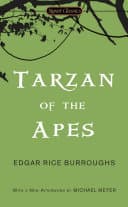
Edgar Rice Burroughs (2008)
Genre
Fantasy / Science Fiction
Reading Time
500 min
Key Themes
See below
Sign in to track this book
Raised by apes in the heart of the African jungle, the orphaned Tarzan grapples with his primal instincts and newfound humanity when a beautiful woman from the civilized world invades his untamed paradise.
John Clayton, Lord Greystoke, and his pregnant wife, Alice, are marooned on the remote West African coast after a mutiny on their ship, the Fuwalda. They build a cabin and struggle to survive in the harsh jungle environment. Lady Greystoke gives birth to their son, John Clayton II. Lady Greystoke dies of jungle fever, and soon after, Lord Greystoke is killed by Kerchak, the leader of a tribe of great apes. The infant is left alone in the cabin, where he is discovered by Kala, a female ape who has recently lost her own baby. Kala, driven by maternal instinct, adopts the human child and raises him as her own.
Kala names the human infant 'Tarzan,' which means 'White Skin' in the ape language. Tarzan grows up feeling different from his ape family because he lacks fur, strength, and natural climbing ability. He learns to hunt, gather food, and communicate with the apes. His intelligence helps him observe and learn quickly. He discovers his parents' cabin and, using their picture books, begins to teach himself to read English, though he doesn't understand the sounds of the words. He also finds his father's hunting knife, which becomes a tool for his survival and dominance in the jungle.
As Tarzan matures, his physical ability increases, and his intellect helps him devise strategies beyond the capabilities of the apes. He often clashes with Kerchak, the leader of the ape tribe, who views Tarzan as an outsider and a threat. Tarzan improves his fighting skills, using his knife and human cunning against the apes' brute strength. Eventually, Tarzan fights Kerchak in a battle, killing the old ape and becoming the new king of the ape tribe. This victory solidifies his place, though he still feels different.
Tarzan's life changes when a tribe of cannibalistic native Africans, led by Mbonga, establishes a village near the ape territory. Tarzan observes them from a distance, interested in their appearance and customs, which are more similar to his own than those of the apes. He engages in a series of stealthy interactions, stealing their weapons and learning their ways. He rescues one of the native women, Teeka, from a lion, earning her respect but also becoming a mysterious, formidable presence in the jungle, known as the 'ghost' or 'demon' by the natives.
Years later, a new group of white people arrives on the same stretch of coast. This party includes Professor Archimedes Q. Porter, his daughter Jane, their servant Esmeralda, and their rescuer, William Cecil Clayton (who is, unknown to them, Tarzan's cousin). They are marooned after their ship, the Arrow, is damaged. Tarzan, observing them from the trees, is captivated by Jane Porter, recognizing her as one of his own kind and feeling an intense, unfamiliar attraction. He secretly watches over them, protecting them from jungle dangers and the native tribe, often leaving behind signs of his presence.
Tarzan's interest in Jane deepens. He saves her from a charging ape, Terkoz, and later from a lion attack. During these rescues, he carries her to safety, experiencing a physical and emotional connection. He brings her to his cabin, where he has carefully preserved his parents' belongings, including photographs and books. He leaves her there, safe, and returns to the jungle. Tarzan continues to secretly provide for the marooned party, leaving them food and supplies, all while struggling to reconcile his ape upbringing with his developing human instincts and feelings for Jane.
A French naval vessel arrives, searching for the lost American party. Lieutenant Paul D'Arnot lands and is soon captured by the native tribe. Tarzan rescues D'Arnot, taking him to his cabin. Using the picture books and D'Arnot's instruction, Tarzan rapidly learns to speak and write French, showing his intelligence. D'Arnot, impressed by Tarzan's noble manner despite his wild upbringing, recognizes him as a gentleman and begins to suspect his true identity as the lost Lord Greystoke. D'Arnot promises to help Tarzan find his place in human society and to reunite him with Jane.
Tarzan, accompanied by D'Arnot, travels to France and then to America, intending to find Jane Porter. He adapts quickly to civilization, though he finds many aspects of it confusing. He learns of his true identity as John Clayton, Lord Greystoke, and the heir to a fortune. He also learns that William Cecil Clayton, his cousin, has falsely claimed the title and is now engaged to Jane. Despite his heartbreak, Tarzan vows to protect Jane and ensure her happiness, even if it means sacrificing his own desires and allowing her to marry his cousin, whom she believes to be the rightful Lord Greystoke.
Tarzan encounters Jane and William Cecil Clayton in Wisconsin. He initially plans to reveal his identity and claim his birthright, but seeing Jane's apparent happiness with William, he hesitates. He intercepts a letter from Professor Porter to Jane, confirming that William is the impostor and that Tarzan is the true Lord Greystoke. However, fearing that revealing the truth would cause Jane pain and potentially ruin her reputation, Tarzan chooses to suppress the evidence. He allows Jane to believe she is marrying the rightful Lord Greystoke, sacrificing his own claim to the title and to Jane's love for her perceived happiness.
Before Jane's wedding, Tarzan visits her one last time. He expresses his admiration and love for her in a way she doesn't fully comprehend, still unaware of his true identity. He gives her a locket containing a miniature portrait of his mother, Alice, which Jane recognizes as the face of the woman in the cabin. This gesture, along with his mysterious words, leaves Jane with a sense of wonder and confusion. Tarzan then departs, leaving her to marry William Cecil Clayton, but not before subtly hinting that he might return. The novel ends with Tarzan embracing his dual nature, a civilized man with the heart of a jungle lord, always watching over Jane from afar.
The Protagonist
He transforms from a wild, instinct-driven ape-man into a noble, self-sacrificing gentleman, bridging the gap between savagery and civilization.
The Love Interest / Supporting
She evolves from a helpless maiden in distress to a woman deeply affected by her encounter with Tarzan, hinting at a future where she might embrace his wild nature.
The Supporting
Her arc is primarily as a steadfast maternal figure whose sacrifice profoundly shapes Tarzan's identity and future actions.
The Antagonist / Supporting
His arc is that of a dominant antagonist who is ultimately overthrown by the superior intelligence and evolving strength of the protagonist.
The Supporting
He serves as the catalyst for Tarzan's integration into human society, evolving from a captive to a loyal friend and mentor.
The Supporting
His arc is largely static, serving as a representation of intellectual but impractical humanity, and a plot device for Tarzan's self-education.
The Supporting / Antagonist
He remains largely unaware of his true role as an impostor and a rival, serving as a foil to Tarzan's noble self-sacrifice.
The Mentioned / Supporting
Represents the constant, unchanging threat of the jungle, against which Tarzan continually proves his mastery.
The Mentioned / Supporting
Represents the raw, untamed power of nature that Tarzan learns to navigate and, at times, control.
The Supporting
His arc shows a gradual shift from teasing superior to impressed companion as Tarzan's abilities develop.
The novel explores whether a person's identity is determined by their genetics or their upbringing. Tarzan, born a British nobleman, is raised by apes. Despite his wild environment, his human intelligence and nobility continually assert themselves, as seen in his ability to learn to read independently and his compassion. Conversely, his ape upbringing gives him physical prowess and a deep understanding of the natural world, making him superior to most civilized men in the jungle. This theme questions what truly defines a 'man.'
“''He was a man in the full vigor of his early manhood, but a man with the training and environment of a wild beast.''”
Tarzan's central struggle is to understand who he is. He feels different from the apes, yet he is unfamiliar with humans. His discovery of his parents' cabin, the books, and the photographs provides the first clues to his true heritage. His encounters with Jane and D'Arnot further propel his quest for identity, forcing him to reconcile his 'ape-man' nature with his aristocratic birthright. The journey is not just physical but internal, as he navigates his dual existence and eventually chooses to embrace both aspects of himself.
“''He was Tarzan of the Apes, but he was also John Clayton, Lord Greystoke.''”
Burroughs contrasts the honesty of the natural world with the artificiality and often hypocrisy of human society. Tarzan embodies the 'noble savage' ideal, possessing a physical and moral superiority often lacking in the 'civilized' characters. While he eventually seeks to integrate into human society for Jane's sake, he frequently finds its customs illogical and its people weak or deceitful. The jungle, despite its dangers, offers a clear existence, while civilization presents complex social rules and hidden motives, showing the tension between instinct and societal convention.
“''He was a savage, but he was a gentleman.''”
Love, particularly Tarzan's love for Jane, is a transformative force. His attraction to Jane is the main reason for his desire to understand his human heritage and integrate into society. This love goes beyond physical attraction, leading to self-sacrifice. Tarzan's ultimate decision to conceal his true identity and allow Jane to marry William Cecil Clayton, believing it would secure her happiness, shows a selfless and noble form of love. This theme shows that true love involves prioritizing the beloved's well-being, even at great personal cost.
“''He loved her with all the power of his primitive, untamed heart, and he would have died for her a thousand times.''”
The novel, set in colonial Africa, reflects contemporary attitudes towards indigenous populations and the wilderness. The native African tribes are often depicted as primitive and violent cannibals, serving as a dangerous 'other' against which both Tarzan and the white explorers define themselves. The arrival of white explorers and their attempts to impose their will or establish their presence in the jungle also touch upon themes of colonial expansion and the perceived right of Westerners to explore and exploit foreign lands. Tarzan, an 'other' to both apes and humans, navigates these cultural situations.
“''To Tarzan, the black men were as strange as the great apes, and almost as repulsive.''”
A physical link to Tarzan's past and a repository of human knowledge.
The cabin built by Lord and Lady Greystoke serves as a crucial plot device. It is Tarzan's first connection to his human heritage, containing objects like books, a knife, and photographs. The books allow Tarzan to independently learn to read, demonstrating his extraordinary intellect and providing a foundation for his eventual understanding of spoken language. The cabin also serves as a sanctuary and a symbol of his dual identity, a place where he can be both the ape-man and the potential heir to a human legacy. It acts as a bridge between his two worlds.
A symbol of human ingenuity and a tool for dominance in the jungle.
Lord Greystoke's hunting knife, discovered by young Tarzan in the cabin, becomes an extension of his will and a symbol of human ingenuity. Unlike the apes' brute strength, the knife allows Tarzan to overcome physically superior opponents, including Kerchak, and assert his dominance in the jungle. It represents the technological advantage of humanity over nature and is a constant reminder of his human origins. The knife is essential for his survival, hunting, and ultimately, his rise to power among the apes.
A central obstacle and a key to Tarzan's integration into human society.
The inability to communicate verbally initially isolates Tarzan from both the apes (who have their own complex language he understands) and later from humans. His self-taught literacy from his parents' books is an extraordinary feat, but he cannot speak. This barrier creates dramatic tension and highlights his 'otherness.' Lieutenant D'Arnot's patient teaching of French to Tarzan is a pivotal moment, as it unlocks Tarzan's ability to communicate with his own kind, allowing him to learn about his past and navigate the complexities of human civilization.
A source of dramatic irony and conflict, driving the romantic subplot.
The mistaken identity of William Cecil Clayton as the rightful Lord Greystoke, and Jane's belief in this, creates significant dramatic irony and emotional conflict. The audience knows Tarzan's true lineage, but the characters do not. This device fuels Tarzan's internal struggle and ultimate self-sacrifice, as he chooses to protect Jane's happiness by allowing her to marry his impostor cousin. It highlights themes of nobility and selflessness, as Tarzan prioritizes Jane's perceived well-being over his own claim to title and love.
“I am Tarzan of the Apes! I am a great killer. I am a mighty fighter. I am a brave hunter. I am a clever tracker. I am a fierce warrior. I am a terrible enemy. I am a staunch friend.”
— Tarzan's self-proclamation and identity.
“He was an enigma, a paradox, a creature of two worlds, and yet belonging to neither.”
— Narrator describing Tarzan's unique position.
“For the first time in his life Tarzan realized the full significance of the power of speech.”
— Tarzan learning to read and understand human language.
“He knew nothing of the world beyond his jungle, yet he was a man, and a king in his own right.”
— Describing Tarzan's innate regality despite his wild upbringing.
“And the ape, seeing the tiny babe, and noting that it was of her own kind, and yet so different, was filled with a strange, maternal longing.”
— Kala, the ape, discovering and adopting the infant Tarzan.
“He was a wild thing, but he was a gentleman by birth.”
— Contrasting Tarzan's savage upbringing with his inherent noble lineage.
“Love is not a thing of the mind, but of the heart.”
— Tarzan's evolving understanding of love, particularly for Jane.
“The jungle is a cruel master, but a just one.”
— Reflecting on the harsh realities and inherent fairness of the jungle's laws.
“He saw that the things he had learned from his books were not always true in practice.”
— Tarzan encountering discrepancies between his book knowledge and real-world experience.
“She was a woman, and he was a man, and the primeval law of nature drew them irresistibly together.”
— Describing the strong attraction between Tarzan and Jane Porter.
“To him the jungle was an open book, whose every page was familiar.”
— Tarzan's profound intimacy and understanding of his jungle environment.
“For the first time in his life, he knew fear.”
— Tarzan's encounter with a new, overwhelming threat or emotion.
“Civilization, he found, was often more savage than the jungle.”
— Tarzan's observations on the cruelty and hypocrisy of human society.
Ready to see how well you understood this book? Take our interactive quiz with 10 questions.
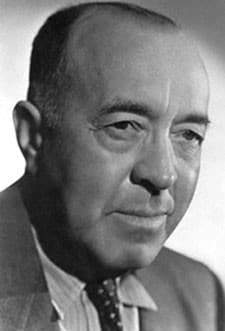
Edgar Rice Burroughs was an American writer, best known for his prolific output in the adventure, science fiction, and fantasy genres. Best-known for creating the characters Tarzan and John Carter, he also wrote the Pellucidar series, the Amtor series, and the Caspak trilogy.







