“I will fly over the city, past the Empire State Building, and the George Washington Bridge, and the lights of the city will be like diamonds.”
— Cassie's dream of flying above New York City.


Faith Ringgold (1991)
Genre
Fantasy / Children's / Historical Fiction / Creativity
Reading Time
5 min
Key Themes
See below
Sign in to track this book
Eight-year-old Cassie, in 1939 Harlem, turns her rooftop 'tar beach' into a magical place, using imagination to dream of freedom and belonging in a story that celebrates African-American heritage.
Eight-year-old Cassie Louise Lightfoot introduces herself and her favorite place: the tar beach rooftop of her Harlem apartment building in 1939. This is where her family goes to cool off on hot summer nights. She recalls one evening with her mother, father, and little brother, Be Be, sharing a picnic of fried chicken, watermelon, and soda pop. As her parents talk, Cassie lies on a blanket, looking at the stars, and begins to imagine she can fly. This rooftop, covered in tar paper, becomes the starting point for her fantastical journey.
Cassie describes her first flight, soaring high above the buildings of Harlem. She feels free and powerful as she glides through the night sky. Her main goal is to claim the George Washington Bridge, which her father helped build but was never allowed to join the union for. She imagines herself wrapping the bridge in her arms, declaring it hers and her family's. This is a symbolic act of ownership and recognition for her father's unacknowledged work. This act is not just for her father, but for all the Black people who helped build it.
Continuing her flight, Cassie sees the ice cream factory. She knows her mother loves ice cream, especially peach, and her father enjoys it too. Using her new power of flight, Cassie decides to claim the ice cream factory. By 'claiming' it, she imagines a future where her family will always have ice cream, getting free scoops whenever they want. This playful act shows her wish to provide for her family and bring them joy, using her imagination to overcome everyday limits.
Cassie thinks about her father, a skilled construction worker who built many of New York's famous buildings, including the George Washington Bridge. She regrets that he has to work long hours, often in dangerous conditions, and never gets to fly. She wishes she could share her flying ability with him so he would not have to work so hard and could enjoy life more. This shows Cassie's deep love for her father and her desire to ease his burdens through her imagination.
Building on her wish to help her father, Cassie imagines him flying with her to the union building. In her dream, his ability to fly would grant him entry and membership into the union, a privilege denied to him in reality due to racial prejudice. This act symbolizes her wish for fairness and equality for her father, allowing him to receive the recognition and fair treatment he deserves for his hard work and skill. It makes a statement about racial discrimination in the workplace.
Cassie's flight goes beyond Harlem. She soars over various New York City landmarks, including the Empire State Building and the Statue of Liberty. With each landmark, she 'claims' it for her family. This act is not about literal ownership, but about asserting her family's right to belong and thrive in a city that often excludes them. It is a statement of identity and belonging, as she symbolically reclaims spaces that represent the American dream.
After her solo adventures, Cassie returns to the tar beach and finds her little brother, Be Be, still asleep on the blanket. She gently wakes him and invites him to join her flight. She describes carrying him in her arms, and together they fly over the city, sharing the magical experience. This moment shows Cassie's protective and caring nature, and her desire to share her joy and freedom with her beloved sibling, extending the power of imagination to him.
Cassie and Be Be fly even higher, among the twinkling stars. Cassie imagines the stars are diamonds, scattered across the night sky. She describes how they are so close she can almost touch them, and she envisions collecting them. This further shows the boundless nature of her imagination and her ability to turn ordinary things into something precious and magical. It is a beautiful image of childhood wonder and the richness of her inner world.
As the night progresses, Cassie and Be Be gently descend back to the tar beach rooftop. The dream flight ends as they land softly on their blanket, still surrounded by their sleeping family. The transition from the fantastical flight back to the reality of the rooftop is smooth, suggesting that imagination stays even when awake. The experience, though a dream, feels real and empowering to Cassie.
The next morning, Cassie wakes up, the memory of her flight clear and fresh. She knows that even though it was a dream, the sense of freedom and power she felt is real within her. She carries the magic of her tar beach adventure into her day, understanding that her imagination can go beyond the limits of her reality. The story ends with Cassie believing in her ability to fly, both in her dreams and through her spirit.
The Protagonist
Cassie develops from a child observing her world into a powerful dreamer who actively reclaims and redefines her world through imagination.
The Supporting
Her character remains consistent as a supportive maternal figure.
The Supporting
His struggles provide the impetus for Cassie's imaginative acts of empowerment, though his personal arc within the story is static.
The Supporting
Be Be experiences the dream flight alongside Cassie, representing shared childhood wonder.
The main theme of 'Tar Beach' is the power of imagination. Cassie's ability to fly is not just a fantasy; it is a way to cope and feel strong. From the ordinary rooftop, she creates a world where she can claim landmarks, get ice cream, and grant her father union membership, overcoming the limits of her 1939 Harlem reality. Her dreams allow her to take control and find joy amid racial and economic hardship, showing that inner freedom can overcome outside restrictions.
“I will always be free to fly as long as I remember who I am.”
The story addresses racial injustice through Cassie's father's experience. He helped build the George Washington Bridge but was denied union membership because of his race. Cassie's imaginative act of 'claiming' the bridge and wishing her father could fly to the union building is a symbolic reclaiming of dignity and justice. Her flights are an act of empowerment, challenging the unfairness African Americans faced in the 1930s, allowing her to symbolically correct wrongs that are beyond her control in reality.
“I claimed the George Washington Bridge. That bridge my daddy helped build. I told him it belonged to us. He was so proud.”
Family love is a key part of 'Tar Beach.' The story opens with a warm picture of the Lightfoot family enjoying a picnic on their rooftop, showing their close bonds. Cassie's imaginative flights are often driven by her desire to help her family—getting ice cream for her mother, freeing her father from hard work, and sharing the joy of flight with Be Be. The 'tar beach' itself is a shared space, representing the warmth and strength of the Harlem community, where families find comfort and connection despite their circumstances.
“We'd have a picnic of fried chicken and watermelon and soda pop.”
The story is rooted in African American identity and heritage, from the Harlem setting in the 1930s to the specific struggles her father faced. The story celebrates strength within the community, using the 'tar beach' as a unique cultural space. Ringgold's visual style, often inspired by story quilts, further supports this theme, connecting the story to a rich tradition of Black artistic expression and storytelling. Cassie's dreams are not just personal but also reflect a shared desire for freedom and recognition.
“Sleeping on 'tar beach' was better than any air-conditioned bedroom, and cooler than any park with its grass and trees.”
The blending of a realistic setting with fantastical elements, such as flying.
The story seamlessly integrates the magical act of Cassie flying with the very real and grounded setting of 1939 Harlem. This device allows for a deeper exploration of themes like freedom and empowerment, as Cassie's fantastical abilities directly address the real-world limitations and injustices she and her family face. The flying isn't questioned within the narrative; it's presented as a natural extension of Cassie's inner world, making the symbolic acts of 'claiming' feel tangible and impactful.
The story is told from the perspective of the protagonist, Cassie Louise Lightfoot.
By telling the story through Cassie's eyes, the reader gains intimate access to her thoughts, feelings, and imaginative world. This perspective makes her dreams and desires deeply personal and relatable. Her innocent yet profound voice allows complex themes like racial injustice to be understood through a child's hopeful lens, making the message more poignant and accessible. It emphasizes the subjective power of her imagination.
Flying represents freedom, empowerment, and transcending limitations.
Cassie's ability to fly is the most prominent symbol in the story. It represents her escape from the economic and racial constraints of her reality, offering her a sense of boundless freedom and control. Her flights are not just physical; they are acts of symbolic empowerment, allowing her to 'claim' what is rightfully hers or her family's, and to soar above the struggles that ground others. It embodies the human spirit's capacity to rise above adversity through imagination and hope.
The rooftop serves as both a mundane family gathering spot and a magical launchpad.
The 'tar beach' is a powerful symbol of transformation. What is in reality a tar-papered rooftop, a common feature of city apartments, becomes in Cassie's imagination a magical, cool, and liberating space. It's where her family finds respite from the heat and where Cassie finds the inspiration to fly. This duality highlights how ordinary environments can be imbued with extraordinary meaning and possibility through the lens of imagination and childhood wonder.
“I will fly over the city, past the Empire State Building, and the George Washington Bridge, and the lights of the city will be like diamonds.”
— Cassie's dream of flying above New York City.
“Being eight years old and flying over New York City is the best.”
— Cassie's joyful exclamation while imagining herself flying.
“That's me, Cassie Louise Lightfoot, and I'm flying.”
— The opening line, introducing the protagonist and her magical ability.
“My daddy could fly. He took me flying over the bridge to see where he helped build it.”
— Cassie connecting her imaginative flight to her father's work as a builder.
“I can fly anywhere I want to. And I can make anything happen.”
— Cassie asserting her power and control through her imagination.
“The stars were so close that I could almost touch them.”
— Describing the view from her imagined flight above the city at night.
“This is my building. My daddy helped build it. He's a union man.”
— Cassie's pride in her father's labor and his contribution to the city.
“I flew over the bridge, the George Washington Bridge, that Daddy helped build.”
— Cassie revisiting the bridge, connecting her fantasy to her father's reality.
“I took my brother Be Be up with me. He was scared at first, but then he loved it.”
— Cassie sharing her imaginative adventure with her younger brother.
“I can fly over the city and look down on everyone.”
— Cassie's perspective from her imagined flight, a sense of overview.
“I claimed it for my own. There ain't nobody gonna tell me I can't have it.”
— Cassie claiming the George Washington Bridge as her own through her dream.
“The stars were sparkling like diamonds on a black velvet cloth.”
— A vivid description of the night sky during Cassie's flight.
“All you have to do is fly up above the surface of the earth and look down.”
— Cassie's simple advice for gaining a new perspective.
“I will always remember my daddy and how he helped build the most beautiful bridge in the world.”
— Cassie's enduring love and admiration for her father.
Ready to see how well you understood this book? Take our interactive quiz with 10 questions.
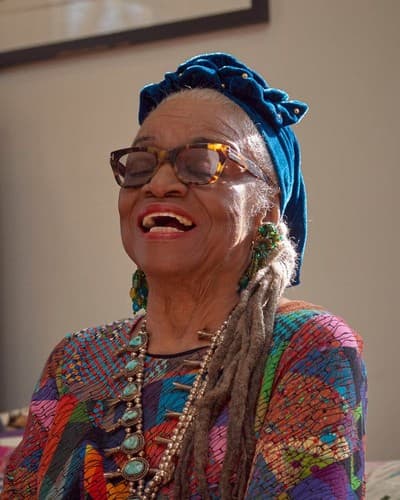
Biography coming soon.







