“There are no human beings, there are only human doings.”
— Mona Mayfair reflecting on the nature of identity and action.

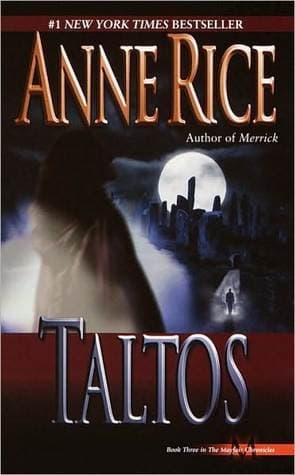
Anne Rice (1994)
Genre
Fantasy
Reading Time
12-15 hours (based on 533 pages)
Key Themes
See below
Sign in to track this book
An ancient Taltos faces his destiny, uncovering centuries of secrets and the legacy of his origins, as ancient bloodlines meet modern desires.
The novel opens with Ashlar, a Taltos in New York City, receiving a mysterious message from another Taltos, Stuart Gordon. Stuart, a descendant of the ancient Taltos line and a powerful telepath, has lived in isolation in a remote Scottish castle for centuries. Ashlar, who thought he was the last of his kind, is curious and uneasy about the message. He travels to Scotland, a journey that brings back old memories and a sense of unease. He knows the Taltos are a rare and powerful species, capable of great creation and destruction, making a meeting between two such beings important.
At Donnelaith Castle, Ashlar meets Stuart Gordon, who appears weak and troubled. Stuart reveals his desperate situation: he is dying and wants to understand his species' origins and purpose. He believes Rowan Mayfair, a powerful Mayfair witch who has given birth to two Taltos children (Lasher and Morrigan), holds the key to their survival and understanding. Stuart plans to force Rowan to have his child, hoping this new Taltos will provide answers or a cure for his failing health. Ashlar is horrified by Stuart's manipulative and unethical intentions, seeing the danger to Rowan and the delicate balance of their existence.
As Ashlar resists Stuart's demands, he begins to share his vast and ancient memories, spanning thousands of years. He describes a forgotten Taltos civilization, a highly advanced and spiritual society older than human history. He details their unique biology, their ability to create and control energy, and their complex social structure. Ashlar reveals that the Taltos were once many and lived peacefully with nature, but a disaster, possibly a conflict with early humans or an internal struggle, led to their near extinction. He highlights their natural desire for knowledge and deep connection to the earth, contrasting this with Stuart's more immediate and selfish desires.
The story then explains the Mayfair family's unique genetic ability to have children with the Taltos. Ashlar details how Mayfair witches, over generations, unknowingly carried the genes needed for Taltos reproduction, leading to Antha and Deirdre Mayfair's unions with Lasher. He explains the rapid, unique development of Taltos children and their great power. This section connects the ancient Taltos history to current events, showing Rowan's important role as a potential mother for future Taltos and the dangers and responsibilities that come with this lineage. Ashlar stresses the ethical problems of using Rowan for their own goals.
Despite Ashlar's objections, Stuart Gordon, weak but still powerful, uses his telepathic abilities to bring Rowan Mayfair to Donnelaith. Rowan, still recovering from the traumatic events with Lasher and Morrigan's birth, feels an irresistible pull to the old castle. She arrives disoriented and vulnerable, unaware of Stuart's true intentions or Ashlar's presence. Stuart intends to impregnate her, believing a new Taltos child will give him the answers he seeks about their kind's purpose and possibly save him from death. Ashlar is conflicted between his ancient loyalty to his species and his growing concern for Rowan's well-being and freedom.
Ashlar confronts Stuart directly, arguing against forcing Rowan to procreate. He emphasizes the Taltos's responsibility and the value of life, even for a species driven by ancient instincts. Ashlar sees Stuart's actions as a distortion of their natural existence and a dangerous violation of Rowan's free will. He uses his considerable powers and ancient knowledge to try and convince Stuart, appealing to their shared history and the possibility of a more ethical way to understand their origins. This moral conflict shows Ashlar's developed sense of ethics compared to Stuart's more basic drive for survival and knowledge.
Despite Ashlar's efforts, Stuart Gordon, in a desperate act, impregnates Rowan. Because of the Taltos's fast gestation, Rowan quickly gives birth to a new male Taltos child. This birth is a traumatic and confusing experience for Rowan, who is still reeling from the events with Lasher. The new Taltos, like the others, quickly matures, showing intelligence and unique abilities almost immediately. Stuart believes this new being holds the answers to his questions, but the child is a mystery, not the direct link to ancient knowledge he had hoped for. The event leaves Rowan deeply scarred and Ashlar very worried for the future.
Soon after the birth, Stuart Gordon, his life force gone and his quest unfinished, dies from his illness. The new Taltos child, named Daniel, is left without a parent. Ashlar, recognizing the great responsibility and dangers of the child's existence, takes Daniel into his care. He sees in Daniel a chance to guide a new generation of Taltos toward a more enlightened path, away from Lasher's destructive tendencies and Stuart's desperation. Rowan, traumatized but alive, is eventually released, her experience deeply affecting her. Ashlar decides to protect Daniel and teach him about their true history and purpose.
With Daniel in his care, Ashlar begins to plan for the Taltos's future. He believes the species must move past its ancient, often violent, past and embrace a more peaceful existence. He aims to find other surviving Taltos, if any exist, and create a community where they can thrive without harming humans or causing chaos. Ashlar also seeks to understand their true origins and purpose further, not through forced reproduction, but through research, self-reflection, and ethical interaction with the world. He understands that the Taltos have great power and must use it responsibly for everyone's benefit.
After her ordeal at Donnelaith, Rowan Mayfair begins a long and difficult process of physical and psychological recovery. She struggles to cope with the repeated trauma of having Taltos children and her involuntary role in their existence. While she is no longer directly involved with Daniel's upbringing, the experience deeply changes her understanding of her own powers and the Mayfair legacy. She grapples with the ethical questions of her family's connection to the Taltos and tries to regain her independence. Her journey becomes one of healing, self-discovery, and understanding the deep, often frightening, power that flows through her and connects her to ancient, supernatural forces.
Ashlar, now Daniel's mentor, sets out to discover more about ancient Taltos history and knowledge. He takes Daniel to various historical sites and powerful places, trying to awaken Daniel's natural memories and connect him to their shared past. Ashlar believes that by understanding their true origins, they can avoid the mistakes of past Taltos generations. He teaches Daniel about their unique abilities, their connection to the earth, and the importance of ethical behavior. This journey is not just physical but also a spiritual and intellectual exploration of what it means to be a Taltos in a human-dominated world.
The novel ends with the Taltos's fate still largely unknown, but with a renewed sense of purpose and hope. Ashlar, with Daniel, continues his mission to understand and protect their species, working to create a future where Taltos can exist ethically and peacefully. The book leaves many questions about the Taltos's ultimate origins and destiny unanswered, showing that their ancient story continues. The focus shifts from forced reproduction to a more thoughtful and responsible exploration of their identity, with Ashlar determined to guide Daniel and any future Taltos toward wisdom and harmony, rather than chaos and exploitation. The Mayfair family, though separate, remains connected to this unfolding narrative.
The Protagonist
Ashlar evolves from a solitary, introspective being burdened by ancient memories to a proactive protector and mentor, taking responsibility for the future of the Taltos species.
The Antagonist (initially)
Stuart's arc is one of escalating desperation and ultimately, failure and death, as his selfish quest for survival leads to his demise.
The Supporting
Rowan endures further trauma and violation, but ultimately begins a journey of recovery and reclaiming her autonomy, seeking to understand her unique place in the supernatural world.
The Supporting
Daniel's arc begins with his miraculous birth and quickly shifts to his mentorship under Ashlar, representing the hope for a new, guided future for the Taltos.
The Supporting
Aaron continues his role as an observer and chronicler, providing stability and historical context amidst the chaos, but his personal involvement deepens with Rowan's continued trauma.
The Supporting
Michael continues to grapple with his inability to fully protect Rowan from supernatural threats, leading to emotional strain and a deeper understanding of his own limitations.
The Supporting
Mona continues to explore and embrace her powerful Mayfair heritage, showing growing curiosity and involvement in the supernatural world.
The Mentioned
Lasher's influence, though deceased, continues to shape the narrative, serving as a warning of the dangers of uncontrolled Taltos power.
The novel explores the psychological burden of extreme longevity and ancient memories. Ashlar, having lived for thousands of years, carries the weight of forgotten civilizations and his species' sad history. His vast knowledge brings both wisdom and deep loneliness. Stuart, however, is dying and desperate, seeing immortality as a right, not a burden, and seeks ways to extend his life. This theme shows how different characters handle immense time and knowledge, often leading to either insight or despair.
“To live so long, to remember so much, it is a blessing and a curse. You see the patterns, you understand the cycles, but the individual sorrows never truly fade.”
A main theme is the ethical questions of creation, especially concerning the Taltos species and their unique reproduction. Stuart Gordon's desperate attempt to force Rowan Mayfair to have his child raises questions about personal freedom, consent, and the morality of using another being for one's own benefit. Ashlar strongly opposes this, advocating for a more ethical and consensual approach to continuing their species. The Taltos's rapid, often violent, reproduction challenges human ideas of family and parenthood, forcing characters to face the responsibilities that come with great power and the ability to create life.
“We are a species capable of immense good and immense destruction. How we choose to perpetuate ourselves speaks volumes about our true nature.”
The novel consistently blurs the lines between human and divine, mortal and immortal. The Taltos, with their ancient origins, great powers, and unique biology, often seem god-like, yet they are also vulnerable to illness, desperation, and existential worry. Rowan Mayfair, though human, has powers that border on the supernatural, making her a key link between the two worlds. The story explores what it means to be 'human' when such ancient and powerful beings are present, and conversely, what 'humanity' the Taltos possess despite their supernatural traits. It questions whether power always corrupts or if it can be used with compassion.
“We are not gods, though we have powers that might seem so to mortals. We are simply older, perhaps, and our path has diverged.”
Rowan Mayfair's repeated experiences of forced reproduction and psychological harm are central to this theme. She endures great trauma, both physical and emotional, yet shows remarkable strength in her efforts to recover and regain control of her life. The Mayfair family, as a whole, carries generations of inherited trauma related to their supernatural legacy. This theme explores how individuals and families cope with deep, often unexplainable, suffering and the lasting psychological effects of supernatural encounters. It also highlights the human spirit's ability to endure and seek healing even in overwhelming circumstances.
“The scars we carry are not always visible, but they shape us, reminding us of what we have survived.”
Both the Taltos and the Mayfair witches are searching for identity and purpose. Ashlar seeks to understand his ancient species' true origins and destiny, hoping to guide them toward a more enlightened future. Stuart is desperate to find meaning for his dying existence. Rowan grapples with her identity as a powerful witch and a mother to Taltos children, questioning her role in these ancient stories. The novel explores the search for meaning, both for individuals and for an entire species, especially when faced with a history that goes beyond human understanding and an uncertain future.
“To know who you are, truly, is to understand where you came from, and where you are meant to go.”
A mysterious call that draws characters into the unfolding narrative.
The summons from Stuart Gordon to Ashlar serves as the primary inciting incident, drawing the ancient Taltos out of his solitude and into the present conflict. This device creates immediate mystery and urgency, hinting at ancient connections and unresolved issues within the Taltos species. It also sets up the narrative's journey, as Ashlar must travel to Scotland, allowing for the introduction of historical context and the unfolding of the central conflict. The summons implies a destiny or a fated meeting that the characters cannot avoid.
The rapid development of Taltos children, driving plot urgency and ethical dilemmas.
The incredibly rapid gestation and maturation of Taltos children (from conception to adulthood in a matter of days) is a crucial plot device. It creates immense urgency and a sense of unnaturalness around their births, intensifying the trauma for Rowan Mayfair. This acceleration also prevents traditional human bonding and parenting, highlighting the Taltos's distinct biology and raising profound ethical questions about their existence and the responsibilities of their 'parents.' It's a key factor in Stuart's desperate plan and the subsequent challenges faced by Ashlar in raising Daniel.
The primary mode of communication and influence among the Taltos and powerful witches.
Telepathy and other psychic abilities are fundamental plot devices, allowing for direct mental communication, manipulation, and the sharing of ancient memories. Stuart Gordon uses his telepathic power to summon Ashlar and later to compel Rowan to Donnelaith, demonstrating its manipulative potential. Ashlar uses his telepathy to communicate with Stuart, to share his vast knowledge, and to begin teaching Daniel. This device bypasses conventional communication, allowing for immediate understanding (or misunderstanding) and direct influence, emphasizing the Taltos's advanced nature and the raw power of the Mayfair witches.
Ashlar's detailed recollections of Taltos history, providing crucial backstory.
Ashlar's ability to access and recount millennia of his own memories and the collective history of the Taltos serves as a crucial expository device. These extended flashbacks and internal monologues provide the reader with a deep dive into the origins, culture, and ultimate decline of the ancient Taltos civilization. Without this device, the reader would lack the necessary context to understand the Taltos's motivations, their unique biology, and the significance of their current predicament. It grounds the fantastical elements in a rich, imagined history, making the Taltos feel more real and complex.
The unique genetic predisposition of the Mayfair family to Taltos procreation.
The Mayfair family's centuries-long, unique genetic connection to the Taltos is the foundational plot device that links the ancient Taltos world to the modern human world. Their specific genetic markers enable them to bear Taltos children, making them indispensable to the species' continuation. This legacy drives much of the conflict, as Taltos like Lasher and Stuart relentlessly pursue Mayfair women. It creates a recurring cycle of trauma and mystery, ensuring the Mayfairs are perpetually entwined with the Taltos's fate and providing a consistent thread through the larger 'Lives of the Mayfair Witches' series.
“There are no human beings, there are only human doings.”
— Mona Mayfair reflecting on the nature of identity and action.
“The greatest evil is not done in the shadows, but in the light, by those who believe themselves to be righteous.”
— Ashlar discussing the dangers of self-righteousness and its capacity for destruction.
“We are all prisoners of our own making, our own desires, our own fears.”
— Mona Mayfair's internal thoughts on the limitations and self-imposed boundaries of existence.
“Love is not a choice; it is a recognition.”
— Ashlar explaining his understanding of love to Mona, emphasizing its innate quality.
“The past is never dead. It's not even past.”
— A recurring theme, here reflecting on the enduring influence of ancestral spirits and ancient history on the present.
“There is a hunger in us all, for something more, something beyond the mundane.”
— Mona Mayfair contemplating the inherent human desire for transcendence and the supernatural.
“To be truly alive is to be aware of the constant presence of death.”
— Ashlar sharing a profound observation about the interconnectedness of life and mortality.
“Magic is simply the art of bending reality to one's will.”
— A general statement about the nature of the supernatural powers wielded by various characters.
“Every secret comes to light, eventually.”
— A common refrain in the Mayfair Chronicles, here applicable to the unfolding mysteries surrounding the Taltos.
“We are all merely instruments of a greater design, whether we know it or not.”
— Ashlar's perspective on the forces that guide their lives and the destiny of the Taltos.
“The heart has its own reasons, which reason knows nothing of.”
— Mona Mayfair struggling with her powerful, often illogical, emotions and attractions.
“To truly see someone is to see their soul, their history, their potential.”
— Ashlar's deep understanding and perception of Mona and other individuals.
“There is no true peace without understanding.”
— Reflecting on the various conflicts and mysteries that plague the characters and their world.
“The world is full of wonders, if only you have the eyes to see them.”
— A general observation on the magical and hidden aspects of the world that are revealed throughout the story.
Ready to see how well you understood this book? Take our interactive quiz with 10 questions.
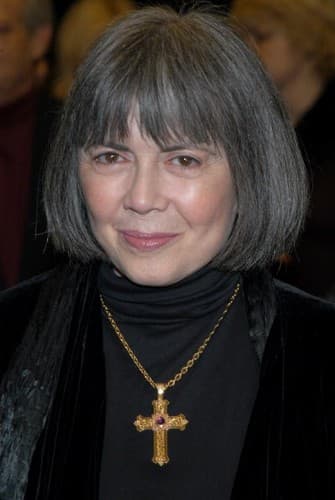
Anne Rice was an American author of gothic fiction, erotic literature, and Christian literature. She was best known for her series of novels The Vampire Chronicles. The first book became the subject of a film adaptation—Interview with the Vampire (1994).







