“We are all of us, in our own way, a little peculiar.”
— A general reflection on the nature of being different.

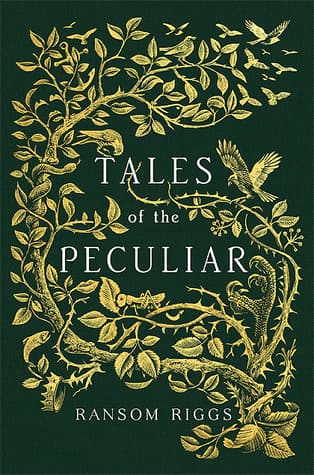
Ransom Riggs (2016)
Genre
Fantasy / Young Adult
Reading Time
120 min
Key Themes
See below
Sign in to track this book
Explore the dark, whimsical origins of the peculiar world, from fork-tongued princesses to cannibalistic gentry, all cataloged by a scholarly invisible boy.
The collection begins with the tale of the first peculiar, a boy named Cuthbert who had a large, unsightly horn on his head. Shunned by his village, Cuthbert fled into the wilderness. He met a wise, old woman, who revealed that his peculiarity was a gift, not a curse. She taught him to embrace his uniqueness. As Cuthbert grew, his horn became a source of great power and wisdom. He eventually met other peculiar children, and together they sought sanctuary. This story sets the foundational myth for the peculiar world, introducing unique abilities and the need for protection, foreshadowing the eventual role of ymbrynes.
Princess Fiona had a peculiar, forked tongue, which made her an outcast despite her royal lineage. Her father, the King, wanted a suitable husband, but Fiona struggled with societal expectations. When a beast threatened the kingdom, conventional knights failed. Fiona, using her unusual tongue, discovered she could communicate with the beast, learning it was simply misunderstood and hungry. She brokered peace between the beast and her people, saving the kingdom and proving her worth because of her peculiarity. This tale highlights themes of acceptance and using one's unique traits for good.
Barnaby, a peculiar boy, could control water, from small puddles to raging seas. Initially, his power was a source of wonder, but as he grew, it became difficult to manage. His emotions directly influenced the tides, causing chaos and fear among the villagers. Barnaby struggled with isolation, fearing he would accidentally harm those he loved. He eventually learned to channel his power through discipline and self-control, transforming from a potential threat into a protector of the coastal community, guiding ships through storms and ensuring bountiful fishing. Millard's annotations emphasize the double-edged nature of peculiar gifts.
Penelope, a peculiar woman, could see and interact with ghosts, a gift that made her an anomaly in her village. While others feared the spectral world, Penelope found comfort and companionship among the spirits. She helped them resolve their lingering earthly affairs, guiding them to peace. Through her interactions, she uncovered forgotten histories and secrets of her community. Her unique ability allowed her to bridge the gap between the living and the dead, bringing closure and understanding to both worlds. This story subtly introduces peculiar empathy and the unseen layers of reality.
This tale introduces the Horrendous Hominid, a large, hairy, and seemingly monstrous peculiar creature. Feared by humans, the Hominid lived in isolation, longing for connection. Despite its intimidating appearance, it had a gentle nature and a deep capacity for kindness. When a group of peculiar children were lost in the wilderness, the Hominid, initially a source of terror, guided them to safety, using its strength and knowledge of the wild. The children, seeing past its exterior, befriended it, proving that true peculiarity is in character. Millard's notes discuss the dangers of prejudice against peculiars.
Arthur, a peculiar boy, could communicate with pigeons. He understood their calls, their flight patterns, and even their gossip. Living near St. Paul's Cathedral, he used his gift to observe the city from above. When a valuable artifact went missing from the cathedral, the authorities were stumped. Arthur, through his network of avian informants, gathered clues that led to the recovery of the artifact and the apprehension of the thief. This story highlights how seemingly minor peculiarities can have significant practical applications and contribute to society.
Lilliput, a peculiar girl, could shrink herself to an incredibly small size. She used her power for playful mischief and daring adventures, exploring worlds unseen by ordinary people. Initially, her parents worried about her safety, but Lilliput proved resourceful and clever. She navigated tiny landscapes, discovered hidden passages, and even helped a family of mice. Her adventures taught her about perspective and the beauty of the miniature world. This story emphasizes the joy and freedom that comes with embracing one's unique abilities, even if they seem unconventional.
Barnaby Button, a peculiar man, could create multiple copies of himself. Initially, this power was a source of amusement and convenience, allowing him to accomplish many tasks at once. However, as the number of his copies grew, Barnaby struggled with his sense of individual identity and purpose. Each copy developed its own personality and desires, leading to internal conflict. He eventually learned to manage his power, understanding that true strength is in unity and shared purpose, rather than sheer numbers. Millard's notes ponder the philosophical implications of such a peculiarity.
This dark tale describes a secret society of wealthy, non-peculiar humans in London who consumed the discarded limbs and organs of peculiars, believing it granted them longevity and power. The story follows a young peculiar who narrowly escaped their clutches, revealing the horrifying extent of their depravity. This narrative exposes the dangers and prejudices faced by peculiars in the wider world, highlighting the need for secrecy and the protective role of loops and ymbrynes. It serves as a stark reminder of the threats that exist beyond the safe havens of peculiar homes.
Cassandra, a peculiar girl, had the gift of precognition, seeing glimpses of the future. While this ability could be a powerful tool, it often brought her distress, as she witnessed both joyful and tragic events she could not always prevent. She struggled with the responsibility of her visions and the isolation it brought, as others often dismissed her warnings. Over time, Cassandra learned to interpret her visions more effectively and use them to guide and protect, rather than simply lament. This story explores the complex moral and emotional challenges associated with powerful peculiar gifts.
Edward, a peculiar boy, could communicate with inanimate objects, particularly stones. He could hear their ancient memories and stories. While initially dismissed as strange, Edward's gift proved invaluable when historical mysteries arose in his village. He uncovered forgotten ruins, revealed hidden passages, and reconstructed narratives from the past by 'listening' to the stones. His unique perspective allowed him to connect with history in a deep way, proving that peculiarity can manifest in unexpected forms and reveal truths hidden from ordinary perception.
This culminating tale reveals the true origin of the ymbrynes, the peculiar women who can manipulate time and transform into birds. It details how the first peculiar children, facing persecution and danger, sought a way to protect themselves. A group of powerful female peculiars, possessing unique temporal abilities, came together to create the first time loops. They discovered that by transforming into birds, they could better safeguard their charges and maintain the loops. This story solidifies the foundational lore of the peculiar world, explaining the ymbrynes' sacred duty and their vital role in preserving peculiar kind.
The Narrator/Annotator
Millard's arc is less about personal change and more about his growth as a historian and his increasing understanding and appreciation of peculiar heritage.
The Protagonist (The First Peculiar)
Transforms from a shunned outcast to a revered figure, symbolizing the journey of self-acceptance for peculiars.
The Protagonist (The Fork-Tongued Princess)
Goes from being an object of pity/disdain to a revered heroine, saving her kingdom through her peculiarity.
The Protagonist (The Boy Who Could Tame Seas)
Learns to master his volatile power, transforming from a source of fear to a community protector.
The Protagonist (The Woman Who Befriended Ghosts)
Embraces her unique connection to the dead, finding fulfillment and becoming a bridge between worlds.
The Protagonist (The Pigeoneer of St. Paul's)
Utilizes his unusual ability to solve a crime, proving the practical value of his peculiarity.
The Protagonist (The Story of the Horrendous Hominid)
Initially feared, the Hominid proves its gentle nature and finds acceptance among peculiar children.
The Protagonist (The Man Who Could Multiply Himself)
Struggles with the fragmentation of his identity due to his multiplying ability, eventually finding a sense of unity.
The Protagonist (The Girl Who Could See the Future)
Learns to manage the burden of her precognitive visions, using them for guidance rather than despair.
The overarching theme explores what it means to be peculiar. The stories show a vast spectrum of abilities, from the visible (Cuthbert's horn) to the unseen (Penelope befriending ghosts, Arthur talking to pigeons). They show how these abilities shape identity and destiny. Peculiarity is not a curse but a unique gift, often misunderstood by the 'normal' world. The tales illustrate the double-edged sword of power, where gifts can be both beneficial and challenging, as seen with Barnaby's control over the seas or Barnaby Button's self-multiplication.
“For peculiarity is not a disease, but a gift, albeit one that often comes with a heavy price.”
Many tales involve characters struggling to find acceptance, both from society and from themselves. Cuthbert is shunned for his horn, Princess Fiona for her tongue, and the Horrendous Hominid for its appearance. The stories consistently advocate for embracing one's unique traits and finding communities where these differences are celebrated. The concept of 'home' for peculiars, often a sanctuary from a prejudiced world, is subtly introduced through the characters' journeys to find understanding and safety among others who are different.
“And it was among them, the truly peculiar, that he finally found a home where his difference was not merely tolerated, but celebrated.”
This theme highlights the dangers faced by peculiars in a world that fears and misunderstands them. The most direct example is 'The Cannibals of London,' which terrifyingly depicts non-peculiars actively preying on peculiars. Other stories, like 'The First Peculiar' and 'The Horrendous Hominid,' show the more common forms of prejudice: ostracization, fear, and misjudgment based on appearance or unusual abilities. This theme shows the necessity for secrecy, protection, and the creation of safe havens like loops, laying the groundwork for the main series' conflicts.
“For the greatest danger to peculiars has always been, and will always be, the mundane world.”
Several stories explore the moral and emotional challenges that come with extraordinary abilities. Barnaby, who can control the seas, struggles with the destructive potential of his power. Cassandra, with her precognition, is burdened by knowing future tragedies she cannot always prevent. Barnaby Button, who can multiply himself, grapples with the fragmentation of his identity. These narratives illustrate that peculiar gifts are not always easy, requiring discipline, self-control, and a strong moral compass to use them wisely and without causing harm, emphasizing the maturity required of peculiars.
“Great power, it was said, often came with an even greater burden.”
A compilation of distinct narratives that build a cohesive world.
The book is structured as an anthology of independent short stories, each focusing on a different peculiar and their unique ability or challenge. This allows Riggs to explore a wide range of peculiarities and their implications without being tied to a single overarching plot. This device is crucial for world-building, as it provides a broad historical and mythological context for the peculiar universe, enriching the lore established in the main 'Miss Peregrine' series by presenting foundational tales.
Millard Nullings provides context and commentary from within the peculiar world.
The stories are presented as a collection compiled and annotated by Millard Nullings, an invisible peculiar from the main series. His footnotes and introductions provide an 'in-universe' perspective, adding layers of authenticity and historical weight to the tales. This device allows for exposition, historical context, and even humorous asides that deepen the reader's understanding of peculiar lore and connect these standalone tales to the larger narrative of Miss Peregrine's Peculiar Children.
Stories that explain the foundational elements of the peculiar world.
Many tales serve as origin stories or foundational myths for key aspects of the peculiar world. 'The First Peculiar' explains the very beginning of peculiarity, while 'The Origin of the Ymbrynes' details how these bird-shifters came to be and their role in protecting peculiars. This device is essential for expanding the lore, providing a sense of deep history and tradition to the peculiar community, and giving context to the struggles and institutions seen in the main book series.
“We are all of us, in our own way, a little peculiar.”
— A general reflection on the nature of being different.
“The world is a book, and those who do not travel read only one page.”
— A common saying, applied to the peculiar world.
“Every peculiar, no matter how small or seemingly insignificant their peculiarity, contributes to the grand tapestry of our kind.”
— Emphasizing the value of all peculiar individuals.
“There are more things in heaven and earth, Horatio, than are dreamt of in your philosophy.”
— A Shakespearean quote often used to describe the inexplicable nature of peculiarities.
“What is normal, anyway? A setting on a washing machine.”
— A humorous dismissal of the concept of 'normalcy'.
“Fear is a peculiar thing. It can make you do the most peculiar things.”
— Observing the powerful and often irrational influence of fear.
“The greatest peculiarities are often hidden in plain sight.”
— Suggesting that true uniqueness isn't always obvious.
“To be peculiar is not a curse, but a gift. A burden, perhaps, but a glorious one.”
— Framing peculiarity as both challenging and rewarding.
“Time, for us, is not a river, but a series of puddles, each one a different moment, a different world.”
— Describing the unique way peculiars experience time loops.
“Even the most monstrous peculiarity can possess a certain beauty.”
— Finding aesthetic value in all forms of peculiarity, even the grotesque.
“Curiosity killed the cat, but satisfaction brought it back.”
— A twist on a common idiom, highlighting the rewards of exploration.
“The world outside our loops is a dangerous place, but not without its own peculiar wonders.”
— Acknowledging the risks and rewards of the non-peculiar world.
“Sometimes, the only way to save yourself is to embrace what makes you different.”
— A lesson about self-acceptance and survival for peculiars.
Ready to see how well you understood this book? Take our interactive quiz with 10 questions.

Biography coming soon.







