“Deep into that darkness peering, long I stood there wondering, fearing, doubting, dreaming dreams no mortal ever dared to dream before.”
— From 'The Raven', as the narrator confronts the mysterious bird.

Edgar Allan Poe (1856)
Genre
Fantasy / Mystery
Reading Time
90 min
Key Themes
See below
Sign in to track this book
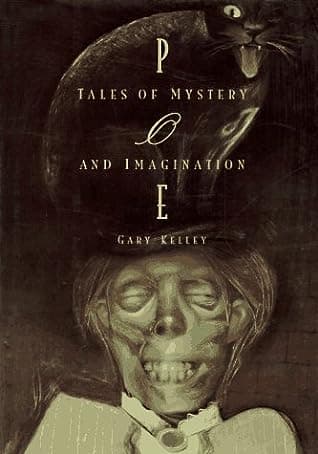
Extraordinary artwork brings to life the madness, beauty, and torment of three classic Poe tales.
The narrator, condemned by the Spanish Inquisition, wakes in total darkness. He fears being buried alive and feels his way around his cell. He finds it is a large, round dungeon. Trying to cross the room, he trips, just missing a deep pit in the center. The Inquisitors give him water and spiced food, which he thinks is drugged. He passes out and wakes to find himself tied to a wooden frame. A large, sharp pendulum slowly lowers from the ceiling, swinging closer to his chest. The mental suffering from the slow, certain approach of death is huge, as he watches the blade shine and hears its hiss.
As the pendulum keeps lowering, the narrator quickly tries to find a solution. He sees rats in the dungeon, drawn by the smell of his spiced meat. He gets an idea: he smears the remaining meat on the straps holding him. The hungry rats chew through the straps, freeing him just before the pendulum would have cut him. He falls to the pit's edge, barely escaping the blade. However, his relief does not last. The cell walls begin to glow with heat, slowly closing in, threatening to push him into the pit he just escaped.
The narrator nearly goes mad as the hot, closing walls push him toward the central pit. The air becomes very hot and bitter, and he hears the walls grinding together. With no hope left, he stumbles toward the edge, ready to throw himself into the pit to avoid being crushed or burned. At the last moment, as he is about to fall, he hears a trumpet and human voices. The walls move back, and a hand grabs him. General Lasalle and the French army have taken Toledo and freed the Inquisition's prisoners, saving the narrator from his terrible experience.
The narrator, saying he is sane, describes his growing obsession with an old man's 'vulture eye' — a pale blue eye with a film over it. He says he loves the old man and wants his gold, but it is this eye that makes him mad. He decides to murder the old man to get rid of the eye. For seven nights, he quietly goes into the old man's room, opening the lantern just enough to shine a thin light ray directly onto the eye, watching him sleep. The old man, though disturbed, does not know the narrator's plan.
On the eighth night, the narrator enters the room as usual, but the old man wakes, startled by a sound. He sits up, terrified. The narrator stays still for an hour, then shines the lantern's light directly into the old man's open 'vulture eye'. He hears the old man's heart beating fast, a sound that makes him more mad. Unable to stand it, he rushes into the room, pulls the heavy bed over the old man, suffocating him. He then cuts up the body in the bathtub, carefully collecting all the blood, and hides the remains under the floorboards, sure he left no trace.
At 4 AM, three police officers arrive, called by a neighbor who heard a scream. The narrator, calm and confident, invites them in, saying the scream was his own in a dream, and that the old man is away. He confidently leads them through the house, even bringing chairs into the old man's room and placing his own chair directly over the spot where the body is hidden. As they talk, the narrator begins to hear a faint, rhythmic thumping — the old man's heart, he believes, beating from under the floorboards. The sound grows louder, making him frantic until, unable to stand the imagined sound and his guilt, he screams his confession, revealing the body.
The narrator, a man known for his gentle nature and animal love, begins his story by admitting he murdered his wife. He describes his early life, his special liking for cats, and his bond with a black cat named Pluto. However, he gradually changes due to alcoholism. His gentle nature becomes violent. He starts to hurt his wife and pets, his love for them turning bad because of drink. This starts his tragic decline, showing the horrors to come.
One night, very drunk, the narrator is annoyed by Pluto, who avoids him. In a drunken rage, he grabs the cat, and believing it bit him, he takes out a knife and deliberately cuts out one of Pluto's eyes. The next morning, feeling quick regret, he is soon overcome by a strange urge to do wrong. He ties a rope around Pluto's neck and hangs the cat from a tree, knowing his act is terrible, yet driven by an unexplainable, evil urge to do it.
The night after Pluto's hanging, the narrator's house mysteriously burns down, destroying everything he owns. He thinks this is punishment for his crime. Among the ruins, he finds one wall still standing, with a clear image of a large cat with a rope around its neck. This sight further disturbs him. Later, drinking in a tavern, he finds another large black cat, very much like Pluto, but with a white patch on its chest. He takes this new cat home, hoping it will replace his lost pet.
The narrator first enjoys the new cat's company, but soon his alcoholism and a growing dislike for the animal return. He sees that the white patch on the cat's chest slowly takes the shape of a gallows. This visual sign of his guilt makes him very irritated and afraid. One day, as he goes into the cellar with his wife, the cat trips him on the stairs. Enraged, he raises an axe to hit the cat, but his wife steps in to protect it. In a fit of rage, he brings the axe down, killing his wife instantly.
After his wife's murder, the narrator calmly plans to hide the body. He decides to wall it up in the cellar, within a false chimney breast, sure no one will find it. He finishes the task carefully, plastering over the bricks to make it look seamless. He feels at ease, believing he committed the perfect crime. However, when the police arrive to investigate his wife's disappearance, the narrator, overly confident, taps on the newly plastered wall to brag about its strong build. From inside, a shriek and a wail come out, revealing the cat, which had accidentally been walled up with the body, and thus exposing his secret.
The Protagonist
He transforms from a terrified, disoriented prisoner to a resourceful survivor, clinging to life until a miraculous rescue.
The Protagonist/Antagonist
He descends from a state of calculated madness to a complete breakdown, driven to confession by his own guilt and imagined torment.
The Victim
His arc is static; he is a victim whose only role is to be murdered.
The Protagonist/Antagonist
He transforms from a kind, animal-loving man into a brutal, self-destructive murderer, ultimately leading to his capture.
The Supporting
Pluto serves as a symbol of the narrator's lost innocence and the victim of his escalating madness.
The Supporting
The second cat acts as a catalyst for the narrator's final breakdown and exposure.
The Victim
Her arc is one of escalating victimhood, culminating in her murder.
The Antagonists
They remain static, representing an unchanging force of evil until their defeat by General Lasalle.
The Supporting
He serves as a deus ex machina, providing a sudden and definitive rescue.
Poe often shows the thin line between sanity and madness, usually through narrators who claim to be rational while describing their mental decline. In 'The Tell-Tale Heart', the narrator carefully plans a murder, thinking his actions are logical, but his imagined sounds show his disturbed mind. The narrator of 'The Black Cat' blames his actions on a 'spirit of perverseness', struggling with regret but unable to control his violent urges, which suggests a form of moral insanity. The intense mental suffering in 'The Pit and the Pendulum' pushes the narrator close to madness, showing how outside pressures can break the mind.
“TRUE!—nervous—very, very dreadfully nervous I had been and am; but why will you say that I am mad?”
The stories show how guilt, whether admitted or hidden, always leads to bad results. In 'The Tell-Tale Heart', the narrator's imagined sound of the old man's beating heart, a sign of his huge guilt, makes him confess his crime. In 'The Black Cat', the narrator's terrible acts against Pluto and his wife are met with a series of punishments: his house burning, the haunting presence of the second cat, and finally, the cat's cry from inside the wall, revealing his murder. These stories suggest that wrongdoings will not go unpunished, often leading to self-destruction.
“I knew myself, however, to be guiltless of the death of my wife.”
Poe often looks at the darker, irrational urges in the human mind, especially the 'spirit of perverseness' — the urge to do wrong just for the sake of it. This idea is clearest in 'The Black Cat', where the narrator, despite loving Pluto, deliberately hurts and then hangs the cat, knowing his act is evil. He calls it an 'unfathomable longing of the soul to vex itself'. This human ability for self-destructive and bad acts, even against one's own better judgment, is a repeated idea, suggesting a deep darkness that can overcome reason and morals.
“I am not more sure that my soul lives, than I am that perverseness is one of the primitive impulses of the human heart—one of the indivisible primary divisions of the faculties or sentiments, which give direction to the character of Man.”
Poe creates a sense of dread and mental terror, often by carefully describing the victim's experience. In 'The Pit and the Pendulum', the horror comes not just from the physical threats (the pit, the pendulum, the closing walls) but from the narrator's expectation of death, the lack of sensory input, and the slow, deliberate torture of his mind. The fear of the unknown and mental breakdown under extreme pressure are central. Similarly, the narrators of 'The Tell-Tale Heart' and 'The Black Cat' suffer internal mental torment, driven by their guilt and imagined sounds, which are often more frightening than any outside threat.
“I had been up to the ceiling, and down to the floor, and everywhere in the dungeon, except where the pit was; and now, as if in mockery of my terror, the very walls of my prison were in motion!”
Throughout these tales, there is a clear sense of punishment for bad deeds, often delivered through seemingly supernatural or ironic ways. The narrator of 'The Tell-Tale Heart' is undone by his own conscience, appearing as the imagined heartbeat. In 'The Black Cat', the second cat acts as a supernatural agent of justice, revealing the narrator's crime from inside the wall. Even in 'The Pit and the Pendulum', the rescue comes at the last moment, saving the innocent from the Inquisition's cruel justice. Poe suggests that justice, whether divine, psychological, or external, will ultimately win against evil.
“No sooner had the reverberation of my blows sunk into silence, than I was answered by a voice from within the tomb!—by a cry, at first muffled and broken, like the sobbing of a child, and then quickly swelling into one long, loud, and continuous scream, utterly anomalous and inhuman—a howl—a wailing shriek, half of horror and half of triumph, such as could have issued only from hellish throats, and from the throats of the damned in their agony and in their defiance.”
A narrator whose credibility is compromised, often due to madness or self-deception.
Poe frequently employs unreliable narrators to heighten the psychological tension and ambiguity of his stories. In 'The Tell-Tale Heart', the narrator's repeated assertions of sanity, despite his clear psychosis and irrational motivations, force the reader to question the reality of events. Similarly, the narrator of 'The Black Cat' attempts to rationalize his horrific acts, attributing them to external forces or an intrinsic 'perverseness', thus blurring the line between his perception and objective truth. This device immerses the reader into the disturbed minds of the characters, making the horror more internal and subjective.
The story is told from the viewpoint of a single character, often the protagonist.
The use of a first-person perspective is crucial to Poe's psychological horror. It allows the reader direct access to the narrator's thoughts, fears, and obsessions, creating an intimate and claustrophobic experience. In 'The Pit and the Pendulum', the narrator's detailed sensory descriptions and internal monologue immerse the reader in his terrifying ordeal. In 'The Tell-Tale Heart' and 'The Black Cat', this perspective allows Poe to showcase the narrators' escalating madness and perverted logic, making their descent into crime more chillingly personal and immediate. The reader experiences the horror through the character's own distorted lens.
Objects or entities representing deeper ideas or qualities.
Poe uses potent symbolism to enrich his narratives. In 'The Tell-Tale Heart', the old man's 'vulture eye' symbolizes the narrator's irrational fear and the perceived evil that drives him to murder. In 'The Black Cat', Pluto initially symbolizes the narrator's innocence and later his brutalized conscience. The second cat, with its gallows-shaped white patch, symbolizes guilt and impending retribution. The pit, pendulum, and contracting walls in 'The Pit and the Pendulum' symbolize the various forms of psychological and physical torture inflicted by the Inquisition, as well as the inevitability of death.
Hints or clues that suggest future events in the story.
Poe masterfully employs foreshadowing to build suspense and dread. In 'The Black Cat', the narrator's initial description of his kindness towards animals and his subsequent descent into alcoholism clearly foreshadows his violent acts. The mysterious image of Pluto on the wall after the fire hints at the supernatural element and the cat's role in the narrator's fate. In 'The Pit and the Pendulum', the narrator's early discovery of the pit sets up the later horror of being driven towards it by the contracting walls. These subtle hints create an ominous atmosphere, preparing the reader for the inevitable horrors to come.
A literary device where there is a contrast between expectation and reality.
Poe frequently uses irony, particularly dramatic and situational irony, to underscore the dark themes of his stories. In 'The Tell-Tale Heart', the narrator's proud boasts of his cunning and meticulousness are ironically undermined by his eventual confession, driven by his own internal torment. In 'The Black Cat', the narrator's attempt to wall up his wife's body for a 'perfect crime' is ironically undone by the very cat he despises, trapped within the wall and revealing his secret. The rescue of the narrator in 'The Pit and the Pendulum' is ironic in its timing, arriving at the very last second, just as he is about to succumb to the pit.
“Deep into that darkness peering, long I stood there wondering, fearing, doubting, dreaming dreams no mortal ever dared to dream before.”
— From 'The Raven', as the narrator confronts the mysterious bird.
“All that we see or seem is but a dream within a dream.”
— From the poem 'A Dream Within a Dream', reflecting on reality and illusion.
“The death of a beautiful woman is, unquestionably, the most poetical topic in the world.”
— From 'The Philosophy of Composition', discussing poetic themes.
“I became insane, with long intervals of horrible sanity.”
— From a letter, describing mental turmoil.
“The boundaries which divide Life from Death are at best shadowy and vague. Who shall say where the one ends, and where the other begins?”
— From 'The Premature Burial', exploring the thin line between life and death.
“I have great faith in fools; self-confidence my friends call it.”
— From 'Marginalia', a collection of Poe's thoughts and aphorisms.
“Never to suffer would never to have been blessed.”
— From 'The Assignation', reflecting on the nature of suffering and joy.
“The scariest monsters are the ones that lurk within our souls.”
— A thematic idea often explored in Poe's tales of psychological horror.
“Words have no power to impress the mind without the exquisite horror of their reality.”
— From 'The Fall of the House of Usher', describing the impact of narrative.
“Invisible things are the only realities.”
— From 'The Colloquy of Monos and Una', discussing metaphysical concepts.
“The fever called 'Living' is conquered at last.”
— From 'For Annie', a poem about death and release.
“There is no exquisite beauty without some strangeness in the proportion.”
— From 'Ligeia', describing the titular character's allure.
“I was never really insane except upon occasions when my heart was touched.”
— From 'Eleonora', a tale of love and loss.
“To be thoroughly conversant with a man's heart, is to take our final lesson in the iron-clasped volume of despair.”
— From 'The Man of the Crowd', exploring human nature and despair.
Ready to see how well you understood this book? Take our interactive quiz with 10 questions.
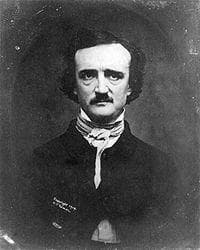
Edgar Allan Poe was an American writer, poet, editor, and literary critic who is best known for his poetry and short stories, particularly his tales of mystery and the macabre. He is widely regarded as a central figure of Romanticism in the United States, and of American literature. He was one of the country's earliest practitioners of the short story, and is considered the inventor of the detective fiction genre, as well as a significant contributor to the emerging genre of science fiction. He is the first well-known American writer to earn a living through writing alone, resulting in a financially difficult life and career.







